

Order Total (1 Item Items):
Shipping Destination:

9780786412334 - Smokin' Rockets: the Romance of Technology in American Film, Radio and Television, 1945-1962 by Lucanio, Patrick; Coville, Gary (21 results)
Skip to main search results
Search filters
Product Type
- All Product Types
- Books (21)
- Magazines & Periodicals (No further results match this refinement)
- Comics (No further results match this refinement)
- Sheet Music (No further results match this refinement)
- Art, Prints & Posters (No further results match this refinement)
- Photographs (No further results match this refinement)
- Maps (No further results match this refinement)
- Manuscripts & Paper Collectibles (No further results match this refinement)
Condition Learn more
- New (16)
- As New, Fine or Near Fine (3)
- Very Good or Good (2)
- Fair or Poor (No further results match this refinement)
- As Described (No further results match this refinement)
Binding
- All Bindings
- Hardcover (No further results match this refinement)
- Softcover (21)
Collectible Attributes
- First Edition (No further results match this refinement)
- Signed (No further results match this refinement)
- Dust Jacket (No further results match this refinement)
- Seller-Supplied Images (10)
- Not Print on Demand (14)
Language (1)
Free Shipping
Seller Location
Seller Rating
-

Smokin' Rockets The Romance of Technology in American Film, Radio and Television, 1945-1962
Language: English
Published by McFarland & Company, Jefferson, NC & London, 2002
ISBN 10: 078641233X ISBN 13: 9780786412334
Seller: Willis Monie-Books, ABAA, Cooperstown, NY, U.S.A.
Association Member: ABAA ESA ILAB
Seller rating 5 out of 5 stars

Softcover. Condition: Very Good. Dust Jacket Condition: No Dust Jacket. Spine is beginning to crack at title page. Covers have some light scuffing. ; 268 pages.
-
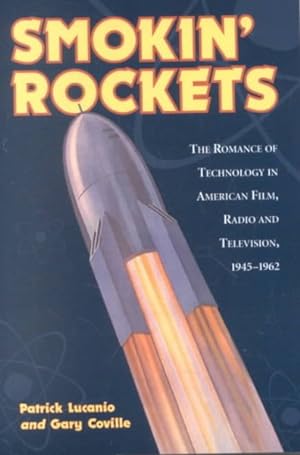
Condition: As New. Unread book in perfect condition.
-
Trade Paperback. Condition: Very Good+. Near fine, flat spine with no cracks or creases. Unread appearance. No markings, no bookplate.
-
Smokin' Rockets (Paperback)
Language: English
Published by McFarland & Co Inc, Jefferson, NC, 2002
ISBN 10: 078641233X ISBN 13: 9780786412334
Paperback. Condition: new. Paperback. Science and technology had a significant influence on American culture and thought in the years immediately following World War II. The new wonders of science and the threat of the Soviet Union as a powerful new enemy made science fiction a popular genre in radio, television, and film. Mutant creatures spawned by radioactive energy and intergalactic dictators unleashing horrific weapons upon Earth were characteristic of science fiction at the time and served as warnings to the very real dangers posed by the atomic age. This work examines science and science fiction in American culture beginning in the year World War II ended and going to 1962, the year of John Glenn's orbital flight and the Cuban Missile Crisis. The radio work of Arch Oboler and the significance of his "Rocket from Manhattan," which aired only one month after the dropping of the first atomic bomb and asked serious questions about the use of atomic energy, are examined. Other topics are the conflict between the free world and the Communist world in the context of science fiction plot lines, the dangers of science as shown in films like Godzilla, Them!, The Day the Earth Stood Still, and radio and television programs, the flying saucer phenomenon and the treatment of such stories in the media (with special attention given to the 1956 documentary UFO), the changing and more positive depictions of scientists, television programs like Flash Gordon and Space Patrol, the shift in the balance of world power due to the successful launching of Sputnik I by the Russians in 1957, the "end of the world" theme in science fiction, and the American journey into space. This work examines science and science fiction in American culture beginning in the year World War II ended and going to 1962, the year of John Glenn's orbital flight and the Cuban Missile Crisis. Shipping may be from multiple locations in the US or from the UK, depending on stock availability.
-

Smokin' Rockets
Language: English
Published by McFarland and Co Inc, US, 2002
ISBN 10: 078641233X ISBN 13: 9780786412334
Seller: Rarewaves.com USA, London, LONDO, United Kingdom
Seller rating 5 out of 5 stars
Paperback. Condition: New. Science and technology had a significant influence on American culture and thought in the years immediately following World War II. The new wonders of science and the threat of the Soviet Union as a powerful new enemy made science fiction a popular genre in radio, television, and film. Mutant creatures spawned by radioactive energy and intergalactic dictators unleashing horrific weapons upon Earth were characteristic of science fiction at the time and served as warnings to the very real dangers posed by the atomic age. This work examines science and science fiction in American culture beginning in the year World War II ended and going to 1962, the year of John Glenn's orbital flight and the Cuban Missile Crisis. The radio work of Arch Oboler and the significance of his "Rocket from Manhattan," which aired only one month after the dropping of the first atomic bomb and asked serious questions about the use of atomic energy, are examined. Other topics are the conflict between the free world and the Communist world in the context of science fiction plot lines, the dangers of science as shown in films like Godzilla, Them!, The Day the Earth Stood Still, and radio and television programs, the flying saucer phenomenon and the treatment of such stories in the media (with special attention given to the 1956 documentary UFO), the changing and more positive depictions of scientists, television programs like Flash Gordon and Space Patrol, the shift in the balance of world power due to the successful launching of Sputnik I by the Russians in 1957, the "end of the world" theme in science fiction, and the American journey into space.
-
-
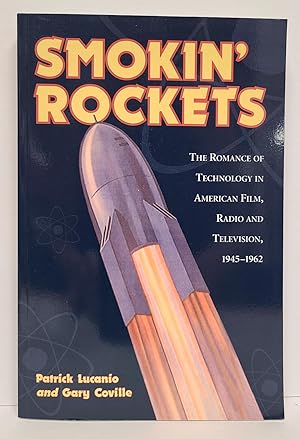
Smokin' Rockets
Seller: Tall Stories Book & Print Gallery, ROCK HILL, SC, U.S.A.
Seller rating 4 out of 5 stars

Soft cover. Condition: Near Fine. Near fine soft cover. Straight secure spine with tight hinges and clean interior.
-
Smokin' Rockets: The Romance of Technology in American Film, Radio and Television, 1945-1962
Seller: THE SAINT BOOKSTORE, Southport, United Kingdom
Seller rating 5 out of 5 stars
US$ 31.73
US$ 20.08 shipping
Ships from United Kingdom to U.S.A.Quantity: Over 20 available
Add to basketPaperback / softback. Condition: New. New copy - Usually dispatched within 4 working days.
-

Smokin' Rockets : The Romance of Technology in American Film, Radio and Television, 1945-1 962
Seller: GreatBookPricesUK, Woodford Green, United Kingdom
Seller rating 5 out of 5 stars
US$ 31.60
US$ 20.20 shipping
Ships from United Kingdom to U.S.A.Quantity: 6 available
Add to basketCondition: New.
-
Smokin' Rockets: The Romance of Technology in American Film, Radio and Television, 1945-1962
Seller: Ria Christie Collections, Uxbridge, United Kingdom
Seller rating 5 out of 5 stars
US$ 37.53
US$ 16.13 shipping
Ships from United Kingdom to U.S.A.Quantity: Over 20 available
Add to basketCondition: New. In.
-

Smokin' Rockets : The Romance of Technology in American Film, Radio and Television, 1945-1 962
Seller: GreatBookPricesUK, Woodford Green, United Kingdom
Seller rating 5 out of 5 stars
US$ 34.01
US$ 20.20 shipping
Ships from United Kingdom to U.S.A.Quantity: 6 available
Add to basketCondition: As New. Unread book in perfect condition.
-
Smokin' Rockets: The Romance of Technology in American Film, Radio and Television, 1945-1 962
Language: English
Published by McFarland & Co Inc Pub, 2002
ISBN 10: 078641233X ISBN 13: 9780786412334
US$ 56.85
US$ 13.47 shipping
Ships from United Kingdom to U.S.A.Quantity: 2 available
Add to basketPaperback. Condition: Brand New. 260 pages. 8.75x6.00x0.75 inches. In Stock.
-
Smokin' Rockets (Paperback)
Language: English
Published by McFarland & Co Inc, Jefferson, NC, 2002
ISBN 10: 078641233X ISBN 13: 9780786412334
Paperback. Condition: new. Paperback. Science and technology had a significant influence on American culture and thought in the years immediately following World War II. The new wonders of science and the threat of the Soviet Union as a powerful new enemy made science fiction a popular genre in radio, television, and film. Mutant creatures spawned by radioactive energy and intergalactic dictators unleashing horrific weapons upon Earth were characteristic of science fiction at the time and served as warnings to the very real dangers posed by the atomic age. This work examines science and science fiction in American culture beginning in the year World War II ended and going to 1962, the year of John Glenn's orbital flight and the Cuban Missile Crisis. The radio work of Arch Oboler and the significance of his "Rocket from Manhattan," which aired only one month after the dropping of the first atomic bomb and asked serious questions about the use of atomic energy, are examined. Other topics are the conflict between the free world and the Communist world in the context of science fiction plot lines, the dangers of science as shown in films like Godzilla, Them!, The Day the Earth Stood Still, and radio and television programs, the flying saucer phenomenon and the treatment of such stories in the media (with special attention given to the 1956 documentary UFO), the changing and more positive depictions of scientists, television programs like Flash Gordon and Space Patrol, the shift in the balance of world power due to the successful launching of Sputnik I by the Russians in 1957, the "end of the world" theme in science fiction, and the American journey into space. This work examines science and science fiction in American culture beginning in the year World War II ended and going to 1962, the year of John Glenn's orbital flight and the Cuban Missile Crisis. Shipping may be from our Sydney, NSW warehouse or from our UK or US warehouse, depending on stock availability.
-

Smokin' Rockets
Language: English
Published by McFarland and Co Inc, US, 2002
ISBN 10: 078641233X ISBN 13: 9780786412334
US$ 31.59
US$ 87.53 shipping
Ships from United Kingdom to U.S.A.Quantity: 5 available
Add to basketPaperback. Condition: New. Science and technology had a significant influence on American culture and thought in the years immediately following World War II. The new wonders of science and the threat of the Soviet Union as a powerful new enemy made science fiction a popular genre in radio, television, and film. Mutant creatures spawned by radioactive energy and intergalactic dictators unleashing horrific weapons upon Earth were characteristic of science fiction at the time and served as warnings to the very real dangers posed by the atomic age. This work examines science and science fiction in American culture beginning in the year World War II ended and going to 1962, the year of John Glenn's orbital flight and the Cuban Missile Crisis. The radio work of Arch Oboler and the significance of his "Rocket from Manhattan," which aired only one month after the dropping of the first atomic bomb and asked serious questions about the use of atomic energy, are examined. Other topics are the conflict between the free world and the Communist world in the context of science fiction plot lines, the dangers of science as shown in films like Godzilla, Them!, The Day the Earth Stood Still, and radio and television programs, the flying saucer phenomenon and the treatment of such stories in the media (with special attention given to the 1956 documentary UFO), the changing and more positive depictions of scientists, television programs like Flash Gordon and Space Patrol, the shift in the balance of world power due to the successful launching of Sputnik I by the Russians in 1957, the "end of the world" theme in science fiction, and the American journey into space.
-
Smokin' Rockets
Language: English
Published by McFarland & Company, Incorporated Publishers, 2002
ISBN 10: 078641233X ISBN 13: 9780786412334
Condition: New. Print on Demand pp. vii + 260 Illus.
-
Smokin' Rockets
Language: English
Published by McFarland & Company, Incorporated Publishers, 2002
ISBN 10: 078641233X ISBN 13: 9780786412334
Condition: New. Print on Demand pp. vii + 260.
-
Smokin' Rockets
Language: English
Published by McFarland & Company, Incorporated Publishers, 2002
ISBN 10: 078641233X ISBN 13: 9780786412334
Condition: New. PRINT ON DEMAND pp. vii + 260.
-
Smokin' Rockets: The Romance of Technology in American Film, Radio and Television, 1945-1962
Seller: THE SAINT BOOKSTORE, Southport, United Kingdom
Seller rating 5 out of 5 stars
US$ 59.94
US$ 21.21 shipping
Ships from United Kingdom to U.S.A.Quantity: Over 20 available
Add to basketPaperback / softback. Condition: New. This item is printed on demand. New copy - Usually dispatched within 5-9 working days.
-

Condition: New. Dieser Artikel ist ein Print on Demand Artikel und wird nach Ihrer Bestellung fuer Sie gedruckt. This work examines science and science fiction in American culture beginning in the year World War II ended and going to 1962, the year of John Glenn s orbital flight and the Cuban Missile Crisis.Über den AutorPatrick Lucanio li.
-

Taschenbuch. Condition: Neu. nach der Bestellung gedruckt Neuware - Printed after ordering - Science and technology had a significant influence on American culture and thought in the years immediately following World War II. The new wonders of science and the threat of the Soviet Union as a powerful new enemy made science fiction a popular genre in radio, television, and film. Mutant creatures spawned by radioactive energy and intergalactic dictators unleashing horrific weapons upon Earth were characteristic of science fiction at the time and served as warnings to the very real dangers posed by the atomic age.This work examines science and science fiction in American culture beginning in the year World War II ended and going to 1962, the year of John Glenn's orbital flight and the Cuban Missile Crisis. The radio work of Arch Oboler and the significance of his 'Rocket from Manhattan,' which aired only one month after the dropping of the first atomic bomb and asked serious questions about the use of atomic energy, are examined. Other topics are the conflict between the free world and the Communist world in the context of science fiction plot lines, the dangers of science as shown in films like Godzilla, Them!, The Day the Earth Stood Still, and radio and television programs, the flying saucer phenomenon and the treatment of such stories in the media (with special attention given to the 1956 documentary UFO), the changing and more positive depictions of scientists, television programs like Flash Gordon and Space Patrol, the shift in the balance of world power due to the successful launching of Sputnik I by the Russians in 1957, the 'end of the world' theme in science fiction, and the American journey into space.
-

Taschenbuch. Condition: Neu. Smokin' Rockets | The Romance of Technology in American Film, Radio and Television, 1945-1962 | Patrick Lucanio (u. a.) | Taschenbuch | Kartoniert / Broschiert | Englisch | 2002 | McFarland | EAN 9780786412334 | Verantwortliche Person für die EU: Libri GmbH, Europaallee 1, 36244 Bad Hersfeld, gpsr[at]libri[dot]de | Anbieter: preigu Print on Demand.

