
Brokatpapier (36 results)

Published by [Augsburg, um 1724] 1724
- Softcover
Seller: Antiquariat Burgverlag, Wien, , AustriaAntiquariat Burgverlag
Contact seller5-star sellerCondition: Used
US$ 238.38
US$ 75.22 shippingShips from Austria to U.S.A.Quantity: 1 available
Brocade paper. 18, 5 x 25, 6 cm. Berieben, an den Kanten vereinzelt mit minimalen Fehlstellen. Mittig etwas ausgeblichen. Mehrere Faltspuren. Teils an den Ecken verstärkt./slightly rubbed. Krause/Rinck 2021, S. 82-97 - Ursprünglich als Bezugspapier eines Pappbandes verwendetes Brokatpapier des Augsburger Buntpapierverlegers Geor…g Christoph Stoy (1670-1750) mit goldfarbenem Positiv-Plattenschnitt auf einfarbig rot gestrichenem Papier. Mit reichem floralen Dekor, Maskenmotiv, Akanthusranken und Arabesken. Am Rand mit Signatur und Privilegvermerk in der Platte "Stoy. C.P.S.C.M." Brokatpapier wurde historisch häufig auch als "Augsburger-Papier" bezeichnet und hatte seine Hochblüte in der 1. Hälfte des 18. Jahrhunderts. Herstellungszentren waren vor allem Augsburg und Nürnberg. Verso mit handschriftl. Notiz "Wiener Einband. Stoy 1724". Brocade paper originally used as cover for a paperback binding by the Augsburg decorated paper publisher Georg Christoph Stoy (1670-1750) with a gold-coloured print on red paper. With rich floral decoration, mask motif, acanthus tendrils and arabesques. Signature and privilege mark in the plate in the margin "Stoy. C.P.S.C.M." Brocade paper was historically often referred to as "Augsburg paper" and had its golden age in the first half of the 18th century. The main centres of production were Augsburg and Nuremberg. Verso with handwritten note "Wiener Einband. Stoy 1724". Gewicht in Gramm: 500.
 More images
Published by [n.d. eighteenth- or early nineteenth century). c. 1800
- Hardcover
Seller: Justin Croft Antiquarian Books Ltd ABA, Faversham, , United KingdomJustin Croft Antiquarian Books Ltd ABA
Contact seller5-star sellerCondition: Used
US$ 1,380.96
US$ 20.11 shippingShips from United Kingdom to U.S.A.Quantity: 1 available
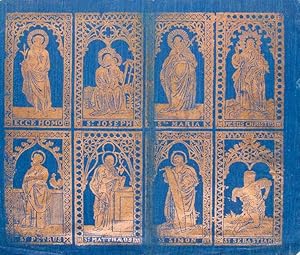
A striking and beautiful single sheet of brokatpapier, with devotional images printed in gilt in a style usually associated with Augsburg. This uncut sheet may have been destined for endpapers, each image neatly fitting an octavo-sized book. Single sheet (390 × 332 mm), deep blue ground printed in gold with 6 devotional images:…Christ (twice) and Saints Joseph, Mary, Peter, Matthew, Simon and Sebastian, each with their customary symbolic attributes within elaborate gothic or romanesque arched compartments. Rough edges. Vertical central crease, torn along fold at foot, no loss, some rubbing to gold along crease.

Published by [o. O., um 1730]. 1730
- Softcover
Seller: Antiquariat Burgverlag, Wien, , AustriaAntiquariat Burgverlag
Contact seller5-star sellerCondition: Used
US$ 119.19
US$ 75.22 shippingShips from Austria to U.S.A.Quantity: 1 available
20, 5 x 14, 4 cm. (Gesamtgr.). Berieben. Mit mittiter horizontaler Faltspur, an dieser mit Läsuren und Verso verstärkt. Krause/Rinck 2021, S. 82-97 - Wohl ursprünglich als Broschur verwendetets Brokatpapier mit goldfarbenem Negativ-Plattenschnitt auf einfarbig rot gestrichenem Papier. Mit reichem, ornamentalen Dekor. Verso von a…lter Hand mit Vermerk "1730". Brokatpapier wurde historisch häufig auch als "Augsburger-Papier" bezeichnet und hatte seine Hochblüte in der 1. Hälfte des 18. Jahrhunderts. Herstellungszentren waren vor allem Augsburg und Nürnberg. Gewicht in Gramm: 500.

Published by o. O. [um 1737]. 1737
- Softcover
Seller: Antiquariat Burgverlag, Wien, , AustriaAntiquariat Burgverlag
Contact seller5-star sellerCondition: Used
US$ 214.54
US$ 75.22 shippingShips from Austria to U.S.A.Quantity: 1 available
Ehemalige Broschur in 2 Teilen. Je 20, 7 x 15, 5 cm. (Gesamtgr.). Krause/Rinck 2021, S. 82-97 - Ursprünglich als Einband verwendetes Brokatpapier mit goldfarbenem Positiv-Plattenschnitt auf einfarbig rot gestrichenem Papier. Am ehemaligen Broschurrücken gebrochen, in 2 Teilen vorliegend. Mit floralem und ornamentalem Dekor mit k…leinen Blüten, Hunden, Hirschen, Vögeln und Kamelen. Brokatpapier wurde historisch häufig auch als "Augsburger-Papier" bezeichnet und hatte seine Hochblüte in der 1. Hälfte des 18. Jahrhunderts. Herstellungszentren waren vor allem Augsburg und Nürnberg. Gewicht in Gramm: 500.

Published by [Augsburg, Mitte 18. Jahrhundert]
Seller: Antiquariat Burgverlag, Wien, , AustriaAntiquariat Burgverlag
Contact seller5-star sellerCondition: Used
US$ 274.14
US$ 75.22 shippingShips from Austria to U.S.A.Quantity: 1 available
24 x 37 cm. (Gesamtgr.). Mit mittiger vertikaler Faltspur, verso verstärkt. Krause/Rinck 2021, S. 82-97 - Wohl ursprünglich als Einband verwendetes Brokatpapier mit goldfarbenem Negativ-Plattenschnitt mit punziertem Fond auf einfarbig, lindgrün gestrichenem Papier. Mit floralem Dekor mit Insekten, Blüten und Raupen. Am rechten v…ertikalen und unteren Rand mit Plattenrand. Brokatpapier wurde historisch häufig auch als "Augsburger-Papier" bezeichnet und hatte seine Hochblüte in der 1. Hälfte des 18. Jahrhunderts. Herstellungszentren waren vor allem Augsburg und Nürnberg. Am unteren Rand mit fragmentarischer Signatur in der Platte: "MUNCK L[.] N: 128 GEPBER [?]". Gewicht in Gramm: 500.
Published by Augsburg, [1. Hälfte 18. Jahrhundert]
Seller: Antiquariat Burgverlag, Wien, , AustriaAntiquariat Burgverlag
Contact seller5-star sellerCondition: Used
US$ 286.06
US$ 75.22 shippingShips from Austria to U.S.A.Quantity: 1 available
18, 7 x 28,9 cm. (Gesamtgr.). Mit mittiger vertikaler Knickspur, diese verso verstärkt und mit dezenteren diagonalen Knickspuren. Krause/Rinck 2021, S. 82-97 - Brokatpapier mit goldfarbenem Negativ-Plattenschnitt auf einfarbig rot gestrichenem Papier. Mit reichem, floralen Dekor mit Blüten und an einer Seite mit Rahmungslinie. F…ragmentarische Signatur "I. M. MUNCK AV". Johann Michael Munck (1700-vor 1762) war einer der bedeutendsten Brokatpapierverleger Augsburgs. Brokatpapier wurde historisch häufig auch als "Augsburger-Papier" bezeichnet und hatte seine Hochblüte in der 1. Hälfte des 18. Jahrhunderts. Herstellungszentren waren vor allem Augsburg und Nürnberg. Gewicht in Gramm: 500.
Published by Nürnberg, (vor/before 1762). 1762
Seller: Antiquariat Burgverlag, Wien, , AustriaAntiquariat Burgverlag
Contact seller5-star sellerCondition: Used
US$ 333.74
US$ 75.22 shippingShips from Austria to U.S.A.Quantity: 1 available
Brocade paper. 25, 5 x 18, 5 cm. (Gefaltet.). Stellenweise minimal berieben, in der oberen Ecke mit mod. Etikett beklebt. Faltbogen an einer Kante zusammengeklebt. Krause/Rinck 2021, S. 82 ff. - Wohl ursprünglich als Einband verwendetes Brokatpapier mit goldfarbenem Negativ-Plattenschnitt auf einfarbig rot gestrichenem Papier. M…it floralem Dekor mit Blättern und Blüten. Mit Signatur in der Platte"ANDREAS REYMUND IN NURNBERG". Andreas Reymund (gest. 1782) ist der Sohn von Johann Michael Reymund (gest. 1768), der bereits als Brokatpapierverleger dokumentiert ist. Verso mit Bleistift beschriftet "Fragen für die Prüfungen über das bürgerliche Recht 1762". Brokatpapier wurde historisch häufig auch als "Augsburger-Papier" bezeichnet und hatte seine Hochblüte in der 1. Hälfte des 18. Jahrhunderts. Herstellungszentren waren vor allem Augsburg und Nürnberg. Brocade paper, probably originally used as a binding, with gold-coloured print on red paper. With floral decoration with leaves and flowers. With signature in the plate "ANDREAS REYMUND IN NURNBERG". Andreas Reymund (died 1782) is the son of Johann Michael Reymund (died 1768), who is already documented as a publisher of brocade paper. Labelled on the verso in pencil "Fragen für die Prüfungen über das bürgerliche Recht 1762". Brocade paper was historically often referred to as "Augsburg paper" and had its golden age in the first half of the 18th century. The main centres of production were Augsburg and Nuremberg. Gewicht in Gramm: 500.
 More images
- Softcover
Seller: Michael Laird Rare Books LLC, Lockhart, TX, U.S.A.Michael Laird Rare Books LLC
Contact seller5-star sellerCondition: Used - Very good
US$ 9,350.00
US$ 8.00 shippingShips within U.S.A.Quantity: 1 available
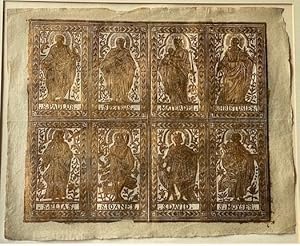
Condition: Very good. Black semi-flexible vinyl portfolio album (625 x 485 mm) containing 48 mylar sleeves, of which 46 contain decorated paper specimens (132 altogether). Some paper specimens have adhesive on verso from previous mounting and/or previous binding. Overall in excellent condition. AN OUTSTANDING SELF-CONTAINED ARCH…IVE OF AN UNUSUALLY BROAD ARRAY OF DECORATED PAPERS, 132 IN ALL, DATING MAINLY FROM THE EIGHTEENTH CENTURY, PRESERVED IN A VERY LARGE PORTFOLIO ALBUM, SUITABLE FOR EXHIBITION AND IMMEDIATE RESEARCH BY, AND INSPIRATION FOR, STUDENTS OF THE BOOK ARTS AND DECORATIVE ARTS, AS IS ATTESTED BY THE 77 IMAGES ON OUR WEBSITE. This extraordinary archive was formed by world-renown calligrapher and book historian Paul Standard, and is tantamount to a working laboratory of decorated papers from Northern Europe and Italy. It is probable that Standard used at least some of these paper specimens for classroom instruction in his courses at Cooper Union and NYU. The archive contains no less than 33 "Dutch gilt" / "Brokatpapier" embossed papers, including two actual Edinburgh theses (both 1784) with their "Dutch gilt" wrappers still in-situ, as well as marbled papers, block-printed papers, paste papers, and bronze-varnish papers. Cataloguing the entire collection awaits future researchers, but we note with great interest the signature: "I C M - N 40." This was Johann Carl Munck (active ca. 1750, d. 1794), one of the most famous Augsburg decorated papermaker of the 18th century. The "N 40" indicator following his monogram refers to the design number, in this case #40, which remained UNKNOWN to Haemmerle, Buntpapier (1977), who lists I C M nos. 1-224, but was only able to locate 36 of them. The sizes of the paper sheets vary greatly, from small (123 x 64 mm) to gigantic (705 x 527 mm), which for reasons of space were folded in half. Many (most?) were removed from the outside of bookbindings or the inside of books, and consequently have characteristic adhesive on the versos (not objectionable). Others, including some of the phenomenal German gilt papers, were never used and are rare in such original condition. In a few instances the decorated papers are still affixed to their original (thin) original boards. When there were two specimens from a single sheet, Standard retained both of them. Therefore, by our reckoning there are ca. 115 difference decorated papers represented in 132 separate pieces. PROVENANCE: Paul Standard (1896-1992), Russian-born calligrapher, author and translator. Standard was the author of "Calligraphy's Flowering, Decay and Restoration," "Our Handwriting," and "Arrighi's Running Hand." Charles Skaggs (who also taught calligraphy at Cooper Union) wrote of him: "Here we have Arrighi's most devoted and scholarly advocate. At Cooper Union and New York University, Standard taught the pure, straight stuff, both as to the mechanics of pen management and to the legitimate variations of the Italian renaissance hand. Basics came before personal frills." [.] "He delights in a stubborn anachronism that charms all who are privileged to know him." MUST BE SEEN TO BE FULLY APPRECIATED.
 More images
Published by Munck, Augsburg: 1731-1760. 1731
Seller: Antiquariat Michael Solder, Münster, NRW, GermanyAntiquariat Michael Solder
Contact seller5-star sellerCondition: Used - Very good
US$ 1,013.13
US$ 75.33 shippingShips from Germany to U.S.A.Quantity: 1 available
Condition: Gut. Haemmerle 253; SMBK 7606/ 1907,325/141; Nürnberg, Germ. Nat. Mus. K. 703 J. Nr. 808; frisches Exemplar in ganzem, unbeschnittenen Blatt. Sprache: Deutsch Gewicht in Gramm: 1200 310 x 370 mm (Motivgröße) 36,50 x 44,50 cm (Blattgröße unbeschnitten).

Published by o. O. [frühes 18. Jahrhundert].
Seller: Antiquariat Burgverlag, Wien, , AustriaAntiquariat Burgverlag
Contact seller5-star sellerCondition: Used
US$ 53.64
US$ 75.22 shippingShips from Austria to U.S.A.Quantity: 1 available
8, 6 x 5, 2 cm. (Blattgr.). Minimal berieben und oxidiert, sonst gut erhalten. Mittig ist herzförmig eine Kupferstichapplikation mit einer Darstellung von Maria mit dem Christuskind zu sehen. Das Brokatpapier zeigt einen geschwungenen Sockel auf dem Blumenschalen stehen. Gewicht in Gramm: 500.
 More images
Seller: Jürgen Patzer, Konstanz, , GermanyJürgen Patzer
Contact seller4-star sellerCondition: Used
US$ 143.03
US$ 21.99 shippingShips from Germany to U.S.A.Quantity: 1 available
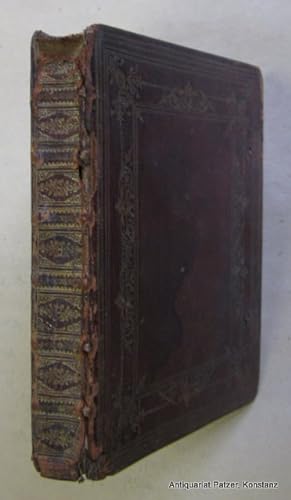
Seltenes, barockes Gebetbuch mit großformatigen Kupferstichillustrationen, die von dem Mainzer Kupferstecher und Verleger Nikolaus Person (gest. 1710) stammen; vgl. Thieme/Becker XXVI, 446. Daß ein Jesuit, wie auf dem Titel angegeben, die Ausgabe "gebessert u. gemehrt" hat, wird im Text auch dadurch deutlich, dass unter den 11 "…Gebetter zu den Heiligen Gottes", sich gleich zwei an Vertreter dieses Ordens richten (Ignatius v. Loyola u. Franz Xaver). - Über KVK lässt sich in deutschen Bibliotheken nur ein Exemplar (Eichstätt) nachweisen. - Durchgehend stark gebräunt u. stockfleckig, bis S. 40 wasserrandig, dadurch auch Titel u. Frontispiz stärker betroffen, letztere im Rand ausgefranst.
Published by [o. O., 1. Hälfte 18. Jahrhundert].
Seller: Antiquariat Burgverlag, Wien, , AustriaAntiquariat Burgverlag
Contact seller5-star sellerCondition: Used
US$ 107.27
US$ 75.22 shippingShips from Austria to U.S.A.Quantity: 1 available
20, 4 x 10,4 cm. (Gesamtgr.). Wenige kleine, alt verstärkte Läsuren. Sonst gut erhalten. Krause/Rinck 2021, S. 82-97 - Brokatpapier mit goldfarbenem Negativ-Plattenschnitt auf einfarbig rot gestrichenem Papier. Mit reichem, floralen Dekor mit Blüten. Brokatpapier wurde historisch häufig auch als "Augsburger-Papier" bezeichnet un…d hatte seine Hochblüte in der 1. Hälfte des 18. Jahrhunderts. Herstellungszentren waren vor allem Augsburg und Nürnberg. Gewicht in Gramm: 500.
Published by [o. O., Mitte 18. Jahrhundert].
Seller: Antiquariat Burgverlag, Wien, , AustriaAntiquariat Burgverlag
Contact seller5-star sellerCondition: Used
US$ 119.19
US$ 75.22 shippingShips from Austria to U.S.A.Quantity: 1 available
23,5 x 14, 5 cm. (Gesamtgr.). Berieben. Mit kleiner Knickspur. Krause/Rinck 2021, S. 82-97 - Brokatpapier mit goldfarbenem Negativ-Plattenschnitt mit punziertem Fond auf rot-schwarz schabloniertem Papier. Mit floralem Dekor. Brokatpapier wurde historisch häufig auch als "Augsburger-Papier" bezeichnet und hatte seine Hochblüte in… der 1. Hälfte des 18. Jahrhunderts. Herstellungszentren waren vor allem Augsburg und Nürnberg. Gewicht in Gramm: 500.
Published by [o. O., 1. Hälfte 18. Jahrhundert].
Seller: Antiquariat Burgverlag, Wien, , AustriaAntiquariat Burgverlag
Contact seller5-star sellerCondition: Used
US$ 119.19
US$ 75.22 shippingShips from Austria to U.S.A.Quantity: 1 available
21 x 15,4 cm. (Gesamtgr.). Kleine Eckläsuren, Knickspur an der oberen Ecke. Krause/Rinck 2021, S. 82-97 - Brokatpapier mit goldfarbenem Negativ-Plattenschnitt auf bunt schabloniertem Papier. Mit reichem, floralen Dekor mit Blättern, Blüten und Granatapfelmustern. Rahmende Zierleiste am unteren Rand erkennbar. Brokatpapier wurde…historisch häufig auch als "Augsburger-Papier" bezeichnet und hatte seine Hochblüte in der 1. Hälfte des 18. Jahrhunderts. Herstellungszentren waren vor allem Augsburg und Nürnberg. Gewicht in Gramm: 500.
Seller: Celler Versandantiquariat, Eicklingen, , GermanyCeller Versandantiquariat
Contact seller5-star sellerCondition: Used
US$ 166.87
US$ 43.97 shippingShips from Germany to U.S.A.Quantity: 1 available
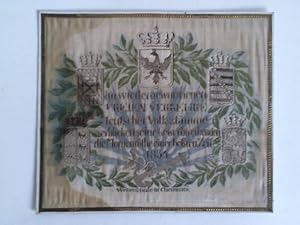
5 gekrönte Wappen von Lorbeerblättern umrankt. Mittich Sinnspruch Im wiedergewonnenen freien Verkehre teutscher Volksstämme erblicken seine Gewerbetreibenden die Morgenröthe einer beßeren Zeit 1834- Weberschule in Chemnitz. Die Wappen zeigen Preussen, Sachsen, Bayern, Hessen und Würrtemberg (am linken Rand wasserfleckig)--- 8 Gr…amm.
Published by [o. O., frühes 18. Jahrhundert].
Seller: Antiquariat Burgverlag, Wien, , AustriaAntiquariat Burgverlag
Contact seller5-star sellerCondition: Used
US$ 143.03
US$ 75.22 shippingShips from Austria to U.S.A.Quantity: 1 available
19, 2 x 15, 6 cm. (Gesamtgr.). Stellenweise minimal berieben, sonst gut erhalten. Krause/Rinck 2021, S. 82-97 - Brokatpapier mit goldfarbenem Negativ-Plattenschnitt auf einfarbig rot gestrichenem Papier. Mit floralem Dekor mit Trauben und Beeren. Plattenansatz am unteren Rand sichtbar. Brokatpapier wurde historisch häufig auch a…ls "Augsburger-Papier" bezeichnet und hatte seine Hochblüte in der 1. Hälfte des 18. Jahrhunderts. Herstellungszentren waren vor allem Augsburg und Nürnberg. Gewicht in Gramm: 500.
Published by [o. O., frühes 18. Jahrhundert].
Seller: Antiquariat Burgverlag, Wien, , AustriaAntiquariat Burgverlag
Contact seller5-star sellerCondition: Used
US$ 143.03
US$ 75.22 shippingShips from Austria to U.S.A.Quantity: 1 available
16 x 19, 7 cm. Auf Japanpapier aufgezogen, mit mittiger Faltspur u. kl. Löchlein, berieben. Krause/Rinck 2021, S. 82-97 - Abgelöstes Brokatpapier mit silberfarbenem, floralen Negativ-Plattenschnitt und punziertem Fond auf bunt schabloniertem Papier. Brokatpapier wurde historisch häufig auch als "Augsburger-Papier" bezeichnet und… hatte seine Hochblüte in der 1. Hälfte des 18. Jahrhunderts. Herstellungszentren waren vor allem Augsburg und Nürnberg. Gewicht in Gramm: 500.
Published by [o. O., 1. Hälfte 18. Jahrhundert]
Seller: Antiquariat Burgverlag, Wien, , AustriaAntiquariat Burgverlag
Contact seller5-star sellerCondition: Used
US$ 143.03
US$ 75.22 shippingShips from Austria to U.S.A.Quantity: 1 available
21 x 15,5 cm. (Gesamtgr.). Mit Knickspur an der unteren Kante. Krause/Rinck 2021, S. 82-97 - Brokatpapier mit bronzefarbenem Positiv-Plattenschnitt auf bunt schabloniertem Papier. Mit reichem, floralen Dekor mit Akanthusblättern und Blüten. Rahmende Zierleiste am unteren Rand erkennbar. Brokatpapier wurde historisch häufig auch…als "Augsburger-Papier" bezeichnet und hatte seine Hochblüte in der 1. Hälfte des 18. Jahrhunderts. Herstellungszentren waren vor allem Augsburg und Nürnberg. Gewicht in Gramm: 500.
Published by [o. O., Mitte 18. Jahrhundert].
Seller: Antiquariat Burgverlag, Wien, , AustriaAntiquariat Burgverlag
Contact seller5-star sellerCondition: Used
US$ 154.95
US$ 75.22 shippingShips from Austria to U.S.A.Quantity: 1 available
19, 8 x 15, 1 cm. Sehr gut erhalten. Ansatz der Plattenkante am unteren Rand sichtbar. Krause/Rinck 2021, S. 82-97 - Abgelöstes Brokatpapier mit goldfarbenem Negativ-Plattenschnitt auf einfarbig rot gestrichenem Papier. Mit filigranem, floralen Dekor. Brokatpapier wurde historisch häufig auch als "Augsburger-Papier" bezeichnet u…nd hatte seine Hochblüte in der 1. Hälfte des 18. Jahrhunderts. Herstellungszentren waren vor allem Augsburg und Nürnberg. Gewicht in Gramm: 500.
Published by [o. O., frühes 18. Jahrhundert].
Seller: Antiquariat Burgverlag, Wien, , AustriaAntiquariat Burgverlag
Contact seller5-star sellerCondition: Used
US$ 154.95
US$ 75.22 shippingShips from Austria to U.S.A.Quantity: 1 available
20 x 16, 5 cm. Eine Ecke mit kl. Fehlstelle bzw. fleckig, einige Wurmlöchlein. Krause/Rinck 2021, S. 82-97 - Abgelöstes Brokatpapier mit goldfarbenem Negativ-Plattenschnitt auf bunt schabloniertem Papier. Mit floralem Dekor. Brokatpapier wurde historisch häufig auch als "Augsburger-Papier" bezeichnet und hatte seine Hochblüte in… der 1. Hälfte des 18. Jahrhunderts. Herstellungszentren waren vor allem Augsburg und Nürnberg. Gewicht in Gramm: 500.
Published by [o. O., frühes 18. Jahrhundert].
Seller: Antiquariat Burgverlag, Wien, , AustriaAntiquariat Burgverlag
Contact seller5-star sellerCondition: Used
US$ 178.79
US$ 75.22 shippingShips from Austria to U.S.A.Quantity: 1 available
16 x 20, 5 cm. (Gesamtgr.). Mit Knickspuren, berieben. Verso mehrfach alt verstärkt. Krause/Rinck 2021, S. 82-97 - Brokatpapier mit silberfarbenem Negativ-Plattenschnitt und punziertem Fond auf bunt schabloniertem Papier. Mit reichem, floralen Dekor. Brokatpapier wurde historisch häufig auch als "Augsburger-Papier" bezeichnet un…d hatte seine Hochblüte in der 1. Hälfte des 18. Jahrhunderts. Herstellungszentren waren vor allem Augsburg und Nürnberg. Gewicht in Gramm: 500.
Published by [o. O., 1. Hälfte 18. Jahrhundert]
Seller: Antiquariat Burgverlag, Wien, , AustriaAntiquariat Burgverlag
Contact seller5-star sellerCondition: Used
US$ 178.79
US$ 75.22 shippingShips from Austria to U.S.A.Quantity: 1 available
19, 1 x 29,4 cm. (Gesamtgr.). Eckabriss u. Kleine Fehlstelle an einer Kante, etwas berieben, mit mittiger, geglätterter und verso verstärkter Faltspur. Krause/Rinck 2021, S. 82-97 - Wohl ursprünglich als Einband verwendetes Brokatpapier mit goldfarbenem Negativ-Plattenschnitt auf einfarbig senfgelb gestrichenem Papier. Mit reich…em, floralen Dekor mit Blüten. Plattenansatzkante am unteren Rand sichtbar. Brokatpapier wurde historisch häufig auch als "Augsburger-Papier" bezeichnet und hatte seine Hochblüte in der 1. Hälfte des 18. Jahrhunderts. Herstellungszentren waren vor allem Augsburg und Nürnberg. Gewicht in Gramm: 500.
Published by [o. O., frühes 18. Jahrhundert]
Seller: Antiquariat Burgverlag, Wien, , AustriaAntiquariat Burgverlag
Contact seller5-star sellerCondition: Used
US$ 178.79
US$ 75.22 shippingShips from Austria to U.S.A.Quantity: 1 available
17, 8 x 23, 4 cm. Auf Japan aufgezogen. Mit mittiger, vertikaler Faltspur, Ecken etwas abgegriffen. Berieben. Krause/Rinck 2021, S. 82-07 - Ursprünglich als Einband verwendetes Brokatpapier mit goldfarbenem Negativ-Plattenschnitt. Mit floralem Dekor mit Granatapfelmuster. Brokatpapier wurde historisch häufig auch als "Augsburger…-Papier" bezeichnet und hatte seine Hochblüte in der 1. Hälfte des 18. Jahrhunderts. Herstellungszentren waren vor allem Augsburg und Nürnberg.Verso mit Bleistift notiert (20. Jhd.)." Einband einer Handschrift 1730, gefüttert mit Kleisterpapier roten Streifen". Gewicht in Gramm: 500.
Published by [o. O., frühes 18. Jahrhundert].
Seller: Antiquariat Burgverlag, Wien, , AustriaAntiquariat Burgverlag
Contact seller5-star sellerCondition: Used
US$ 178.79
US$ 75.22 shippingShips from Austria to U.S.A.Quantity: 1 available
14, 8 x 19,2 cm. (Gesamtgr.). Auf Trägerpapier aufkaschiert. Etwas berieben. Krause/Rinck 2021, S. 82-97 - Abgelöstes Brokatpapier mit goldfarbenem Negativ-Plattenschnitt auf bunt schabloniertem Papier. Mit floralem Dekor. Brokatpapier wurde historisch häufig auch als "Augsburger-Papier" bezeichnet und hatte seine Hochblüte in d…er 1. Hälfte des 18. Jahrhunderts. Herstellungszentren waren vor allem Augsburg und Nürnberg. Gewicht in Gramm: 500.
Published by [o. O., frühes 18. Jahrhundert]
Seller: Antiquariat Burgverlag, Wien, , AustriaAntiquariat Burgverlag
Contact seller5-star sellerCondition: Used
US$ 190.71
US$ 75.22 shippingShips from Austria to U.S.A.Quantity: 1 available
17,5 x 27, 4 cm. (Gesamtgr.). Mit mittiger vertikaler Faltspur (geglättet), verso verstärkt. An den Rändern berieben. Krause/Rinck 2021, S. 82-97; Kunstbibliothek Staatliche Museen zu Berlin, Inv. Nr. 1907, 325,013 - Wohl ursprünglich als Einband verwendetes Brokatpapier mit goldfarbenem Positiv-Plattenschnitt auf einfarbig rot…gestrichenem Papier. Mit Doppeladler-Wappen und Jagd-Motiven in floralen Ranke. Brokatpapier wurde historisch häufig auch als "Augsburger-Papier" bezeichnet und hatte seine Hochblüte in der 1. Hälfte des 18. Jahrhunderts. Herstellungszentren waren vor allem Augsburg und Nürnberg. Gewicht in Gramm: 500.

Published by [o. O., um 1730]. 1730
Seller: Antiquariat Burgverlag, Wien, , AustriaAntiquariat Burgverlag
Contact seller5-star sellerCondition: Used
US$ 202.63
US$ 75.22 shippingShips from Austria to U.S.A.Quantity: 1 available
29, 4 x 14, 8 cm. (Gesamtgr.). Berieben. Goldfarbe an den Schmalkanten etwa 1, 5 cm abgerieben. Krause/Rinck 2021, S. 82-97 - Abgelöstes Brokatpapier mit goldfarbenem Negativ-Plattenschnitt auf einfarbig lila gestrichenem Papier. Mit reichem, ornamentalen Dekor. Brokatpapier wurde historisch häufig auch als "Augsburger-Papier" b…ezeichnet und hatte seine Hochblüte in der 1. Hälfte des 18. Jahrhunderts. Herstellungszentren waren vor allem Augsburg und Nürnberg. Gewicht in Gramm: 500.
Published by [o. O., 1. Hälfte 18. Jahrhundert]
Seller: Antiquariat Burgverlag, Wien, , AustriaAntiquariat Burgverlag
Contact seller5-star sellerCondition: Used
US$ 214.54
US$ 75.22 shippingShips from Austria to U.S.A.Quantity: 1 available
16, 5 x 14 cm. (Gesamtgr.). Berieben. Mit eine Knickspur, hier etwas brüchig. Krause/Rinck 2021, S. 82-97 - Brokatpapier mit goldfarbenem Druck auf einfarbig lindgrün gestrichenem Papier. Mit reichem, ornamentalen Dekor. Brokatpapier wurde historisch häufig auch als "Augsburger-Papier" bezeichnet und hatte seine Hochblüte in der… 1. Hälfte des 18. Jahrhunderts. Herstellungszentren waren vor allem Augsburg und Nürnberg. Gewicht in Gramm: 500.
Published by o. O. [1. Hälfte 18. Jahrhundert].
Seller: Antiquariat Burgverlag, Wien, , AustriaAntiquariat Burgverlag
Contact seller5-star sellerCondition: Used
US$ 226.46
US$ 75.22 shippingShips from Austria to U.S.A.Quantity: 1 available
22, 7 x 16, 4 cm. (Gesamtgr.). Berieben, verso teils verstärt. Krause/Rinck 2021, S. 82-97 - Brokatpapier mit goldfarbenem Negativ-Plattenschnitt mit punziertem Fond auf bunt schabloniertem Papier. Mit floralem Dekor mit großen Blüten. Plattenansatz an der unteren Kante sichtbar. Brokatpapier wurde historisch häufig auch als "Au…gsburger-Papier" bezeichnet und hatte seine Hochblüte in der 1. Hälfte des 18. Jahrhunderts. Herstellungszentren waren vor allem Augsburg und Nürnberg. Gewicht in Gramm: 500.
Published by [o. O., 1. Hälfte 18. Jahrhundert].
Seller: Antiquariat Burgverlag, Wien, , AustriaAntiquariat Burgverlag
Contact seller5-star sellerCondition: Used
US$ 226.46
US$ 75.22 shippingShips from Austria to U.S.A.Quantity: 1 available
25, 2 x 16, 1 cm. (Gesamtgr.). Leicht berieben.Mit wenigen dezenten Quetschspuren. Krause/Rinck 2021, S. 82-97 - Brokatpapier mit goldfarbenem Druck auf einfarbig lila gestrichenem Papier. Mit reichem, floralen Dekor mit kleinteiligen Blumen, Ranken und Granatapfelmotiven. Brokatpapier wurde historisch häufig auch als "Augsburge…r-Papier" bezeichnet und hatte seine Hochblüte in der 1. Hälfte des 18. Jahrhunderts. Herstellungszentren waren vor allem Augsburg und Nürnberg. Gewicht in Gramm: 500.

Published by [o. O., Mitte 18. Jahrhundert/Mid-18th century]
Seller: Antiquariat Burgverlag, Wien, , AustriaAntiquariat Burgverlag
Contact seller5-star sellerCondition: Used
US$ 238.38
US$ 75.22 shippingShips from Austria to U.S.A.Quantity: 1 available
Brocade paper. 23, 4 x 17, 8 cm. (Gesamtgr.). An wenigen Stellen leicht berieben, , an einer der Schmalkanten mit Knickspur, hier etwas stärker berieben, sonst gut erhalten. Krause/Rinck 2021, S. 82-97 - Brokatpapier mit goldfarbenem Plattenschnitt auf einfarbig schwarz gestrichenem Papier. Mit reichem, floralen Dekor mit kleine…n Blüten, Granatäpfeln und Trauben. Brokatpapier wurde historisch häufig auch als "Augsburger-Papier" bezeichnet und hatte seine Hochblüte in der 1. Hälfte des 18. Jahrhunderts. Herstellungszentren waren vor allem Augsburg und Nürnberg. Brocade paper with gold-coloured print on black paper. Rich floral decoration with small flowers, pomegranates and grapes. Brocade paper was historically often referred to as "Augsburg paper" and had its golden age in the first half of the 18th century. The main centres of production were Augsburg and Nuremberg. Gewicht in Gramm: 500.


