
Order Total (1 Item Items):
Shipping Destination:

Computer Modelling Microporous Materials (15 results)
Skip to main search results
Search filters
Product Type
- All Product Types
- Books (15)
- Magazines & Periodicals (No further results match this refinement)
- Comics (No further results match this refinement)
- Sheet Music (No further results match this refinement)
- Art, Prints & Posters (No further results match this refinement)
- Photographs (No further results match this refinement)
- Maps (No further results match this refinement)
- Manuscripts & Paper Collectibles (No further results match this refinement)
Condition Learn more
- New (14)
- As New, Fine or Near Fine (1)
- Very Good or Good (No further results match this refinement)
- Fair or Poor (No further results match this refinement)
- As Described (No further results match this refinement)
Binding
- All Bindings
- Hardcover (15)
- Softcover (No further results match this refinement)
Collectible Attributes
- First Edition (No further results match this refinement)
- Signed (No further results match this refinement)
- Dust Jacket (No further results match this refinement)
- Seller-Supplied Images (2)
- Not Print on Demand (12)
Language (1)
Price
- Any Price
- Under US$ 25 (No further results match this refinement)
- US$ 25 to US$ 50
- Over US$ 50
Free Shipping
Seller Location
Seller Rating
-
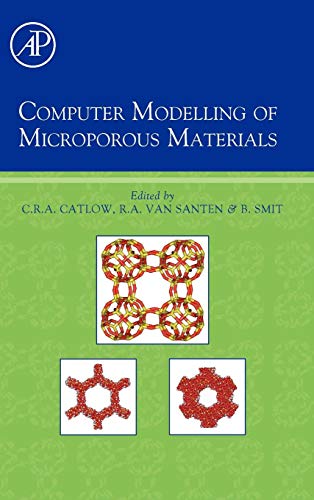
Condition: Brand New. New. US edition. Expediting shipping for all USA and Europe orders excluding PO Box. Excellent Customer Service.
-
Condition: New. This is a Brand-new US Edition. This Item may be shipped from US or any other country as we have multiple locations worldwide.
-
Condition: New. Brand New Original US Edition. Customer service! Satisfaction Guaranteed.
-
Brand new book. Fast ship. Please provide full street address as we are not able to ship to P O box address.
-
Condition: New. pp. 298.
-
Condition: New. pp. 298 Illus.
-
Condition: New. pp. 298.
-
 International Edition
US$ 41.73
US$ 17.49 shipping
Ships from United Kingdom to U.S.A.Quantity: 10 available
Add to basketCondition: New. Brand New ! Fast Delivery "International Edition " and ship within 24-48 hours. Deliver by FedEx and Dhl, & Aramex, UPS, & USPS and we do accept APO and PO BOX Addresses. Order can be delivered worldwide within 4-6 Working days .and we do have flat rate for up to 2LB. Extra shipping charges will be requested This Item May be shipped from India, United states & United Kingdom. Depending on your location and availability.
-
Hardcover. Condition: New. In shrink wrap. Looks like an interesting title!
-
Computer Modelling of Microporous Materials,
Language: English
Published by Academic Press 2004-04-30, 2004
ISBN 10: 0121641376 ISBN 13: 9780121641375
US$ 201.66
US$ 20.87 shipping
Ships from United Kingdom to U.S.A.Quantity: Over 20 available
Add to basketHardcover. Condition: New.
-
US$ 229.12
US$ 16.84 shipping
Ships from United Kingdom to U.S.A.Quantity: 2 available
Add to basketHardcover. Condition: Brand New. 1st edition. 287 pages. 9.00x6.00x0.50 inches. In Stock.
-
US$ 276.16
US$ 33.68 shipping
Ships from United Kingdom to U.S.A.Quantity: 1 available
Add to basketHardcover. Condition: Like New. Like New. book.
-
Condition: new. Questo è un articolo print on demand.
-

Computer Modelling of Microporous Materials
Language: English
Published by Elsevier Science & Technology, Academic Press, 2004
ISBN 10: 0121641376 ISBN 13: 9780121641375
Seller: BuchWeltWeit Ludwig Meier e.K., Bergisch Gladbach, Germany
Seller rating 5 out of 5 stars

Buch. Condition: Neu. This item is printed on demand - it takes 3-4 days longer - Neuware -Microporous materials, including both zeolites and aluminophosphates are amongst the most fascinating classes of materials, with wide ranging important applications in catalysis, gas separation and ion exchange. The breadth of the field has, moreover, been extended in the last ten years by the discovery of the versatile and exciting ranges of mesoporous materials. Computational methods have a long and successful history of application in solid state and materials science, where they are indeed established tools in modelling structural and dynamic properties of the bulk and surfaces of solids; and where they are playing an increasingly important role in understanding reactivity. Their application to zeolite science developed strongly in the 1980's, with the initial successes in modelling structure and sorption, and with emerging capability in quantum mechanical methods. The field was reviewed over ten years, since then there have been major developments in techniques and of course the power of the available hardware, which have promoted a whole range of new applications to real complex problems in the science of microporous materials. Computer Modelling of Microporous Materials aims to summarise and illustrate the current capabilities of atomistic computer modelling methods in this growing field. Englisch.
-

Computer Modelling of Microporous Materials
Language: English
Published by Elsevier Science & Technology, Academic Press, 2004
ISBN 10: 0121641376 ISBN 13: 9780121641375
Buch. Condition: Neu. nach der Bestellung gedruckt Neuware - Printed after ordering - Microporous materials, including both zeolites and aluminophosphates are amongst the most fascinating classes of materials, with wide ranging important applications in catalysis, gas separation and ion exchange. The breadth of the field has, moreover, been extended in the last ten years by the discovery of the versatile and exciting ranges of mesoporous materials. Computational methods have a long and successful history of application in solid state and materials science, where they are indeed established tools in modelling structural and dynamic properties of the bulk and surfaces of solids; and where they are playing an increasingly important role in understanding reactivity. Their application to zeolite science developed strongly in the 1980's, with the initial successes in modelling structure and sorption, and with emerging capability in quantum mechanical methods. The field was reviewed over ten years, since then there have been major developments in techniques and of course the power of the available hardware, which have promoted a whole range of new applications to real complex problems in the science of microporous materials. Computer Modelling of Microporous Materials aims to summarise and illustrate the current capabilities of atomistic computer modelling methods in this growing field.


