
Destruction Change: Signed (3 results)
 More images
- Hardcover
- First Edition
- Signed
Seller: GraceyBooks, Raleigh, NC, U.S.A.GraceyBooks
Contact seller5-star sellerCondition: Used - Near fine
US$ 68.50
Free ShippingShips within U.S.A.Quantity: 1 available
Hardcover. Condition: Near Fine. Dust Jacket Condition: Very Good. 1st Edition. First Edition, Third Printing with the number line starting at "3" on the copyright page. Inscribed "For__With my very best wishes" and Signed by Author dated 7-27-06. Book is Near Fine. Dust Jacket is Very Good + to Near Fine. It is not price clippe…d. Jacket is in protective BroDart mylar cover. All books shipped same day or next in a box with styrofoam peanuts. Inscribed by Author(s).
- Hardcover
- First Edition
- Signed
Seller: In Other Words Books, Plymouth, , United KingdomIn Other Words Books
Contact seller5-star sellerCondition: Used - As new
US$ 38.89
US$ 37.59 shippingShips from United Kingdom to U.S.A.Quantity: 1 available
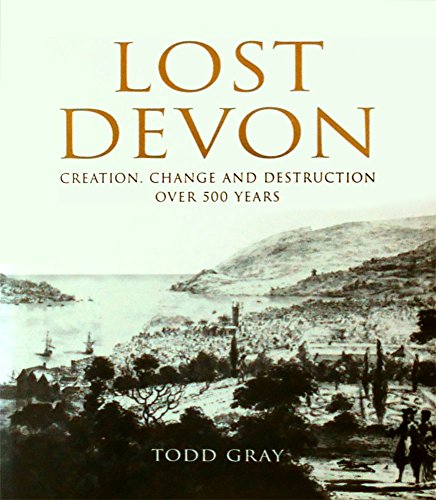
Hardcover. Condition: As New. Dust Jacket Condition: Near Fine. First Edition. 192pp, 176 b&w (some colour) drawings, illustrations, engravings throughout. Extensive notes and illustration sources. Black board cover with gilt lettering on spine. Book new, dust jacket has slight creasing at top, back and front, and curling at bot…tom of front. Stunningly illustrated history of this fascinating county from the beginning of the 16th century- religious changes, war, exploration, buildings and architecture, fashion, commerce, natural disasters and much more. SIGNED BY THE AUTHOR. This is a heavy book - extra postage will be needed. Signed by Author(s).
- Hardcover
- Signed
Seller: Ground Zero Books, Ltd., Silver Spring, MD, U.S.A.Ground Zero Books, Ltd.
Contact seller5-star sellerCondition: Used - Good
US$ 105.00
US$ 5.00 shippingShips within U.S.A.Quantity: 1 available
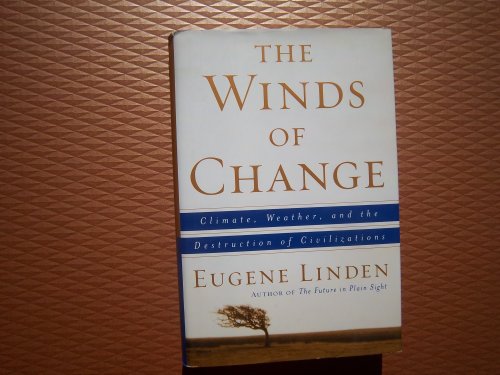
Hardcover. Condition: Good. Dust Jacket Condition: Good. Third Printing [stated]. xii, 302, [6] pages. Footnotes. Map. Illustrations. Chronology. Index. There is some staining at the bottom edge, cover and dust jacket. This copy has an author inscription on the title page that reads: "For Sharon, With my best wishes, Eugene Lind…en 7/27/06". A concise history of significant world events that occurred as a direct result of climate changes describes lost societies in Greenland, central America, and central Africa, in a cautionary account that evaluates the present world's readiness for threatening climate changes. Eugene Linden (born 1947) is an American author of nonfiction books on animal intelligence, popular science, technology, the environment, and humanity's relationship with nature. Linden was educated at Yale University. Besides his books, Linden has published articles and essays in Time, Foreign Affairs, The Wall Street Journal et al. He published a cover story on the demoralization of American forces in Vietnam in Saturday Review, December 1971. Linden was a senior writer at Inc. in 1984, and a senior writer at Time in 1987-1995, followed by a contributor in 1995-2001. His books The Parrot's Lament (1999) and The Octopus and the Orangutan (2002) have been positively reviewed as making a compelling argument for consciousness in animals. He has appeared on television, including The Daily Show and Comedy Central, and on radio, including National Public Radio (NPR). Derived from a Kirkus review: In this cautionary tale, journalist Linden lays out evidence that climate change is the culprit behind the demise of previous civilizations. Linden posits climate change as the "serial killer" responsible for a series of death blows to civilizations both ancient and modern. The effect of climate fluctuation on the planet is a hot topic, with new research pointing to sudden, dramatic shifts: the "switch" model. Drought-induced starvation led the Akkadians of the once-Fertile Crescent to abandon their fabled cities so quickly that walls were left half-finished. Mayan leaders were likewise done in when their water sources failed. Norse colonies in Greenland disappeared during the Little Ice Age; if climate had remained favorable, they might have had the opportunity to overrun the Americas. Linden describes how scientists use ice cores and sediment to determine past climate changes, then considers how the evidence stacks up for each civilization. He moves on to El Niño's impact on more recent history, especially that of India under British rule, when imperial arrogance allowed famine to kill millions. The final chapters are devoted to the disconnection between the scientific consensus and the political debate over global warming. Although whole volumes have been devoted to each of the topics covered, this text provides a sound orientation to a controversial subject. Rob Carter (Jacket photograph) and Marion Ettlinge (illustrator).


