Order Total (1 Item Items):
Shipping Destination:

Edimbourg, Signed (7 results)
Skip to main search results
Search filters
Product Type
- All Product Types
- Books (6)
- Magazines & Periodicals (No further results match this refinement)
- Comics (No further results match this refinement)
- Sheet Music (No further results match this refinement)
- Art, Prints & Posters (No further results match this refinement)
- Photographs (No further results match this refinement)
- Maps (No further results match this refinement)
- Manuscripts & Paper Collectibles (1)
Condition Learn more
- New (No further results match this refinement)
- As New, Fine or Near Fine (1)
- Very Good or Good (2)
- Fair or Poor (No further results match this refinement)
- As Described (4)
Binding
Collectible Attributes
- First Edition (4)
- Signed (7)
- Dust Jacket (No further results match this refinement)
- Seller-Supplied Images (6)
- Not Print on Demand (7)
Language (1)
Price
- Any Price
- Under US$ 25 (No further results match this refinement)
- US$ 25 to US$ 50
- Over US$ 50
Free Shipping
Seller Location
Seller Rating
-

Couverture souple. Condition: Bon. Ian RANKIN. L'ETRANGLEUR D'EDIMBOURG. Editions Livre de Poche 2007 , broche, Format 11*17.5 cm, 285 pages, BON ETAT, Traduit de l'Anglais (Knots and Crosses , 1987) Avec une DEDICACE Envoi AUTOGRAPHE de Ian RANKIN sur la page de titre (voir scan) SIGNED La PREMIERE enquete de l'inspecteur John REBUS La toute première enquête de l'inspecteur John Rebus.Édimbourg est une ville d'apparences ; le crime n'y est pas moins présent, tout juste plus difficile à repérer. Quand deux jeunes filles sont enlevées et tuées brutalement et une troisième disparaît, John Rebus doit parcourir la jungle de la ville, une jungle que les touristes ne voient jamais, pour traquer le meurtrier. Ian Rankin est internationalement connu pour les séries de l'inspecteur John Rebus et de Malcolm Fox. Ses romans sont traduits dans trente-six langues et sont des best-sellers partout dans le monde. Ian Rankin a reçu quatre prix Dagger du Crime Writers' Association ainsi que le prix Edgar et a été décoré de l'Ordre de l'Empire britannique (OBE). Il vit à Edimbourg. EXEMPLAIRE DEDICACE par Ian RANKIN ***** ATTENTION ! ! A PARTIR DU 1er JUILLET, LE TARIF ECONOMIQUE LIVRE ET BROCHURE N'EXISTE PLUS. ENVOI A L'INTERNATIONAL EN TARIF COURRIER OU COLISSIMO, BEAUCOUP PLUS ONEREUX. Dédicacé par l'auteur.
-

Le canon d'Edimbourg "Mons Meg" (XVe siècle)
Published by Mons, Dequesne-Masquillier 1894, 1894
Seller: Antiquariaat Pieter Judo (De Lezenaar), Hasselt, Belgium
Association Member: ILAB
Seller rating 5 out of 5 stars

Signed
96pp. + 3 planches hors-texte, 24cm., signé avec dédicace par l'auteur à Louis Paris + lettre écrite manuscrite par l'auteur à ce même Louis Paris, br.orig. (dos restauré), non coupé, texte en bon état, B71881.
-
Études sur la bière, ses maladies, causes qui les provoquent, procédé pour la rendre inaltérable, avec une théorie nouvelle de la fermentation, Par M. L. Pasteur, Membre de l'Institut de France et de la Société royale de Londres, Membre de l'Académie de Médecine et de la Société centrale d'Agriculture de France, des Sociétés royale et médicale d'Edimbourg, etc., etc.
Published by Gauthier-Villars, Paris, 1876
First Edition Signed
Paperback. Condition: Very good. First. PRESENTATION COPY TO A MILITARY HERO. Paris: Gauthier-Villars, 1876. First edition. Octavo (9 3/8" x 6 1/8", 240mm x 155mm). [Full collation available.] With 12 lithographic plates, each with its tissue-guard, and many in-text illustrations. Bound in the publisher's printed blue-grey wrappers. Title-page to the front wrapper and advertisements to the rear On the spine, author, title and imprint. All edges of the text-block untrimmed. Recently conserved (front wrapper re-attached; full conservation report available). Chips to the edges of the wrappers. Spine sunned, with some cracks and holes. Foxed throughout. Paste-downs coming up, with some tears. Inscribed in ink by the author on the half-title: "Au Colonel Broye/ son compatriote et son ami/ L. Pasteur". Bookplate of Billie and Stanley Marcus to the verso of the front wrapper (under the paste-down). Presented in a custom half black morocco over green cloth slip-case with chemise. Louis Pasteur (1822-1895) was a pioneer of microbiology, and the father of germ theory. He had a life-long interest in food science and safety, and the process of eliminating pathogens through high heat -- pasteurization -- is named after him. From the 1850's Pasteur investigated fermentation in particular, and published in 1866 his Études sur le vin, to which this is a companion-volume of sorts. His contributions to the understanding of spoilage -- the maladies of the title -- and various means of preventing or combatting it must surely have contributed many billions to the world economy, as well as preventing incalculable food waste. It is no overstatement that the modern global food and beverage industry could not exist without Pasteur and his work in this field. Pasteur inscribed the volume to "his compatriot and his friend" Antoine Marie Louis Broye (1823-1905). Broye achieved the rank of colonel on New Year's Eve of 1871, and that of brigadier-general 5 June 1877, indicating a presentation before that date. From 1873 he served as aide-de-camp to Maréchal MacMahon, who went on to be President of France. Despite the affectionate and patriotic dedication, no relation between the two men is recorded. Harold Stanley Marcus (1905-2002) was president and then chairman of Neiman-Marcus, which had been founded by his father. He married Billie Cantrell in 1932 and was widowed in 1978. Marcus was one of the great lights of XXc book-collecting, founding the Book Collector's Service Bureau (see David Farmer's Stanley Marcus: a life with books (Fort Worth: Texas Christian University, 1995)). The volume then passed into the collection of Dr. Eugene Vigil, whose erstwhile Antiquariat Botanicum was one of the great sources of natural history books in the United States (whose books have been dispersed by Hindman over many years; acquired 9 November 2021 (lot 153)). Garrison-Morton 2485; Heirs of Hippocrates 1898.
-
A Montpellier de l'Imprimerie de Jean-François Picot 1780. In-12 3 feuillets non chiffrés (titre, dédicace) XXIV (préface du traducteur) 303pp. Demi basane brune à coins de vélin, dos lisse orné de filets dorés, pièce de titre tabac, plats de papier vert, tranches brique, reliure de l'époque. Bel exemplaire complet, reliure de l'époque en très bon état. Réunion très intéressante d'observation faites par James Lind (1716-1794), l'un des pionniers de l'hygiène sur les bateaux de la Marine Royale Britannique; il étudia aussi les maladies tropicales.
-
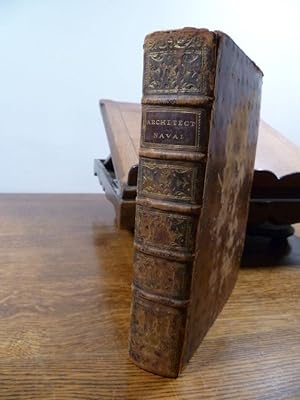
Élémens de l'Architecture navale, ou Traité pratique de la Construction des Vaisseaux. Par M. Duhamel du Monceau, de l'Académie royale des Sciences, de la Société Royale de Londres, Honoraire de la Société d'Edimbourg & de l'Académie de Marine, Inspecteur Général de la Marine. Seconde Edition revue, corrigée & augmentée par l'Auteur.
Publication Date: 1758
Seller: Librairie L'Abac / Gimmic SRL, Bruxelles, Belgium
Association Member: ILAB
Seller rating 5 out of 5 stars
First Edition Signed
A Paris, rue Dauphine, chez Charles-Antoine Jombert, Imprimeur-Libraire du Roi pour l'Artillerie & le Génie, à l'Image Notre-Dame, M. DCC. LVIII. (1758) Un volume in-4° (26x20 cm.) de : XLIV (titre avec vignette gravée, dédicace, préface) ; 49 pp ; XXIX (table alphabétique, page du titre de la partie paginé 49, première page de la table paginée II) ; 484 pp.; 1 frontispice gravé et 11 bandeaux gravés d'après N. Ozanne (10) et Chedel (1); 24 planches gravées dépliantes. Reliure plein veau marbré d'époque, dos à nerfs orné, pièce de titre rouge. Mors légèrement fendus, coiffe supérieur abimée (voir photos), coins émoussés. Quelques rousseurs et les bords de certaines planches dépliantes sont salies mais sans gravité. Seconde édition, en partie originale, la meilleure de cet ouvrage de référence, qui aborde la construction navale de manière scientifique et accessible à tous. L'édition originale est, elle, de 1752. Livres.
-
"Si tu es libre de me joindre. faites moi signed" Carte postale autographe signée de Lawrence Durrell adressée depuis Edimbourg à Jani Brun
Publication Date: 1980
Seller: Librairie Le Feu Follet, Paris, France
Association Member: ILAB
Seller rating 5 out of 5 stars
Manuscript / Paper Collectible First Edition Signed
autre. Edimbourg 4 octobre 1980 | 10 x 14.50 cm | une carte postale + une enveloppe | Suggestive carte postale autographe signée de Lawrence Durrell adressée à Jani Brun, rédigée au feutre violet, au verso d'une reproduction de sculpture représentant un satyre, enveloppe jointe. "Buttons dear. J'arrive mardi pour deux nuits à Paris - au Royale. Si tu es libre de me joindre. faites moi signed. Suis fatigué après Athens, Londres, Edinburgh! Love. Larry Durrell." Après de nombreuses années passées en Grèce, en Egypte et à Rhodes, l'écrivain voyageur Lawrence Durrell fut contraint de fuirChypre à la suite de soulèvements populaires qui menèrent l'île à son indépendance de la couronne britannique. Riche seulement d'une chemise et d'une machine à écrire mais auréolé du succès de son romanBitter Lemons of Cyprus(Les citrons acides), il arriva en 1956 en France et s'établit dans le village languedocien de Sommières. Dans la «maison Tartès», sa grande demeure entourée d'arbres, il écrivit la seconde partie de son uvre, son monumental Quintette d'Avignon, s'adonna à la peinture et reçut ses illustres amis, dont le couple Henry Miller et Anaïs Nin, le violoniste Yehudi Menuhin, l'éditeur londonien Alan G. Thomas, et ses deux filles Pénélope et Sappho. Parmi les oliviers et sous le soleil méditerranéen, il y rencontre au milieu des années 1960 la jeune et pétillante "Jany" (Janine Brun), montpelliéraine d'une trentaine d'années à la beauté ravageuse, qui travaillait au département des Antiquités de la Sorbonne à Paris. Elle fut prénommée «Buttons» en souvenir de leur première rencontre, où la jeune fille portait une robe couverte de boutons. Henry Miller tomba également sous le charme de «Buttons», louant sa beauté et son éternelle jeunesse dans d'exceptionnelles lettres restées inédites. Les trois compères passèrent des soirées parisiennes mémorables dont nous gardons de précieuses traces autographes à travers leurs échanges épistolaires. Recommandée par Durrell, elle fit de nombreux voyages notamment en Angleterre d'où elle reçut une vaste correspondance de l'écrivain ainsi que des uvres d'art originales signées de son pseudonyme d'artiste, Oscar Epfs. | [ENGLISH DESCRIPTION FOLLOWS] Suggestive autograph postcard signed by Lawrence Durrell addressed to Jani Brun, written in violet felt-tip pen, on the verso of a reproduction of a sculpture representing a satyr, envelope attached. "Buttons dear. J'arrive mardi pour deux nuits à Paris - au Royale. Si tu es libre de me joindre. faites moi signed. Suis fatigué après Athens, Londres, Edinburgh! Love. Larry Durrell." ["Buttons dear. I arrive Tuesday for two nights in Paris - at the Royale. If you are free to join me. let me know. Am tired after Athens, London, Edinburgh! Love. Larry Durrell."] After many years spent in Greece, Egypt and Rhodes, the traveling writer Lawrence Durrell was forced to flee Cyprus following popular uprisings that led the island to its independence from the British crown. Rich only with a shirt and a typewriter but crowned with the success of his novel Bitter Lemons of Cyprus (Les citrons acides), he arrived in France in 1956 and settled in the Languedoc village of Sommières. In the "Tartès house," his large dwelling surrounded by trees, he wrote the second part of his work, his monumental Avignon Quintet, devoted himself to painting and received his illustrious friends, including the couple Henry Miller and Anaïs Nin, violinist Yehudi Menuhin, London publisher Alan G. Thomas, and his two daughters Penelope and Sappho. Among the olive trees and under the Mediterranean sun, he met in the mid-1960s the young and vivacious "Jany" (Janine Brun), a thirty-something woman from Montpellier of devastating beauty, who worked at the Antiquities department of the Sorbonne in Paris. She was nicknamed "Buttons" in memory of their first meeting, where the young woman wore a dress covered with buttons. Henry Miller also fell under the charm of "Buttons," praising her beau.
-

Correspondance secrette du Chevalier Robert Cecil, avec Jacques VI, Roi d?Ecosse. Publiée aujourd?hui pour la premiére fois, á Edimbourg, imprimée par A. Millar, sur le Strand, à Londres 1766. Traduite de l?anglois littéralement & mot pour mot.
Seller: Centralantikvariatet, Stockholm, Sweden
Seller rating 5 out of 5 stars
First Edition Signed
Condition: Good. No place, 1767. 12:o. xii,+ 452 pp. Slight foxing, a minor hole in inner margin to the end from page 445. Sewn as issued and uncut in contemporary yellow marbled paper wrapper, spine with handwritten label. From the library of L. F. Rääf, with its exlibris. Fine. First french edition, translated by N.-P. Besset de la Chapelle. The english original, ?The Secret Correspondence of Sir Robert Cecil with James VI, King of Scotland?, was published in 1766. Henry Howard, Earl of Northampton, (1540-1614) conducted correspondence with James VI (later James I of England) on behalf of Sir Robert Cecil (1563?-1612), who secured the accession of James VI to the English throne 1603. The correspondence was published and edited by Sir David Dalrymple from the orig. MS. Forteen of the sixteen letters are signed by Howard and the other two by James VI. Softcover / Paperback.