
Euclides: First Edition (28 results)

Published by Martin Claret 1997
- Softcover
- First Edition
Seller: Livraria Ingá, Niterói, RJ, BrazilLivraria Ingá
Contact seller5-star sellerCondition: New
US$ 19.00
US$ 29.00 shippingShips from Brazil to U.S.A.Quantity: 1 available
Soft cover. Condition: New. 1st Edition. A coleção Vida e Pensamentos é uma série de livro-clipping com biografias essencializadas de homens e mulheres que marcaram a vida e o modo de pensar da humanidade.São livros informativos e formativos destinados a pessoas de qualquer idade.Você vai gostar de lê-los e colecioná-los.

- Softcover
- First Edition
Seller: Kennys Bookshop and Art Galleries Ltd., Galway, GY, IrelandKennys Bookshop and Art Galleries Ltd.
Contact seller5-star sellerCondition: New
US$ 53.25
US$ 12.18 shippingShips from Ireland to U.S.A.Quantity: 2 available
Condition: New. 2014. 1st Edition. paperback. . . . . .
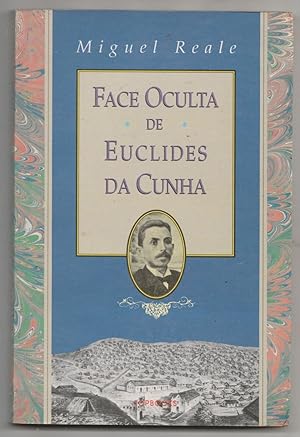
Published by Topbooks, Rio de Janeiro 1993
- Softcover
- First Edition
Seller: Biblioteca de Babel, São Paulo, SP, BrazilBiblioteca de Babel
Contact seller4-star sellerCondition: Used - Good
US$ 15.00
US$ 45.00 shippingShips from Brazil to U.S.A.Quantity: 1 available
Soft cover. Condition: Good. 1st Edition. 21x14cm,192p.[br].

Language: Spanish
Published by Madrid 1943
- Hardcover
- First Edition
Seller: VidyaLibros, Madrid, , SpainVidyaLibros
Contact seller1-star sellerCondition: Used - Very good
US$ 71.71
US$ 16.82 shippingShips from Spain to U.S.A.Quantity: 1 available
Holandesa. Condition: Bien. 1ª Edición. Revista mensual de Ciencias Exactas, Físico Químicas y Naturales. El envío contrareembolso conlleva un recargo de 3€.

- Softcover
- First Edition
Seller: diakonia secondhand, München, Germanydiakonia secondhand
Contact seller5-star sellerCondition: Used - Very good
US$ 14.34
US$ 40.61 shippingShips from Germany to U.S.A.Quantity: 1 available
Taschenbuch. Condition: Gut. 1. Auflage. 783 S. Schuber an Ecken leicht berieben. Einband an Ecken und Kanten leicht berieben. Seiten sauber. 403 Sprache: Deutsch Gewicht in Gramm: 540.

Published by St. Gallen, dia , 1984
- Hardcover
- First Edition
Seller: Wolfgang Rüger, Frankfurt am Main, , GermanyWolfgang Rüger
Contact seller5-star sellerCondition: Used
US$ 15.54
US$ 52.22 shippingShips from Germany to U.S.A.Quantity: 1 available
DEA, 25x25 cm, 159 S., OLwd. m. OU., gut erhalten Aufgrund der EPR-Regelung kann in folgende Länder KEIN Versand mehr erfolgen: Bulgarien, Finnland, Frankreich, Griechenland, Luxemburg, Österreich, Polen, Rumänien, Schweden, Slowakei, Spanien.

Language: English
Published by University of Chicago Press, Chicago, IL 2013
- Hardcover
- First Edition
Seller: Capitol Hill Books, ABAA, Washington, DC, U.S.A.Capitol Hill Books, ABAA
Contact seller5-star sellerCondition: Used - Very good
US$ 125.00
US$ 4.50 shippingShips within U.S.A.Quantity: 1 available
Condition: Very Good. Dust Jacket Condition: Very Good+. First Edition. Chicago: University of Chicago Press, [2013]. First Edition with full number line. Octavo (24cm); publisher's cloth in glossy pictorial dust jacket; xv,[1],612pp.; illus. Corners rather significantly bumped else Very Good or better.
Published by Chicago & London: Open Court, 1920 1920
- Hardcover
- First Edition
Seller: Antiquarian Scientist, The, Westhampton, MA, U.S.A.Antiquarian Scientist, The
Contact seller5-star sellerCondition: Used - Very good
US$ 65.00
US$ 9.00 shippingShips within U.S.A.Quantity: 1 available
Hardcover. Condition: Very Good. 1st Edition. FIRST EDITION IN ENGLISH. 8 vo. Orig. cloth with orig. lea. spine label. xxx, 246 pp. Text figs. A very good copy. This is the first English translation of the Italian mathematician, G. Saccheri's (1667-1733), famous and rare geometric work, 'Euclid freed of every fleck' (Milan, 1733…). Saccheri's ".attempt to apply his logic to prove the correctness of the fifth postulate (Euclid's parallel axiom). has become part of mathematical logic and non-Euclidean geometry." (D.S.B.).
Published by Interlingue-Fundation, 1968)., (Uppsala: 1968
- Hardcover
- First Edition
Seller: Jeff Weber Rare Books, Neuchatel, NEUCH, SwitzerlandJeff Weber Rare Books
Contact seller4-star sellerCondition: Used
US$ 55.00
US$ 29.01 shippingShips from Switzerland to U.S.A.Quantity: 1 available
First edition. 8vo. xxviii, 939, 14 pp. Classic papers in geometry with facsimiles of original text & translation into Swedish, figs. Cloth, dust-jacket; jacket rubbed. Very good.

Published by Escuela de Arquitectura Universidad de Chile, Santiago de Chile 1961
- Softcover
- First Edition
- Periodical
Seller: Librería Monte Sarmiento, Santiago, SANTI, ChileLibrería Monte Sarmiento
Contact seller5-star sellerCondition: Used - Good
US$ 25.10
US$ 38.00 shippingShips from Chile to U.S.A.Quantity: 1 available
Encuadernación de tapa blanda. Condition: Aceptable. 1ª Edición. 129 p. ; 30x23 cms., ilustraciones b/n y color., planos. Bibliografía. Roturas en lomo (A-288-GR-38).
- Softcover
- First Edition
Seller: Librería Santo Domingo, Barcelona, B, SpainLibrería Santo Domingo
Contact seller4-star sellerCondition: New
US$ 215.13
US$ 16.82 shippingShips from Spain to U.S.A.Quantity: 1 available
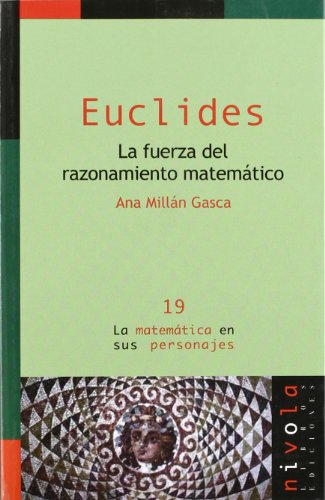
Encuadernación de tapa blanda. Condition: Nuevo. 1 Edición. Una característica esencial de la matemática griega era que se trataba de una disciplina que se cultivaba por sí misma, independientemente de su aplicación o valor práctico. Este tipo de saber desinteresado, sin utilidad inmediata, era típico de esta cultura, y en ella…las matemáticas representaron uno de los principales ejemplos de una contemplación tal de la verdad, una forma de conocimiento puro.

Published by Facultad de Arquitectura y Urbanismo Universidad de Chile, Santiago de Chile 1962
- Softcover
- First Edition
- Periodical
Seller: Librería Monte Sarmiento, Santiago, SANTI, ChileLibrería Monte Sarmiento
Contact seller5-star sellerCondition: Used - Very good
US$ 33.46
US$ 38.00 shippingShips from Chile to U.S.A.Quantity: 1 available
Encuadernación de tapa blanda. Condition: Bien. 1ª Edición. 136 p. ; 30x24 cms., ilustraciones b/n, planos (A-267-GR-17).

Language: Portuguese
Published by Lisbon, Fundacao Caixa Geral de Depositos - Culturgest, 2009
- Hardcover
- First Edition
Seller: Antiquariat Gerber AG, ILAB/VEBUKU/VSAR, Basel, SwitzerlandAntiquariat Gerber AG, ILAB/VEBUKU/VSAR
Contact seller4-star sellerCondition: Used
US$ 38.92
US$ 48.73 shippingShips from Switzerland to U.S.A.Quantity: 1 available
1.Ausgabe. 152 S. Mit 69 teilweise farbigen und ganzseitigen Abb. Deckel stellenweise minim fleckig. pt Gewicht in Gramm: 750 28,5 cm. x 19 cm. Original-Halbleinenband mit Rückenprägung und Deckel-Beschriftung.
Published by Chicago & London: Open Court, 1920. 1920
- Hardcover
- First Edition
Seller: Ted Kottler, Bookseller, Redondo Beach, CA, U.S.A.Ted Kottler, Bookseller
Contact seller3-star sellerCondition: Used - Very good
US$ 95.00
US$ 12.70 shippingShips within U.S.A.Quantity: 1 available
Hardcover. Condition: Very Good. No Jacket. 1st Edition. xxix, 246 pp; 48 figs. Original cloth, leather spine label. Very Good. First Edition in English. Contains the Latin text, with English translation, on facing page. Saccheri's 'attempt to apply his logic to prove the correctness of the fifth postulate (Euclid's parallel axi…om). . . has become part of mathematical logic and non-Euclidean geometry' (D.S.B.).

Language: German
Published by S[ank]t Gallen ; Wuppertal : Edition diá 1984
- Hardcover
- First Edition
Seller: Roland Antiquariat UG haftungsbeschränkt, Weinheim, GermanyRoland Antiquariat UG haftungsbeschränkt
Contact seller5-star sellerCondition: Used
US$ 44.22
US$ 48.73 shippingShips from Germany to U.S.A.Quantity: 1 available
Hardcover. 1. Aufl. 159 S. : Sehr guter Zustand. Buch weist leichte Lagerspuren auf. Schutzumschlag mit leichten Randläsuren. Sonst sehr gutes Exemplar. 9783905482041 Sprache: Deutsch Gewicht in Gramm: 1001.

- Hardcover
- First Edition
Seller: Antiquarische Fundgrube e.U., Wien, , AustriaAntiquarische Fundgrube e.U.
Contact seller5-star sellerCondition: Used
US$ 43.03
US$ 63.82 shippingShips from Austria to U.S.A.Quantity: 1 available
gebundene Ausgabe. 1. Aufl. 159 S. Ill. / Schutzumschlag bestaubt u. vergilbt // Bevölkerung, Soziologie, Gesellschaft, Fotografie, Photographie, Bildband N08 9783905482041 *.* Sprache: Deutsch Gewicht in Gramm: 850.
 More images
Published by Amsterdam, Wed. J. Loots, I. Swigters, 1735
- Hardcover
- First Edition
Seller: Neverland Books, waalre, , NetherlandsNeverland Books
Contact seller4-star sellerCondition: Used - Good
US$ 380.00
US$ 40.61 shippingShips from Netherlands to U.S.A.Quantity: 1 available
Hardcover. Condition: Good. 1st Edition. Euclides. De zes eerste, elfde en twaalfde boeken vertonende de voornaamste gronden en eygenschappen der wydberoemde en voortreffelyke meetkonst, waar by gevoegd een toegift, om vierkanten in driehoeken; en een agthoek in een vierkant te beschryven, mitsgaders een aanhang (.), door Pieter… Warius. Den derden druk. Amsterdam, Wed. J. Loots, I. Swigters, 1735. (12),292 pp., with numerous mathematical figures on 27 folding engraved plates, in contemporary vellum. Binding sl. rubbed, spine dam. Good copy. One of the most popular school books on geometry, based on Euclid, translated and adapted by Pieter Warius.

Published by Leyden; 1763 1763
- Hardcover
- First Edition
Seller: Antiquariaat De Boekenbeurs, Middelburg, , NetherlandsAntiquariaat De Boekenbeurs
Contact seller5-star sellerCondition: Used
US$ 512.72
US$ 17.99 shippingShips from Netherlands to U.S.A.Quantity: 1 available
; Samuel en Johannes Luchtmans. First edition. Contemporary halfleather with marbled boards. (16), 381 Pp. New endpapers; last 30 pp. waterstained. Otherwise nice copy of this rare first edition.
Published by London Printed by Robert and William Leybourn for Richard Tomlins and Robert Boydell at the Sun & Bible neer Pie-corner and at the Bulwark neer the Tower 1651
- Hardcover
- First Edition
Seller: Shapero Rare Books, London, United KingdomShapero Rare Books
Contact seller5-star sellerCondition: Used
US$ 5,541.38
US$ 20.17 shippingShips from United Kingdom to U.S.A.Quantity: 1 available
First Rudd edition; small 4to (18 x 13 cm); title printed in red and black, woodcut head and tailpieces, decorative initials, and diagrams within the text, contemporary ownership signature and date correction to title, near-contemporary bookplate to verso of title causing wrinkling, corner of F1 torn with no loss of text, corner… of S4 torn with small loss of text, contents a little toned with some spotting and offsetting; later sprinkled calf ruled in blind, manuscript title to fore-edge, yellow morocco label, loss from the head of the spine and joint, corners worn, boards a little marked and scuffed, a very good, unsophisticated copy; 259pp. The rare second full English language edition of Euclid's Elements. Likely a revision of the first English language edition, published in 1570 by Henry Billingsley with the John Dee preface (Corry, British Versions of Book II of Euclid's Elements, p. 31.) ESTC records three different versions of the title page of the Rudd edition, with the word 'at' in different places in the imprint. This copy from the library of the Scottish nobleman Thomas Hamilton, 7th Earl of Haddington (1721-1795). Thomas Rudd (1583/4-1656) was a mathematician and military engineer who began his career in the Low Countries before being recalled to England 'to become chief engineer of all castles, forts, and fortifications within Wales. Subsequently he was appointed the king's principal engineer for fortifications'. His final years were 'devoted to mathematical studies and publications', with the present work being one of three that he published; the others were on practical geometry and the military arts (Oxford Dictionary of National Biography). 'The most influential of all Dee's published works was his "Mathematicall praeface" to Henry Billingsley's English translation of Euclid, Elements of Geometrie, printed by John Daye in 1570. The preface is firstly a long encomium of the study of "thynges mathematicall" as partaking both of the supernatural and of the natural, and of geometry in particular. He goes on to enumerate the practical arts (proper to "mechanicians") which derive from mathematics, and under one of the last of these, "thaumaturgike", exculpates himself with some passion from the charge of conjuring. He also defends the use of the vernacular, as not encroaching on the rights of the universities. His concept of "Archemastrie", which "procedeth by Experiences", has been seen by some as foreshadowing the experimental science of the next century, but he also hints at magical interests and practices under this very heading. In general the "Praeface" is now seen as a retrospective view of his own practice and teaching after his return to England in 1551, but the interest in magic, and possibly in skrying (seeing, or conversing with, spirits), may be a development of the late 1560s' (Oxford Dictionary of National Biography). ESTC R234863.
 More images
Published by Alonso Gomez, Madrid 1585
- Hardcover
- First Edition
Seller: Heritage Book Shop, ABAA, Beverly Hills, CA, U.S.A.Heritage Book Shop, ABAA
Contact seller5-star sellerCondition: Used
US$ 17,500.00
US$ 20.00 shippingShips within U.S.A.Quantity: 1 available
First Edition. GARCIA DE CESPEDES, Andres. La Perspectiva, y Especularia de Euclides. Traduzidas en vulgar Castellano. por Pedro Ambrosio Onderiz. Madrid: Alonso Gomez, 1585. Full Description: [EUCLID]. La Perspectiva, y Especularia de Euclides. Traduzidas en vulgar Castellano. por Pedro Ambrosio Onderiz. Madrid: Alonso Gomez, 1…585. First edition of the first Spanish translation of Euclid's "Optics and Catoptrics." Small quarto (7 5/8 x 5 1/2 inches; 194 x 136 mm). [6], 60 leaves. With separate title-page for Especularia dated 1584. Woodcut armorial vignette of Philip II on the general title page. With woodcut initials and diagrams in the text. [Together with]: GARCIA DE CESPEDES, Andrés. Libro des Instrumentos Nuevos de Geometria muy Necessarios para Medir Distancias, y Alturas, sin que intervengan numeros, como se demuestra en la practica. De mas desto se ponen otros tratados, com es uno, de conduzir aguas, y otro una question de artilleria, en donde se ponen algunas demostraciones curiosas. Madrid, Juan de la Cuesta, 1606. First and only edition. Small quarto (7 5/8 x 5 1/2 inches; 194 x 136 mm). [4], 68 leaves. With woodcut engravings, initials, head and tailpieces.Andrés García de Céspedes was the Royal Cosmographer to King Philip III of Spain. The leaf following the title page contains a list of 11 other works by Céspedes of which only two were printed, the present work and a treatise on navigation, Regimiento de Navigacion, published the same year as this work. The headpiece at the start of the text contains native American motifs. Juan de la Cuesta was the printer of the first edition of Don Quixote. These two works are bound together in contemporary vellum. Yap edges. Vellum ties. Previous owner's bookplate on front pastedown. Early ink inscriptions to front free endpaper. Old ink marginalia throughout both works. Some old branding markings to edges of text block, not affecting text. Some minor dampstaining and soiling. Final text leaf and rear free endpaper with a repair, affecting a few words. Final text leaf trimmed close, just touching text. Housed in a quarter sheep clamshell with red morocco spine label, lettered in gilt. Overall a very good copy of both works. "Though often overshadowed by his mathematical reputation, Euclid is a central figure in the history of optics. He wrote an in-depth study of the phenomenon of visible light in Optica, the earliest surviving treatise concerning optics and light in the western world. Within the work, Euclid maintains the Platonic tradition that vision is caused by rays that emanate from the eye, but also offers an analysis of the eye's perception of distant objects and defines the laws of reflection of light from smooth surfaces. Optica was considered to be of particular importance to astronomy and was often included as part of a compendium of early Greek works in the field. Translated into Latin by a number of writers during the medieval period, the work gained renewed relevance in the fifteenth century when it underpinned the principles of linear perspective." (Michael W. Davidson and The Florida State University) Libro des Instrumentos Nuevos de Geometria by Garcia de Cespedes, describes new instruments useful in various fields of military surveying, ballistics and geometry, as well as the location and transportation of drinking water. It also includes the most comprehensive description of hydraulics to have been published in Spain. Palau 98620. HBS 69530. $17,500.
 More images
Published by Pisa: Francesco Onofrio 1658
- Softcover
- First Edition
Seller: Landmarks of Science Books, Richmond, , United KingdomLandmarks of Science Books
Contact seller4-star sellerCondition: Used - Very good
US$ 3,463.36
US$ 40.35 shippingShips from United Kingdom to U.S.A.Quantity: 1 available
Soft cover. Condition: Very Good. 1st Edition. First edition, rare, of Borelli's "well received work" (DSB) - not merely a restoration but a thoroughgoing reformulation of Euclid's Elements. "The mathematical work of Giovanni Alfonso Borelli (1608-1679) was entirely devoted to the study and interpretation of the Greek classics.…His most important mathematical book is the Euclides restitutus ('Euclid Restored') from 1658, in which Borelli offered a complete rewriting of Euclid's Elements . . . Borelli's Euclides is a masterwork in the foundations of mathematics, and arguably the most important treatise on the subject in the seventeenth century. In it, Borelli reformulated most of Euclid's definitions, modified and expanded the axioms, transformed a great many demonstrations in the Elements, and made in depth changes to the deductive structure of the classical treatise. Euclid's Elements had already been modified many times over the centuries and the text had always remained partially plastic and changeable. Through all these changes, however, the Elements had remained a classical text to which editors had added scholia and local amendments. In times closer to Borelli, such modifications had become bolder: Jesuits and Ramists had abridged the text for students, Aristotelians had reshaped some proofs into syllogistic chains, Herigone and Barrow had formalized the Elements with new symbolisms. None of them, however, had changed the mathematics of Euclid: the ideas behind the demonstrations and their deductive order had remained the same. By contrast, Borelli's book revolutionized the mathematical core of Euclid's work to such an extent that it could be doubted whether it was still Euclid's . . . Borelli had long surpassed Galileo and his contemporaries in both classicism and reformation. He extended the critical approach from the foundations of the theory of proportions to the whole of mathematics, and thus rewrote all of the Elements . . . Book V of Borelli's Euclides mixes together Euclid's theorems belonging to the second, fourth and thirteenth books of the Elements, adding something from the first, sixth and twelfth books. The order of the propositions is generally quite different from Euclid's sequences of the same books . . . These theorems are also interspersed with results from Archimedes, Ptolemy and Pappus. To hold together such a deductive sequence, Borelli also demonstrates therein ten new theorems. As a bonus, Borelli offered a wholly new proof of the important Elements XII.2 (circles are to each other as the squares of the diameters) avoiding the method of exhaustion, which Borelli found hopelessly obscure given its reference to the infinite" (Dr Risi, Euclid Upturned. Borelli on the Foundations of Geometry, Physis 58, 2022). Borelli (1608-79), a Neapolitan, spent the years 1656 to 1667 at the University of Pisa in the chair of mathematics, a period coinciding with the life of the Florentine Accademia del Cimento, of which Borelli was a founder member. In 1665 he established an observatory on the hill of San Miniato in Florence. RBH lists only three copies since 1961. Riccardi I, 157 ('raro'); Steck IV.50. 4to (218 x 153 mm), pp. [8], xxx, [2], 456, woodcut diagrams in text, woodcut initials (light browning and occasional light marginal dampstaining). Later limp vellum. A large copy with the deckle showing on many leaves.
 More images
Published by Pauli Antonii Montani, Milan 1733
- First Edition
Seller: SOPHIA RARE BOOKS, Koebenhavn V, , DenmarkSOPHIA RARE BOOKS
Contact seller4-star sellerCondition: Used
US$ 60,000.00
Free ShippingShips from Denmark to U.S.A.Quantity: 1 available
First edition. THE FIRST TREATISE ON NON- EUCLIDEAN GEOMETRY . First edition, notoriously rare, of this "masterpiece of eighteenth-century geometry" (De Risi, p. 40), "the first treatise on non-Euclidean geometry . this rare and inestimable treasure" (George Bruce Halstead). "Today it is generally recognized by mathematicians as… one of the important documents in the history of geometry" (Emch, p. 53). In it, Saccheri attempted to give a demonstration of the famous Parallel Postulate of Euclidean geometry. Proofs had been attempted since the time of the ancient Greeks, but "Saccheri tried a wholly new way, and thus his book marks an epoch" (ibid.). The new way was to use the method of 'consequentia mirabilis' which Saccheri had studied in detail in his Logica demonstrativa (1697): assume the Parallel Postulate is false, make deductions from this assumption, and conclude that the Parallel Postulate must, in fact, be true (this method is closely related to, but distinct from, 'reductio ad absurdam'). Saccheri believed, incorrectly, that his Proposition XXXII led to such a contradiction. However, as the great Italian geometer Corrado Segre wrote: "the first seventy pages, up to Proposition 32 inclusive, constitute an ensemble of logic and of geometric acumen which may be called perfect." These pages, indeed, constitute essentially a textbook of non-Euclidean geometry, written a century before Bolyai and Lobachevsky. "Saccheri did not find the supposed contradiction, as it was nowhere to be found, but he was unable to convince himself that the new geometry he had erected might in fact be a reasonable alternative to Euclid's Elements rather than a green-eyed monster: consequently, he pointed to a contradiction of his own making . This effort notwithstanding, the sacrilege, so to speak, had already been committed, and Saccheri's outstanding achievements towards the construction of hyperbolic geometry, while disowned by their author and relegated to a book printed in quite few copies, sneaked into European mathematical culture and poisoned the minds of certain more acute, unprejudiced, or simply more modern geometers. One century after the Jesuit's death, these scholars eagerly welcomed Saccheri's 'monster' in their writings, thus celebrating the triumph of non-Euclidean geometry. Following this widespread story, Saccheri unwittingly (yet brilliantly) anticipated one of the most momentous conceptual revolutions in the genesis of contemporary mathematics" (De Risi, p. 4). The philosophical importance of non-Euclidean geometry was that it greatly clarified the relationship between mathematics, science and observation. Our present-day understanding of models of axioms, relative consistency and so on can all be traced back to the advent of non-Euclidean geometry. Before hyperbolic geometry was discovered, it was thought to be completely obvious that Euclidean geometry correctly described physical space, and attempts were even made, by Kant and others, to show that this was necessarily true. Gauss was one of the first to understand that the truth or otherwise of Euclidean geometry was a matter to be determined by experiment. Non-Euclidean geometry paved the way for Riemannian geometry, which in turn paved the way for Einstein's General Theory of Relativity. Saccheri's work is divided into two Books. The first, Propositions I-XXXIX, is devoted to the Parallel Postulate. The second, now less well known, is a defence of the profound treatment of ratio and proportion in Book V of the Elements. Of this second part, Halsted writes: "It shows again Saccheri's wisdom, penetration and modernity." In 1621 the Oxford scholar and mathematician Sir Henry Savile described the Parallel Postulate and the theory of proportion as "two blemishes, two moles" spoiling Euclid's "beautiful body". Saccheri referred to Savile's comments in the very title pf his book, Euclid vindicated from every blemish. OCLC lists 6 copies in the US (UC Berkeley, Brown, Columbia, Huntington, Indiana, Michigan). Library Hub lists BL and UCL. No copies listed on RBH, although the Stanhope-Halsted copy sold at Christie's New York, 25 February 2003, $26,290. In about 300 BC Euclid wrote the Elements, a book which "has exercised an influence upon the human mind greater than that of any other work except the Bible" (DSB). Euclid stated five postulates from which he deduced all the theorems and propositions in his work: To draw a straight line from any point to any other. To produce a finite straight line continuously in a straight line. To describe a circle with any centre and distance. That all right angles are equal to each other. That, if a straight line falling on two straight lines make the interior angles on the same side less than two right angles, if produced indefinitely, meet on that side on which are the angles less than the two right angles. Euclid was dissatisfied with the fifth postulate, also known as the Parallel Postulate, and he tried to avoid its use as long as possible. In fact, the first 28 propositions of The Elements are proved without using it, including results about congruence and the isosceles triangle theorem, but neither of the most famous results of Euclidean geometry, that the angle sum of a triangle is ? (180°), and Pythagoras's theorem. Because the parallel postulate is not transparently true, attempts were made to deduce it from the first four axioms. There were many such attempts. There is a lost work of Archimedes that was titled 'On Parallel Lines' It is conjectured by some that in it Archimedes replaced Euclid's Parallel Postulate with one stating that two lines are parallel if and only if the distance between them is constant (this is equivalent to the postulate stated above in the presence of the other Euclidean axioms). The Syrian mathematician Posidonius attempted a proof of the Parallel Postulate based on such an assumption. Ptolemy also tried to prove the Postulate. He did not use the equidistant assumption, but he as.
 More images
Published by Francisco Rioja, Sevilla-Cadiz 1747
- First Edition
Seller: Libreria de Antano (ILAB & ABA Members), Miami, FL, U.S.A.Libreria de Antano (ILAB & ABA Members)
Contact seller5-star sellerSpecial binding. Condition: Very good copy. 8vo. S.P. Continúa del título: Obra postuma de. Sacalo a luz Doña Maria Theresa Aylguardo y Zamora, Viuda del Author. "YES, THERE ARE 18TH CENTURY MATH BOOKS WITH LUXURIOUS BINDINGS! NO COPIES IN US LIBRARIES". Con licencia en Sevilla, Impresso en el Puerto de Santa Maria (Cádiz), Fran…cisco Rioja, 1747. Fine 19th century blue velvet binding; ex libris: Biblioteca de Ramirez de Arellano. Although Palau does not mention plates, CCPBE describes a copy with 5 folded tables. Our copy seems to have been bound without plates. FIRST EDITION OF THIS RARE MATHEMATICAL TREATISE, CURIOUSLY HOUSED IN A FINE VELVET BINDING. The author, a Lieutenant of the Royal Navy, a mathematics teacher at the Royal Academy of Gentleman's Marine Guards in the city of Cádiz, had great merit, as he solves a hitherto unresolved problem in the Sixth Book of Euclid. About the Sixth Book of Euclid (yes, we used Google for this!): Book VI of Euclid's "The Elements' contains the Eudoxian theory of the proposition to plane geometry. The fundamental theorems of similar triangles and the constructions of the third, the fourth and the proportional mean are established. A geometric solution to the quadratic equations is established and the proposition that the internal bisector of the angle of a triangle divides the opposite side into two segments proportional to the other two sides. Palau 156182 (did not see a copy). WorldCat: no copies in US Libraries.
 More images
- First Edition
Seller: Librairie l'Imaginaire, Bruxelles, BelgiumLibrairie l'Imaginaire
Contact seller5-star sellerCondition: Used
US$ 1,792.73
US$ 52.22 shippingShips from Belgium to U.S.A.Quantity: 1 available
México, chez l'auteur, 31 décembre 1967. 1 feuillet recto verso, 38,5 x 50 cm, E.O. Infime déchirure sans manque sur 3 mm sans manque, sinon bon état. Affiche imprimée en noir et rouge, en typographie. El Correo de Euclides a été publié à petit nombre par Max Aub à l'intention exclusive de ses amis dont Juan Larrea et Luis Bunue…l, entre 1959 et 1968. Au recto l'auteur écrit : Max Aub le envía este cuento extraordinario deseándole felices y tranquilas vacaciones (Max Aub vous envoie ce récit extraordinaire en vous souhaitant de joyeuses et paisibles vacances).
 More images
- First Edition
Seller: Librairie l'Imaginaire, Bruxelles, BelgiumLibrairie l'Imaginaire
Contact seller5-star sellerCondition: Used
US$ 1,792.73
US$ 52.22 shippingShips from Belgium to U.S.A.Quantity: 1 available
México, chez l'auteur, 31 décembre 1965. 1 feuillet recto verso, 38,5 x 50 cm, E.O. Deux infimes déchirures du bord sans manque, sinon bon état. Affiche imprimée en noir et rouge, en typographie. El Correo de Euclides a été publié à petit nombre par Max Aub à l'intention exclusive de ses amis dont Juan Larrea et Luis Buñuel, ent…re 1959 et 1968.
 More images
- First Edition
Seller: Librairie l'Imaginaire, Bruxelles, BelgiumLibrairie l'Imaginaire
Contact seller5-star sellerCondition: Used
US$ 1,792.73
US$ 52.22 shippingShips from Belgium to U.S.A.Quantity: 1 available
México, chez l'auteur, 31 décembre 1963. 1 feuillet recto verso, 38,5 x 50 cm, E.O. Deux infimes déchirures avec un manque de 3 mm et une déchirure sur 10 cm sans manque, sinon bon état. Affiche imprimée en noir et rouge, en typographie. El Correo de Euclides a été publié à petit nombre par Max Aub à l'intention exclusive de ses… amis dont Juan Larrea et Luis Bunuel, entre 1959 et 1968.
 More images
- First Edition
Seller: Librairie l'Imaginaire, Bruxelles, BelgiumLibrairie l'Imaginaire
Contact seller5-star sellerCondition: Used
US$ 1,792.73
US$ 52.22 shippingShips from Belgium to U.S.A.Quantity: 1 available
México, chez l'auteur, 31 décembre 1963. 1 feuillet, 38,5 x 50 cm, E.O. Quelques petites déchirures sans manque, sinon bon état. Affiche imprimée en noir et rouge, en typographie. El Correo de Euclides a été publié à petit nombre par Max Aub à l'intention exclusive de ses amis dont Juan Larrea et Luis Buñuel, entre 1959 et 1968.

- Hardcover
- First Edition
- Print on Demand
Seller: moluna, Greven, , Germanymoluna
Contact seller5-star sellerCondition: New
US$ 143.36
US$ 56.85 shippingShips from Germany to U.S.A.Quantity: Over 20 available
Condition: New. Dieser Artikel ist ein Print on Demand Artikel und wird nach Ihrer Bestellung fuer Sie gedruckt.


