

Order Total (1 Item Items):
Shipping Destination:

Ever Present Origin (33 results)
Skip to main search results
Search filters
Product Type
- All Product Types
- Books (33)
- Magazines & Periodicals (No further results match this refinement)
- Comics (No further results match this refinement)
- Sheet Music (No further results match this refinement)
- Art, Prints & Posters (No further results match this refinement)
- Photographs (No further results match this refinement)
- Maps (No further results match this refinement)
- Manuscripts & Paper Collectibles (No further results match this refinement)
Condition Learn more
- New (27)
- As New, Fine or Near Fine (1)
- Very Good or Good (3)
- Fair or Poor (No further results match this refinement)
- As Described (2)
Binding
- All Bindings
- Hardcover (No further results match this refinement)
- Softcover (32)
Collectible Attributes
- First Edition (No further results match this refinement)
- Signed (No further results match this refinement)
- Dust Jacket (No further results match this refinement)
- Seller-Supplied Images (11)
- Not Print on Demand (28)
Language (1)
Free Shipping
Seller Location
Seller Rating
-
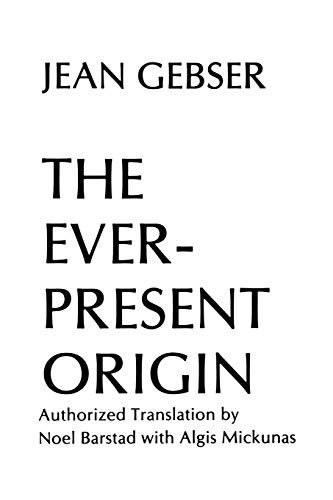
The Ever-Present Origin
Language: English
Published by Ohio University Press, 1984
ISBN 10: 0821407694 ISBN 13: 9780821407691
Soft cover. Condition: Fine. Trade paperback. Translation of Ursprung und Gegenwart, published by Deutsche Verlags-Anstalt GmbH, Stuttgart (1949, 1953).
-
The Ever-Present Origin : Part One: Foundations of the Aperspectival World
Language: English
Published by Ohio University Press, 1986
ISBN 10: 0821407694 ISBN 13: 9780821407691
Condition: Very Good. Former library copy. Pages intact with possible writing/highlighting. Binding strong with minor wear. Dust jackets/supplements may not be included. Includes library markings. Stock photo provided. Product includes identifying sticker. Better World Books: Buy Books. Do Good.
-
The Ever-Present Origin, Part One: Foundations of the Aperspectival World and Part Two: Manifestations of the Aperspectival World
Language: English
Published by Ohio University Press, 1986
ISBN 10: 0821407694 ISBN 13: 9780821407691
Soft cover. Condition: Good. No Jacket. This copy has no creasing of the spine or covers, some light rubbing and wear. Interior text is tight in binding. There is some highlighting and underlining present.
-
The The Ever-Present Origin: Part One: Foundations Of The Aperspectival World (Englis Series, No 1)
Language: English
Published by Ohio University Press, 1986
ISBN 10: 0821407694 ISBN 13: 9780821407691
Seller: WorldofBooks, Goring-By-Sea, WS, United Kingdom
Seller rating 5 out of 5 stars

Paperback. Condition: Very Good. The book has been read, but is in excellent condition. Pages are intact and not marred by notes or highlighting. The spine remains undamaged.
-
The Ever-Present Origin
Language: English
Published by MJ - Ohio University Press, 1986
ISBN 10: 0821407694 ISBN 13: 9780821407691
Seller: PBShop.store UK, Fairford, GLOS, United Kingdom
Seller rating 5 out of 5 stars
US$ 45.76
US$ 7.97 shipping
Ships from United Kingdom to U.S.A.Quantity: 15 available
Add to basketPAP. Condition: New. New Book. Shipped from UK. Established seller since 2000.
-

The Ever-Present Origin
Language: English
Published by Ohio University Press, US, 1986
ISBN 10: 0821407694 ISBN 13: 9780821407691
Seller: Rarewaves.com USA, London, LONDO, United Kingdom
Seller rating 5 out of 5 stars
US$ 57.37
Free Shipping
Ships from United Kingdom to U.S.A.Quantity: Over 20 available
Add to basketPaperback. Condition: New. This English translation of Gebser's major work, Ursprung und Gegenwart (Stuttgart, Deutsche Verlag, 1966), offers certain fundamental insights which should be beneficial to any sensitive scientist and makes it available to the English-speaking world for the recognition it deserves. "The path which led Gebser to his new and universal perception of the world is, briefly, as follows. In the wake of materialism and social change, man had been described in the early years of our century as the "dead end" of nature. Freud had redefined culture as illness-a result of drive sublimation; Klages had called the spirit (and he was surely speaking of the hypertrophied intellect) the "adversary of the soul," propounding a return to a life like that of the Pelasgi, the aboriginal inhabitants of Greece; and Spengler had declared the "Demise of the West" during the years following World War I. The consequences of such pessimism continued to proliferate long after its foundations had been superseded. It was with these foundations-the natural sciences-that Gebser began. As early as Planck it was known that matter was not at all what materialists had believed it to be, and since 1943 Gebser has repeatedly emphasized that the so-called crisis of Western culture was in fact an essential restructuration. Gebser has noted two results that are of particular significance: first, the abandonment of materialistic determinism, of a one-sided mechanistic-causal mode of thought; and second, a manifest "urgency of attempts to discover a universal way of observing things, and to overcome the inner division of contemporary man who, as a result of his one-sided rational orientation, thinks only in dualisms." Against this background of recent discoveries and conclusions in the natural sciences Gebser discerned the outlines of a potential human universality. He also sensed the necessity to go beyond the confines of this first treatise so as to include the humanities (such as political economics and sociology) as well as the arts in a discussion along similar lines. This was the point of departure of The Ever-Present Origin. From In memoriam Jean Gebser by Jean Keckeis.
-

Ever Present Origin: Part One: Foundations of the Aperspectival World (Paperback or Softback)
Language: English
Published by Ohio University Press 8/31/1986, 1986
ISBN 10: 0821407694 ISBN 13: 9780821407691
Paperback or Softback. Condition: New. Ever Present Origin: Part One: Foundations of the Aperspectival World. Book.
-
The Ever-Present Origin (eng)
Language: English
Published by Ohio University Press, 1986
ISBN 10: 0821407694 ISBN 13: 9780821407691
Condition: new.
-
Ever Present Origin: Part One: Foundations Of The Aperspectival World (Englis Series, No 1)
Language: English
Published by Ohio University Press, 1986
ISBN 10: 0821407694 ISBN 13: 9780821407691
Condition: New. pp. 646.
-
The Ever-Present Origin, Part One: Foundations of the Aperspectival World and Part Two: Manifestations of the Aperspectival World
Language: English
Published by Ohio University Press, 1986
ISBN 10: 0821407694 ISBN 13: 9780821407691
Paperback. Condition: new. New Copy. Customer Service Guaranteed.
-
The Ever-Present Origin, Part One: Foundations of the Aperspectival World and Part Two: Manifestations of the Aperspectival World
Language: English
Published by Ohio University Press, 1986
ISBN 10: 0821407694 ISBN 13: 9780821407691
Seller: Kennys Bookshop and Art Galleries Ltd., Galway, GY, Ireland
Seller rating 5 out of 5 stars
Condition: New. 1986. 1st. Paperback. . . . . .
-
The Ever-Present Origin (Paperback)
Language: English
Published by Ohio University Press, Athens, 1986
ISBN 10: 0821407694 ISBN 13: 9780821407691
Paperback. Condition: new. Paperback. Born in Posen in 1905, Jean Gebser came from an old Franconian family domiciled in Thuringia since 1236. A nephew of German chancellor von Bethmann-Hollweg, he was a descendant on his mother's side of Luther's friend Melanchthon. He was educated in Breslau, Konigsberg, Rossleben, and at the University of Berlin. In 1929 Gebser emigrated to Italy and subsequently lived in Spain where he was attached to the Ministry of Education of the Spanish Republic. From 1937-1939 he lived in Paris in the circle which included Picasso, Andre Malraux, Paul Eluard, and Louis Aragon. In 1939 he made his permanent home in Switzerland where he became a citizen in 1951. For many years Gebser was Lecturer at the Institute of Applied Psychology in Zurich and was later appointed honorary Professor of Comparative Studies of Civilization at the University of Salzburg, Austria. For his many publications, including books on Rilke, his friend Federico Garcia Lorca, recent developments in the sciences, East-West relations, evolution, and twentieth century civilization and its antecedents, Gebser received several prizes, including a share of the German Schiller prize, the literary award of the Esslingen Artist's Guild, the Koggen prize of the City of Minden, and the literary award of the City of Berne. He died in Berne on May 14, 1973. Gebser's central thesis was that a potent "leap" in thinking was happening in the 20th century. This new mode of thought would be a holistic-centered, or integral one; an answer to the type of thinking responsible for economic and industrial crisis, two World Wars, and what many today consider a dire, global ecological crisis. Shipping may be from multiple locations in the US or from the UK, depending on stock availability.
-
The The Ever-Present Origin: Part One: Foundations Of The Aperspectival World (Englis Series, No 1)
Language: English
Published by Ohio University Press, 1986
ISBN 10: 0821407694 ISBN 13: 9780821407691
US$ 50.88
US$ 21.03 shipping
Ships from United Kingdom to U.S.A.Quantity: 2 available
Add to basketpaperback. Condition: New.
-
The Ever-Present Origin, Part One: Foundations of the Aperspectival World and Part Two: Manifestations of the Aperspectival World
Language: English
Published by Ohio University Press, 1986
ISBN 10: 0821407694 ISBN 13: 9780821407691
Seller: Ria Christie Collections, Uxbridge, United Kingdom
Seller rating 5 out of 5 stars
US$ 56.32
US$ 16.26 shipping
Ships from United Kingdom to U.S.A.Quantity: Over 20 available
Add to basketCondition: New. In.
-

The Ever-Present Origin
Language: English
Published by Ohio University Press, US, 1986
ISBN 10: 0821407694 ISBN 13: 9780821407691
Paperback. Condition: New. This English translation of Gebser's major work, Ursprung und Gegenwart (Stuttgart, Deutsche Verlag, 1966), offers certain fundamental insights which should be beneficial to any sensitive scientist and makes it available to the English-speaking world for the recognition it deserves. "The path which led Gebser to his new and universal perception of the world is, briefly, as follows. In the wake of materialism and social change, man had been described in the early years of our century as the "dead end" of nature. Freud had redefined culture as illness-a result of drive sublimation; Klages had called the spirit (and he was surely speaking of the hypertrophied intellect) the "adversary of the soul," propounding a return to a life like that of the Pelasgi, the aboriginal inhabitants of Greece; and Spengler had declared the "Demise of the West" during the years following World War I. The consequences of such pessimism continued to proliferate long after its foundations had been superseded. It was with these foundations-the natural sciences-that Gebser began. As early as Planck it was known that matter was not at all what materialists had believed it to be, and since 1943 Gebser has repeatedly emphasized that the so-called crisis of Western culture was in fact an essential restructuration. Gebser has noted two results that are of particular significance: first, the abandonment of materialistic determinism, of a one-sided mechanistic-causal mode of thought; and second, a manifest "urgency of attempts to discover a universal way of observing things, and to overcome the inner division of contemporary man who, as a result of his one-sided rational orientation, thinks only in dualisms." Against this background of recent discoveries and conclusions in the natural sciences Gebser discerned the outlines of a potential human universality. He also sensed the necessity to go beyond the confines of this first treatise so as to include the humanities (such as political economics and sociology) as well as the arts in a discussion along similar lines. This was the point of departure of The Ever-Present Origin. From In memoriam Jean Gebser by Jean Keckeis.
-
The Ever-Present Origin
Language: English
Published by Ohio University Press, 1986
ISBN 10: 0821407694 ISBN 13: 9780821407691
Seller: THE SAINT BOOKSTORE, Southport, United Kingdom
Seller rating 5 out of 5 stars
US$ 51.70
US$ 27.79 shipping
Ships from United Kingdom to U.S.A.Quantity: Over 20 available
Add to basketPaperback / softback. Condition: New. New copy - Usually dispatched within 4 working days.
-
The Ever-Present Origin, Part One: Foundations of the Aperspectival World and Part Two: Manifestations of the Aperspectival World
Language: English
Published by Ohio University Press, 1986
ISBN 10: 0821407694 ISBN 13: 9780821407691
Condition: New. 1986. 1st. Paperback. . . . . . Books ship from the US and Ireland.
-

The Ever-Present Origin
Language: English
Published by Ohio University Press, 1986
ISBN 10: 0821407694 ISBN 13: 9780821407691
Paperback. Jean Gebser, Ohio University Press. Born in Posen in 1905, Jean Gebser came from an old Franconian family domiciled in Thuringia since 1236. A nephew of German chancellor von Bethmann-Hollweg, he was a descendant on his mother's side of Luther's friend Melanchthon. He was educated in Breslau, Konigsberg, Rossleben, and at the University of Berlin. In 1929 Gebser emigrated to Italy and subsequently lived in Spain where he was attached to the Ministry of Education of the Spanish Republic. From 1937-1939 he lived in Paris in the circle which included Picasso, Andre Malraux, Paul Eluard, and Louis Aragon. In 1939 he made his permanent home in Switzerland where he became a citizen in 1951. For many years Gebser was Lecturer at the Institute of Applied Psychology in Zurich and was later appointed honorary Professor of Comparative Studies of Civilization at the University of Salzburg, Austria. For his many publications, including books on Rilke, his friend Federico Garcia Lorca, recent developments in the sciences, East-West relations, evolution, and twentieth century civilization and its antecedents, Gebser received several prizes, including a share of the German Schiller prize, the literary award of the Esslingen Artist's Guild, the Koggen prize of the City of Minden, and the literary award of the City of Berne. He died in Berne on May 14, 1973. Paperback.
-
EVER-PRESENT ORIGIN: THE FOUNDATIONS AND
Language: English
Published by Ohio University Press, 1986
ISBN 10: 0821407694 ISBN 13: 9780821407691
US$ 45.70
US$ 55.65 shipping
Ships from United Kingdom to U.S.A.Quantity: 2 available
Add to basketCondition: NEW.
-
US$ 85.40
US$ 16.97 shipping
Ships from United Kingdom to U.S.A.Quantity: 1 available
Add to basketPaperback. Condition: Brand New. reprint edition. 614 pages. 9.25x6.00x1.50 inches. In Stock.
-
US$ 89.37
US$ 16.97 shipping
Ships from United Kingdom to U.S.A.Quantity: 2 available
Add to basketPaperback. Condition: Brand New. reprint edition. 614 pages. 9.25x6.00x1.50 inches. In Stock.
-
The Ever-Present Origin, Part One: Foundations of the Aperspectival World and Part Two: Manifestations of the Aperspectival World
Language: English
Published by Ohio University Press, 1986
ISBN 10: 0821407694 ISBN 13: 9780821407691
paperback. Condition: New. In shrink wrap. Looks like an interesting title!
-

The Ever-Present Origin
Language: English
Published by Ohio University Press, 1986
ISBN 10: 0821407694 ISBN 13: 9780821407691
Condition: New. Gebser s central thesis was that a potent leap in thinking was happening in the 20th century. This new mode of thought would be a holistic-centered, or integral one an answer to the type of thinking responsible for economic and industrial crisis, two Wor.
-

The Ever-Present Origin
Language: English
Published by Ohio University Press, US, 1986
ISBN 10: 0821407694 ISBN 13: 9780821407691
Paperback. Condition: New. This English translation of Gebser's major work, Ursprung und Gegenwart (Stuttgart, Deutsche Verlag, 1966), offers certain fundamental insights which should be beneficial to any sensitive scientist and makes it available to the English-speaking world for the recognition it deserves. "The path which led Gebser to his new and universal perception of the world is, briefly, as follows. In the wake of materialism and social change, man had been described in the early years of our century as the "dead end" of nature. Freud had redefined culture as illness-a result of drive sublimation; Klages had called the spirit (and he was surely speaking of the hypertrophied intellect) the "adversary of the soul," propounding a return to a life like that of the Pelasgi, the aboriginal inhabitants of Greece; and Spengler had declared the "Demise of the West" during the years following World War I. The consequences of such pessimism continued to proliferate long after its foundations had been superseded. It was with these foundations-the natural sciences-that Gebser began. As early as Planck it was known that matter was not at all what materialists had believed it to be, and since 1943 Gebser has repeatedly emphasized that the so-called crisis of Western culture was in fact an essential restructuration. Gebser has noted two results that are of particular significance: first, the abandonment of materialistic determinism, of a one-sided mechanistic-causal mode of thought; and second, a manifest "urgency of attempts to discover a universal way of observing things, and to overcome the inner division of contemporary man who, as a result of his one-sided rational orientation, thinks only in dualisms." Against this background of recent discoveries and conclusions in the natural sciences Gebser discerned the outlines of a potential human universality. He also sensed the necessity to go beyond the confines of this first treatise so as to include the humanities (such as political economics and sociology) as well as the arts in a discussion along similar lines. This was the point of departure of The Ever-Present Origin. From In memoriam Jean Gebser by Jean Keckeis.
-

The Ever-Present Origin
Language: English
Published by Ohio University Press Aug 1986, 1986
ISBN 10: 0821407694 ISBN 13: 9780821407691
Taschenbuch. Condition: Neu. Neuware - This English translation of Gebser's major work, Ursprung und Gegenwart (Stuttgart, Deutsche Verlag, 1966), offers certain fundamental insights which should be beneficial to any sensitive scientist and makes it available to the English-speaking world for the recognition it deserves. 'The path which led Gebser to his new and universal perception of the world is, briefly, as follows. In the wake of materialism and social change, man had been described in the early years of our century as the 'dead end' of nature. Freud had redefined culture as illness-a result of drive sublimation; Klages had called the spirit (and he was surely speaking of the hypertrophied intellect) the 'adversary of the soul,' propounding a return to a life like that of the Pelasgi, the aboriginal inhabitants of Greece; and Spengler had declared the 'Demise of the West' during the years following World War I. The consequences of such pessimism continued to proliferate long after its foundations had been superseded. It was with these foundations-the natural sciences-that Gebser began. As early as Planck it was known that matter was not at all what materialists had believed it to be, and since 1943 Gebser has repeatedly emphasized that the so-called crisis of Western culture was in fact an essential restructuration. Gebser has noted two results that are of particular significance: first, the abandonment of materialistic determinism, of a one-sided mechanistic-causal mode of thought; and second, a manifest 'urgency of attempts to discover a universal way of observing things, and to overcome the inner division of contemporary man who, as a result of his one-sided rational orientation, thinks only in dualisms.' Against this background of recent discoveries and conclusions in the natural sciences Gebser discerned the outlines of a potential human universality. He also sensed the necessity to go beyond the confines of this first treatise so as to include the humanities (such as political economics and sociology) as well as the arts in a discussion along similar lines. This was the point of departure of The Ever-Present Origin. From In memoriam Jean Gebser by Jean Keckeis.
-

The Ever-Present Origin
Language: English
Published by Ohio University Press, US, 1986
ISBN 10: 0821407694 ISBN 13: 9780821407691
US$ 54.81
US$ 88.23 shipping
Ships from United Kingdom to U.S.A.Quantity: Over 20 available
Add to basketPaperback. Condition: New. This English translation of Gebser's major work, Ursprung und Gegenwart (Stuttgart, Deutsche Verlag, 1966), offers certain fundamental insights which should be beneficial to any sensitive scientist and makes it available to the English-speaking world for the recognition it deserves. "The path which led Gebser to his new and universal perception of the world is, briefly, as follows. In the wake of materialism and social change, man had been described in the early years of our century as the "dead end" of nature. Freud had redefined culture as illness-a result of drive sublimation; Klages had called the spirit (and he was surely speaking of the hypertrophied intellect) the "adversary of the soul," propounding a return to a life like that of the Pelasgi, the aboriginal inhabitants of Greece; and Spengler had declared the "Demise of the West" during the years following World War I. The consequences of such pessimism continued to proliferate long after its foundations had been superseded. It was with these foundations-the natural sciences-that Gebser began. As early as Planck it was known that matter was not at all what materialists had believed it to be, and since 1943 Gebser has repeatedly emphasized that the so-called crisis of Western culture was in fact an essential restructuration. Gebser has noted two results that are of particular significance: first, the abandonment of materialistic determinism, of a one-sided mechanistic-causal mode of thought; and second, a manifest "urgency of attempts to discover a universal way of observing things, and to overcome the inner division of contemporary man who, as a result of his one-sided rational orientation, thinks only in dualisms." Against this background of recent discoveries and conclusions in the natural sciences Gebser discerned the outlines of a potential human universality. He also sensed the necessity to go beyond the confines of this first treatise so as to include the humanities (such as political economics and sociology) as well as the arts in a discussion along similar lines. This was the point of departure of The Ever-Present Origin. From In memoriam Jean Gebser by Jean Keckeis.
-
The Ever-Present Origin
Language: English
Published by Ohio University Press, 1986
ISBN 10: 0821407694 ISBN 13: 9780821407691
Taschenbuch. Condition: Neu. The Ever-Present Origin | Jean Gebser | Taschenbuch | Einband - flex.(Paperback) | Englisch | 1986 | Ohio University Press | EAN 9780821407691 | Verantwortliche Person für die EU: Libri GmbH, Europaallee 1, 36244 Bad Hersfeld, gpsr[at]libri[dot]de | Anbieter: preigu.
-

THE NARRATIVE OF A VOYAGE OF DISCOVERY, PERFORMED IN HIS MAJESTY'S VESSEL THE LADY NELSON, OF SIXTY TONS BURTHEN, WITH SLIDING KEELS, IN THE YEARS 1800, 1801, AND 1802, TO NEW SOUTH WALES. Including Remarks on the Cape De Verd Islands, Cape of Good Hope, the hitherto Unknown Parts of New Holland, discovered by him in his Passage (the first ever attempted from Europe) through the Streight separating that Island from the Land discovered by Van Dieman (sic): Together With Various Details of his Interviews with the Natives of New South Wales; Observations on the Soil, Natural Productions, &c. not known or very slightly treated of by former Navigators; with his Voyage home in the Brig Anna Josepha round Cape Horn; and an Account of the Present State of Falkland Islands. To which is prefixed, an Account of the Origin of Sliding Keels, and the Advantages resulting from their Use; with am Appendix of Orders, Certificates, and Examinations, relative to the Trial Cutter. The whole illustrated wi
Language: English
Published by London, T. Egerton, Military Library, Whitehall, 1803 (Reprint Adelaide, Librairies Board of Australia, 1973)., 1973
Goldgepr. Org.-Ganzleinen. Quart (22,5 x 27 cm). 8 Bll., S. (V)-XXVI, 195 S., mit einer gefalteten Tafel, einer gefalteten Karte, sechs Tafeln (davon 1 koloriert: Psittacus fimbriatus Fringe, Crested Cockatoo). Geringfügig bestossen, Titelseite im Rand etwas gebräunt, sonst einwandfrei. Publisher's gilt cloth. Quarto. Collation (the information given by the publisher in the impressum is wrong/incomplete): 8 ff., pp. (v)-xxvi, 195 p., with one folded plate, one fold-out map, six plates (one of which coloured, showing the Crested Cockatoo). Minor bumping, title page with minor browning in the magrins, else fine. Publisher's gilt cloth. Quarto. Collation (the information given by the publisher in the impressum is wrong/incomplete): 8 ff., pp. (v)-xxvi, 195 p., with one folded plate, one fold-out map, six plates (one of which coloured, showing the Crested Cockatoo). Minor bumping, title page with minor browning in the magrins, else fine. 2000 g.
-
Ever Present Origin: Part One: Foundations Of The Aperspectival World (Englis Series, No 1)
Language: English
Published by Ohio University Press, 1986
ISBN 10: 0821407694 ISBN 13: 9780821407691
Condition: New. Print on Demand pp. 646.
-
Ever Present Origin: Part One: Foundations Of The Aperspectival World (Englis Series, No 1)
Language: English
Published by Ohio University Press, 1986
ISBN 10: 0821407694 ISBN 13: 9780821407691
Condition: New. PRINT ON DEMAND pp. 646.


