

Order Total (1 Item Items):
Shipping Destination:

Exploring Moon, First Edition (29 results)
Skip to main search results
Search filters
Product Type
- All Product Types
- Books (29)
- Magazines & Periodicals (No further results match this refinement)
- Comics (No further results match this refinement)
- Sheet Music (No further results match this refinement)
- Art, Prints & Posters (No further results match this refinement)
- Photographs (No further results match this refinement)
- Maps (No further results match this refinement)
- Manuscripts & Paper Collectibles (No further results match this refinement)
Condition Learn more
- New (No further results match this refinement)
- As New, Fine or Near Fine (12)
- Very Good or Good (12)
- Fair or Poor (No further results match this refinement)
- As Described (5)
Binding
Collectible Attributes
Language (2)
Free Shipping
Seller Location
Seller Rating
-

Exploring the Earth and Moon
Language: English
Published by Trodd, Brian Publishing, London, 1990
ISBN 10: 1853611689 ISBN 13: 9781853611681
Seller: Charing Cross Road Booksellers, Canton, GA, U.S.A.
Seller rating 5 out of 5 stars

First Edition
Hardcover. Condition: Near Fine. Dust Jacket Condition: Fine. First Edition. Glossy Pictorial Board Covers; Royal Blue Endpapers; Book interior is clean, tight and bright; dustjacket is protected by a mylar wrapper and is clean and bright; illustrated in black-and-white and color; 96 pages, indexed; lower front corner has a small rub on bottom edge and rear fee endpaper has a very small dog-ear crease at bottom corner, the book's only defects.
-

Exploring the Moon
Seller: Lewes Book Centre, LEWES East Sussex, ES, United Kingdom
Seller rating 4 out of 5 stars

First Edition
Hardcover. Condition: As New. 1st Edition. As new hardback.1st edition.Fully illustrated.
-

Exploring the Moon Through Binoculars
Language: English
Published by McGraw-Hill Book Company, 1969
ISBN 10: 0432022104 ISBN 13: 9780432022108
Seller: Charles Berry, Bookseller, Lakeport, CA, U.S.A.
Seller rating 5 out of 5 stars
First Edition
Hardcover. Condition: Near Fine. Dust Jacket Condition: Very Good. 1st Edition. First edition (stated) large hardcover in excellent, unmarked, near-pristine condition (slightest handling), with VG dust jacket (slight to light wear, price-clipped). The DJ is protected by a new, clear, removeable cover. 211 pages. [2.1 lbs]. Book.
-
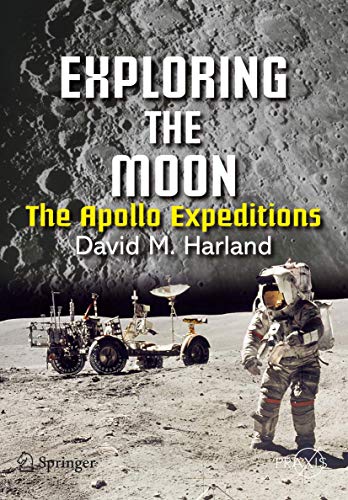
Exploring the Moon: The Apollo Expeditions
Book 134 of 408: Springer Praxis BooksLanguage: English
Published by Springer / Praxis, London, 1999
ISBN 10: 1852330996 ISBN 13: 9781852330996
First Edition
softcover. Condition: Fine copy. Profusely illustrated (illustrator). 1st. 8vo, 411 pp., Springer-Praxis Series in Space Science and Technology.
-

Condition: Good. 1st edition. Paperback, G. 287pp, 32pp b/w illustrations, index, spine faded & creased, a good copy. Geological study of the moon & the interesting problems which arrise from close study of the luanr landscape. How old is the moon, how was it formed & is there life on the moon? 350 grams.
-
Soft cover. Condition: Fine. 1st Edition. Softcover with bright clean cover. Looks near fine inside and out.
-

Exploring the Moon The Apollo Expeditions
Book 134 of 408: Springer Praxis BooksLanguage: English
Published by Springer, United Kingdom, 1999
ISBN 10: 1852330996 ISBN 13: 9781852330996
Seller: True Oak Books, Highland, NY, U.S.A.
Association Member: IOBA
Seller rating 5 out of 5 stars
First Edition
Paperback. Condition: Very Good-. First Edition; Fourth Printing. Springer-Praxis Series In Space Science And Technology; 6.5 X 1 X 9.5 inches; 411 pages; B&W illustrations. Very minor foxing speckles on the exterior edges of textblock. Very Good condition otherwise. No other noteworthy defects. No markings. ; - Your satisfaction is our priority. We offer free returns and respond promptly to all inquiries. Your item will be packaged with care and ship on the same or next business day. Buy with confidence.
-
Exploring the Moon Through Binoculars
Language: English
Published by Mcgraw - Hill, New York, 1969
First Edition
US$ 36.89 45% offUS$ 20.29
US$ 5.50 shipping
Ships within U.S.A.Quantity: 1 available
Add to basketHardcover. Condition: Very Good. Dust Jacket Condition: Very Good. First Edition. exploring the moon with binoculars at night on a clear warm night an inexpensive way to better see a piece of the world above us.
-

Exploring the Solar System with Binoculars: A Beginner's Guide to the Sun, Moon, and Planets
Language: English
Published by Cambridge University Press, 2010
ISBN 10: 0521741289 ISBN 13: 9780521741286
Seller: G.J. Askins Bookseller, New Lebanon, NY, U.S.A.
Association Member: SNEAB
Seller rating 5 out of 5 stars
First Edition Signed
Soft cover. Condition: Good. 1st Edition. 166 page tall soft cover beginner guide to stars, moon and planets - with binoculars. Many illustrations and helpful advise. Only flaws is a light crease to front cover lower corner. Inscribed to prior owner on title page. Inscribed by Author(s).
-

The Moon, Earth's Natural Satellite ( exploring Our Universe )
Published by Faber and Faber, London, 1960
First Edition
Cloth. Condition: Very Good. First Edition. VG++/VG. Tight and bright red cloth binding with light bumping to foot. Dust jacket has moderate edgewear and rubbing. First edition. Very nice solid copy.
-
Pictorial Encyclopedia of American History - Exploring the Moon-Fighting Inflation on Earth - Years 1971- Vol. 20
Published by United States History Society, Inc., US, 1972
First Edition
Hardcover. Condition: Near Fine. 1st Printing. United States History Society, Inc. 1972 1st Printing Near Fine/ Light tip wear to pictorial cover. Tight bright color illustrated pages. 15.1 ounces. Size: 10 1/4 x 8 1/4 x 1/2 inches.
-
EXPLORING THE MOON THROUGH BINOCULARS
Published by McGraw-Hill Book Company (1969), New York, NY, 1969
Seller: Riverow Bookshop, Owego, NY, U.S.A.
Seller rating 5 out of 5 stars
First Edition
Cloth w/DJ. Condition: G/G. Black & White Photographs (illustrator). First Edition. New York, NY: McGraw-Hill Book Company. G/G. (1969). First Edition. Cloth w/DJ. 4to., 211 pp., DJ rubbed, bumped, frayed, price clipped .
-
NAKED EYE ASTRONOMY, EXPLORING THE MOON WITH BINOCULARS, FIRESIDE ASTRONOMY (HISTORY , LORE OF ASTRONOMY ) 3 HCDJ1STXLIB
Published by WILEY, 1990
First Edition
GD. GD.
-
Queen of the Night: Exploring the Astrological Moon
First Edition
Paperback. Condition: Like New. First Edition. First Edition, First Printing. Not price-clipped. Published by Element Books, 1990. Octavo. Paperback. Book is like new with very light shelf wear. 100% positive feedback. 30 day money back guarantee. NEXT DAY SHIPPING! Excellent customer service. Please email with any questions. All books packed carefully and ship with free delivery confirmation/tracking. All books come with free bookmarks. Ships from Sag Harbor, New York.
-

Lifting Titan's Veil: Exploring the Giant Moon of Saturn
Language: English
Published by Cambridge University Press, 2002
ISBN 10: 0521793483 ISBN 13: 9780521793483
First Edition
Hardcover. Condition: Near Fine. Dust Jacket Condition: Fine. 1st Edition. 260PP. Tight copy in mylar-protected dust jacket.
-
Exploring the Moon Through Binoculars
Published by Peter Davis, London, 1969
Seller: WEST WESSEX BOOKS, Taunton, SOMER, United Kingdom
Seller rating 5 out of 5 stars
First Edition
US$ 13.82
US$ 24.15 shipping
Ships from United Kingdom to U.S.A.Quantity: 1 available
Add to basketHardcover. Condition: Good. Dust Jacket Condition: Fair. 1st Edition. 211pp. A month by month guided tour that will enable you to observe the moom in its full and fascinating details. d.j. a little used at the exptremitiesbook nice and clean , not inscribed, sound throughout. Size: 4to - over 9¾" - 12" tall. Book.
-

Lifting Titan's Veil: Exploring the Giant Moon of Saturn (a first printing)
Language: English
Published by Cambridge University Press,uk, 2002
ISBN 10: 0521793483 ISBN 13: 9780521793483
First Edition
US$ 34.54
US$ 26.96 shipping
Ships from United Kingdom to U.S.A.Quantity: 1 available
Add to basketHardcover. Condition: Fine. Dust Jacket Condition: Fine. 1st Edition. uk1st.edition,1st.printing./fine hardback in fine dustwrapper.
-
America in Space/The First Decade Two (2) Soft Cover Book Lot, including: Exploring the Moon and Planets, and; Linking Man and Spacecraft
Published by NASA, Washington, D.C., 1968
First Edition
Soft cover. Condition: See Description. 1st Edition. Nice pair from the NASA America in Space/The First Decade series published in 1968. B&W photos and drawings. Moon and Planets (EP-52) in Fine condition, and; Linking Man and Spacecraft (EP-56) in Very Good condition mostly because of folding creases of internal pages, yet very clean.
-
Project Apollo, Exploring the Moon
Published by Apogee Books Ontario 2005, 2005
Seller: Andrew Barnes Books / Military Melbourne, Melbourne, VIC, Australia
Seller rating 4 out of 5 stars
First Edition
1st edition softback with stiff wrappers Fine small octavo 49 + (47)pp., col. & b/w pls., text ills., Includes Saturn/Apollo lunar flights & Apollo 11-17.
-
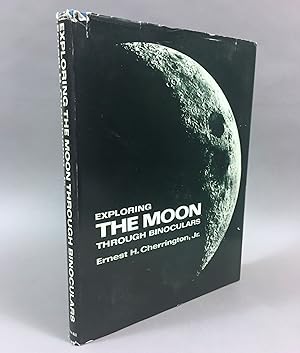
Hardcover. Condition: Near Fine. First Edition, First Printing. 211pp. including charts, gazetteer, list of reference books & index; illustrations, maps ; 29 cm. Tall 4to. Hardcover. Publisher's original turquoise cloth over boards, silver lettering to spine. Profusely illustrated with 52 photographs and 7 line drawings. Book Condition: faint signs of handling, else fine. Dust Jacket Condition: clipped, with very light wear to the extremities. A sharp copy. Not to be confused with the Dover edition reprint; "In addition to the seven full pages of photos of the moon-considered to be the finest ever taken-there are 52 other illustrations.".
-
Apollo 40 Years; NP-2009-06-593-HQ Celebrating Apollo Exploring the Moon, Discovering Earth
Published by National Aeronautics and Space Administration, Washington DC, 2009
Seller: Ground Zero Books, Ltd., Silver Spring, MD, U.S.A.
Seller rating 5 out of 5 stars
First Edition
Wraps. Condition: Very good. Presumed First Edition, First printing. Format is approximately 8.5 inches by 11 inches. Cover has minor wear and soiling. 23, [1] pages, plus covers. Profusely illustrated (color). This has write-ups on key Apollo program flights/crews. The Apollo program, also known as Project Apollo, was the third United States human spaceflight program carried out by the National Aeronautics and Space Administration (NASA), which succeeded in landing the first humans on the Moon from 1969 to 1972. It was first conceived during Dwight D. Eisenhower's administration as a three-person spacecraft to follow the one-person Project Mercury, which put the first Americans in space. Apollo was later dedicated to President John F. Kennedy's national goal for the 1960s of "landing a man on the Moon and returning him safely to the Earth" in an address to Congress on May 25, 1961. It was the third US human spaceflight program to fly, preceded by the two-person Project Gemini conceived in 1961 to extend spaceflight capability in support of Apollo. Kennedy's goal was accomplished on the Apollo 11 mission when astronauts Neil Armstrong and Buzz Aldrin landed their Apollo Lunar Module (LM) on July 20, 1969, and walked on the lunar surface, while Michael Collins remained in lunar orbit in the command and service module (CSM), and all three landed safely on Earth on July 24. Five subsequent Apollo missions also landed astronauts on the Moon, the last, Apollo 17, in December 1972. In these six spaceflights, twelve people walked on the Moon. Apollo ran from 1961 to 1972, with the first crewed flight in 1968. It encountered a major setback in 1967 when an Apollo 1 cabin fire killed the entire crew during a prelaunch test. After the first successful landing, sufficient flight hardware remained for nine follow-on landings with a plan for extended lunar geological and astrophysical exploration. Budget cuts forced the cancellation of three of these. Five of the remaining six missions achieved successful landings, but the Apollo 13 landing was prevented by an oxygen tank explosion in transit to the Moon, which destroyed the service module's capability to provide electrical power, crippling the CSM's propulsion and life support systems. The crew returned to Earth safely by using the lunar module as a "lifeboat" for these functions. Apollo used Saturn family rockets as launch vehicles, which were also used for an Apollo Applications Program, which consisted of Skylab, a space station that supported three crewed missions in 1973-74, and the Apollo-Soyuz Test Project, a joint US-Soviet Union Earth-orbit mission in 1975. Apollo set several major human spaceflight milestones. It stands alone in sending crewed missions beyond low Earth orbit. Apollo 8 was the first crewed spacecraft to orbit another celestial body, and Apollo 11 was the first crewed spacecraft to land humans on one. Overall the Apollo program returned 842 pounds (382 kg) of lunar rocks and soil to Earth, greatly contributing to the understanding of the Moon's composition and geological history. The program laid the foundation for NASA's subsequent human spaceflight capability, and funded construction of its Johnson Space Center and Kennedy Space Center. Apollo also spurred advances in many areas of technology incidental to rocketry and human spaceflight, including avionics, telecommunications, and computers. The Apollo program has been called the greatest technological achievement in human history. Apollo stimulated many areas of technology, leading to over 1,800 spinoff products as of 2015. The flight computer design used in both the lunar and command modules was, along with the Polaris and Minuteman missile systems, the driving force behind early research into integrated circuits (ICs). By 1963, Apollo was using 60 percent of the United States' production of ICs. The crucial difference between the requirements of Apollo and the missile programs was Apollo's much greater need for reliability. While the Navy and Air Force could work around reliab.
-

Exploring the Moon
Language: English
Published by Odhams Books Limited, 1964
Seller: Books at yeomanthefirst, Folkestone, United Kingdom
Seller rating 5 out of 5 stars
First Edition
US$ 41.45
US$ 42.86 shipping
Ships from United Kingdom to U.S.A.Quantity: 1 available
Add to basketHardcover. Condition: Very Good. Dust Jacket Condition: Very Good. Cyril Deakins (illustrator). 1st Edition. Hardback. Book Condition: Very Good. Dust Jacket Condition: Very Good. Cyril Deakins (illustrator). 1st Edition. First edition first printing octavo hardback 96 pp. Illustrated Very Good condition in Very Good, neatly price clipped dust jacket. No previous owner's inscriptions or marking of any kind.
-

Lifting Titan's Veil: Exploring the giant moon of Saturn.
Language: English
Published by Cambridge. Cambridge University Press., 2002
ISBN 10: 0521793483 ISBN 13: 9780521793483
First Edition
Karton Karton. Condition: Sehr gut. 1. Auflage,. viii, 260 Seiten, mit zahlreichen Abbildungen, Zust: Gutes Exemplar. Mit original Schutzumschlag. Schneller Versand und persönlicher Service - jedes Buch händisch geprüft und beschrieben - aus unserem Familienbetrieb seit über 25 Jahren. Eine Rechnung mit ausgewiesener Mehrwertsteuer liegt jeder unserer Lieferungen bei. Wir versenden mit der deutschen Post. Sprache: Englisch Gewicht in Gramm: 608.
-

Exploring the Moon: The Apollo Expeditions (Springer-Praxis Series in Space Science and Technology)
Book 134 of 408: Springer Praxis BooksSeller: suspiratio - online bücherstube lic.phil h.b., Basel, Switzerland
Seller rating 4 out of 5 stars
First Edition
Softcover. Condition: Sehr gut. 1. Auflage. sehr gut Size: 2.54x16.51x24.13 CENTIMETERS Language: ENG.
-
US$ 34.54
US$ 22.13 shipping
Ships from United Kingdom to U.S.A.Quantity: 1 available
Add to basketHardcover. Condition: Very Good. Dust Jacket Condition: Very Good. 1st Edition. 8.5 x 5.5 approx. This for the dust jacket only. Very Good+.
-
Exploring the Moon and the Planets; EP-52
Published by National Aeronautics and Space Administration, Washington, DC, 1968
Seller: Ground Zero Books, Ltd., Silver Spring, MD, U.S.A.
Seller rating 5 out of 5 stars
First Edition
Booklet. Condition: Good. [6], 26 pages. Wraps. illustrations. Diagram. Covers somewhat worn and soiled. Some page discoloration and soiling. Pencil erasure residue on fep. William Roger Corliss (August 28, 1926 - July 8, 2011) was an American physicist and writer who was known for his interest in collecting data regarding anomalous phenomena. Starting in 1974, Corliss published a number of works in the "Sourcebook Project". Each volume was devoted to a scientific field (archeology, astronomy, geology, et cetera) and featured articles culled almost exclusively from scientific journals. Corliss initially offered little in the way of his own opinions or editorial comments, preferring to let the articles speak for themselves. Corliss quoted all relevant parts of articles. Corliss wrote many other books and articles, notably including 13 educational books about astronomy, outer space and space travel for NASA and a similar number for the Atomic Energy Commission and the National Science Foundation. This is one of a series of booklets, America in Space: The First Decade, published on the occasion of the 10th Anniversary of the National Aeronautics and Space Administration. EP-52. Booklets in this series are intended to be overviews of some important activities, programs and events written for the general public in terms of the several science disciplines. Presumed First Edition, First printing [While the text date in stated inside the cover as Oct. 1, 1968 the GPO printing date at the back is 1969].
-
Exploring the Moon
Published by Odhams, London, 1964
Seller: Alexander's Books, Royal Leamington Spa, United Kingdom
Seller rating 5 out of 5 stars
First Edition
US$ 55.27
US$ 13.41 shipping
Ships from United Kingdom to U.S.A.Quantity: 1 available
Add to basketHardback. Condition: Very Good. Dust Jacket Condition: Very Good. Cyril Deakins (illustrator). 1st Edition. First edition first printing octavo hardback 96 pp. Illustrated Very Good condition in Very Good unclipped dust jacket. No inscriptions.
-
US$ 103.62
US$ 26.83 shipping
Ships from United Kingdom to U.S.A.Quantity: 1 available
Add to basketHardcover. Dust Jacket Included. 1st Edition. First Edition. Illustrated by Cyril Deakins. Very good plus condition in very good plus unclipped dust jacket. The contents are clean and free from any internal markings or inscriptions. The dust jacket is completely intact. A very well preserved copy of a rare book. Book.
-
Exploring the Moon and Mars; Choices for the Nation: OTA-ISC-502
Published by United States, Congress, Office of Technology Assessment, Washington DC, 1991
Seller: Ground Zero Books, Ltd., Silver Spring, MD, U.S.A.
Seller rating 5 out of 5 stars
First Edition
Trade paperback. Condition: Good. John Bergling (Cover design) (illustrator). Presumed First Edition, First printing. ix, [1], 104, [2] pages. Illustrations. Boxes. Figures. Tables. Footnotes. Cover has some other wear and soiling. Scientifically, the prospect of returning to the Moon and exploring Mars in greater detail is an exciting one. President Bush's proposal to establish a permanent lunar base and to send human crews to explore Mars would engage both scientists and engineers in challenging tasks. Yet it also raises a host of issues regarding the appropriate mix of humans and machines, timeliness, and costs of space exploration. This Nation faces a sobering variety of economic, environmental, and technological challenges over the next few decades, all of which will make major demands on the Federal budget and other national assets. Within this context, Congress will have to decide the appropriate pace and direction for the President's space exploration proposal.This report, the result of an assessment of the potential for automation and robotics technology to assist in the exploration of the Moon and Mars, raises a number of issues related to the goals of the U.S. civilian space program. Among other things, the report discusses how greater attention to automation and robotics technologies could contribute to U.S. space exploration efforts. The Office of Technology Assessment (OTA) was an office of the United States Congress from 1972 to 1995. OTA's purpose was to provide Congressional members and committees with objective and authoritative analysis of scientific and technical issues of the late 20th century, i.e. technology assessment. It was a leader in practicing and encouraging delivery of public services in innovative and inexpensive ways, including early involvement in the distribution of government documents through electronic publishing. Congress established the Office of Technology Assessment with the Technology Assessment Act of 1972.[1] It was governed by a twelve-member board, comprising six members of Congress from each party â" half from the Senate and half from the House of Representatives. During its twenty-four-year life it produced about 750 studies on a wide range of topics, including acid rain, health care, global climate change, and polygraphs. Criticism of the agency was fueled by Fat City, a book by Donald Lambro; it called OTA an "unnecessary agency" that duplicated government work done elsewhere. OTA was "de-funded" in the "Contract with America" period.


