Order Total (1 Item Items):
Shipping Destination:

Figure Camera, First Edition (11 results)
Skip to main search results
Search filters
Product Type
- All Product Types
- Books (9)
- Magazines & Periodicals (No further results match this refinement)
- Comics (No further results match this refinement)
- Sheet Music (No further results match this refinement)
- Art, Prints & Posters (No further results match this refinement)
- Photographs (1)
- Maps (No further results match this refinement)
- Manuscripts & Paper Collectibles (1)
Condition Learn more
- New (No further results match this refinement)
- As New, Fine or Near Fine (5)
- Very Good or Good (5)
- Fair or Poor (No further results match this refinement)
- As Described (1)
Binding
Collectible Attributes
Language (2)
Price
- Any Price
- Under US$ 25 (No further results match this refinement)
- US$ 25 to US$ 50
- Over US$ 50
Free Shipping
- Free Shipping to U.S.A. (No further results match this refinement)
Seller Location
Seller Rating
-

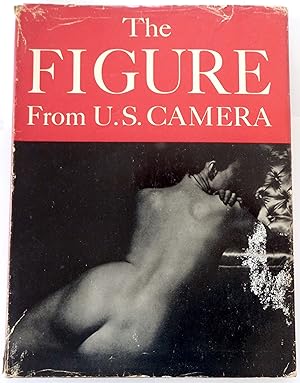
Hardcover. Condition: Fine. Dust Jacket Condition: Very Good. 1st Edition. Folio,.112 pages. Truth be told the majority of these figure photography productions were nothing more than an excuse to display the latest cheesecake of the 1950's. This production can legitimately be called a beautiful compilation from ~66 photographers of the world who contributed a uniformly successful version of the "nude" as a fine art. These include Philippe Halsman, Harry Callahan, Ferenc Berko (with a quadruple foldout study) and, somewhat astonishingly, a collaboration double exposre between Ted Castle and Doris Day!! She photographed the sand dunes and he the nude. Touche!
-
The Figure from U. S. Camera
Published by U. S. Camera Publishing Corporation, New York, 1952
First Edition
Hardcover. Condition: Good+. Dust Jacket Condition: Good. First Edition. Owners name in ink on several pages. Some small chips on front of DJ. Corners and spine of DJ hae sipping. ; Covered in Mylar; B and w photos; 9 X 1 X 11.25 inches; 112 pages.
-

First edition. 4to. 48 pp. Duotone photography. Cloth in dustwrapper, unclipped, edgewear, very good copy. (87176).
-

FIGURE LUOGHI MISTERI CRONACA. UN SECOLO DI VITA BOLOGNESE NELL'ARCHIVIO DEI FRATELLI CAMERA
Published by NUOVA ALFA EDITORIALE, 1989
First Edition
Condition: Buone. fotografie in b/n (illustrator). Prima Edizione. Num Pagine 249 tela editoriale con sovracoperta illustrata.
-
THE FIGURE FROM U.S. CAMERA
Publication Date: 1952
Seller: Xerxes Fine and Rare Books and Documents, Glen Head, NY, U.S.A.
Seller rating 5 out of 5 stars

First Edition
Condition: VG. New York 1952 first edition. U S Camera. Hardcover 4to. 112p. Fully illustrated with award-wining lovely photos of female body by many different photographers. VG++ almost no wear; owner bokplate. Hinges not cracked. VG DJ. light wear on dj; dj protected with removable glassine jacket.
-
The Figure from U.S. Camera
Published by U.S.Camera Publishing Corporation, 1952
Seller: The Book House, Inc. - St. Louis, St. Louis, MO, U.S.A.
Association Member: IOBA MWABA
Seller rating 5 out of 5 stars
First Edition
Hardcover. Condition: Very Good. Dust Jacket Condition: Very Good. First Edition. Very Good Hardcover with dustjacket.
-

An Original Official Letter Appointing an Interview with the Pope for Leone Levi. Dated Dall Antigamera Pontifigia Vaticano 17 by the Octtobre 1867. Part filled in part typed. Signed to base by The Maestro di Camera ( is the real chief chamberlain to the Pope). A very senior figure in the Papal Hierarchy. The Maestro di Camera at this time was in Filippo de Angelis.
Language: English
Published by UK, 1867
Seller: Lasting Words Ltd, Northampton, UK, United Kingdom
Association Member: PBFA
Seller rating 5 out of 5 stars
Manuscript / Paper Collectible First Edition Signed
US$ 124.29
US$ 26.75 shipping
Ships from United Kingdom to U.S.A.Quantity: 1 available
Add to basketPaper. Condition: Good. First Edition. An Original Official Letter Appointing an Interview with the Pope for Leone Levi. Dated Dall Antigamera Pontifigia Vaticano 17 by the Octtobre 1867. Part filled in part typed. Signed to base by The Maestro di Camera ( is the real chief chamberlain to the Pope). A very senior figure in the Papal Hierarchy. The Maestro di Camera at this time was in Filippo de Angelis. Levi Leone, 1821-1888. English jurist and statistician. His chief work, History of British Commerce and of the Economic Progress of the British Nation, 1763-1870, is considered to be a partisan account of British economic development. Size is 270mm x 200mm. Condition is good. Light folding creases and light marking. More images can be taken upon request. Ref17153. Signed by Author(s).
-
Ginnastica da Camera. Massaggio e Nuoto. 86 figure a colori con testo.
Published by Torino, S. Lattes & C. Librai-Editori,, 1900
Seller: Libreria Antiquaria Dentis (ALAI - ILAB), Torino, TO, Italy
Seller rating 5 out of 5 stars
First Edition
Brossura. Condition: ottimo. prima edizione. Torino, S. Lattes & C. Librai-Editori, 1900. In-16° (16,5 cm x 9 cm). Pp. 48 di cui 24 di testo e 24 tavole a piena pagina raffiguranti 86 figure a colori impresse in cromolitografia. Esemplare in ottimo stato di conservazione. Interessante e raro piccolo atlante, difficile a trovarsi ben conservato, opera di Ubaldo Valbusa (1872-1939). L' Autore è stato tra i fondatori del Cai e dello Ski Club Torino. Docente di scienze naturali, intellettuale, erudito, è stato un personaggio fondamentale negli anni in cui gli sport della montagna hanno avuto un ruolo fondamentale nella nascita dell' Italia.
-
Couverture rigide. Condition: Bon. Dust Jacket Condition: Moyen. Edition originale. New York, U.S. Camera publishing corporation, 1952. In-4, 1952. Plein cartonnage toilé de l'éditeur, jaquette illustrée. 104 photographies, dont 1 dépliante. Jaquette défraichie avec de petites déchirures et de petits manques, des traces de mouillures. Album en bel état.
-
DECORATIVE FIGURE (Original Photogravure from CAMERA NOTES)
Published by Camera Club of New York, New York, 1899
Seller: Tennyson Williams Books and Fine Art, Williamsburg, VA, U.S.A.
Seller rating 3 out of 5 stars

Photograph First Edition
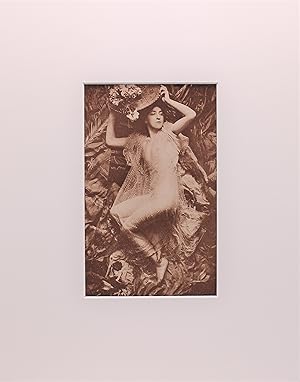
Paper. Condition: Fine. René Le Bègue (illustrator). First Edition Thus. Published in Camera Notes, volume 3, number I (July 1899). Printed as a photogravure by the Photochrome Engraving Company, a company that Alfred Stieglitz had founded. Image size is 7 3/4 inches by 4 3/4 inches. René Le Bègue was a Parisian photographer who founded the Photo-Club de Paris and was the first French photographer elected to England's Linked Ring. Alfred Stieglitz recognized his talent when he included six of Le Bègue's photographs in his personal collection. The semi-nude portrait offered here is typical for Le Bègue, who almost exclusively photographed nude women. The photogravure is in excellent condition: a superb impression that is in virtually as-new condition. Now archivally matted in an off-white passe-partout and ready to be framed in a standard 11" by 14" frame. Size: 7 3/4 inches by 4 3/4 Inches. Photo.
-
L'Archittettura civile preparata su la geometria, e ridotta alle prospettive. Considerazioni pratiche di Ferdinando Galli Bibiena cittadino Bolognese Architetto Primario, Capo Mastro Maggiore, e Pittore di Camera, e Feste di Teatro della Maestà, Dissegnate e descritte in cinque parti. La prima contiene la Geometria, e avvertimenti, prima che à fabbricar si pervenga. La seconda. un utile Trattato dell'Architettura civile in generale, e le divisioni di essa molto facilitate. La Terza. La Prospettiva commune, orizontale, e di sotto in sù. La Quarta. Un brieve discorso di Pittura, e la Prospettiva per li Pittori di Figure, colla nuova Prospettiva delle Scene Teatrali vedute per angolo, oltre le praticate da tutti gli altri. La Quinta. La Mecani
Published by Paolo Monti, Parma, 1711
Seller: Liber Antiquus Early Books & Manuscripts, Chevy Chase, MD, U.S.A.
Seller rating 5 out of 5 stars
First Edition
Hardcover. Condition: Fine. FIRST EDITION, SECOND ISSUE. A genuine, unsophisticated copy with no interventions. Bound in contemporary stiff parchment (worn, soiled and stained, corners and extremities worn with some restorations. The text is in overall fine condition, the paper fine, the margins broad, with just cosmetic faults: Marginal finger-soiling, heavier to first two leaves; pages 49-50, 135-136, and a few other leaves towards the end with marginal damp-stains, wrinkled gutter of plate opposite p. 95 (from paste), with stains at head and foot (not affecting the image), small tallow stain to blank corner of plate 61 and following two text lvs., gutter of p. 119/120 and following plate with a few wormholes and some staining from the paste, p. 123/4 with clean tear at head, not entering the text, p. 139 with light ink smear and marginal damp-stain, final leaves with v. light damp-stain in the gutter and outer margin; some leaf edges curled and with small tears. With 72 numbered etched plates, after and possibly by Bibiena, pasted in, and an engraved portrait of the author printed in the prelims. First edition, second issue, with the author's address "In Bologna Appresso L'Autore" added to the title and numbers added to the plates. One of Baroque theater's most important innovators, Ferdinando Galli Bibiena founded a dynasty of eight artists whose work, produced largely for the Farnese family and the House of Austria, shaped stage and theater design from the 1680s to the 1780s. Trained in painting, draftsmanship, and architecture, Ferdinando developed the family's distinctive style while creating stage sets, decorations, buildings, and gardens for the Farnese court in Parma and Piacenza. He is best known for inventing the scena per angolo - the "angled scene" - which broke with the rigid symmetry of seventeenth-century stages and introduced dynamic, immersive perspectives. This innovation established him as one of Europe's leading stage designers. His reputation brought commissions from major Italian theaters and, in 1708, an invitation to Barcelona to direct festivities for the marriage of Archduke Charles (later Emperor Charles VI). Later, together with his sons Giuseppe and Antonio, he worked at the Viennese court, further refining this revolutionary perspective system. Ferdinando codified his ideas in L'architettura civile, an influential manual for students of art and architecture. It is the first treatise to formally define scena per angolo, explained in Part Four's Della prospettiva delle scene, o teatri di nuova invenzione as a means of transforming static scenery into dynamic, spatially rich theatrical environments. The work is divided into five sections: geometry, civil architecture, perspective, including illusionistic "sotto in sù" perspective; instructions for painting perspective for theatrical scenes, including the "scena per angolo" technique; and the mechanics of transporting and supporting stage scenery. "The five-part text of Architettura civile contains references to the principal canonical writers on architecture (Vitruvius, Leon Battista Alberti, Andrea Palladio, Sebastiano Serlio, Vincenzo Scamozzi, and Giacomo Barozzi da Vignola) and on painting (Leonardo and Albrecht Durer), but is more circumspect in its references to experts on perspective; neither Nicola Sabbatini nor Andrea Pozzo is mentioned, the latter an especially glaring omission. The section on geometry includes a comparative table of scaled measurements, and although this was not a new idea (Serlio had provided scaled comparative measurements in his treatise), it added to the documentation of the widely diverse measurements used in European cities. In the section on architecture, Ferdinando follows Palladian principles of architecture, discussing types of buildings and appropriate kinds of ornament. The first two parts of the treatise establish several methods for the mastery of spatial illusionism in architecture and offer a repertory of architectural forms. "Ferdinando's Architettura civile i.