
Garcilaso: Signed (8 results)

- Softcover
- First Edition
- Signed
Seller: themeekdontwantit, Atlanta, GA, U.S.A.themeekdontwantit
Contact seller5-star sellerCondition: Used - Very good
US$ 15.00
US$ 6.75 shippingShips within U.S.A.Quantity: 1 available
Soft cover. Condition: Very Good. 1st Edition. Trade paperback, VG+ condition. 9 x 6 inches. Inscribed to previous owner and SIGNED by Claudio Guillen. Signed by Author(s).

Language: Spanish
Published by Cincel, Madrid 1980
- Softcover
- Signed
Seller: Llibrenet, Sant Feliu del Raco, B, SpainLlibrenet
Contact seller5-star sellerCondition: Used - Very good
US$ 7.06
US$ 22.85 shippingShips from Spain to U.S.A.Quantity: 1 available
Encuadernación de tapa blanda. Condition: Bien. Dust Jacket Condition: Bien. Cuadernos de estudio, 5. Serie literatura El servicio contrareembolso tiene un coste adicional de 3 euros. Literatura Universal (illustrator). Sello del anterior propietario.
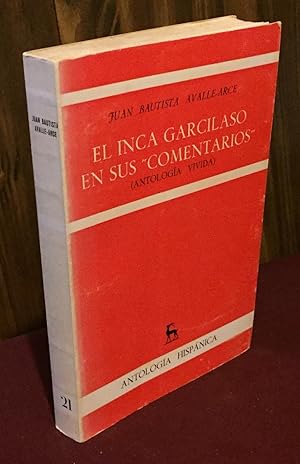
Published by Editorial Gredos (Madrid) 1970
- Softcover
- Signed
Seller: Palimpsest Scholarly Books & Services, Brooktondale, NY, U.S.A.Palimpsest Scholarly Books & Services
Contact seller5-star sellerCondition: Used - Very good
US$ 17.50
US$ 6.50 shippingShips within U.S.A.Quantity: 1 available
Soft cover. Condition: Very Good. Biblioteca Romanica Hispanica VI. Antologia hispanica. Author-signed reprint. Softcover volume, with flaps, measures approximately 5" x 7.5", and displays moderate external wear, with sunning to spine and light foxing to top edge of text block. Binding is sound. Pages are clean and bright. Inscr…iption on first blank page reads "Para Dan Eisenberg / muy / agradecido por esos "apendices / quijotescos." / Cordialmente, / J. Avalle-Arce / 5.V.971." 282 pages. Signed by Author(s).
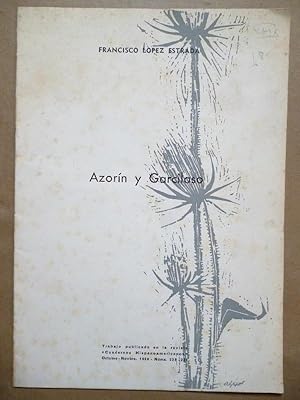
Published by Separata de Cuadernos Hispanoamericanos 226-227,, Madrid 1968
- Softcover
- Signed
Seller: Carmichael Alonso Libros, Cantabria, S, SpainCarmichael Alonso Libros
Contact seller4-star sellerCondition: Used - Very good
US$ 11.77
US$ 25.14 shippingShips from Spain to U.S.A.Quantity: 1 available
Rústica. Condition: Bueno. 17x24. 15pp. Rústica. Buen ejemplar. Dedicatoria autógrafa al bibliotecario Ignacio Aguilera. .
 More images
Published by Devenir Ensayo,, Madrid 2005
- Softcover
- First Edition
- Signed
Seller: Carmichael Alonso Libros, Cantabria, S, SpainCarmichael Alonso Libros
Contact seller4-star sellerCondition: Used - Very good
US$ 17.65
US$ 25.14 shippingShips from Spain to U.S.A.Quantity: 1 available
Rústica. Condition: Bueno. 1ª ed. 16x22. 221pp. 5h. Rústica. Dedicatoria autógrafa a Manuel Arce, poeta y editor. Muy buen ejemplar.
 More images
Published by Narcea,, Madrid 1983
- Softcover
- First Edition
- Signed
Seller: Carmichael Alonso Libros, Cantabria, S, SpainCarmichael Alonso Libros
Contact seller4-star sellerCondition: Used - Very good
US$ 21.18
US$ 25.14 shippingShips from Spain to U.S.A.Quantity: 1 available
Rústica. Condition: Bueno. 1ª ed. 11x18. 2 vols. de 413pp. y 412pp. Rústica. Español. Dedicatoria autógrafa a Julio Neira.
 More images
Language: Spanish
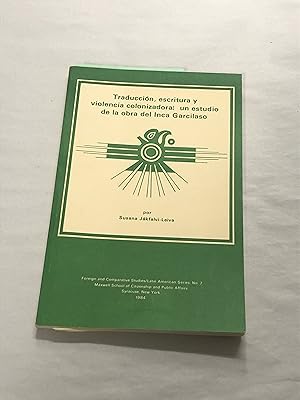
Published by Maxwell School of Citizenship and Public Affairs 1984
- Softcover
- Signed
Seller: ccbooksellers, Front Royal, VA, U.S.A.ccbooksellers
Contact seller5-star sellerCondition: Used - Very good
US$ 70.00
US$ 6.00 shippingShips within U.S.A.Quantity: 1 available
paperback. Condition: very good. inscribed by author. cover shows minor signs of shelf wear. save for author's inscription, pages are clean and unmarked. 1. signed and inscribed by author.
Published by University of Texas Press, Austin 1951
- Hardcover
- First Edition
- Signed
Seller: Ground Zero Books, Ltd., Silver Spring, MD, U.S.A.Ground Zero Books, Ltd.
Contact seller5-star sellerCondition: Used - Good
US$ 125.00
US$ 5.00 shippingShips within U.S.A.Quantity: 1 available
Hardcover. Condition: Good. Dust Jacket Condition: Poor. Presumed First Edition, First printing. xlv, [3], 655, [1] pages. Illustrated endpaper. Frontis illustration of Hernando de Soto. Footnotes. Index. Signed by both translators on the half-title page. Bookplate of Otto Orren Fisher on endpaper verso. Minor stain and print tr…ansfer on half-title page. DJ has wear, tears, soiling and chips. Inca Garcilaso de la Vega (12 April 1539 - 23 April 1616), born Gómez Suárez de Figueroa and known as El Inca, was a chronicler and writer born in the Viceroyalty of Peru. He is considered the earliest-recorded mestizo in the history of the Americas. Sailing to Spain at 21, he was educated informally there, where he lived and worked the rest of his life. The natural son of a Spanish conquistador and an Inca noblewoman born in the early years of the conquest, he is known primarily for his chronicles of Inca history, culture, and society. His work was widely read in Europe, influential and well received. It was the first literature by an author born in the Americas to enter the western canon. After his father's death in 1559, Vega moved to Spain in 1561. His paternal uncle became a protector, and he lived in Spain for the rest of his life, where he wrote an account of De Soto's expedition in Florida. De la Vega entered Spanish military service in 1570 and fought in the Alpujarras against the Moors after the Morisco Revolt. He received the rank of captain for his services to the Crown. He wrote from an important perspective, as his maternal family were the ruling Inca. De la Vega's first work was La Florida del Inca, an account of Hernando de Soto's expedition and journey in Florida. The work was published in Lisbon in 1605 and became popular. It describes the expedition according to its own records and information Garcilaso gathered during the years. He defended the legitimacy of imposing the Spanish sovereignty in conquered territories and submitting them to Catholic jurisdiction. At the same time, he expresses and defends the dignity, the courage, and the rationality of the Native Americans. It was translated and published in English in 1951. Hernando de Soto (c. 1500 - May 21, 1542) was a Spanish explorer and conquistador who was involved in expeditions in Nicaragua and the Yucatan Peninsula. He played an important role in Francisco Pizarro's conquest of the Inca Empire in Peru, but is best known for leading the first European expedition deep into the territory of the modern-day United States (through Florida, Georgia, Alabama, Mississippi, and most likely Arkansas). He is the first European documented as having crossed the Mississippi River. De Soto's North American expedition was a vast undertaking. It ranged throughout what is now the southeastern United States, both searching for gold, which had been reported by various Native American tribes and earlier coastal explorers, and for a passage to China or the Pacific coast. De Soto died in 1542 on the banks of the Mississippi River. In May 1539, de Soto landed nine ships with over 620 men and 220 horses in an area generally identified as south Tampa Bay. He named the land as Espíritu Santo after the Holy Spirit. The ships carried priests, craftsmen, engineers, farmers, and merchants; some with their families, some from Cuba, most from Europe and Africa. Few of the men had traveled before outside of Spain, or even away from their home villages. Near de Soto's port, the party found Juan Ortiz, a Spaniard living with the Mocoso people. Ortiz had been captured by the Uzita while searching for the lost Narváez expedition; he later escaped to Mocoso. Ortiz had learned the Timucua language and served as an interpreter to de Soto as he traversed the Timucuan-speaking areas on his way to Apalachee. Ortiz developed a method for guiding the expedition and communicating with the various tribes, who spoke many dialects and languages. He recruited guides from each tribe along the route. A chain of communication was established whereby a guide who had lived in close proximity to another tribal ar. Reese Brandt (drawings) (illustrator).


