
Giuoco Parti: First Edition (8 results)
 More images
Language: Italian
Published by Fratelli Treves, Editori, 1919
- Softcover
- First Edition
Seller: Daniel Zachariah, Buenos Aires, ArgentinaDaniel Zachariah
Contact seller5-star sellerAssociation member: ALADA
Condition: Used - Good
US$ 20.00
US$ 23.00 shippingShips from Argentina to U.S.A.Quantity: 1 available
Add to basketSoft cover. Condition: Good. No Jacket. 1st Edition. Milano, Fratelli Treves, Editori, 1919. 1st edition. 12,5 x 19 cm, 256 pp. Light foxing on the covers. Blind stamp on the title page, pages browned. Overall good. The Book Cellar & Henschel.

Published by Oscar Mondadori Gli Oscar, 1971
- Softcover
- First Edition
Seller: Books di Andrea Mancini, Milano, MI, ItalyBooks di Andrea Mancini
Contact seller5-star sellerCondition: Used - Good
US$ 5.77
US$ 44.81 shippingShips from Italy to U.S.A.Quantity: 1 available
Add to basketCondition: Buono. Brossura illustrata, tracce di lettura ai piatti e al dorso, buona copia. Prima edizione Gli Oscar. 18,5x11cm.
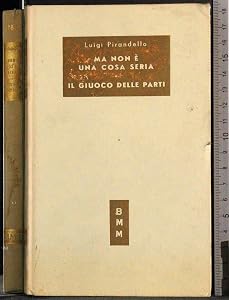
Published by Mondadori, 1954
- Hardcover
- First Edition
Seller: Cartarum, Ariccia, RM, ItalyCartarum
Contact seller5-star sellerCondition: Used - Good
US$ 6.92
US$ 50.41 shippingShips from Italy to U.S.A.Quantity: 1 available
Add to basketCondition: Good. PRIMA EDIZIONE. Condizioni dettagliate: Buone, scritta di penna sul frontepsizio, etichetta, gora d'acqua e lievissime abrasioni sulla copertina, copertina rigida.

Published by Mondadori
- Hardcover
- First Edition
Seller: Cartarum, Ariccia, RM, ItalyCartarum
Contact seller5-star sellerCondition: Used - Good
US$ 6.92
US$ 50.41 shippingShips from Italy to U.S.A.Quantity: 1 available
Add to basketCondition: Good. PRIMA EDIZIONE. Condizioni dettagliate: Buone, macchie e pieghe alla copertina, copertina flessibile.

Published by Milano
- Softcover
- First Edition
Seller: Sergio Trippini, Gavirate, VA, ItalySergio Trippini
Contact seller5-star sellerCondition: Used
US$ 11.54
US$ 53.77 shippingShips from Italy to U.S.A.Quantity: 1 available
Add to basketLibro vintage. Argomento: Teatro. Autore: Piradello Luigi. Editore: Mondadori. Luogo: Milano. Anno: 1993. Formato: in-16°. Pagg: 179. Legatura: Brossura. Collana: Oscar tutte le opere di Pirandello. Conservazione: Buona. Prima edizione. Buono stato di conservazione.

Published by Fratelli Trevesi editori,, 1919
- Softcover
- First Edition
Seller: Libreria Antiquaria Pontremoli SRL, Milano, MI, ItalyLibreria Antiquaria Pontremoli SRL
Contact seller5-star sellerCondition: Used
US$ 57.69
US$ 56.01 shippingShips from Italy to U.S.A.Quantity: 1 available
Add to basketbrossura. Milano, Fratelli Trevesi editori, 1919, Prima edizione. Ottimo esemplare (leggere fioriture). Lo Vecchio Musti, Bibliografia di Pirandello in 8°, brossura, pp. [4] 256; 16 di catalogo editoriale. Prima edizione. Ottimo esemplare (leggere fioriture).
 More images
Published by London: Strangeways Press Ltd, 1951
- Hardcover
- First Edition
- Signed
Seller: LOUIS88BOOKS (Members of the PBFA), Andover, United KingdomLOUIS88BOOKS (Members of the PBFA)
Contact seller5-star sellerAssociation member: PBFA
Condition: Used - Good
US$ 681.57
US$ 38.38 shippingShips from United Kingdom to U.S.A.Quantity: 1 available
Add to basketHardcover. Condition: Good. 1st Edition. London: Strangeways Press Ltd. 1951. Later Edition. Publisher's original red cloth binding with gilt titles to a black spine label, front board and spine badly faded, text pages tanned, text block tight. Newspaper clippings loosely inserted. First English translation of Scaino's Trattato del giuoco della palla, the first book on tennis. Limited to two-hundred and fifty copies, hand-numbered and autographed by P.A. Negretti this copy No. 8. Scaino (1524-1612), priest and doctor of theology, was thirty-one when his book was published. It covers many forms of tennis, his definition of "ball-game" in W.W. Kershaw's English translation (London, 1951) being: "a contest between at least two players who, placed one on one side and the other on the other as adversaries, do battle together with a solid and round instrument made from the skin of an animal and capable of bouncing, called a ball, each doing his utmost to obtain victory for himself by striking the ball as far as possible towards his adversary, striking it sometimes at the volley in mid-air, sometimes after the first bound, and sometimes at the half-volley." (ch. iii, pt. II). Pagination: xlii, 319, [3], xliii-lpp. Provenance: pencil inscription to the final leaf, David, Cambridge. Approximately 6 ¾ inches (17.3m) tall. Condition Report Externally Spine good condition structurally sound and strong, gilt titles to a black leather label, faded, minor wear. Joints good condition sound, worn. Corners good condition worn and bumped. Boards good condition red cloth, front board badly faded. Page edges good condition darkened to the top, tanned. Binding good condition sound. See above and photos. Internally Hinges good condition sound. Paste downs good condition tanned paper, foxed. End papers good condition tanned paper, foxed. Title good condition tanned, minor foxing and marks. Pages good condition tanned, minor foxing and marks. See photos. Signed by Author(s).…
 More images
Published by Gabriel Giolito de' Ferrari and his brothers, Venice, 1555
- Hardcover
- First Edition
Seller: Arader Books, New York, NY, U.S.A.Arader Books
Contact seller5-star sellerCondition: Used - Very good
US$ 58,000.00
Free ShippingShips within U.S.A.Quantity: 1 available
Add to basketHardcover. Condition: Very good. First. FIRST EDITION OF THE FIRST BOOK ON TENNIS. Venice: Gabriel Giolito de' Ferrari, et fratelli; 1555. Sextodecimo in 8s (16mo; 5 9/16" x 3 11/16", 141mm x 94mm). [Full collation available; lacking the final blank V8.] With 6 double-page wood-cut illustrations. Bound in modern speckled calf by Trevor Lloyd. On the spine, five raised bands. Title gilt to chestnut morocco in the second panel, imprint gilt to deep brown morocco in the third. Gilt fillet to the edges of the boards. Marbled end-papers. All edges of the text-block glazed red. Very pale foxing throughout, mild in places. Quire Q tanned. Lacking V8 blank. Ink "407" in an old hand to the title-page (inventory number?), with an oval ink-stamp below (mostly illegible: "ET SI[M.]/ D. [D]"). Antonio Scaino (1524-1612) was born in Salò on the shore of Lake Garda in Lombardy to a noble family. After a doctorate at Padua, Scaino took holy orders as an Augustinian and entered the court at Ferrara, where the Este family had long ruled. There he struck up a friendship with the current Duke's eldest son, the future Alonso II, to whom the present work is dedicated. Ever a philosopher -- perhaps best known as one of the great Renaissance interpreters of Aristotle -- Scaino celebrates the exercise of the body and thus of the soul, suggesting that the game was described in a (lost) treatise of Timocrates the Spartan. Scarcely a page later, he claims more soundly that his is indeed the first work on the game that would come to be known as tennis. The history of tennis is the subject of a library of studies, but in brief, the cluster of palm (jeu de paume) and racquet sports emerged in the XIIc in France and blossomed throughout the monastic and noble centers of Europe. "Gioco della palla" simply means "ballgame," but Scaino is codifying a racqueted sport that had become particularly popular in the opening decades of the XVIc. Often called the sport of kings, "real tennis" -- a XXc distinction from lawn tennis -- is played in an asymmetrical indoor court, with a service end and a hazard end, as well as various architectural elements that can interact or interfere with the ball. The intimate relation between the particular court and the game played -- as well as the great privilege of its players -- meant that disputes often arose concerning rules and the general course of play. Scaino's treatise, in addition to specifying a standard set of equipment and a plan of the court, is the first to lay out a common set of rules, such that a Ferrarese duke might profitably play against a Venetian doge. All modern books of tennis stand on the shoulders of the present work, and bibliographers are unanimous in declaring its primacy and importance. The marks of ownership are too faint to interpret; the "D. D." of the ink-stamp on the title suggests a gift made ("Donum Dedit"), perhaps to an institution. Adams II, S-547; Brunet V.178; Mortimer/Harvard Italian 465; Henderson p. 176. …


