Order Total (1 Item Items):
Shipping Destination:

Great Doctors, Signed (12 results)
Skip to main search results
Search filters
Product Type
- All Product Types
- Books (12)
- Magazines & Periodicals (No further results match this refinement)
- Comics (No further results match this refinement)
- Sheet Music (No further results match this refinement)
- Art, Prints & Posters (No further results match this refinement)
- Photographs (No further results match this refinement)
- Maps (No further results match this refinement)
- Manuscripts & Paper Collectibles (No further results match this refinement)
Condition Learn more
- New (No further results match this refinement)
- As New, Fine or Near Fine (2)
- Very Good or Good (6)
- Fair or Poor (No further results match this refinement)
- As Described (4)
Binding
Collectible Attributes
Language (1)
Free Shipping
- Free Shipping to U.S.A. (No further results match this refinement)
Seller Location
Seller Rating
-

Man the thinker and the great doctors of the soul: Mystics, sages, saints, seers, masters and psychics
Published by Augstums Printing Service, 2002
Seller: Books From California, Simi Valley, CA, U.S.A.
Seller rating 4 out of 5 stars

Signed
Unknown Binding. Condition: Very Good. Signed. Signed by the author. Paperback. Minimal wear and creases.
-
American Doctors of Destiny: A Collection of Historical Narratives of the Lives of Great American Physicians and Surgeons
Published by Normandie House, Chicago, 1940
Seller: Bibliodisia Books, Caxton Club, Chicago, IL, U.S.A.
Association Member: MWABA
Seller rating 5 out of 5 stars

First Edition Signed
Hardcover. Condition: Fine. First Edition. SIGNED BY THE AUTHOR with o other inscription present. Vintage illustrated bookplate of James M. Kasten, Chicago physician of note. Small chip to bottom of jacket spine, else a fine, unclipped and unmarked copy in a Brodart cover. Signed.
-
![Seller image for Medical Scientists and Doctors; Lives of Great Men and Women Series IV [Signed] for sale by Little Stour Books PBFA Member](https://pictures.abebooks.com/inventory/md/md6758977611.jpg)
Medical Scientists and Doctors; Lives of Great Men and Women Series IV [Signed]
Published by Published by Oxford University Press, Amen House, London Reprinted Edition with Corrections [First Edition 1958]. London 1971., 1971
Seller: Little Stour Books PBFA Member, Canterbury, United Kingdom
Association Member: PBFA
Seller rating 5 out of 5 stars
Signed
US$ 17.00
US$ 39.60 shipping
Ships from United Kingdom to U.S.A.Quantity: 1 available
Add to basketCondition: Very Good. Hard back binding in publisher's original pale olive cloth covers, red title and author lettering to the spine and the upper panel. 8vo. 7½'' x 5¼''. Contains 264 printed pages of text with monochrome illustrations and photographs throughout. Light foxing to the closed page edges. Very Good condition book in Very Good condition dust wrapper with small nicks to the spine ends, not price clipped. SIGNED by the author to the front free end paper 'Norman Wymer'. Dust wrapper supplied in archive acetate film protection, this preserves and prolongs the life of the paper, it is not adhered to the book or to the dust wrapper. Member of the P.B.F.A. BIO (Résumé, Memoir).
-
ADVENTURES IN MEDICINE, ONE DOCTOR'S LIFE AMID THE GREAT DISCOVERIES OF 1940-1990
Published by Sibley W. Hoobler, Cleveland, Ohio, 1991
Seller: Hoffman Books, ABAA, IOBA, Columbus, OH, U.S.A.
Association Member: ABAA ILAB IOBA
Seller rating 3 out of 5 stars

Signed
Softcover. Condition: Very Good. This books is soft-bound in gray wrappers with blue printing on the covers and spine. The covers show sunning to the edges and spine, and a few small spoiling spots. The binding is solid. The contents are bright and clean. This book is Signed/Inscribed by the author, Sibley Hoobler, on the title-page. ; Signed by Author.
-

The Lost Legion: The Story of the Fifteen Hundred American Doctors who Served with the B.E.F. in the Great War
Published by author/Loring Axtell, Springfield, 1926
First Edition Signed
Hardcover. Condition: Good. 1st Edition. 1st printing (same date). Signed by author. 408pp. Good+, worn and soiled with a glass ring on the front panel. Signed by Author(s).
-
The Lost Legion; The Story Of The Fifteen Hundred American Doctors Who Served With The B. E. F. In The Great War
Published by Published by the Author, Printed by The Loring-Axtell Company, Springfield, Mass., 1926
First Edition Signed
Hardback. Red cloth, gilt lettering on the spine, 8vo, 408 pp. Presentation copy, with the inscription "For Ernest Hartter from his friend the Author" on ffep. Also, as usual, signed by the author on the frontis photograph of Chapin (1890-1961), and dated 1929. Account of the doctors recruited to serve with the British Army when America entered World War I. Franklin Martin, Chairman of the General Medical Board of the Council of National Defense was asked by Arthur Balfour if America could supply doctors, as Britain had no reserves left. 1500 volunteer doctors were sent to serve with British regiments in France, and this book details their experiences. Illustrated with full-page plates and one large fold out photograph of members of the Medical Officers Training Camp in Indiana. 3 lines of notes on front paste-down, no other marks in book, binding tight and pages clean. Covers show light edge wear, scratch on front cover. Book condition VG-. Binding: HB. Edition: First Edition.
-
The Lost Legion; The Story of the Fifteen Hundred American Doctors Who Served with the B.E.F. in the Great War
Published by Loring-Axtell Company, Springfield, MA, 1926
Seller: Ground Zero Books, Ltd., Silver Spring, MD, U.S.A.
Seller rating 5 out of 5 stars
First Edition Signed
Hardcover. Condition: Good. Presumed First Edition, First printing. [6], xi,[1], 3-40, [2]8 pages. Illustrations. Large, 4 panel fold-out group photo between pages vi and vii. Foreword by Franklin H. Martin. Roster. Several instance of yellow highlighting to next noted. Some minor soiling inside boards and flyleaves. Some wear and edge rubbing to cover and edges. From an article in JAMA from 1908--After a struggle of four years on the part of the Surgeon General of the Army, backed by the medical profession, Congress at its last session was induced to give much needed relief to the Army Medical Corps, by an Act, approved last April, entitled "A bill to increase the efficiency of the Medical Department of the Army." Conditions in the Army prior to this were deplorable, so far as the organization of the Medical Department was concerned, as apparently no thought had been given to requirements for war. In fact, officers were far too few to perform the ordinary duties of peace times. To be capable of ready expansion in war time. the act authorized the Medical Reserve Corps, a peacetime pool of trained civilian physicians. This represented the first United States Army volunteer reserve and proved the forerunner for the entire Army Reserve system. The Medical Reserve Corps had grown to 1,757 officers, plus 146 on active duty, compared to 443 Regular Army medical officers at the time. By 30 June 1917, less than three months after the declaration of war, this had grown to 9,223 officers in the Medical, Dental, and Veterinary Officers' Reserve Corps, most recently enrolled. The American Medical Association and the American College of Surgeons formed a Committee on Medical Preparedness. Franklin H. Martin, head of the American College of Surgeons, was particularly instrumental in recruiting surgeons to the Medical Reserve Corps in anticipation of the war. The National Academy of Sciences created the National Research Council, which became an arm of the National Defense Council. Universities such as Johns Hopkins, University of Kansas, and Harvard University, were to organize and field hospital units, operating under the overall control of the army. The Red Cross was at this time an organization which provided ambulances and delivered medical care, besides its relief activities, was of great assistance. It had been involved in the war since 1916, providing 47 ambulance units to assist the British and French armies. All of these units were taken into the Army after war was declared. The first American military unit in France during World War I was Base Hospital No. 4 (Cleveland), which arrived to cheering French crowds on 25 May 1917, nineteen days ahead of General Pershing and the nucleus of his American Expeditionary Force (AEF) staff. These American physicians, nurses, and enlisted men would face the possibility of death and destruction months before the first American soldiers would see combat. The root of Reserve Medical Officers aiding the British Army was the Balfour Mission which came to the United States in April 1917. This visit by the former British Prime Minister sparked the agreement that led to placing U.S. Army medical personnel in British units. Balfour asked Dr. Martin if he could provide between a thousand and twelve hundred physicians as soon as possible. Martin promised he could, saying he would be glad to be of assistance. The next day Dr. Martin reported to Secretary of War Newton Baker that he had pledged the United States government to provide 1,000 American medical officers to serve with the British forces. Baker's response to Martin on being informed of the commitment was "Doctor, go the limit!" The die was cast that would send nearly 1,500 American Army medical officers to Europe to serve with the British Army, some until the end of the war. This American contribution would take the immediate form of six base hospitals, each with a complete medical staff, and over 100 additional medical officers were quickly dispatched to England. Thus 'The Lost Legion" was created.
-
The Lost Legion: The Story of the Fifteen Hundred American Doctors Who Served with the B.E.F. in the Great War
Published by Loring-Axtell Company, Springfield, MA, 1926
Seller: Ground Zero Books, Ltd., Silver Spring, MD, U.S.A.
Seller rating 5 out of 5 stars
First Edition Signed
Hardcover. Condition: fair to good. First Edition. Some soiling inside boards and flyleaves, large pencil name inside front flyleaf, boards somewhat scuffed/worn. Damp stains in margins of several pages (no pages stuck). 6], xi,[1], 3-40, [2]8 pages. Illustrations. Large, 4 panel fold-out group photo between pages vi and vii. Foreword by Franklin H. Martin. Roster. Signed by the author on the frontis illustration. From an article in JAMA from 1908--After a struggle of four years on the part of the Surgeon General of the Army, backed by the medical profession, Congress at its last session was induced to give much needed relief to the Army Medical Corps, by an Act, approved last April, entitled "A bill to increase the efficiency of the Medical Department of the Army." Conditions in the Army prior to this were deplorable, so far as the organization of the Medical Department was concerned, as apparently no thought had been given to requirements for war. In fact, officers were far too few to perform the ordinary duties of peace times. To be capable of ready expansion in war time. the act authorized the Medical Reserve Corps, a peacetime pool of trained civilian physicians. This represented the first United States Army volunteer reserve and proved the forerunner for the entire Army Reserve system. The Medical Reserve Corps had grown to 1,757 officers, plus 146 on active duty, compared to 443 Regular Army medical officers at the time. By 30 June 1917, less than three months after the declaration of war, this had grown to 9,223 officers in the Medical, Dental, and Veterinary Officers' Reserve Corps. The American Medical Association and the American College of Surgeons formed a Committee on Medical Preparedness. Franklin H. Martin, head of the American College of Surgeons, was particularly instrumental in recruiting surgeons to the Medical Reserve Corps in anticipation of the war. The National Academy of Sciences created the National Research Council, which became an arm of the National Defense Council. Universities such as Johns Hopkins, University of Kansas, and Harvard University, were to organize and field hospital units, operating under the overall control of the army. The Red Cross was at this time an organization which provided ambulances and delivered medical care, besides its relief activities, was of great assistance. It had been involved in the war since 1916, providing 47 ambulance units to assist the British and French armies. All of these units were taken into the Army after war was declared. The first American military unit in France during World War I was Base Hospital No.4 (Cleveland), which arrived to cheering French crowds on 25 May 1917, nineteen days ahead of General Pershing and the nucleus of his American Expeditionary Force (AEF) staff. These American physicians, nurses, and enlisted men would face the possibility of death and destruction months before the first American soldiers would see combat. The root of Reserve Medical Officers aiding the British Army was the Balfour Mission which came to the United States in April 1917. This visit by the former British Prime Minister sparked the agreement that led to placing U.S. Army medical personnel in British units. Balfour asked Dr. Martin if he could provide between a thousand and twelve hundred physicians as soon as possible. Martin promised he could, saying he would be glad to be of assistance. The next day Dr. Martin reported to Secretary of War Newton Baker that he had pledged the United States government to provide 1,000 American medical officers to serve with the British forces. Baker's response to Martin on being informed of the commitment was "Doctor, go the limit!" The die was cast that would send nearly 1,500 American Army medical officers to Europe to serve with the British Army, some until the end of the war. This American contribution would take the immediate form of six base hospitals, each with a complete medical staff, and over 100 additional medical officers were quickly dispatched to England. Thus.
-
The Lost Legion: The Story of the Fifteen Hundred American Doctors Who Served with the B.E.F. in the Great War
Published by Loring-Axtell Company, Springfield, MA, 1926
Seller: Ground Zero Books, Ltd., Silver Spring, MD, U.S.A.
Seller rating 5 out of 5 stars
First Edition Signed
Hardcover. Condition: good. First Edition. Slight soiling inside boards and flyleaves, some soiling to boards, rear board somewhat scratched. [6], xi,[1], 3-40, [2]8 pages. Illustrations. Large, 4 panel fold-out group photo between pages vi and vii. Foreword by Franklin H. Martin. Roster. Some minor soiling inside boards and flyleaves. Some wear and edge rubbing to cover and edges. Inscribed by the author. From an article in JAMA from 1908--After a struggle of four years on the part of the Surgeon General of the Army, backed by the medical profession, Congress at its last session was induced to give much needed relief to the Army Medical Corps, by an Act, approved last April, entitled "A bill to increase the efficiency of the Medical Department of the Army." Conditions in the Army prior to this were deplorable, so far as the organization of the Medical Department was concerned, as apparently no thought had been given to requirements for war. In fact, officers were far too few to perform the ordinary duties of peace times. To be capable of ready expansion in war time. the act authorized the Medical Reserve Corps, a peacetime pool of trained civilian physicians. This represented the first United States Army volunteer reserve and proved the forerunner for the entire Army Reserve system. The Medical Reserve Corps had grown to 1,757 officers, plus 146 on active duty, compared to 443 Regular Army medical officers at the time. By 30 June 1917, less than three months after the declaration of war, this had grown to 9,223 officers in the Medical, Dental, and Veterinary Officers' Reserve Corps. The American Medical Association and the American College of Surgeons formed a Committee on Medical Preparedness. Franklin H. Martin, head of the American College of Surgeons, was particularly instrumental in recruiting surgeons to the Medical Reserve Corps in anticipation of the war. The National Academy of Sciences created the National Research Council, which became an arm of the National Defense Council. Universities such as Johns Hopkins, University of Kansas, and Harvard University, were to organize and field hospital units, operating under the overall control of the army. The Red Cross was at this time an organization which provided ambulances and delivered medical care, besides its relief activities, was of great assistance. It had been involved in the war since 1916, providing 47 ambulance units to assist the British and French armies. All of these units were taken into the Army after war was declared. The first American military unit in France during World War I was Base Hospital No.4 (Cleveland), which arrived to cheering French crowds on 25 May 1917, nineteen days ahead of General Pershing and the nucleus of his American Expeditionary Force (AEF) staff. These American physicians, nurses, and enlisted men would face the possibility of death and destruction months before the first American soldiers would see combat. The root of Reserve Medical Officers aiding the British Army was the Balfour Mission which came to the United States in April 1917. This visit by the former British Prime Minister sparked the agreement that led to placing U.S. Army medical personnel in British units. Balfour asked Dr. Martin if he could provide between a thousand and twelve hundred physicians as soon as possible. Martin promised he could, saying he would be glad to be of assistance. The next day Dr. Martin reported to Secretary of War Newton Baker that he had pledged the United States government to provide 1,000 American medical officers to serve with the British forces. Baker's response to Martin on being informed of the commitment was "Doctor, go the limit!" The die was cast that would send nearly 1,500 American Army medical officers to Europe to serve with the British Army, some until the end of the war. This American contribution would take the immediate form of six base hospitals, each with a complete medical staff, and over 100 additional medical officers were quickly dispatched to England. Thus.
-
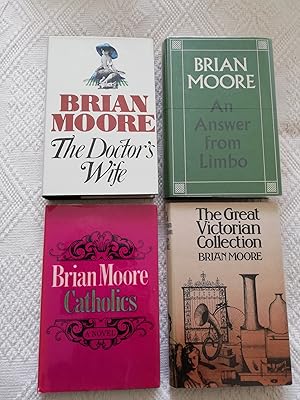
11 First Impressions, 1963-1995 (Two Signed): An Answer From Limbo, 1963; Catholics, 1972; The Great Victorian Collection, 1975; The Doctor's Wife, 1976; The Mangan Inheritance, 1979; The Temptation of Eileen Hughes, 1981; Cold Heaven, 1983; The Colour of Blood, 1987; Lies of Silence, 1990 (signed); No Other Life, 1993 (signed); The Statement, 1995
Published by Jonathan Cape, 1972
First Edition Signed
US$ 406.56
US$ 22.44 shipping
Ships from United Kingdom to U.S.A.Quantity: 1 available
Add to basketHardcover. Condition: Fine. Dust Jacket Condition: Fine. 1st Edition. Jonathan Cape, from 1972; Bloomsbury, from 1990; others earlier. First editions, first printings throughout, with full number strip starting with 1 where called for. An Answer From Limbo, Andre Deutsch, 1963. Hardcover. Condition: Very Good +, with clean and firm boards and tight text block; short (one inch of letters) former owner's name to top of fep. Dust jacket condition: Near Fine, with no tears or nicks; not price clipped. Catholics, Jonathan Cape, 1972. Hardcover. Condition: Fine. Dust jacket condition: Near Fine, with single closed quarter-inch tear to bottom of spine; very thin sunning line to top inside of wrapper; not price clipped. The Great Victorian Collection, Cape, 1975. Hardcover. Condition: Fine. Dust jacket condition: Fine: not price clipped. The Doctor's Wife, Cape, 1976. Hardcover. Condition: Fine. Dust jacket condition: Fine. The Mangan Inheritance, Cape, 1979. Hardcover. Condition: Very Good: neat former owner's mark to top of fep. Dust jacket condition: Very Good +: sixteenth-inch high by one-inch long nick to bottom of front flap; not price clipped. The Temptation of Eileen Hughes, Cape, 1981. Hardcover. Condition: Fine: UK imprint but printed in the US. Dust jacket condition: Very Good +, with no tears or nicks, but fading to spine and to bottom of front wrapper; neat price clip but with publisher's printed price sticker and Irish bookseller's printed price label above. Cold Heaven, Cape, 1983. Hardcover. Condition: Near Fine: single one-inch light indentation to rear board, otherwise fine. Dust jacket condition: Fine: neat price clip but with publisher's printed price sticker adjacent. The Colour of Blood, Cape, 1987. Hardcover. Condition: Fine. Dust jacket condition: Near Fine: nicks to top and bottom of front flap and to top of front wrapper; not price clipped. Lies of Silence, Bloomsbury, 1990. Hardcover. Condition: Dedicated, signed and dated (24 April 1990) by the author to the title page. Dust jacket condition: Fine: not price clipped. No Other Life, Bloomsbury, 1993. Hardcover. Condition: Fine: Signed by the author to the title page. Dust jacket condition: Fine: not price clipped. The Statement, Bloomsbury, 1995. Hardcover. Condition: Fine. Dust jacket condition: Near Fine: no tears but with tiny nicks to edges; not price clipped. Extra postage will be required for the 11 books, particularly overseas. This will be requested following an order. Signed by Author(s).
-
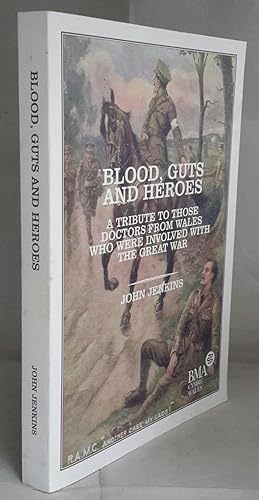
Blood, Guts and Heroes. A Tribute to Those Doctors From Wales Who Were Involved With The Great War. (SIGNED).
Publication Date: 2014
First Edition Signed
US$ 135.97
US$ 31.68 shipping
Ships from United Kingdom to U.S.A.Quantity: 1 available
Add to basketBMA Cymru Wales. 2014. First Edition. Paperback. SIGNED presentation copy from the author "John with best wishes John" written to inside cover. Tall 8vo. Illustrated. A very nice copy. Covers very slightly grubby o/w overall a lovely clean and fresh copy.
-
"Attlee and I saw the two doctors who had attended Winston. we did not feel there was anything more to be done." - A Second World War 16 December 1943 autograph letter signed on House of Commons stationery from British Foreign Secretary and Leader of the House of Commons Anthony Eden to Churchill's great friend, media mogul Max Aitken, Lord Beaverbrook, regarding the dire health of British Prime Minister Winston S. Churchill, who was suffering pneumonia and heart trouble in North Africa
Published by Whitehall, London, 1943
Seller: Churchill Book Collector ABAA/ILAB/IOBA, San Diego, CA, U.S.A.
Association Member: ABAA ILAB IOBA
Seller rating 5 out of 5 stars
Signed
Letter. This 16 December 1943 autograph letter signed from British Prime Minister Winston Churchill's British Foreign Minister and Leader of the House of Commons, Anthony Eden, to Churchill's great friend, media mogul, and Tory politician Lord Beaverbrook, is a direct window on Churchill's dire health emergency in North Africa in late 1943, immediately following conferences with Stalin and Roosevelt. The letter, written entirely in Eden's hand on the recto of a single sheet of embossed House of Commons stationery, reads "My dear Max, Thank you so much for your letter. Attlee and I saw the two doctors who had attended Winston, after our Cabinet last night. Both were emphatic that the men out there were the best possible; no one who could be sent out from here could be better. In view of this we did not feel there was anything more to be done in that line." After his valediction, Eden signs simply "Anthony". "Attlee" is, of course, Deputy Prime Minister Clement Attlee, who would succeed Churchill as Prime Minister in July 1945.Condition and provenanceCondition of the letter is near fine. The embossed House of Commons stationery is crisp, complete, and clean apart from a faint paperclip impression and stain at the upper left corner. A single vertical crease and a single horizontal crease are presumably from original posting. Eden's writing remains clear and distinct. This letter was part of the Forbes family's incomparable Churchill collection, and thereafter part of the Churchill collection of Richard C. Marsh, from whence it came to us. The letter is protected within a clear, removable, archival sleeve housed in a rigid, crimson cloth folder."I am completely at the end of my tether."Fresh from a wartime conference with U.S. President Franklin D. Roosevelt and Soviet Premier Joseph Stalin, "On the morning of 2 December 1943, Churchill left Teheran by air for Cairo," where he had further meetings with Roosevelt and many others. By 7 December 1943, it was clear that Churchill was contending with some illness, though meetings continued. On the night of 10 December, "Churchill left Cairo for the westward flight to Tunisia, the prelude, as he hoped, to a visit to the British troops in Italy." His plane landed at the wrong airport, where Churchill waited outside in "a very cold morning wind" before another short flight and a drive to meet with Eisenhower, to whom Churchill confided "I am completely at the end of my tether and cannot go on to the front until I have recovered some strength." Churchill had pneumonia, diagnosed via a portable X-Ray machine brought in from Tunis. Then 69 years old, Churchill had survived everything from Dervish spears to artillery shells in battle on three continents, and every manner of incident and accident, from falling out of a tree as a young man, falling out the sky in a plane as an adult, and being struck by a New York City truck driver. It was not clear that his luck would hold.For some days, Churchill's illness "continued to cause alarm" and "Churchill's heart began to show signs of strain." On 14 December, Churchill told his daughter Sarah, "If I die, don't worry the war is won." Staff began to converge on him in North Africa, as did his wife and son. On the 15th, Churchill experienced prolonged fibrillation and his doctor recognized "we were at last right up against things." Churchill had suffered a heart attack. His doctor sat by Churchill's bedside, "waiting for the Prime Minister's heart to resume its normal rhythm." It was only on 16 December, the day Eden wrote this letter to Beaverbrook, that Churchill's condition began to improve, "his pulse steadier" and lungs "clearing a little." Substantiating Eden's reassurance to Beaverbrook about Churchill's medical care, Churchill's Private Secretary John Martin wrote to his wife on 16 December: "We have quite an assembly of medical talent, and everything possible is being done for him."The long-suffering Anthony EdenIf retrospectively pressed, Eden mig.