

Order Total (1 Item Items):
Shipping Destination:

Macau, Signed (28 results)
Title:
macau
Refine with Advanced Search
Skip to main search results
Search filters
Product Type
- All Product Types
- Books (12)
- Magazines & Periodicals (No further results match this refinement)
- Comics (No further results match this refinement)
- Sheet Music (No further results match this refinement)
- Art, Prints & Posters (No further results match this refinement)
- Photographs (No further results match this refinement)
- Maps (No further results match this refinement)
- Manuscripts & Paper Collectibles (16)
Condition Learn more
- New (No further results match this refinement)
- As New, Fine or Near Fine (5)
- Very Good or Good (8)
- Fair or Poor (12)
- As Described (3)
Binding
Collectible Attributes
Language (2)
Free Shipping
Seller Location
Seller Rating
-
The Red Pole of Macau
Book 4 of 16: Ava LeeSeller: Scene of the Crime, ABAC, IOBA, St. Catharines, ON, Canada
Seller rating 5 out of 5 stars

First Edition Signed
Soft cover. Condition: Near Fine. No Jacket. 1st Edition. First US edition, first printing of the fourth novel in the "Ava Lee" series. SIGNED by Hamilton on the title page. Light edgewear. In near fine condition. Signed by Author.
-

Belly of Macau
Language: English
Published by Self Published by E. R. McCracken, 1998
ISBN 10: 096822010X ISBN 13: 9780968220108
First Edition Signed
Soft Cover. Condition: Fine. Limited Edition. Trade paperback, 356 pages; number 229 of 1000 copies; inscribed and signed by McCracken inside front cover; spine wrinkled due to drying of binding glue, other very tiny traces of shelf wear, but very gently read, if at all, otherwise very clean and unmarked throughout. Signed by Author.
-

Belly of Macau
Language: English
Published by E. R. McCracken, London, Ontario, Canada, 1998
ISBN 10: 096822010X ISBN 13: 9780968220108
Signed
Trade Paperback. Condition: Very Good. Very good copy. Some marks on the front cover on the right side.(see picture) Signed by the Author. # 107/1000. Signed by Author(s).
-
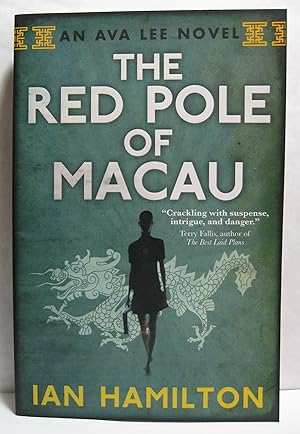
The Red Pole of Macau
Book 4 of 16: Ava LeeLanguage: English
Published by House of Anansi Press / Spiderline, Canada, 2012
ISBN 10: 0887842542 ISBN 13: 9780887842542
First Edition Signed
Softcover. Condition: Fine. First Edition; First Printing. First edition/First printing. Signed by author on title page. Book is in Fine, unread condition, with slight rubbing of cover. ; Trade PB; Signed by Author.
-
Belly of Macau
Signed
Paperback. Condition: Very Good. Clean nicely bound copy. Unmarked pages. Signed by Editor (Beth insciption and number 784 of 1000 inside front cover. Secure packaging! p1. Book.
-

Entrepreneurs and Enterprises in Macau: A Study of Industrial Development
Published by Hong Kong University Press, 1991
First Edition Signed
Paperback. Condition: Very Good. First Edition. Stated First Edition, inscribed by author, S.L. Wong on FFEP. A Very Good copy with light creasing to wraps, light shelfwear and an uncreased spine. Internally clean and free of markings. 8vo. - over 7¾' - 9¾'.
-

Creating Across Cultures: Women in the Arts from China, Hong Kong, Macau and Taiwan
Language: English
Published by East Slope, Hong Kong, 2017
ISBN 10: 9881604702 ISBN 13: 9789881604705
Seller: Argosy Book Store, ABAA, ILAB, New York, NY, U.S.A.
Seller rating 5 out of 5 stars
Signed
hardcover. Condition: near fine. Dust Jacket Condition: very good(+). First. Illustrated with color and b/w photos throughout. 346 pages. 4to, natural cloth, d.w. (Honk Kong: East Slope, 2017). First edition. Inscribed by author on endpaper. A near fine copy with light scuffing to fore-edge; in a very good(+) wrapper.
-
US$ 69.18
US$ 24.29 shipping
Ships from Czech Republic to U.S.A.Quantity: 1 available
Add to basketSoftcover. Condition: Fine. Autoren- / zusammenhängende Unterschrift; Abnutzung / Risse - leicht.
-
Macau Days / Dias de Macau
Published by Art + Australia Melbourne 2017, 2017
Seller: Andrew Barnes Books / Military Melbourne, Melbourne, VIC, Australia
Seller rating 4 out of 5 stars

First Edition Signed
1st edition hardback in decorated cloth As New quarto 187pp., colour & b/w plates, Dual text ENGLISH / PORTUGUESE / CHINESE. Edition of 1000 copies, Signed by Brian Castro on the half-title.
-

OFF TO ASIA: SINGAPORE, MALAYSIA, HONG KONG, MACAU
Published by Angus and Robertson, Sydney Melbourne Brisbane Adelaide London Singapore, 1973
First Edition Signed
Hardcover. Condition: Good. Dust Jacket Condition: Good. 1st Edition. Edges are lightly stained and foxed, more so at the head. Binding is strong and tidy. Some light disclouration of title pages, else in good condition. Dust wrapper lightly rubbed. Edges thumbed, a little more dramatically at the head and tail of spine. Spine lightly sunned, otherwise bright and in good condition. *We always describe the faults of our books meticulously but they usually present better than they sound. Signed by Author(s).
-
Ghostwriting: Photographs of Macau
Published by Museu de Arte de Macau 2001, 2001
Seller: Hard to Find Books NZ (Internet) Ltd., Dunedin, OTAGO, New Zealand
Association Member: IOBA
Seller rating 5 out of 5 stars
Signed
INSCRIBED &z SIGNED BY LAURENCE ABERHART TO SUE CROCKFORD, square quarto, black heavy boards, blind stamp lettering to front board, 89pp + unpaginated material to rear, VG+ (boards sl warped & soiled, light foxing to page edges with some minor tanning) in d/w, VG+ (light creasing to edges, light chafing & soiling).
-
Macau Watercolours
Published by Stockhouse Productions, Hong Kong, 1995
Seller: Baggins Book Bazaar Ltd, Rochester, KENT, United Kingdom
Seller rating 5 out of 5 stars
Signed
US$ 42.81
US$ 53.63 shipping
Ships from United Kingdom to U.S.A.Quantity: 1 available
Add to basketHardcover. Condition: Good. Dust Jacket Condition: Good. Inscription to half title; white d/j, black title to spine, text by Shann Davies; some residue from sticky-tape to eps. front and rear.31 Size: 8vo - over 7¾ - 9¾" tall. Inscribed by Author(s). Book.
-
1865 Remarkable Testimonies of Chinese Coolies Following a Failed Mutiny Aboard Coolie Ship Emmanuel on Route from Macau to Havana
Published by Chinese Coolie Ship Mutiny MacAo To Havana, 1865
Seller: Katz Fine Manuscripts Inc., Cochrane, AB, Canada
Seller rating 5 out of 5 stars
Manuscript / Paper Collectible Signed
No Binding. Condition: Fair. No Jacket. On offer is a stunning, shocking and outstanding piece of Chinese and Cuban history, being a remarkably rare Spanish and Chinese manuscript recording the interrogation of passengers aboard the French frigate, Emmanuel, seeking details about the deaths occurring on its voyage from Macau to Havana after a failed mutiny aboard the vessel. The French frigate Emmanuel set sail from Havana on March 4, 1865 with 160 Chinese men on board. It was captained by L. De Condray It landed in Macau on July 12, 1865. Only 144 men survived the journey. This sailing of the Emmanuel was known to have had an attempted mutiny on board, but no details of the mutiny were released publicly (Asome, 2020). This document provides details on the mutiny through the eyes of the Chinese men who survived. The document is formatted as a question asked by Cuban authorities followed by an answer from the Chinese under interrogation. The first interview is of a Chinese coolie, Vong, who says he arrived on the French frigate Emmanuel. Vong is from Macao, aged 21 and single. His following first-hand testimony from direct questioning - "was examined as follows" (in rough translation) : "How many deaths were there that happened during the voyage from Macao to this city? " Vong states that he doesn t know anything about deaths, only that they occurred during the crossing. He does not know because he himself was sick after departure from Macao. However, he knows that three of the passengers were shot ("fusiallamiento"). The second question asks when the Captain of the ship knew about the shootings and they are referred to as "executions". Vong replies that "No one can determine the motive behind the shootings". As well, he was very ill himself. The interrogations continue with more passengers. On the second page, another Chinese coolie is questioned regarding the deaths on the ship, during the voyage. He states that 17 died and 3 were shot [executed] by order of the Captain of the ship. Three "marineros" with rifles shot them. They were shot shortly after leaving Macao. Further along there is discussion as to why they might have been executed. Possibly "swear [bad] words" were said to the Captain. These first hand testimonies are signed in Chinese by the men being interviewed and by the interviewer. This is a truly remarkable window into life on board a Chinese coolie ship that was one of many to experience a failed mutiny by Chinese men who had been forced or coerced into leaving their troubled home land for indentured servitude across the ocean. The Chinese coolie trade, a system of indentured labor that targeted young, poor Chinese men, operated from 1847-1874. Throughout this period, African slavery was slowly being abolished around the world. The coolie trade was initiated by Britain and was eventually dominated by both Britain and the United States of America. Chinese coolie laborers were sent to work in British, American and Spanish colonies, and the nature of the trade changed throughout its 27-year operation, due to social and political pressures. The coolie trade took place, in large part, between the shipping port in Macao (now a part of China, then under Portuguese rule) and Havana, Cuba (then under Spanish control). As Macau was under Portugese rule at the time of the coolie trade, they transported coolies on their vessels frequently and many of the manifests were written in Portuguese and/or Spanish. To learn more about the Chinese coolie trade and its importance in world history, click here to read our in-depth research blog on the topic. The document contains 12 folio leaves with 24 pages of handwritten content. Spanish and Chinese languages. These leaves appear to have been extracted from a larger document. There is evidence of the string binding that has come off the document. Small holes and tears where the binding would have been are present, as are some tears on the pages themselves. Age toning present. Legible. Overall Fair. Asome, J. (2020). Co. Signed by Author(s).
-
1869 Chinese Coolie Arrival Manifest for Passengers of the San Salvadorian Vessel Aurora s Voyage from Macau to Havana
Published by Chinese Coolie Trade Ship Manifest Cuba, 1869
Seller: Katz Fine Manuscripts Inc., Cochrane, AB, Canada
Seller rating 5 out of 5 stars
Manuscript / Paper Collectible Signed
No Binding. Condition: Fair. No Jacket. On offer is an arrival manifest recording the names, information and fates of 26 Chinese men who were transported on an complicated voyage of the Aurora, from the port of Macau to Havana, Cuba to complete their indentured servitude as "coolies", working for Cuban sugar plantation owners. This manifest was created upon the arrival of the San Salvadorian ship, Aurora, in Havana, Cuba, once the coolies on board had their contracts sold to plantation owners. The Aurora departed Macau on November 24,1868 and arrived in Havana, Cuba on March 26,1869. 419 Chinese men boarded the ship and only 384 arrived in Cuba, for an 8.4% death rate on the voyage. The ultimate fates of 25 of the men who made the sailing to Havana can be found on this manifest. On the manifest, the coolie s number (assigned at departure) , Chinese name, given Christian name, age, sex, work he is destined to do, length of contract, start date of contract, Cuban patron (plantation owner) and location they will be living are indicated. The 25 men on this manifest would go to work under the patron Fedoro Sanchez Salvador at the Plantation Colosa_Re Near Cardenas with contracts beginning on April 23, 1869. The manifest is written on Alianza y Cia stationary, but the company name has been crossed out and replaced with "D. S. Burnham". It is signed on the back in Havana, name of the signatory is difficult to interpret. This manifest is intriguing as it is from the Aurora s one and only coolie sailing from Macau to Havana, with her other coolie crossings being to Callao, Peru. The Aurora was originally a British ship which was sold and reflagged multiple times. At the time of this sailing, the Aurora was registered to San Salvador and was under Peruvian Captain, Narciso Garcia y Garcia. The Aurora made a total of five crossings with coolie labourers. Of these five crossings, the overall mortality rate on this ship was 4.07%, lower than the death rate on this particular voyage. The Chinese coolie trade, a system of indentured labor that targeted young, poor Chinese men, operated from 1847-1874. Throughout this period, African slavery was slowly being abolished around the world. The coolie trade was initiated by Britain and was eventually dominated by both Britain and the United States of America. Chinese coolie laborers were sent to work in British, American and Spanish colonies, and the nature of the trade changed throughout its 27-year operation, due to social and political pressures. The coolie trade took place, in large part, between the shipping port in Macao (now a part of China, then under Portuguese rule) and Havana, Cuba (then under Spanish control). As Macau was under Portugese rule at the time of the coolie trade, they transported coolies on their vessels frequently and many of the manifests were written in Portuguese and/or Spanish. To learn more about the Chinese coolie trade and its importance in world history, click here to read our in-depth research blog on the topic. This manifest measures 9.5x13 inches. It exhibits signs of aging including age toning, small rips and tears, especially at the centre crease. There is one significant tear at the centre crease on the top of the page which does not impede readability. The manifest is one folio leaf. Spanish language. Fair to Good. Citations: Asome, J. (2020). Coolie ships of the Chinese diaspora (1846-1874). Proverse Hong Kong. ; Manuscripts; 4to 11" - 13" tall; Signed by Author. Signed by Author(s).
-
1867 Chinese Coolie Arrival Manifest for Passengers of the Storied Russian Vessel Avon s Voyage from Macau to Havana
Published by Chinese Coolie Trade Ship Manifest Havana, Cuba, 1867
Seller: Katz Fine Manuscripts Inc., Cochrane, AB, Canada
Seller rating 5 out of 5 stars
Manuscript / Paper Collectible Signed
No Binding. Condition: Fair. No Jacket. On offer is a unique arrival manifest recording the names, information and fates of nine Chinese men who were transported on an complicated voyage of the Avon, from the port of Macau to Havana, Cuba to complete their indentured servitude as "coolies", working for Cuban sugar plantation owners. This manifest was created upon the arrival of the Russian Galley, Avon, in Havana, Cuba, once the coolies on board had their contracts sold to plantation owners. This manifest is particularly fascinating due to the history of the Avon s journey to get these men to Havana. The Avon was built in the USA and named Cyclone, sold to Britain during the Civil War, before becoming an Italian coolie ship in 1865. In 1866 the Avon changed her flag to Russia. In November of 1866, British Captain Warwick began the Avon s journey from Macau to Havana with 551 Chinese men on board. There was a disturbance on board the Avon, and the British Opossum and HMS Salamis found it off Lamma Island, Hong Kong. While Cpt. Warwick denied these claims, it was believed there had been a coolie uprising on board, and that there were kidnapped Chinese children on board who had not signed contracts. Avon returned to Macau on Nov 23, 1866 but 14 Chinese people were missing and there was no explanation given for their absences. An investigation determined that all rules had been properly followed, yet when the Avon set sail again for Macau on December 5, 1866, only 502 coolies were on board. Of those 502 coolies who made the final journey to Macau, only 473 arrived in Havana on April 14, 1867, for a 6% death rate on this sailing. A few days after the Avon s arrival, 24 children who had been taken off the Avon were delivered to the Chief Mandarin of Cantos, arriving on the Portuguese gunboat, Camoes. The ultimate fates of 9 of the men who made the sailing to Havana on the Avon can be found on this manifest. On the manifest, the coolie s number (assigned at departure) , Chinese name, given Christian name, age, sex, work he is destined to do, length of contract, start date of contract, Cuban patron (plantation owner) and location they will be living are indicated. The 9 men on this manifest would go to work under the patron Solosabal Campos & C. [? ] in Cienfuegos with contracts beginning on May 20, 1867. The manifest is signed by the Vice Director of Alianza y Cia, Carlos de Zaldo. The Avon was a ship of the Alianza y Cia, a coolie importing business that was born through the merger of the Empresa and La Compania de Seguros y Creditos. The Alianza was the major importer of Chinese labourers, making 55 shipments of men between 1865 and 1873. The Chinese coolie trade, a system of indentured labor that targeted young, poor Chinese men, operated from 1847-1874. Throughout this period, African slavery was slowly being abolished around the world. The coolie trade was initiated by Britain and was eventually dominated by both Britain and the United States of America. Chinese coolie laborers were sent to work in British, American and Spanish colonies, and the nature of the trade changed throughout its 27-year operation, due to social and political pressures. The coolie trade took place, in large part, between the shipping port in Macao (now a part of China, then under Portuguese rule) and Havana, Cuba (then under Spanish control). As Macau was under Portugese rule at the time of the coolie trade, they transported coolies on their vessels frequently and many of the manifests were written in Portuguese and/or Spanish. To learn more about the Chinese coolie trade and its importance in world history, click here to read our in-depth research blog on the topic. This manifest measure 9.5x13 inches. It exhibits significant signs of aging including age toning, small rips and tears, especially at the centre crease. The manifest is one page. Spanish language. Fair. ; Manuscripts; 4to 11" - 13" tall; Signed by Author. Signed by Author(s).
-
1869 Archive of Two Chinese Coolie Trade Ship Arrival Manifests for Passengers of the Russian Vessel Neva s Sailing from Macau to Havana
Published by Chinese Coolie Ship Manifest Havana Cuba, 1869
Seller: Katz Fine Manuscripts Inc., Cochrane, AB, Canada
Seller rating 5 out of 5 stars
Manuscript / Paper Collectible Signed
No Binding. Condition: Very Good. No Jacket. On offer is an archive two fascinating arrival manifests, recording the names, information and fates of 42 Chinese men who were transported on the December 1868 voyage of the Lucie from the port of Macau to Havana, Cuba to complete their indentured servitude as "coolies", working for Cuban sugar plantation owners. These manifests were created upon the arrival of the Russian ship, Neva, in Havana, Cuba, once the coolies on board had their contracts sold to plantation owners. This sailing of the Neva departed January 27, 1869 from Macau. It arrived in Cuba on April 30, 1869. 537 Chinese men boarded the ship in Macau and 485 arrived alive in Havana, for a death rate of nearly 10%. The ultimate fates of 42 of those men can be found on these manifests. On each manifest, the coolie s number (assigned at departure) , Chinese name, given Christian name, age, sex, work he is destined to do, length of contract, start date of contract, Cuban patron (plantation owner) and location they will be living are indicated. All the manifests are signed by the Vice Director of Alianza y Cia, Carlos de Zaldo. The first manifest identifies 12 coolies whose contract will begin on July 9, 1869. They will work under their patron, Ana Josefa Alvarez do Segundo, in Matanzas. The second manifest lists 30 coolies whose contracts will begin July 9, 1869, under patron Senores Carrillo y Diago in Havana. The Neva was a ship of the Alianza y Cia, a coolie importing business that was born through the merger of the Empresa and La Compania de Seguros y Creditos. The Alianza was the major importer of Chinese labourers, making 55 shipments of men between 1865 and 1873. This sailing of the Neva was captained by J. D. Onate. The Chinese coolie trade, a system of indentured labor that targeted young, poor Chinese men, operated from 1847-1874. Throughout this period, African slavery was slowly being abolished around the world. The coolie trade was initiated by Britain and was eventually dominated by both Britain and the United States of America. Chinese coolie laborers were sent to work in British, American and Spanish colonies, and the nature of the trade changed throughout its 27-year operation, due to social and political pressures. The coolie trade took place, in large part, between the shipping port in Macao (now a part of China, then under Portuguese rule) and Havana, Cuba (then under Spanish control). As Macau was under Portugese rule at the time of the coolie trade, they transported coolies on their vessels frequently and many of the manifests were written in Portuguese and/or Spanish. To learn more about the Chinese coolie trade and its importance in world history, click here to read our in-depth research blog on the topic. Both manifests measure 9.5x13 inches. They display significant signs of aging including age toning, small rips and tears, especially at the centre creases. Each manifest is one single folio leaf, with one of the two having writing on the front and back of the page. Spanish language. Overall Fair. Citations: Asome, J. (2020). Coolie ships of the Chinese diaspora (1846-1874). Proverse Hong Kong. ; Manuscripts; 4to 11" - 13" tall; Signed by Author. Signed by Author(s).
-
1867 Chinese Coolie Arrival Manifest for Passengers of the French Vessel Delangle s Voyage from Macau to Havana
Published by Chinese Coolie Ship Manifest Havana Cuba, 1867
Seller: Katz Fine Manuscripts Inc., Cochrane, AB, Canada
Seller rating 5 out of 5 stars
Manuscript / Paper Collectible Signed
No Binding. Condition: Fair. No Jacket. On offer is a unique arrival manifests recording the names, information and fates of 10 Chinese men who were transported on the January 1867 voyage of the Delangle. From the port of Macau to Havana, Cuba to complete their indentured servitude as "coolies", working for Cuban sugar plantation owners. This manifest was created upon the arrival of the French Galley, Delangle, in Havana, Cuba, once the coolies on board had their contracts sold to plantation owners. This sailing of the Delangle departed January 4, 1867 from Macau under the French flag. It arrived in Cuba on May 3, 1867. 275 Chinese men boarded the ship and 270 arrived in Havana. The ultimate fates of 10 of those men can be found on this manifest. On the manifest, the coolie s number (assigned at departure) , Chinese name, given Christian name, age, sex, work he is destined to do, length of contract, start date of contract, Cuban patron (plantation owner) and location they will be living are indicated. The 10 men on this manifest would go to work in Havana with contracts beginning on May 21, 1867. The manifest is signed by the Vice Director of Alianza y Cia, Carlos de Zaldo. The Delangle was a ship of the Alianza y Cia, a coolie importing business that was born through the merger of the Empresa and La Compania de Seguros y Creditos. The Alianza was the major importer of Chinese labourers, making 55 shipments of men between 1865 and 1873. This particular 1867 sailing of the Delangle resulted in a mortality rate of under 2%, with five men dying on the voyage. The Chinese coolie trade, a system of indentured labor that targeted young, poor Chinese men, operated from 1847-1874. Throughout this period, African slavery was slowly being abolished around the world. The coolie trade was initiated by Britain and was eventually dominated by both Britain and the United States of America. Chinese coolie laborers were sent to work in British, American and Spanish colonies, and the nature of the trade changed throughout its 27-year operation, due to social and political pressures. The coolie trade took place, in large part, between the shipping port in Macao (now a part of China, then under Portuguese rule) and Havana, Cuba (then under Spanish control). As Macau was under Portugese rule at the time of the coolie trade, they transported coolies on their vessels frequently and many of the manifests were written in Portuguese and/or Spanish. To learn more about the Chinese coolie trade and its importance in world history, click here to read our in-depth research blog on the topic. This manifest measure 9.5x13 inches. It exhibits significant signs of aging including age toning, small rips and tears, especially at the centre crease. The manifest is one page. Spanish language. Overall Fair. ; Manuscripts; 4to 11" - 13" tall; Signed by Author. Signed by Author(s).
-
1869 Incredible Archive of Five Chinese Coolie Trade Ship Arrival Manifests for Passengers of the French Vessel Niagara s Voyage from Macau to Havana
Published by Chinese Coolie Ship Manifests Havana Cuba, 1869
Seller: Katz Fine Manuscripts Inc., Cochrane, AB, Canada
Seller rating 5 out of 5 stars
Manuscript / Paper Collectible Signed
No Binding. Condition: Poor. No Jacket. On offer is a truly remarkable archive of five arrival manifests, recording the names, information and fates of 125 Chinese men who were transported on the October, 1868 voyage of the Niagara from the port of Macau to Havana, Cuba to complete their indentured servitude as "coolies", working for Cuban sugar plantation owners. These manifests were created upon the arrival of the French Galley, Niagara, in Havana, Cuba, once the coolies on board had their contracts sold to plantation owners. This sailing of the Niagara departed October 3, 1868 from Macau under the French flag. It arrived in Cuba on February 15, 1869. 406 Chinese men boarded the ship and only 385 arrived in Havana. The ultimate fates of 125 of those men can be found on these manifests. On each manifest, the coolie s number (assigned at departure) , Chinese name, given Christian name, age, sex, work he is destined to do, length of contract, start date of contract, Cuban patron (plantation owner) and location they will be living are indicated. All the manifests are signed by the Vice Director of Alianza y Cia, Carlos de Zaldo. The first manifest identifies 50 men whose contracts will begin on February 18, 1869, working under patron Julian Zulueta in Havana. The second manifest lists 25 men whose contracts will begin on February 23, 1869 under patron Sannago S[? ] in Havana. The third manifest details 10 men whose contracts will begin on February 24, 1869 under patron Pascual Mendoza in Havana. The fourth manifest reports on 20 men whose contracts will begin March 3, 1869 under patron Miguel Gaston in Havana. The fifth and final manifest contains the fates of 20 men whose contracts will begin on March 6, 1869 under patron Ramon Dia, D. Julio and Evaveiso Cassico [? ] in Havana. The Niagara was a ship of the Alianza y Cia, a coolie importing business that was born through the merger of the Empresa and La Compania de Seguros y Creditos. The Alianza was the major importer of Chinese labourers, making 55 shipments of men between 1865 and 1873. This particular 1868 sailing of the Niagara resulted in a mortality rate of almost 5%, with 21 men dying on the voyage. The Chinese coolie trade, a system of indentured labor that targeted young, poor Chinese men, operated from 1847-1874. Throughout this period, African slavery was slowly being abolished around the world. The coolie trade was initiated by Britain and was eventually dominated by both Britain and the United States of America. Chinese coolie laborers were sent to work in British, American and Spanish colonies, and the nature of the trade changed throughout its 27-year operation, due to social and political pressures. The coolie trade took place, in large part, between the shipping port in Macao (now a part of China, then under Portuguese rule) and Havana, Cuba (then under Spanish control). As Macau was under Portugese rule at the time of the coolie trade, they transported coolies on their vessels frequently and many of the manifests were written in Portuguese and/or Spanish. To learn more about the Chinese coolie trade and its importance in world history, click here to read our in-depth research blog on the topic. The five manifests vary in condition from Poor to Fair+. They all display significant signs of aging including age toning, small rips and tears, especially at the centre creases. Three of the five manifests are completely separated at creases. All are legible. Spanish language. Four of the five documents measure 9.5x13 inches (two separated at the centre crease). One is a fold-out double sized sheet measuring approx 9.5x25 inches (complete tears at two creases). Citations: Asome, J. (2020). Coolie ships of the Chinese diaspora (1846-1874). Proverse Hong Kong. ; Manuscripts; 4to 11" - 13" tall; Signed by Author. Signed by Author(s).
-
1866 Chinese Coolie Arrival Manifest for Passengers of the French Vessel Granville s Voyage from Macau to Havana
Published by Chinese Coolie Trade Havana Cuba, 1866
Seller: Katz Fine Manuscripts Inc., Cochrane, AB, Canada
Seller rating 5 out of 5 stars
Manuscript / Paper Collectible Signed
No Binding. Condition: Very Good. No Jacket. On offer is an arrival manifest recording the names, information and fates of 20 Chinese men who were transported on an complicated voyage of the Aurora, from the port of Macau to Havana, Cuba to complete their indentured servitude as "coolies", working for Cuban sugar plantation owners. This manifest was created upon the arrival of the French ship, Granville, in Havana, Cuba, once the coolies on board had their contracts sold to plantation owners. The Granville departed Macau on April 3, 1866 and arrived in Havana, Cuba on September 5, 1866. 230 Chinese men boarded the ship and only 225 arrived in Cuba, for a death rate of just over 2% on the voyage. The ultimate fates of 20 of the men who made the sailing to Havana can be found on this manifest. On the manifest, the coolie s number (assigned at departure) , Chinese name, given Christian name, age, sex, work he is destined to do, length of contract, start date of contract, Cuban patron (plantation owner) and location they will be living are indicated. 10 of the 20 men on this manifest would go to work under the patron Thomas M. Seville while the other 10 would go to work under patron Joaquin Diago. All of their contracts would begin on September 11, 1866. The Granville sailed for the Zangroniz family, a well-known family who participated in the trafficking of human beings even before the coolie trade was begun. At the time of this sailing, the Zangroniz trafficking business was owned mainly by Ignacio Maria Zangroniz and the company was called Ignacio Maria Zangroniz y Cia. The manifest is signed in Havana by a representative for the company, [? ] dela Maja Amedonas [? ]. The Chinese coolie trade, a system of indentured labor that targeted young, poor Chinese men, operated from 1847-1874. Throughout this period, African slavery was slowly being abolished around the world. The coolie trade was initiated by Britain and was eventually dominated by both Britain and the United States of America. Chinese coolie laborers were sent to work in British, American and Spanish colonies, and the nature of the trade changed throughout its 27-year operation, due to social and political pressures. The coolie trade took place, in large part, between the shipping port in Macao (now a part of China, then under Portuguese rule) and Havana, Cuba (then under Spanish control). As Macau was under Portugese rule at the time of the coolie trade, they transported coolies on their vessels frequently and many of the manifests were written in Portuguese and/or Spanish. To learn more about the Chinese coolie trade and its importance in world history, click here to read our in-depth research blog on the topic. This manifest measure 13x17.5 inches. It exhibits signs of aging including age toning, small rips and tears, especially at the centre crease. There is one significant tear at the centre crease that has caused the document to completely separate. It is extremely delicate. The manifest is one folio leaf. Spanish language. Fair. Citations: Asome, J. (2020). Coolie ships of the Chinese diaspora (1846-1874). Proverse Hong Kong. Sparks, R. J. (2020). On the frontlines of slave trade abolition: British consuls combat state capture in Cuba and Mozambique. Atlantic Studies, 17(3) , 327-347.; Manuscripts; 4to 11" - 13" tall; Signed by Author. Signed by Author(s).
-
1869 Archive of Two Chinese Coolie Trade Ship Arrival Manifests for Passengers of the French Vessel Lucie s Mutinoussailing from Macau to Havana
Published by Chinese Coolie Ship Manifests Havana Cuba, 1869
Seller: Katz Fine Manuscripts Inc., Cochrane, AB, Canada
Seller rating 5 out of 5 stars
Manuscript / Paper Collectible Signed
No Binding. Condition: Fair. No Jacket. On offer is an archive two fascinating arrival manifests, recording the names, information and fates of 38 Chinese men who were transported on the December 1868 voyage of the Lucie from the port of Macau to Havana, Cuba to complete their indentured servitude as "coolies", working for Cuban sugar plantation owners. These manifests were created upon the arrival of the French Galley, Lucie, in Havana, Cuba, once the coolies on board had their contracts sold to plantation owners. This sailing of the Lucie departed December 8, 1868 from Macau under the French flag. It arrived in Cuba on April 10, 1869. This voyage of the Lucie was known to have had a mutiny initiated by the Chinese on board. 360 Chinese men boarded the ship and only 327 arrived in Havana. The ultimate fates of 38 of those men can be found on these manifests. On each manifest, the coolie s number (assigned at departure) , Chinese name, given Christian name, age, sex, work he is destined to do, length of contract, start date of contract, Cuban patron (plantation owner) and location they will be living are indicated. All the manifests are signed by the Vice Director of Alianza y Cia, Carlos de Zaldo. The first manifest identifies 28 coolies whose contract will begin on May 22, 1869. They will work under their patron, Roza Rios, in Cardenas. The second manifest lists 10 coolies whose contracts will begin June 1, 1869, under patron Ignacio Gonzalez Laminga in Cardenas. The Lucie was a ship of the Alianza y Cia, a coolie importing business that was born through the merger of the Empresa and La Compania de Seguros y Creditos. The Alianza was the major importer of Chinese labourers, making 55 shipments of men between 1865 and 1873. This particular 1869 sailing of the Lucie resulted in a mortality rate of almost 10%, with 33 men dying on the voyage. The Chinese coolie trade, a system of indentured labor that targeted young, poor Chinese men, operated from 1847-1874. Throughout this period, African slavery was slowly being abolished around the world. The coolie trade was initiated by Britain and was eventually dominated by both Britain and the United States of America. Chinese coolie laborers were sent to work in British, American and Spanish colonies, and the nature of the trade changed throughout its 27-year operation, due to social and political pressures. The coolie trade took place, in large part, between the shipping port in Macao (now a part of China, then under Portuguese rule) and Havana, Cuba (then under Spanish control). As Macau was under Portugese rule at the time of the coolie trade, they transported coolies on their vessels frequently and many of the manifests were written in Portuguese and/or Spanish. To learn more about the Chinese coolie trade and its importance in world history, click here to read our in-depth research blog on the topic. Both manifests measure 9.5x13 inches. They display significant signs of aging including age toning, small rips and tears, especially at the centre creases. Each manifest is one single page, with one of the two having writing on the front and back of the page. Spanish language. Overall Fair to Poor. Citations: Asome, J. (2020). Coolie ships of the Chinese diaspora (1846-1874). Proverse Hong Kong. ; Manuscripts; 4to 11" - 13" tall; Signed by Author. Signed by Author(s).
-
1867 Archive of Three Chinese Coolie Trade Ship Arrival Manifests for Passengers of the Spanish Vessel J. A. U. Voyage from Macau to Havana
Published by Chinese Coolie Ship Manifest MacAo To Havana, 1867
Seller: Katz Fine Manuscripts Inc., Cochrane, AB, Canada
Seller rating 5 out of 5 stars
Manuscript / Paper Collectible Signed
No Binding. Condition: Fair. No Jacket. On offer is an archive three incredible arrival manifests, recording the names, information and fates of 68 Chinese men who were transported on the April 1867 voyage of the J. A. U. From the port of Macau to Havana, Cuba to complete their indentured servitude as "coolies", working for Cuban sugar plantation owners. These manifests were created upon the arrival of the Spanish Galley, J. A. U. In Havana, Cuba, once the coolies on board had their contracts sold to plantation owners. This sailing of the J. A. U. Departed April 3, 1867 from Macau under the Spanish flag. It arrived in Cuba on July 19, 1867. 319 Chinese men boarded the ship and 312 arrived in Havana. The ultimate fates of 68 of those men can be found on these manifests. On each manifest, the coolie s number (assigned at departure) , Chinese name, given Christian name, age, sex, work he is destined to do, length of contract, start date of contract, Cuban patron (plantation owner) and location they will be living are indicated. All the manifests are signed by the Vice Director of Alianza y Cia, Carlos de Zaldo. The first manifest identifies 21 coolies whose contract will begin on July 31, 1867. They will work under their patron, Quintero y Coloma in Cienfuegos. The second manifests lists 18 coolies whose contracts will begin August 1, 1867 under patrons Julio de Ibana, Manuel Aturia in Havana. The final manifest describes 29 coolies whose contracts will begin September 1, 1867 under patron Solosabal Campos & C. [? ] in Havana. The J. A. U. Was a ship of the Alianza y Cia, a coolie importing business that was born through the merger of the Empresa and La Compania de Seguros y Creditos. The Alianza was the major importer of Chinese labourers, making 55 shipments of men between 1865 and 1873. This particular 1867 sailing of the J. A. U. Resulted in a mortality rate of only 2.2%, with seven men dying on the voyage. The Chinese coolie trade, a system of indentured labor that targeted young, poor Chinese men, operated from 1847-1874. Throughout this period, African slavery was slowly being abolished around the world. The coolie trade was initiated by Britain and was eventually dominated by both Britain and the United States of America. Chinese coolie laborers were sent to work in British, American and Spanish colonies, and the nature of the trade changed throughout its 27-year operation, due to social and political pressures. The coolie trade took place, in large part, between the shipping port in Macao (now a part of China, then under Portuguese rule) and Havana, Cuba (then under Spanish control). As Macau was under Portugese rule at the time of the coolie trade, they transported coolies on their vessels frequently and many of the manifests were written in Portuguese and/or Spanish. To learn more about the Chinese coolie trade and its importance in world history, click here to read our in-depth research blog on the topic. All three manifests measure 9.5x13 inches. They display significant signs of aging including age toning, small rips and tears, especially at the centre creases. Each manifest is one single page, one of which has writing on the front and back of the pages. Spanish language. Overall Fair. Citations: Asome, J. (2020). Coolie ships of the Chinese diaspora (1846-1874). Proverse Hong Kong. Guia de forasteros de la siempre fiel isla de Cuba. (1861). ; Manuscripts; 8vo 8" - 9" tall; Signed by Author. Signed by Author(s).
-
1864 Archive of Two Incredible Chinese Coolie Trade Ship Arrival Manifests for Passengers of the Portuguese Vessel Luisita s Sailing from Macau to Havana
Published by Chinese Coolie Trade Ship Manifest Cuba, 1864
Seller: Katz Fine Manuscripts Inc., Cochrane, AB, Canada
Seller rating 5 out of 5 stars
Manuscript / Paper Collectible Signed
No Binding. Condition: Poor. No Jacket. On offer is an archive two detailed arrival manifests, recording the names, information and fates of 177 Chinese men who were transported on the October 1863 voyage of the Luisita from the port of Macau to Havana, Cuba to complete their indentured servitude as "coolies", working for Cuban sugar plantation owners. These manifests were created upon the arrival of the Luisita in Havana, Cuba, once the coolies on board had their contracts sold to plantation owners. This sailing of the Luisita departed on October 30, 1863 from Macau. It arrived in Cuba on February 21, 1864. 343 Chinese men boarded the ship in Macau and only 283 arrived alive in Havana, for a death rate of 17.49%. The ultimate fates of 177 of those men can be found on these manifests. On each manifest, the coolie s number (assigned at departure) , Chinese name, given Christian name, age, sex, work he is destined to do, length of contract, start date of contract, Cuban patron (plantation owner) and location they will be living are indicated. The first manifest identifies 67 coolies whose contract will begin on March 16, 1864. The names are divided into chunks based on the patron who will be overseeing the work of each group and their work destination. The second manifest lists a massive 110 coolies whose contracts will begin March 17, 1864. Again, these names are listed in batches based on the patron and work destination. On the second manifest there are small checkmarks beside the names of the disembarking coolies indicating that they had been accounted for. This ship was formerly the Fanny Fern. It was built in Maine, purchased in August of 1863 by Filomena M. De Garcia in Macau, and renamed the Luisita. The ship was overseen on this voyage by American Captain Jordan, though official documents were signed by Joao A. Nunez of Portugal. It took them 75 days to load the 343 coolies and over the 114 day voyage, over 17% of the men on board died. The Luisita sailed for the company Alianza y Ferran y Dupierris, a coolie importing business, which seems to have been a collaboration between La Alianza, Marcial Dupierris, and Antonio Ferran. Dupierris and Ferran were two of the four owners of Empressa de Colonizacion, a company that ultimately merged with La Alianza. Both of the manifests are signed by the Vice Director of Alianza y Cia, Carlos de Zaldo as well as by Ferran y Dupierris. . The Chinese coolie trade, a system of indentured labor that targeted young, poor Chinese men, operated from 1847-1874. Throughout this period, African slavery was slowly being abolished around the world. The coolie trade was initiated by Britain and was eventually dominated by both Britain and the United States of America. Chinese coolie laborers were sent to work in British, American and Spanish colonies, and the nature of the trade changed throughout its 27-year operation, due to social and political pressures. The coolie trade took place, in large part, between the shipping port in Macao (now a part of China, then under Portuguese rule) and Havana, Cuba (then under Spanish control). As Macau was under Portugese rule at the time of the coolie trade, they transported coolies on their vessels frequently and many of the manifests were written in Portuguese and/or Spanish. To learn more about the Chinese coolie trade and its importance in world history, click here to read our in-depth research blog on the topic. Both manifests measure 13.5x17 inches. The first manifest is one folio leaf with writing on the front and back. The second is two folio leaves with writing on the front of one side and only the front of the other. They display significant signs of aging including age toning, small rips and tears, especially at the centre creases. The one-leaf manifest is ++ fragile and likely to separate at the middle horizontal fold in transit. The two leaf manifest is less fragile. Spanish language. Overall Poor to Fair. Citation: Asome, J. (2020). Coolie ships of the Chinese diaspora (1846-1874). P. Signed by Author(s).
-
1867 Remarkable Pair of Chinese Coolie Arrival Manifests for the Dutch Ship Krimpen Aan De Lek s Voyage from Macau to Havana
Published by Chinese Coolie Trade Ship Manifest, 1867
Seller: Katz Fine Manuscripts Inc., Cochrane, AB, Canada
Seller rating 5 out of 5 stars
Manuscript / Paper Collectible Signed
No Binding. Condition: Fair. No Jacket. On offer are two extremely unique 1867 Dutch ship arrival manifests, recording the names and information of 140 Chinese men who were transported from the port of Macau to Havana, Cuba to complete their indentured servitude as "coolies", working for Cuban sugar plantation owners. These manifests are for the Dutch Galley, Krimpen aan de Lek. This was the only recorded coolie importation voyage for this vessel. The Krimpen departed Macau on March 4,1867 with 368 Chinese men on board and arrived in Havana on June 27, 1867, with 363 living men. The first manifest was signed July 9, 1867 and the second signed July 10th. These dates correspond with the beginning of the coolie contracts. The manifests offer great detail on each coolie and list for each man: their contract number, Chinese name, Christian name, age, patron, job for which they are hired, location where they will work, and date their contract starts. The "patron" for all 110 men listed on the first manifest is Don José de la Portilla, a Cuban landowner. The coolies on the first manifest are being sent to Matanzas and Jagua [likely Jagüey Grande]. The patron for the 30 men on the second manifest is Mr. Antonio Hera. The coolies listed on this manifest will complete their contracts in Cienfuegos. Both documents were signed in Havana by "Caro Hermanos Watson". Caro Hermano and Watson were merchant coolie importers. They were agents working with the Compagnie Générale Transatlantique, which specialized in coolie trading. The Chinese coolie trade, a system of indentured labor that targeted young, poor Chinese men, operated from 1847-1874. Throughout this period, African slavery was slowly being abolished around the world. The coolie trade was initiated by Britain and was eventually dominated by both Britain and the United States of America. Chinese coolie laborers were sent to work in British, American and Spanish colonies, and the nature of the trade changed throughout its 27-year operation, due to social and political pressures. The coolie trade took place, in large part, between the shipping port in Macao (now a part of China, then under Portuguese rule) and Havana, Cuba (then under Spanish control). As Macau was under Portugese rule at the time of the coolie trade, they transported coolies on their vessels frequently and many of the manifests were written in Portuguese and/or Spanish. To learn more about the Chinese coolie trade and its importance in world history, click here to read our in-depth research blog on the topic. Both manifests measures 12.75x17 inches. The first one contains two large pages with writing on the front and back of one side, and on the front of the second, for a total of three pages of text. The manifest is unbound but was once held together with metal rings (still present on the first page). The writing is legible. The second manifest is one page with writing on one side. Both manifests exhibit age toning, small rips and tears, particularly at the centre folds, and the first manifest contains more signs of tearing at the creases. Spanish language. Overall Fair+. Citation: Asome, J. (2020). Coolie ships of the Chinese diaspora (1846-1874). Proverse Hong Kong. ; Manuscripts; 4to 11" - 13" tall; Signed by Author. Signed by Author(s).
-
1868 Massive Departure Manifest for the Chinese Coolie Trade Ship the America's Voyage from Macau to Havana
Published by Chinese Coolie Ship Manifest, 1868
Seller: Katz Fine Manuscripts Inc., Cochrane, AB, Canada
Seller rating 5 out of 5 stars
Manuscript / Paper Collectible Signed
No Binding. Condition: Fair. No Jacket. On offer is a tremendous San Salvadorian ship manifest, recording the names and information of 622 Chinese men who were transported from the port of Macau to Havana, Cuba to complete their indentured servitude as "coolies", working for Cuban sugar plantation owners. This manifest is for the January 25, 1868 sailing of the Peruvian Galley, the America. This sailing was captained by Cpt Ferreiro for the Compania Maritima del Peru. This sailing was under the San Salvadorian flag. The ship arrived in Macau on May 20, 1868. 610 coolies departed Macau and 607 arrived in Cuba. This manifest was signed on January 24,1868 by Henrique W. Pearce, a Macao-based emigration agent. It was also signed the day before departure on January 24,1868 by The Consul General of His Majesty, José de Alguilar. The America had previously been used as a coolie ship called Red Rose under the British flag and under the Italian flag as the America. The America completed a total of seven coolie voyages, transporting a total of 4,703 Chinese passengers. The Chinese coolie trade, a system of indentured labor that targeted young, poor Chinese men, operated from 1847-1874. Throughout this period, African slavery was slowly being abolished around the world. The coolie trade was initiated by Britain and was eventually dominated by both Britain and the United States of America. Chinese coolie laborers were sent to work in British, American and Spanish colonies, and the nature of the trade changed throughout its 27-year operation, due to social and political pressures. The coolie trade took place, in large part, between the shipping port in Macao (now a part of China, then under Portuguese rule) and Havana, Cuba (then under Spanish control). As Macau was under Portugese rule at the time of the coolie trade, they transported coolies on their vessels frequently and many of the manifests were written in Portuguese and/or Spanish. To learn more about the Chinese coolie trade and its importance in world history, click here to read our in-depth research blog on the topic. This departure manifest measures 8.5x13.5 inches. It contains 18 pages of writing (9 front and back) over 10 physical pages. Folded together. Significant bending with some tears at the crease lines. Some pages are ++ fragile with some pages becoming detached from the total document, however the document does remain in tact. Legible. Overall Fair. Citation: Asome, J. (2020). Coolie ships of the Chinese diaspora (1846-1874). Proverse Hong Kong. ; Manuscripts; 8vo 8" - 9" tall; Signed by Author. Signed by Author(s).
-
1866 Chinese Coolie Trade Ship Emigrante s Departure and Arrival Manifests for Its Voyage from Macau to Havana, Including Markings to Indicate the Dead
Published by Chinese Coolie Trade Ship Manifest Cuba, 1866
Seller: Katz Fine Manuscripts Inc., Cochrane, AB, Canada
Seller rating 5 out of 5 stars
Manuscript / Paper Collectible Signed
No Binding. Condition: Fair. No Jacket. On offer is an exceptional, complete pair of manifests from the 1866 Spanish ship Emigrante s voyage from Macau to Havana for the purpose of transporting 359 Chinese men to work as "coolies". This small archive is particularly special as the arrival manifest includes unique markings indicating which of the 359 coolies tragically perished on the journey. These manifests are for the Spanish ship Emigrante, which had previously sailed under the British flag as the Emigrant. This sailing of the Emigrante was captained by D. Domingo Tramoja. The departure manifest was signed in Macau on January 16, 1866 by The Consul General of Her Majesty, José de Aguilar. Captain Domingo Fremayo and provides the information on 359 Chinese men on board. The arrival manifest was completed and signed upon arrival in Havana, with small symbols placed beside the names of those who had perished during the trip. Of the 359 Chinese men who boarded the Emigrante in Macao in February of 1866, only 319 landed in Havana alive in May. Along with the markings of who died, the manifest records each coolie s Chinese name, Christian name and age. The sailing of the Emigrante was coordinated by coolie trader Antonio G. Bustamente, a land owner who partnered with Troncoso and Castro in Havana and Joao Garcia in Macao. The arrival manifest was dated May 21, 1866 in Havana. While the document is handwritten, there is no notable signature. The Chinese coolie trade, a system of indentured labor that targeted young, poor Chinese men, operated from 1847-1874. Throughout this period, African slavery was slowly being abolished around the world. The coolie trade was initiated by Britain and was eventually dominated by both Britain and the United States of America. Chinese coolie laborers were sent to work in British, American and Spanish colonies, and the nature of the trade changed throughout its 27-year operation, due to social and political pressures. The coolie trade took place, in large part, between the shipping port in Macao (now a part of China, then under Portuguese rule) and Havana, Cuba (then under Spanish control). As Macau was under Portugese rule at the time of the coolie trade, they transported coolies on their vessels frequently and many of the manifests were written in Portuguese and/or Spanish. To learn more about the Chinese coolie trade and its importance in world history, click here to read our in-depth research blog on the topic. The departure manifest measures 8.5x13 inches. Its four lined pages are stapled in the upper left corner. Tearing at the vertical edge of the document. There is writing on front and back of two pages and one side of the third page for a total of five pages of writing. Legible. Overall Fair. The arrival manifest measures 10x16 inches. It contains three large pages folded to create six pages. There is a total of nine pages of writing (four pages have writing on the font and back plus one title page). It is in fair condition, with rips on some creases and small holes and tears on the vertical fold. Writing is legible. Spanish language. Fair. Citation: Asome, J. (2020). Coolie ships of the Chinese diaspora (1846-1874). Proverse Hong Kong. ; Manuscripts; 4to 11" - 13" tall; Signed by Author. Signed by Author(s).
-

Albumblatt (1 S. kl. 8 to), mit Ort, Datum, Unterschrift eigenhändig signiert Hongkong, Nov. 2, 1971 - RARE ! (autograph album page signed in person by anglican bishop, PROVENIENZ : aus Reisealbum / from autograph album of world traveller ROLF ITALIAANDER (1913-91, Professor Dr., deutscher Schriftsteller und Völkerkundler / german writer and folklorist ).
-
1857 Remarkable primitive Chinese and Spanish Indentured Labour Contract from the Macau to Havana Coolie Trade with Thumbprint Signatures of Labourer
Publication Date: 1857
Seller: Katz Fine Manuscripts Inc., Cochrane, AB, Canada
Seller rating 5 out of 5 stars
Manuscript / Paper Collectible Signed
No Binding. Condition: Good. No Jacket. On offer is a remarkable Chinese and Spanish primitive contract for an Chinese indentured labourer (known as a coolie) in 1857 which had been sold to a plantation owner in Cuba, where the man will begin working following his voyage from Macau to Havana. This contract is particularly rare as it features a thumbprint signature of the Chinese labourer, Chen Yom, on both the front and back of the contract. This contract was written for Cheom Yom, age 19, of Defom (? ) , China. It states, in Portuguese on one side and Chinese on the other, that Yom is agreeing to work for Dn. Rafael R. Torices in Cuba for eight years, upon his arrival in Havana. The contract indicates the terms of Yom s eight years of servitude, discussing when he will work, rest, how his medical issues will be treated, what money will be advanced to him by Torices, clothing Torices will provide (which Yom will pay for out of his wages) , and more. The contract is stamped with the seal of the Consulate General of Cuba and is signed in ink by A. R. Ferran, Manuel Arito d Younga Procurador. It is also signed in Chinese and stamped with Yom s fingerprint. Dated possibly March (? ) 7, 1857, there is a handwritten Spanish note on the back of the contract indicating that Yom is being passed off upon his arrival in Havana and this note is dated June 20, 1857. This correlates with the arrival of the Dutch vessel Christina, which arrived in Havana from Macao on June 20, 1857, indicating that Yom may have been aboard this ship. This contract provides evidence of the conditions Chinese coolie workers faced in the colonies where they were sent to work, making it an essential piece of Chinese history. Primitive contracts were the first contracts offered to slaves following their emancipation. After completion of a primitive contract such as this one, a contrata was offered. The Chinese coolie trade, a system of indentured labor that targeted young, poor Chinese men, operated from 1847-1874. Throughout this period, African slavery was slowly being abolished around the world. The coolie trade was initiated by Britain and was eventually dominated by both Britain and the United States of America. Chinese coolie laborers were sent to work in British, American and Spanish colonies, and the nature of the trade changed throughout its 27-year operation, due to social and political pressures. The coolie trade took place, in large part, between the shipping port in Macao (now a part of China, then under Portuguese rule) and Havana, Cuba (then under Spanish control). As Macau was under Portuguese rule at the time of the coolie trade, they transported coolies on their vessels frequently and many of the documents related to the trade were written in Portuguese and/or Spanish. To learn more about the Chinese coolie trade and its importance in world history, click here to read our in-depth research blog on the topic. The contract is partially printed, filled in with ink. Text on both sides of the single folio leaf, measuring 8x11.5 inches. The document exhibits age toning, small rips and tears that do not impede readability and evidence of significant folds and creases. Good+. ; Manuscripts; 8vo 8" - 9" tall; 1 pages; Signed by Author. Signed by Author(s).
-
1869 Chinese Coolie Arrival Manifest for Passengers of the German Vessel Confucius Voyage from Macau to Havana
Publication Date: 1869
Seller: Katz Fine Manuscripts Inc., Cochrane, AB, Canada
Seller rating 5 out of 5 stars
Manuscript / Paper Collectible Signed
No Binding. Condition: Fair. No Jacket. On offer is an arrival manifest recording the names, information and fates of 26 Chinese men who were transported on an complicated voyage of the Confucius, from the port of Macau to Havana, Cuba to complete their indentured servitude as "coolies", working for Cuban sugar plantation owners. This manifest was created upon the arrival of the German Galley, Confucius, in Havana, Cuba, once the coolies on board had their contracts sold to plantation owners. The Confucius departed Macau on October 18, 1868 and arrived in Havana, Cuba on March 3, 1869. 218 Chinese men boarded the ship and only 196 arrived in Cuba, for a 9.9% death rate on the voyage. The ultimate fates of 26 of the men who made the sailing to Havana can be found on this manifest. On the manifest, the coolie s number (assigned at departure) , Chinese name, given Christian name, age, sex, work he is destined to do, length of contract, start date of contract, Cuban patron (plantation owner) and location they will be living are indicated. The 26 men on this manifest would go to work under the patron Feresa Senmea Mar [? ] in Havana with contracts beginning on March 9, 1869. The manifest is signed by the Vice Director of Alianza y Cia, Carlos de Zaldo. The Confucius was a ship of the Alianza y Cia, a coolie importing business that was born through the merger of the Empresa and La Compania de Seguros y Creditos. The Alianza was the major importer of Chinese labourers, making 55 shipments of men between 1865 and 1873. The Chinese coolie trade, a system of indentured labor that targeted young, poor Chinese men, operated from 1847-1874. Throughout this period, African slavery was slowly being abolished around the world. The coolie trade was initiated by Britain and was eventually dominated by both Britain and the United States of America. Chinese coolie laborers were sent to work in British, American and Spanish colonies, and the nature of the trade changed throughout its 27-year operation, due to social and political pressures. The coolie trade took place, in large part, between the shipping port in Macao (now a part of China, then under Portuguese rule) and Havana, Cuba (then under Spanish control). As Macau was under Portugese rule at the time of the coolie trade, they transported coolies on their vessels frequently and many of the manifests were written in Portuguese and/or Spanish. To learn more about the Chinese coolie trade and its importance in world history, click here to read our in-depth research blog on the topic. This manifest measure 9.5x13 inches. It exhibits signs of aging including age toning, small rips and tears, especially at the centre crease. The manifest is one page. Spanish language. Fair to Good. Citations: Asome, J. (2020). Coolie ships of the Chinese diaspora (1846-1874). Proverse Hong Kong. ; Manuscripts; 4to 11" - 13" tall; Signed by Author. Signed by Author(s).


