
Practical Commercial Arithmetic Designed Use (5 results)

Published by Williams & Rogers, . 1888
- Hardcover
Seller: Riverow Bookshop, Owego, NY, U.S.A.Riverow Bookshop
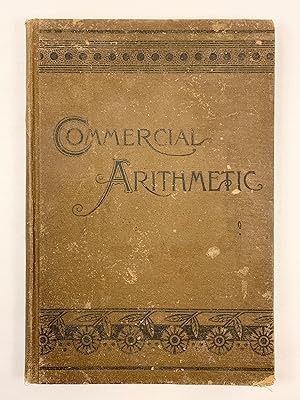
Contact seller5-star sellerCloth. Condition: G/No Dustjacket. .: Williams & Rogers. G/No Dustjacket. 1888. . Cloth. Sm 4to., 272 pp., cover rubbed, bumped, frayed, page toning, writing of ffe . Not Illustrated (illustrator).
 More images
Published by Williams & Rogers, (Rochester, NY) 1890
- Hardcover
- First Edition
Seller: Old New York Book Shop, ABAA, Atlanta, GA, U.S.A.Old New York Book Shop, ABAA
Contact seller5-star sellerCondition: Used - Good
US$ 50.00
US$ 4.75 shippingShips within U.S.A.Quantity: 1 available
Hardcover. Condition: Good. First Edition. 288p quarto, text foxed, fraying at 2 corners. A good copy, but does not qualify for very good. Original brown cloth.

- Softcover
Seller: Buchpark, Trebbin, GermanyBuchpark
Contact seller5-star sellerCondition: Used - Fine
US$ 50.92
US$ 119.22 shippingShips from Germany to U.S.A.Quantity: 1 available
Condition: Sehr gut. Zustand: Sehr gut | Seiten: 318 | Sprache: Englisch | Produktart: Bücher | Keine Beschreibung verfügbar.
- Softcover
Seller: Buchpark, Trebbin, GermanyBuchpark
Contact seller5-star sellerCondition: Used
US$ 52.46
US$ 119.22 shippingShips from Germany to U.S.A.Quantity: 1 available
Condition: Hervorragend. Zustand: Hervorragend | Seiten: 318 | Sprache: Englisch | Produktart: Bücher | Keine Beschreibung verfügbar.
 More images
Published by Lansingburgh, NY, Lansingburgh, NY 1797
- Hardcover
- First Edition
Seller: High Ridge Books, Inc. - ABAA, South Deerfield, MA, U.S.A.High Ridge Books, Inc. - ABAA
Contact seller5-star sellerOriginal full leather, lacking spine label, front board detached. Lacks frontispiece plate (supplied in photocopy) and front endpaper. [i-][xlii; [43-]110; [111-]182;l [183-]297; [298-300], [12] pp. First edition. Possibly the first printed use of the U.S. $ symbol. Experts disagree about whether the first printed use of the U.S…. dollar sign (see p.56) appears in this work, or not, but there is consensus that the copper-plate engraving of the 1795 U. S. Eagle is "the earliest known illustration of a United States coin" - Eric P. Newman. Numerous myths for the origin of the dollar sign exist. As Florian Cajori (1925, pp. 16â"29), Eric P. Newman (1993), and scholars in between have argued, Lee listed symbols for the cent, dime, dollar, and eagle on page 56, but the symbol he gave for the dollar is not the "S" with two vertical lines through it that became standard after 1800 and that already existed in North and South American manuscripts. (See, for example, page 87 of the 1807 4th edition of Daniel Adams's Scholar's Arithmetic.) His scheme of multiple symbols was not adopted by any other authors. Rather, Newman places the first appearance in print of the conventional dollar sign in Philadelphia in 1799 and provides examples of several forms of handwritten symbols. Newman added, however, "Granted he was the first to develop a symbol for the dollar in type form rather than spelling out 'dollar' or employing an abbreviation." Overall, a fair to good copy of a very important book in the history of American currency and accounting. Evans 32366, Howes L196, Karpinski, p. 118, Sabin 39719.


