
Precept: Signed (4 results)

- Softcover
- First Edition
- Signed
Seller: Black Dog Books, Emerson, NJ, U.S.A.Black Dog Books
Contact seller4-star sellerCondition: Used - Near fine
US$ 50.00
US$ 5.50 shippingShips within U.S.A.Quantity: 1 available
Soft cover. Condition: Near Fine. 1st Edition. Signed by Brian Frost with his red chop stamp added. Signed by Author(s). Book.

Published by T. Cadell, 1834. [First Edition], London : 1834
- Softcover
- First Edition
- Signed
Seller: Noushin Books & Company, Hamden, CT, U.S.A.Noushin Books & Company
Contact seller5-star sellerCondition: Used - Very good
US$ 60.00
US$ 6.95 shippingShips within U.S.A.Quantity: 1 available
Soft cover. Condition: Very Good. First Edition. 8vo. pp.53, [3p. adv.] Inscribed by author to John Holmes Esq. Original stiff blue wraps lightly rubbed, lacking spine (though wraps still firmly attached). Leaves clean and bright, with sporadic spots of foxing to edges. This pamphlet was delivered the year Horne obtained a benef…ice in London and a prebend in St. Paul's, and is a affirmation of his views on the Church. Includes appendix with numerous notes on the American Church and Anglo-American writers. [Bible. N.T. Ephesians II, 19-20 Sermons]. Rare. Signed by Author(s).
 More images
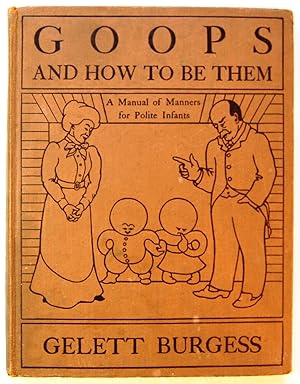
Published by J. B. Lippincott Co 1928
- Hardcover
- Signed
Seller: Kazoo Books LLC, Kalamazoo, MI, U.S.A.Kazoo Books LLC
Contact seller5-star sellerCondition: Used - Very good
US$ 245.95
US$ 5.99 shippingShips within U.S.A.Quantity: 1 available
Hardcover. Condition: Very Good. No Jacket. Signed by author on front free endpaper. Large hardcover with brown cloth covers with brown line drawing. Light wear on edges and corners. Tight binding. Small sticker mark inside back cover. 10x8.75 unpaginated. Signed by Author(s).
- Signed
Seller: Ground Zero Books, Ltd., Silver Spring, MD, U.S.A.Ground Zero Books, Ltd.
Contact seller5-star sellerCondition: Used - Good
US$ 1,000.00
US$ 5.00 shippingShips within U.S.A.Quantity: 1 available
Condition: Good. Presumed a unique copy. Sheet is approximately 24 inches by 18 inches, and has been folded so that there are 8 panels per side. Some discoloration and some fading of the handwriting/script. Framable. Sasine in Scots law is the delivery of feudal property, typically land. Feudal property means immovable property,… and includes everything that naturally goes with the property. For land, that would include such things as buildings, trees, and underground minerals. A heritor might authorize his agent to give possession to someone else through a document known as a "precept of sasine". One of the earliest records in Scotland is from 1248 when Sir Malcolm, son of the then Earl of Lennox, âconferred full Sasine' of certain lands at Strathblane to Sir David Graham. Over time, sasine came to be used in common speech as a reference to the deed or document recording the transfer. There are several alternative spellings. A Register of Sasines was created in every locality by the Registration Act 1617. Transfers of property were originally by symbolic delivery and then registering the "deed of conveyance" in the local "Register of Sasines". The term 'Instrument of Sasine' was the recording of the event of the symbolic delivery of the property as witnessed, and minuted, by a Court Official in attendance for that purpose. Actual sasines on the land itself were made unnecessary by an act of 1845. The "instrument of sasines" was superseded by the recording of a "warrant of registration" per an 1858 act. The last legal ceremony of sasine in Scotland was performed in 2002 as Glenmorangie handed over the land of St Mary's Chapel to the Cadboll Trust. According to the Scottish National Dictionary: CLARE CONSTAT, n.phr. In phr. precept or writ of clare constat. Sc. law: "a deed executed by a subject superior, for the purpose of completing the title of his vassal's heir to the lands held by the deceased heir, under the granter of the precept [or writ]" (Sc. 1890 Bell Dict. Law Scot. 185). These deeds are now extinct in practice. Seisin (or seizin) denotes the legal possession of a feudal fiefdom or fee, that is to say an estate in land. It was used in the form of "the son and heir of X has obtained seisin of his inheritance", and thus is effectively a term concerned with conveyancing in the feudal era. The person holding such estate is said to be "seized of it", a phrase which commonly appears in inquisitions post mortem (i.e. "The jurors find that X died seized of the manor of ."). The monarch alone "held" all the land of England by his allodial right and all his subjects were merely his tenants under various contracts of feudal tenure. Seisin comes from Middle English saysen, seysen, in the legal sense of to put in possession of, or to take possession of, hence, to grasp, to seize. The Old French variations seisir, saisir, are from Low Latin sacire, generally referred to the same source as Gothic satjan, Old English settan, to put in place, set. Seisin is believed to have been applicable only to freehold tenures, that is to say a tenure exceeding a mere term for life and which was heritable, on condition of payment of the appropriate feudal relief to the overlord. A "freeman" was a man who held by freehold tenure, and thus freehold tenure was anciently said to be the only form of feudal land tenure worthy to be held by a free man. Tenure, and the variety thereof, was the very essence of feudal society and the stratification thereof, and the possession of a tenure (i.e., holding, from Latin teneo "to hold") was legally established by the act of seisin. Seisin used in the normal course of events is of two kinds, "in law" and "in deed". Each carries with it a differing strength of tenure. It came to be said later that in the conveyance of a fee by deed of feoffment there must be livery of seisin. "Livery" (or delivery) by "seisin in law" occurred when the parties to the transaction went within sight of the land to be conveyed and the transferor declared to the recipient th.

