

Order Total (1 Item Items):
Shipping Destination:

Smaller Dot (23 results)
Skip to main search results
Search filters
Product Type
- All Product Types
- Books (22)
- Magazines & Periodicals (1)
- Comics (No further results match this refinement)
- Sheet Music (No further results match this refinement)
- Art, Prints & Posters (No further results match this refinement)
- Photographs (No further results match this refinement)
- Maps (No further results match this refinement)
- Manuscripts & Paper Collectibles (No further results match this refinement)
Condition Learn more
Binding
Collectible Attributes
Language (2)
Free Shipping
Seller Location
Seller Rating
-
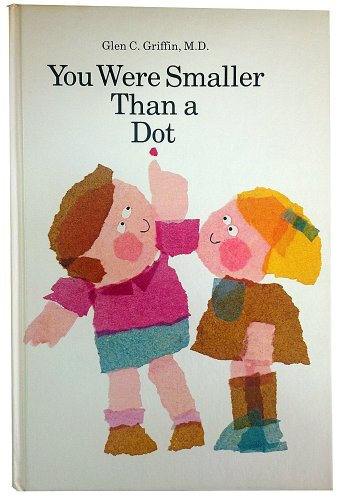
You Were Smaller Than a Dot
Seller: World of Books (was SecondSale), Montgomery, IL, U.S.A.
Seller rating 5 out of 5 stars

Condition: Acceptable. Item in acceptable condition! Textbooks may not include supplemental items i.e. CDs, access codes etc.
-
paperback. Condition: Good. The item is in good condition and works perfectly, however it is showing some signs of previous ownership which could include: small tears, scuffing, notes, highlighting, gift inscriptions, and library markings.
-
Paperback. Condition: Good. No Jacket. Pages can have notes/highlighting. Spine may show signs of wear. ~ ThriftBooks: Read More, Spend Less.
-
Paperback. Condition: Fair. No Jacket. Readable copy. Pages may have considerable notes/highlighting. ~ ThriftBooks: Read More, Spend Less.
-
Paperback. Condition: Good. No Jacket. Pages can have notes/highlighting. Spine may show signs of wear. ~ ThriftBooks: Read More, Spend Less.
-
hardcover. Condition: Used - Good. some wear. unmarked text. Very readable copy.
-

Condition: good. A copy that has been read, remains in good condition. All pages are intact, and the cover is intact. The spine and cover show signs of wear. Pages can include notes and highlighting and show signs of wear, and the copy can include "From the library of" labels or previous owner inscriptions. 100% GUARANTEE! Shipped with delivery confirmation, if you're not satisfied with purchase please return item! Ships via media mail.
-
Hardcover. Condition: Fair. No Jacket. Readable copy. Pages may have considerable notes/highlighting. ~ ThriftBooks: Read More, Spend Less.
-
You were smaller than a dot
Language: English
Published by Better Books January 1972, 1972
ISBN 10: 096006141X ISBN 13: 9780960061419
Hardcover. Condition: Good - Cash. No Jacket. Small book, white covers, illustration of a boy and girl looking at a red dot. An illustrated primer to help you answer the big question 'where do babies come from?' P/O name stamp and name on first pastedown. General reader wear to the corners, edges, and cover. Corners have been bumped a bit. The pages show some general reader wear as well. The book is in good condition with some normal reader wear. Stock photos may not look exactly like the book.
-
You Were Smaller Than a Dot
Language: English
Published by Deseret Books August 1980, 1980
ISBN 10: 0877478171 ISBN 13: 9780877478171
Hardcover. Condition: Very Good - Cash. Dust Jacket Condition: Good. Minor rubbing and edge wear to cover, with light reader wear to pages. Still great condition. Secure pages, solid binding. Small tear in dust jacket at upper spine, along with light staining on front and back. Minor edge wear and rubbing to dust jacket. Stock photos may not look exactly like the book.
-

Condition: good. A copy that has been read, remains in good condition. All pages are intact, and the cover is intact. The spine and cover show signs of wear. Pages can include notes and highlighting and show signs of wear, and the copy can include "From the library of" labels or previous owner inscriptions. 100% GUARANTEE! Shipped with delivery confirmation, if you're not satisfied with purchase please return item! Ships via media mail.
-

Polka Dot Unicorn Story Journal Composition Notebook Half Unruled Drawing Space Half Wide Ruled Lines: Combined Dual Write and Sketch Blank Workbook (6x9 Black Smaller Size)
Language: English
Published by Independently published, 2018
ISBN 10: 1792925980 ISBN 13: 9781792925986
US$ 12.62
US$ 16.76 shipping
Ships from United Kingdom to U.S.A.Quantity: 1 available
Add to basketPaperback. Condition: Brand New. 104 pages. 9.00x6.00x0.24 inches. In Stock.
-

You Were Smaller Than a Dot
Language: English
Published by Deseret Book Co August 1980, 1980
ISBN 10: 0875790577 ISBN 13: 9780875790572
Paperback. Condition: Good - Cash. General use wear, surface and edges rubbed with some creasing. Corners bumped and show wear. Pages show reader wear. Unmarked pages. Ex-Library with normal markings and stickers. Has some soiling to cover and small chip at edge of front cover. Stock photos may not look exactly like the book.
-
You were smaller than a dot
Language: English
Published by Better Books January 1972, 1972
ISBN 10: 096006141X ISBN 13: 9780960061419
First Edition
Hardcover. Condition: Very Good - Cash. No Jacket. First Edition. 12 mo - over 6 3/4 - 7 3/4': White covers, illustration on face, some light soiling around at the top of the spine, yellowing around the top edges of pages. Pages unmarked. Stock photos may not look exactly like the book.
-
You were smaller than a dot
Language: English
Published by Better Books January 1972, 1972
ISBN 10: 096006141X ISBN 13: 9780960061419
Signed
Hardcover. Condition: Good - Cash. Unmarked text and tight binding. General wear to the surface, edges, corners and ends. Has staining/ tanning on the edges of the book. Covers have soiling. book is roughly 6 x 4. barely a quarter of an inch thick. this book has been inscribed by author. Stock photos may not look exactly like the book. Inscribed By Author.
-
You Were Smaller Than a Dot
Seller: Readers Cove Used Books & Gallery, DEMING, NM, U.S.A.
Seller rating 4 out of 5 stars

Signed
Hardcover. Condition: Very Good. Dust Jacket Condition: Good. Signed by author on first fly. Coated color illustrated boards with matching DJ. Solid binding, minimal wear. Clean unmarked pages. DJ has light surface wear and tine chips along edges, now in mylar cover. ; 8.90 X 5.80 X 0.40 inches; 31 pages; Signed by author.
-
Paperback. Condition: new. New Copy. Customer Service Guaranteed.
-
hardcover. Condition: New. In shrink wrap. Looks like an interesting title!
-
Condition: New. New. In shrink wrap. Looks like an interesting title! 1.57.
-

How to build an automobile smaller than this dot . Popular Science, November 1960, p.114. Feynman helped to inspire the field of nanotechnology. Here's one of his early articles on the topic.
Published by popular science, 1960
Magazine / Periodical First Edition
Soft cover. Condition: Good. No Jacket. 1st Edition. Feynman helped to inspire the field of nanotechnology. rare article; tears along spine age toning of pages light rubbing overall good plus condition.
-
Nanotechnology. 3 papers. "The Wonders That Await a Micro-Microscope". Saturday Review, 2 April 1960, pp. 45-47. WITH: Feynman, R.P. "How to Build an Automobile Smaller Than This Dot." Popular Science, Nov. 1960, vol 177 #5 (254pp), pp. 114-116, 230, and 232. AND WITH: Feynman, R.P. The December 12 1960 issue of TIME Magazine referred to the talk on the occasion of the award of the first Feynman prize to James McLellan.
Published by Various, 1960
Seller: JF Ptak Science Books, Hendersonville, NC, U.S.A.
Seller rating 5 out of 5 stars
Soft cover. Condition: Fine. Three of among the earliest appearances in print of a foundation stone in nanotechnology by the great Richard Feynman. (FEYNMAN, Richard P.) Nanotechnology. 3 papers. "The Wonders That Await a Micro-Microscope." Saturday Review, 2 April 1960, pp. 45-47. WITH: Feynman, R.P. "How to Build an Automobile Smaller Than This Dot." Popular Science, Nov. 1960, vol 177 #5 (254pp), pp. 114-116, 230, and 232. AND WITH: Feynman, R.P. The December 12 1960 issue of TIME Magazine5 referred to the talk on the occasion of the award of the first Feynman prize to James McLellan, (but) presented a short summary of the speech's contents only. Offered here are three of the four earliest appearances of Richard Feynman's visionary work on what would be known as "nanotechnology". The transcript of his talk "There's plenty of room at the bottom", was given by Richard Feynman on December 29, 1959 in Pasadena on the occasion of the American Physical Society's Winter Meeting of the West, and was first printed in the February 1960 issue of the "California Institute of Technology Journal of Engineering and Science" 4(2), 23 36 (1960), which as it turns out is a rare artifact and relatively unobtainable. The three items offered here are the next three appearances in print of this famous talk (#s 2-4 following the Caltech paper). (A chronology of the printing of the Feynman talk is given in an excellent paper by Stephen Tuomey Reading Feynman into Nanotechnology , Techne, 12:3 Fall, 2008.) [++] All are housed in a beautiful custom leather solander case. The Feynman address comes four years after the introduction of the word "microminiaturization" enters the language; 14 years before "nanotechnology", and 35 years before "quantum computing" (according to the OED). The three Feynmans include: Feynman, R.P. "The Wonders That Await a Micro-Microscope." Saturday Review, 2 April 1960, pp. 45-47. Feynman, R.P. "How to Build an Automobile Smaller Than This Dot." Popular Science, Nov. 1960, vol 177 #5 (254pp), pp. 114-116, 230, and 232. Feynman, R.P. The December 12 1960 issue of TIME Magazine referred to the talk on the occasion of the award of the first Feynman prize to James McLellan, (but) presented a short summary of the speech's contents only. [++] Experts and leaders in the field have this to say about the Feynman talk and its place in the history of nanotechnology: "Eric Drexler says that The revolutionary Feynman vision launched the global nanotechnology race (Drexler 2004:21); An entry in the Encyclopedia of Twentieth-Century Technology explains that the impetus for nanotechnology came "from a famous talk by the Nobel physicist Richard Feynman in 1959" (Thomas 2004); In his collection of Feynman's papers, Jeffrey Robbins calls Feynman "the father of nanotechnology by virtue of his Plenty of Room paper". One major biography of Feynman says that "Nanotechnologists thought of Feynman as their spiritual father" (Gleick 1992:356). According to Adam Keiper's introductory article on nanotech, "Usually the credit for inspiring nanotechnology goes to a lecture by Richard Phillips Feynman."[i.e., Plenty of Room] (Keiper 2003:18). The National Nanotechnology Initiative's glossy brochure on nanotech reminds us that "One of the first to articulate a future rife with nanotechnology was Richard Feynman" (Amato 1999:4).Ray Kurzweil writes that "Most nanotechnology historians date the conceptual birth of nanotechnology to Richard Feynman's seminal speech in 1959, There's Plenty of Room at the Bottom"(Kurzweil 2005:227). (Source: Toumey's 2008 article Reading Feynman into Nanotechnology,Techne, 12:3 Fall, 2008. See also: "From an idea to a vision: There's plenty of room at the bottom", American Journal of Physics 74, 825 (2006). AND: Kornei, The Beginning of Nanotechnology at the 1959 APS Meeting, APS News, November 2016 .
-
How to Build an Automobile Smaller Than This Dot., pp. 114-6 & 230-2 in: Popular Science, November, 1960. FEYNMAN PREDICTS NANOTECHNOLOGY
Publication Date: 1960
Seller: Landmarks of Science Books, Richmond, United Kingdom
Seller rating 4 out of 5 stars
First Edition
US$ 207.13
US$ 40.22 shipping
Ships from United Kingdom to U.S.A.Quantity: 1 available
Add to basketSoft cover. Condition: Very Good. 1st Edition. First edition, journal issue in original printed wrappers, of this slightly enlarged version of Feynman's famous and visionary Caltech after-dinner lecture, 'There's plenty of room at the bottom,' which represents the birth of nanotechnology, the field of applied science involving manipulating matter on an atomic and molecular scale. "The revolutionary Feynman vision . . . launched the global nanotechnology race" (Drexler, p. 21). At the annual meeting of the American Physical Society in December 1959, Richard Feynman delivered an after-dinner lecture entitled 'There's Plenty of Room at the Bottom'. "The banquet speech would prove prescient. Feynman's lecture is widely accepted as spurring the field of nanotechnology, and the Nobel Prize Committee lauded it as visionary when they awarded the 2016 Nobel Prize in Chemistry to researchers who assembled tiny motors made of molecules" (Kornei). Years before the term nanotechnology would be coined, Feynman laid out the principal problems and potentials of the field. He noted, "I will not discuss how we are going to do it, but only that it is possible in principle in other words what is possible according to the laws of physics." Feynman considered the possibility of direct manipulation of individual atoms as a more powerful form of synthetic chemistry than those used at the time. Feynman laid out challenge after challenge: reducing the Encyclopedia Britannica to a pinhead, making an electron microscope that could see individual atoms, building a microscopic computer, and even "swallowing the doctor": building a tiny, ingestible surgical robot. In an era when computers filled entire rooms, what Feynman proposed seemed nearly unfathomable: "I am not afraid to consider the final question as to whether, ultimately in the great future we can arrange atoms the way we want; all the way down!" A transcript of 'Plenty of room' was published by the Caltech magazine Engineering & Science in February 1960; this is very rare indeed (we are not aware of any copy of the journal having appeared on the market). The magazine Saturday Review ran a brief synopsis in April 1960 with the title 'The Wonders That Await a Micro-Microscope,' and this was followed by the present article, a condensed version which contained comments that had not been in the Engineering & Science article, but which retained the heart of Feynman's argument. Drexler, 'Nanotechnology: From Feynman to Funding,' Bulletin of Science, Technology & Society 24 (2004), pp. 21-27. Kornei, 'The Beginning of Nanotechnology at the 1959 APS Meeting,' APS News, November 2016. 8vo, original printed wrappers (very slightly worn and soiled, slightly browned at edges). A very good copy.
-

Condition: good. A copy that has been read, remains in good condition. All pages are intact, and the cover is intact. The spine and cover show signs of wear. Pages can include notes and highlighting and show signs of wear, and the copy can include "From the library of" labels or previous owner inscriptions. 100% GUARANTEE! Shipped with delivery confirmation, if you're not satisfied with purchase please return item! Ships via media mail.


