

Order Total (1 Item Items):
Shipping Destination:

Soviet American Relations, Signed (2 results)
Skip to main search results
Search filters
Product Type
- All Product Types
- Books (2)
- Magazines & Periodicals (No further results match this refinement)
- Comics (No further results match this refinement)
- Sheet Music (No further results match this refinement)
- Art, Prints & Posters (No further results match this refinement)
- Photographs (No further results match this refinement)
- Maps (No further results match this refinement)
- Manuscripts & Paper Collectibles (No further results match this refinement)
Condition Learn more
- New (No further results match this refinement)
- As New, Fine or Near Fine (No further results match this refinement)
- Very Good or Good (1)
- Fair or Poor (No further results match this refinement)
- As Described (1)
Binding
- All Bindings
- Hardcover (2)
- Softcover (No further results match this refinement)
Collectible Attributes
Language (2)
Price
- Any Price
- Under US$ 25 (No further results match this refinement)
- US$ 25 to US$ 50
- Over US$ 50
Free Shipping
Seller Location
Seller Rating
-
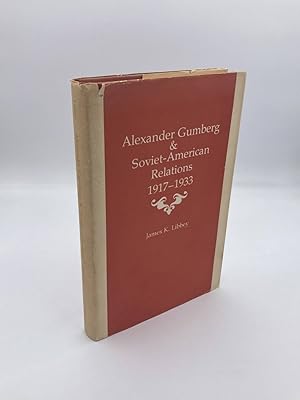
Alexander Gumberg And Soviet-American Relations, 1917-1933 (Signed)
Language: English
Published by University Press of Kentucky, 1977
ISBN 10: 081311361X ISBN 13: 9780813113616
Seller: True Oak Books, Highland, NY, U.S.A.
Association Member: IOBA
Seller rating 5 out of 5 stars

Signed
Hardcover. Condition: Good. Dust Jacket Condition: Good. 229 pages; Signed by Author; - Book is in good overall condition. No writing or major blemishes. Average wear. Signed by author! ; - We're committed to your satisfaction. We offer free returns and respond promptly to all inquiries. Your item will be carefully wrapped in bubble wrap and securely boxed. All orders ship on the same or next business day. Buy with confidence.
-

Russia Leaves the War Soviet-American Relations, 1917-1920.
Published by Princeton University Press, Princeton, NJ, 1956
First Edition Signed
First edition of this classic work, which went on to win the Pulitzer Prize in History, the National Book Award for Nonfiction, the George Bancroft Prize, and the Francis Parkman Prize. Octavo, original cloth. Presentation copy, inscribed by the author on the front free endpaper, "To Langrock's with best wishes George Kennan." Near fine in a near fine dust jacket. In this volume Kennan explores the complexities of the Soviet-American relationship between the November Revolution of 1917 and Russia's final departure in March 1918 from the ranks of the warring powers. These four months, which witnessed the Bolshevik Revolution and Russia's departure from the warring powers, set the stage for future relations between the two emerging superpowers. Volume 2 of Soviet American Relations, entitled The Decision to Intervene (Princeton, 1958), explored U.S. intervention in northern Russia and Siberia between 1918 and 1920.The distinguished scholar and public servant George F. Kennan opens the way to an understanding not only of these events but of the subsequent pattern of Soviet-American relations and the complex process of international diplomacy generally. Kennan became the U.S. government's key analyst of the Soviet Union after a two-year stint in the Foreign Service there (1944-1946), which had been preceded by service in the American embassy in Moscow before World War II. His "long telegram" to his superiors at the State Department, written in 1946 and published a year later in revised form in Foreign Affairs as the famous "X" article, was perhaps the most influential statement in the early years of the Cold War.
