Synopsis
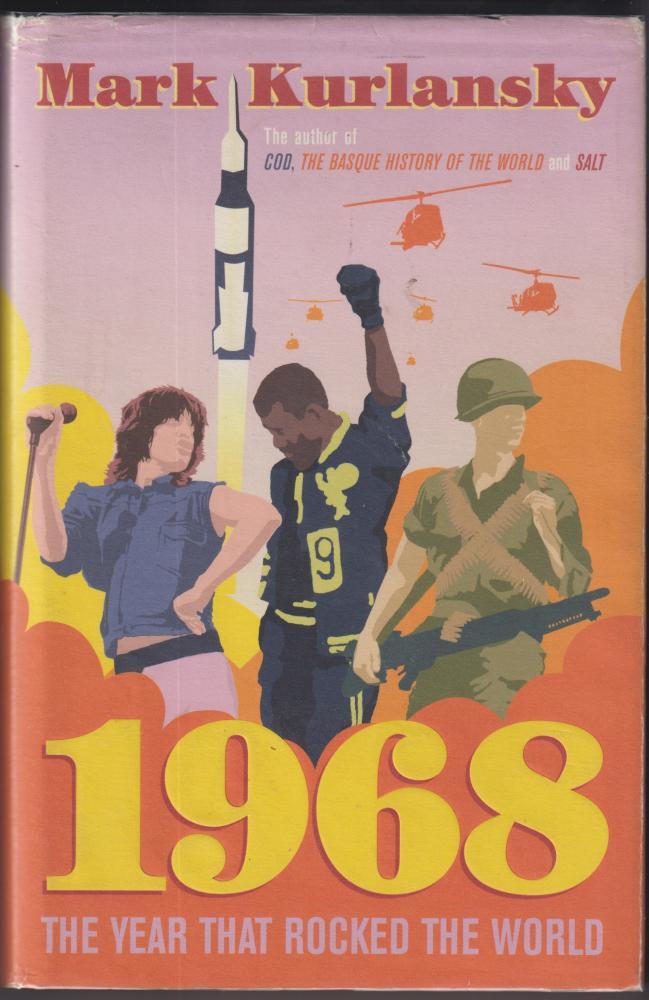
It was the year of sex and drugs and rock and roll; it was also the year of the Martin Luther King and Bobby Kennedy assassinations, Prague Spring, the Chicago convention, the anti-war movement and the Tet Offensive, the student rebellion that paralyzed France, Civil Rights, the generation gap, the beginning of the end for the Soviet Union, and the birth of the women's movement. With 1968: The Year that Rocked the World, award-winning journalist Mark Kurlansky has written his magnum opus-a cultural and political history of that world-changing year of social upheaval, when television's impact on global events first became apparent, and where simultaneously, in Paris, Prague, London, Berkeley, Chicago, New York and all over the globe uprisings spontaneously occurred. 1968 encompasses the worlds of youth and music, politics, war, economics, assassinations, riots, and demonstrations-and the media, and shows us how we got to where we are today. 1968 is destined to be Mark Kurlansky's most important and most fascinating book yet.
Review
Given its broad and vibrant subject, it would be quite difficult for a writer of any proficiency to pen a boring book on 1968, and Mark Kurlansky has indeed pulled together an entertaining and enlightening popular history with 1968: The Year That Rocked the World. With the Vietnam War and Soviet repression providing sparkplugs in the East and West, student movements heated up in Berkeley, Prague, Mexico City, Paris, and dozens of other hotspots. With youth in ascendancy, music, film, and athletics became generational battlegrounds between opposition forces that couldn't be more appalled with one another. Not so fortuitously, the Summer Olympics in Mexico City and a presidential election in the United States conspired to elevate the tension higher as months passed. Kurlansky is skilled at concisely capturing the personalities behind the conflicts, whether they be heartbroken Czech leader Alexander Dubcek as Eastern Bloc troops violently suppress his nation's uprising or respected veteran newsman Walter Cronkite reluctantly editorializing against the war in Vietnam. The author is more than willing to choose heroes (the doomed Robert Kennedy) and villains (victorious presidential candidate Richard Nixon), and clearly sides with the rebels in most cases. In general, Kurlansky is more adept at covering the political front than he is the equally revolutionary arts world, and it's apparent that any chapter in this book could be expanded into a book of its own. One's expectation is that captivated readers will view 1968 as a portal into a deeper exploration of a fascinating time. --Steven Stolder
"About this title" may belong to another edition of this title.