Synopsis
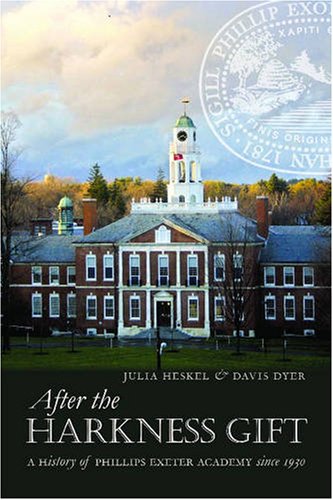
In 1930, philanthropist Edward S. Harkness bestowed a gift of $5.8 million on Phillips Exeter Academy, expecting to inspire "something revolutionary" in secondary education. The gift enabled the Exeter, New Hampshire, academy to redesign pedagogy and classrooms around distinctive oval "Harkness tables" that could accommodate twelve students plus a teacher and to remake its campus into a residential community. The gift transformed education at the school, but its impact spread well beyond the classroom. Since 1930, principles of free and open inquiry and discussion have come to animate Exeter's efforts to deal with major challenges and changes, including working with an increasingly diverse community, introducing coeducation, and governing and financing a large, complex institution. After the Harkness Gift demonstrates how one leading independent school adopted a distinctive approach to teaching and learning and then successfully adapted it in the service of continuing institutional change.
About the Authors
Davis Dyer is a founding director of The Winthrop Group, Inc., and a group leader at Monitor Company Group, L.P., in Cambridge, Massachusetts.
JULIA HESKEL is executive editor of publications at PRTM, a global management consulting firm based in Waltham, Massachusetts. She was formerly a senior consultant with The Winthrop Group, Inc., in Cambridge, Massachusetts. DAVIS DYER is a founding director of The Winthrop Group, Inc., and a group leader at Monitor Company Group, L.P., in Cambridge, Massachusetts.
"About this title" may belong to another edition of this title.