Synopsis
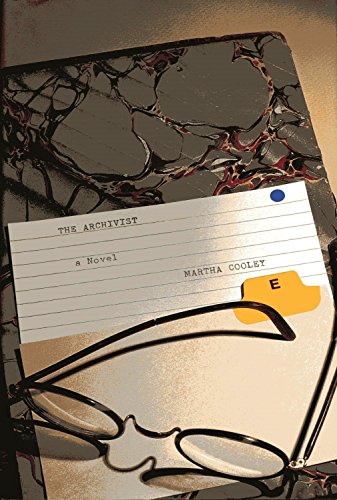
A battle of wills between Matt, a careful, orderly archivist for a private university, and Roberta, a determined young poet, over a collection of T.S. Eliot's letters, sealed by bequest until 2019, sparks an unusual friendship and reawakens painful memories of the past
Reviews
The reserved voice of 65-year-old Matthias Lane, archivist at a prestigious Eastern university, opens this remarkably assured first novel, a complex and beautifully written tale of loss, crises of faith and resolution. Then we read the anguished journal of his wife, Judith, a poet who committed suicide in a mental institution in 1965, the same year as T.S. Eliot died. This is just one of the many parallels between the life of the poet and those of Matt and Judith (Eliot, of course, committed his own wife, Vivienne, to an asylum). Grad student and poet Roberta Spire requests Matt's permission to look at the sealed correspondence between Eliot and a Boston woman named Emily Hale, to whom he may have bared his emotions. Roberta has more than an academic interest in this correspondence. She is immensely disturbed by her parents' belated revelation that they were Jews who fled Germany and converted to Christianity in the U.S., and she feels that Eliot's conversion to Catholicism may hold insights for her. She is unaware that Judith's mental breakdown was related to the Holocaust, but Matt is quick to see the relationship and to recognize the parallels between Eliot's reclusive personality and his own emotional detachment. As several wrenching surprises about the past are revealed, Matt is finally opened to his pain and guilt and to an affirmative act of connectedness and trust. With its sinewy interplay of moral, spiritual and philosophical issues, its graceful interjection of lines of poetry and references to jazz, the novel first engages the reader's intellect. Soon, however, the emotions are also engaged, and the narrative acquires unflagging suspense as it peels back layers of secrets. This is an auspicious debut from a writer who already has mastered the craft.
Copyright 1998 Reed Business Information, Inc.
A sophisticated and compelling debut--about libraries though without a particle of dust, and with passion galore though about inability to love. Matthias Lane has been bookish all his life and may not seem like much to write about--a buttoned-up man in his 60s, chief archivist of rare books and manuscripts in a university library. But when a grad student named Roberta Spire asks to see T.S. Eliot's letters to his passionate but unrequited lover Emily Hale, a set of associations is let loose that will reveal the painful truth (and deceit) of Matt's past life and the painful truth as well of a great sweep of the 20th century. Though 30 years his junior, Roberta reminds Matt of his own dead wife, Judith--who was also beautiful, also passionate, and also a poet. There are other parallels between Roberta and Judith--both had been deceived, in one way or another, about their own past, their parents' past, and their own Jewishness. And both, in different ways, were connected with the fate of the Jews in WWII Europe. Judith, in fact, in the years after the war, grew so obsessed by the emerging details of the Holocaust--and by people's having stood by and done nothing--that she became unhinged and was committed by Matt to an institution (just as Eliot had earlier committed his own wife Vivienne), where a fate awaited her that will grip any reader and that will haunt the self-blaming Matt forever. Roberta's appearance causes him to revisit that past, revisit--and revise--his own guilt, and suffer again both the intensity of his love for the doomed Judith and the terrible, fear-based inadequacy of it. What sounds like an entirely dour tale takes wings in Cooley's hands, is enlivened by her eye for character, detail, place, period, every small human nuance--and by her perfect, apt quotations from Eliot's poems. A superlative, serious, gripping literary treasure. -- Copyright ©1998, Kirkus Associates, LP. All rights reserved.
Matthias Lane quietly inhabits his work as the keeper of an unnamed university library's special collection, which includes the letters T.S. Eliot wrote to Emily Hale. When a young poet requests access to the sequestered papers, Matt must confront a personal history he's been avoiding?a mystery that, ironically, recalls the terrible pain between Eliot and his wife, Vivienne. Cooley builds upon a parallel between Vivienne and Matt's dead wife, Judith, to reveal a staid conformity that cannot withstand the failure of love. Told through Matt's recollections and Judith's journals, this excellent first effort chips away at issues of religious faith, madness, and the troubling intersection between life and art.
Copyright 1999 Reed Business Information, Inc.
The articulate yet restrained archivist who narrates this exceptional first novel confides, "Books never cease to astonish me," a sentiment that could easily be aroused by Cooley's resolute and somber tale. It takes great vision and verve to work with the heavily freighted materials she handles so adroitly: the terrible legacy of the Holocaust; questions of faith, conversion, and sanity; and the life and poetry of T. S. Eliot. Using Eliot's tragic first marriage, religious convictions, and abortive relationship with his confidante, Emily Hale, as a template, Cooley explores and extends his traumas through the prisms of her highly cerebral characters. Now in his sixties, Matthias takes quiet pleasure in his guardianship of a university archive that contains letters between Eliot and Hale. This invaluable correspondence is off-limits until 2019, but Roberta, an attractive poet, is determined to gain access to it and draws Matthias into a tense tango of negotiations that unfreezes painful memories of his poet-wife's suicide. Much of Cooley's unusual novel flows like a psychological thriller, and even its slow passages are moodily compelling. Donna Seaman
"About this title" may belong to another edition of this title.