About this Item
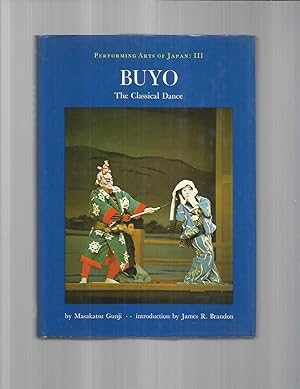
natural tan with brown flecks & gilt decorative cloth hardbound 8vo. 8º (octavo). dustwrapper in protective plastic book jacket cover. very fine cond. mint cond. looks new. like new. as new. binding square & tight. covers clean. edges clean. contents free of markings. price clipped dustwrapper in fine cond. a little rubbed at one corner, not torn . nice clean copy. no library markings or store stamps, no stickers or bookplates, no names, no inking , no underlining, no remainder markings etc ~. first edition so stated. first printing (NAP) . translated By Don Kenny. 207p.+ colophon. chronology. commentaries on the illustrations. 24 pages of glossy full color full page plates. 153 plates & illustrations in all. performing arts. religion. mythology. folklore. japanese theatre. kabuki. shinto. ~ "The most important aspect of Japanese dance is the spirit of play," says Masakatsu Gunji in this enlightening introduction to one of Japan's oldest and greatest performing arts. Indeed, in Japanese mythology, the dance originated as a diversion of the gods, and certainly it has long been a diversion of the people. From ancient times it has been the chief feature of celebratory occasions, and its role as the ancestor of the drama is still apparent in the Japanese theater today. Sometimes, as the book interestingly shows, the element of play in Japanese dance is lighthearted and comical, sometimes solemn and decorous, sometimes erotic, sometimes violent. Strangely enough, even a murder scene in a Kabuki drama may become a kind of ballet, transformed by the movements of dance into an episode of mysterious beauty. In fact, dance pervades the drama, and Kabuki dance is the essence of the dancer's art. The themes of Japanese dance are almost as limitless as the array of characters who interpret them. Armor~clad warriors enact battles in dazzling choreography, a folk hero portrays his personality in a striking sequence of dance movements, fanciful lions disport themselves to the music of flutes and drums, a young girl expresses the beauty of wisteria blossoms in a series of exquisite dances. The enchantments are as endless as the themes and the characters themselves. This book introduces Japanese classical dance from the viewpoint of the general reader who wishes to know the essential facts about it. The approach is mainly a visual one, as the generous selection of illustrations makes clear. Dance types and roles, scenes from famous dance pieces, notable performers, paintings and prints from dance history~all these are pictured here to complement an informative text that traces the development of the dance, explains its techniques, interprets its aesthetics, and re~creates for the reader the atmosphere in which it is performed.
Seller Inventory # 8051903
Contact seller
Report this item