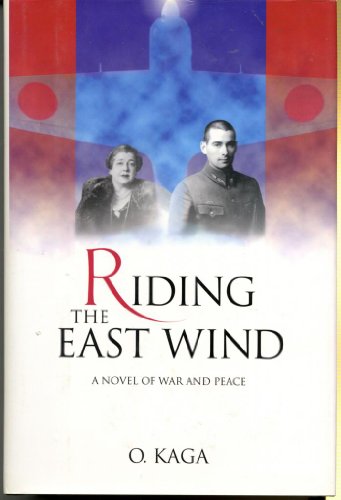
In a saga set during World War II, Saburo--a pro-American diplomat--is regarded in the United States as a traitor, while his American wife struggles to live in a country that is at war with her homeland
The Author: Otohiko Kaga was born in Tokyo in 1929. As a teenager he became a cadet at the Junior Army Academy, and at the age of sixteen he saw his hometown go up in flames. After studying in postwar France, he became a professor of criminal psychology and counselor to prisoners on death row.
Turning to literature in his late thirties, he made his debut with A Winter in Flanders, followed by A Summer Never to Return, a novel based on his wartime experiences, which won the prestigious Tanizaki Prize in 1973. He achieved best-selling status in 1979 with The Sentence, a massive novel about Japan's condemned prisoners, and then Riding the East Wind in 1982, works which established him as a master of the Western-style epic in a country where the short story and the novella had been the main vehicles of serious fiction. He has recently completed The Eternal City, a trilogy about Tokyo in the 1930s and 1940s, crowning a career as an expert literary witness to the effects of war.
Riding the East Wind is his first novel to appear in English.
The Translator: Ian Hideo Levy was born in the United States in 1950 and educated in Taiwan, America, and Japan. He received the American Book Award for The Ten Thousand Leaves, a translation of the classic Japanese poetry anthology, the Manyoshu. With the publication of The Room Where the Star-Spangled Banner Cannot Be Heard, which won the coveted Noma Prize for New Writers, he became the first Westerner ever to be recognized as a writer of original Japanese fiction.