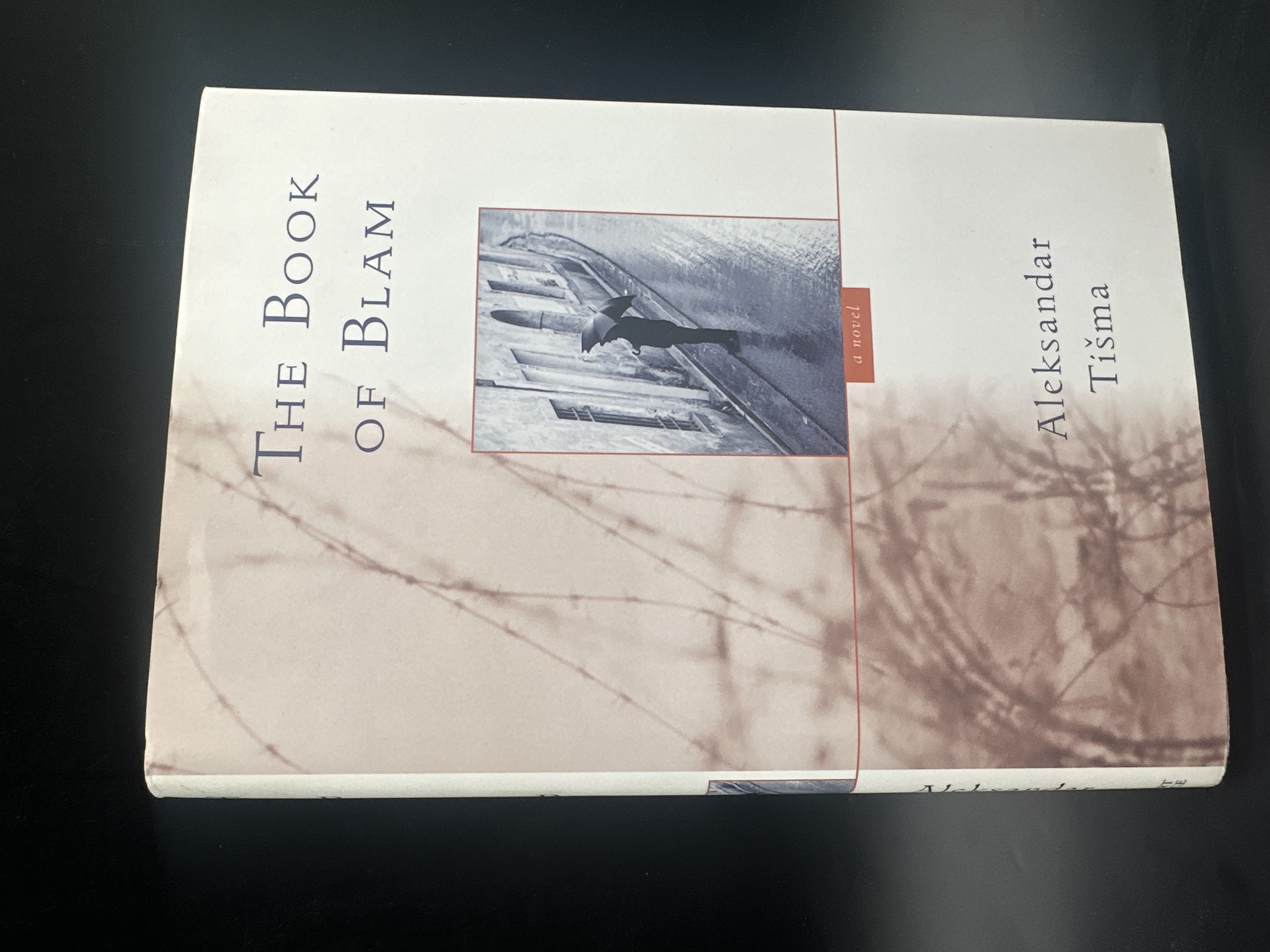
Miroslav Blam walks through the empty streets of Novi Sad, remembering. The war has ended, but for Blam the town is haunted with its presence, and memories of its dead: Aaron Grün, the hunchbacked watchmaker; Eduard Fiker, a lamp merchant; Jakob Mentele, a stove fitter; Arthur Spitzer, a grocer who played amateur soccer and had non-Jewish friends; and Sándor Vértes, a communist lawyer. They stand before him as ever, but they are only the ghosts in Blam's mind. Accompanying the others are Blam's family and his best friend, all of whom perished in the infamous Novi Sad raid in January 1942. Blam lives. He seeks no revenge, no retribution. His life is a spectator's-made all the more agonizing by the clarity with which he sees the events around him. The silhouettes of the dead pass before him, and he incorporates what would have been their daily lives into his own. And in telling the story of one man's life after the war, Ti
ALEKSANDAR TISMA was born in 1924 in Vojvodina, Yugoslavia, to a Serbian father and a Hungarian mother. He experienced the Holocaust in his native town of Novi Sad. After the war he worked as a journalist in Novi Sad and Belgrade, and later became an editor, writer, and translator. He has written sixteen works of fiction, of which the last five--what he calls a pentateuch of novels and stories--have been devoted to the subject of the Holocaust.