About this Item
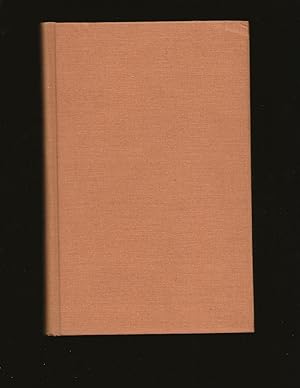
First Edition (NAP). Julius Thomas Frazer loved time. He ran out of it in 2010, but this book will offer you a glimpse into what he was thinking about it, probably in 1979, while reading Defoe and Fictional Time. He did a good deal of underlining in the chapter titled Fictional Time and Real Time, a little bit more in a chapter titled Time-Consciousness, and in the Notes to Pages at the end of the book. This will be the fourth book of his that I've listed. This book has his bookplate on the front inside cover. The bookplate is in very good condition. You can see the covers of the book in the photos provided. They are quite clean. The edges and corners are in very good shape. So is the spine. There is a bump/dent at the top corner of the rear cover. It doesn't seem to have affected the pages. The blueish silver lettering on the spine is very bright. The top page edge is gray. The middle and bottom page edges have very light dust staining or toning. The book is square and very solidly bound from cover to cover with nicely tight pages throughout, as well as nicely tight covers. There is some spotting/foxing on some early pages, including the half-title page, title page, copyright page, Dedication page, Contents page and Acknowledgments page. There's a light bit of the same on the Index pages that end the book. There is no spotting/foxing in the text. The pages are exceptionally clean. I scrolled through them a number times without finding any soiling. I didn't find any conspicuous creasing. There is a nick at the middle edge of three consecutive pages, one has a teeny tiny tear. There's another nick at the bottom edge of a half-dozen or so consecutive pages. The nicks are obviously very far away from the print, all of them just barely peeking over the edge. Mr. Fraser did cut out from what I assume was the dust jacket a description of the book and a short biography of the author, Paul K. Alkon. He attached them to the rear inside cover. There are no other attachments in the book. 'Julius Thomas Frazer who made 'important scholarly contributions to the interdisciplinary Study of Time' and whose 'work has strongly influenced thinking about the nature of time across the disciplines from physics to sociology, biology to comparative religion, and who was a seminal figure in the general interdisciplinary study of temporality.' Mr. Fraser was also a founding member of the International Society for the Study of Time. You can read a lot more about him in his Wikipedia profile. By the way, the book was purchased in Westport, Connecticut where Mr. Fraser lived.' 'Defoe and Fictional Time shows Defoe's relevance to issues now central to criticism of the novel; relationships between narrative time and clock time, the influence of time concepts shared by writers and their audience, and above all the questions of how fiction shapes the phenomenal time of reading. Paul K. Alkon offers first a study of time in Defoe's fiction, with glances at Richardson, Fielding, and Sterne; and second a theoretical discussion of time in fiction. Arguing that eighteenth-century views of history account for the strange chronologies in Captain Singleton, Colonel Jack, Moll Flanders, and Roxana, Alkon explores Defoe's innovative use of narrative sequences, frequency, spatial form, chronology, settings, tempo, and the reader's cumulative memories of a text. Defoe's Journal of the Plague Year is the first portrayal of a public duration--passing time shared by an entire population during a crisis--ranking Defoe among the most creative writers who have explored the way in which fictional time may influence reading time.'.
Seller Inventory # 003305
Contact seller
Report this item