About this Item
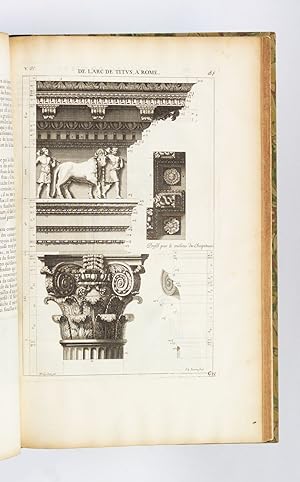
443 x 290 mm. (17 3/8 x 11 1/2"). 6 p.l., 323, [1] pp. Attractive modern calf-backed marbled boards with single decorative blind rule, raised bands, one compartment with red morocco label lettered in gilt, others with a diamond-shaped foliate tool in gilt. With engraved title, headpieces and initials for dedication and text, and 137 ARCHITECTURAL PLATES (included in pagination) after drawings by Desgodets. A Large Paper Copy. Engraved title with ink stamp of G. Wills Esqr; two leaves with marginal notes in a contemporary hand. Fowler 102; Millard, French 62; Brunet II, 625. See also: W. Hermann, "Antoine Desgodets and the Académie Royale d'Architecture" in "The Art Bulletin" Vol. 40, No. 1 (Mar., 1958), pp. 23-53. Just a hint of browning right at top edge of leaves, final four leaves (including plates) with a half dozen small rust-colored droplets (from wax?), but easily A FINE COPY, the binding unworn, text and plates with only the most trivial imperfections, and the margins very, very wide. With meticulously executed plates by some of the most talented engravers of the day, this groundbreaking work stirred controversy by advocating the importance of scientific accuracy and direct observation in the study of architecture and by pointing out inconsistencies in the writings of some of the most distinguished ancient and modern architectural authorities. The work was the result of great physical determination, an unprecedented example of insistence on accuracy, and a notable case of architectural iconoclasm. Antoine Babuty Desgodets (or Desgodetz, 1653 1728), was just 20 years old when he was sent to Rome with the task of measuring and sketching out ancient buildings on behalf of the Académie Royale d'Architecture. He stayed in Rome for 16 months, and as Hermann relates, "It is almost inconceivable that within this comparatively short time one man was able to survey thoroughly the great variety of monuments, the more astonishing if one learns that he selected for publication drawings of only about half the number of buildings he had actually measured. . . . He measured the buildings just as they stood without any attempt at restoration, incorporating as many details as possible, the whole undertaking being carried out with a degree of thoroughness and accuracy never before known." Desgodets returned to Paris in 1677 and published the present work with the assistance of Jean-Baptiste Colbert, founder of the Académie Royale d'Architecture, who, as Millard tells us, "had Desgodets' drawings engraved by the king's engravers at His Majesty's expense." Our author ruffled many feathers: he had the temerity to note "discrepancies in Vitruvius' text and listed errors made by modern authorities (such as Serlio, Palladio, Antonio Lobacco, and Fréart de Chambray) in establishing measurements for the same buildings he described. Desgodets then allowed the evidence of the ancient monuments, observed with scientific accuracy and recorded to the fraction of an inch, to take priority over the written architectural documents on which the Academy had based its principles." The 137 plates detail 25 antique buildings in and around Rome, and are breathtaking for both their devotion to accuracy and the skill of the engravers. In Fowler's words, "The plates, many of them masterpieces of architectural drawing and engraving, were engraved from the drawings of Desgodets by De Chastillon, S. Le Clerc, J. and P. Le Pautre, N. Guerard and others. This work gives the first really accurate representation of ancient Roman architecture and is the beginning of that long series of measured drawings which are one of the great traditions of French architecture. It is remarkable that the drawings for this work were made when the author was about twenty-two and the book was published before he was thirty." Because of its importance, the book appears at auction with some frequency, but copies in agreeable condition are hard to come by.
Seller Inventory # ST17496-007
Contact seller
Report this item