Synopsis
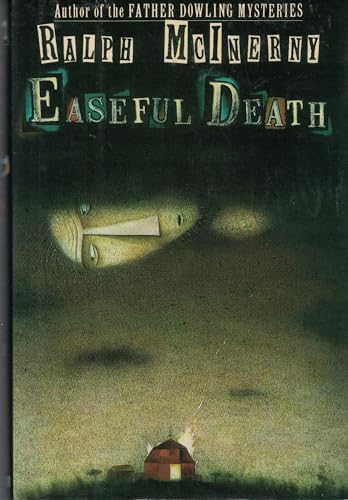
A poet and teacher, Howard Webster, feigns death and moves to Italy where he reads a magazine article lauding his work and returns home to enjoy the "posthumous" fame
Reviews
A bizarre identity switch kicks off this intriguing psychological drama by the author of the Father Dowling mystery series. Raunchy, alcoholic "retired" poet Howard Webster is holed up in his Wisconsin farmhouse re-wooing his muse when a vagrant hangs himself in the barn. By burning the body on a bonfire and writing a suicide poem, Webster convinces everyone that he has died and spends the next two years anonymously in Sardinia. His larcenous daughter Felicia establishes the Webster Foundation, which accrues unexpected (but inaccessible) wealth when the curator "discovers" a Webster manuscript that becomes a huge posthumous success. Felicia's husband seeks a way out of vast debts incurred with pie-in-the-sky business schemes, while Webster's third (divorced) wife is persuaded to abet a plot to "discover" still more manuscripts. Truth-seekers among the shady types are private investigator Philip Knight and his enormously fat brother Roger, computer genius and ardent admirer of Webster's poetry. After two more deaths, numerous thefts and a kind of reverse counterfeiting, a deus ex machina wraps things up satisfactorily.
Copyright 1991 Reed Business Information, Inc.
Another of the author's interesting departures from his Father Dowling and Andrew Broom series (Finger Marks, etc.). Here, poet- academic Howard Webster has a minor literary reputation and three failed marriages behind him when he retires at 61 to an isolated Wisconsin farmhouse. There, he finds a drinking buddy in Ober, a dissolute but educated tramp. Webster, blocked in his attempts at poetry writing, keeps notes on their windy encounters. When Ober kills himself, Webster seizes the moment, arranges things to look as though he himself committed suicide, and takes off for Sardinia. After more than a year there, he discovers that his literary status has soared; his unloved daughter Felicia has established a foundation in his name; and a curator has been installed at the farmhouse, now a mini-museum. Webster can't stay away. Returning, in disguise, he finds--and further fuels--an unlikely series of events overlaid with greed and irony, ending in death. Byzantine plotting, a surplus of complicated characters, much intellectual posturing, and a mostly cheerless atmosphere--all in an ambitious but only sporadically compelling story. -- Copyright ©1991, Kirkus Associates, LP. All rights reserved.
How does one react to the news that one has become famous in absentia? Howard Webster, an aging poet, faces that quandary after staging his own death on his isolated Wisconsin farm. Webster had become convinced that his life was in vain. When presented with an opportunity to escape his humdrum existence, he seizes the moment and expatriates to Sardinia to live out his days in anonymity. Alas! While living abroad he picks up a magazine that places him "among the two or three genuine poetic talents of the past half century in America." Webster returns to the United States undercover and travels to his farm, which his estranged daughter has turned into the Webster Foundation. He discovers that his sudden fame stems primarily from a novella published posthumously, and authored by the foundation's curator. Although subterfuge and intrigue abound, the novel finally disappoints the reader awaiting some revelation.
- Kimberly G. Allen, National Assn. of Home Builders Lib., Washington, D.C.
Copyright 1991 Reed Business Information, Inc.
"About this title" may belong to another edition of this title.