Synopsis
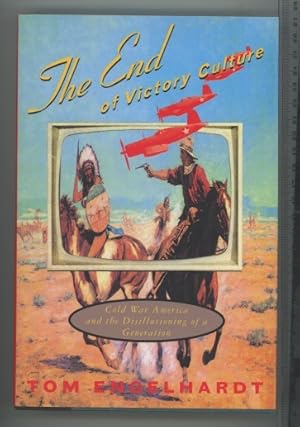
Offers an account of the life and death of the American myth of conquest. Engelhardt describes the mood of "triumphalist despair" in post-WWII America and explores pop culture icons of the Cold War. Topics include the link between the fear of communism and the rise of youth culture in the 1950s, cowboy and war films of the 1960s, the Vietnam war and the Gulf war. Annotation copyright Book News, Inc. Portland, Or.
Reviews
Freelance writer Engelhardt here traces the roots of American "triumphalism" back to early New England, where the massacre of Indians set the pattern for the self-justified slaughter of external enemies, a ritual that would be replayed endlessly not only in life but also in fiction, movies, toys and comics. In his sprawling meditation, he considers the effect of our "loss of enemy" when the Japanese surrendered in 1945. In his tedious recap of the Vietnam tragedy Engelhardt suggests that the American public's inability to view the Viet Cong as a savage, lesser adversary contributed to our becoming "the world's most extraordinary [because least expected] losers." The desire to create a Third World battlefield with maximum U.S. weaponry and minimum U.S. casualties was briefly satisfied, he contends, by the Gulf War with its seemingly bloodless, machine-versus-machine destructiveness. America, according to Engelhardt, is still yearning for a revival of our national identity via the victory culture, "the story of their slaughter and our triumph."
Copyright 1995 Reed Business Information, Inc.
What passes for American patriotism, so argues Engelhardt, is fundmentally a war story: specifically, cowboys versus Indians. Over 300 years, the theme has become globalized, with the enemy role always assigned to numerous but technically inferior nonwhite people. To the Pequot War, to the Gulf War, and every other war in between, Engelhardt asseverates that American "victory culture" is a race-dependent phenomenon that dehumanizes the enemy. The pattern peaked with our victory over Japan and was broken by defeat in Vietnam. The dominant medium for his analysis is the cinema, and most of his text is essentially film criticism. Be it Birth of a Nation, the sci-fi flicks of the 1950s, TV reportage from Vietnam, the postwar Vietnam movies, or the Star Wars series, Engelhardt deconstructs the features (such as America as ambush victim--in a box canyon or at Pearl Harbor) that he sees fed to the viewer. His interpretations, including digressions about toy soldiers, exert a sort of pop-culture appeal. However, the totalistic character of the author's political thought--that the cold war was an impertinence buttressed by the visual arts--might deter the history-inclined reader. Such are the split odds this'll move off the shelf: pick 'em. Gilbert Taylor
Engelhardt, an editor and freelance writer, traces the growth and decline of "victory culture" in American history. A triumphalist myth, unquestioned for years, promoted the belief that America would always overcome its enemies. Engelhardt shows how major events since 1945 have thoroughly eroded this belief, resulting in disillusionment for those over 40 and bewilderment for the post-Vietnam War generation. He focuses on a variety of related themes: Indian captivity narratives; Hollywood's depiction of our "enemies," usually dehumanized Native Americans and Asians; the phenomenon of "GI Joe," the most popular war toy ever created; and the advent of rock'n'roll and the teen subculture that grew up around it. Engelhardt's study is a solid contribution to Cold War literature, especially where it touches upon questions of national purpose and identity. Although scholarly in tone, his book will appeal to anyone interested in American popular culture. Recommended for most libraries.
Gary D. Barber, SUNY at Fredonia Lib.
Copyright 1995 Reed Business Information, Inc.
"About this title" may belong to another edition of this title.