About this Item
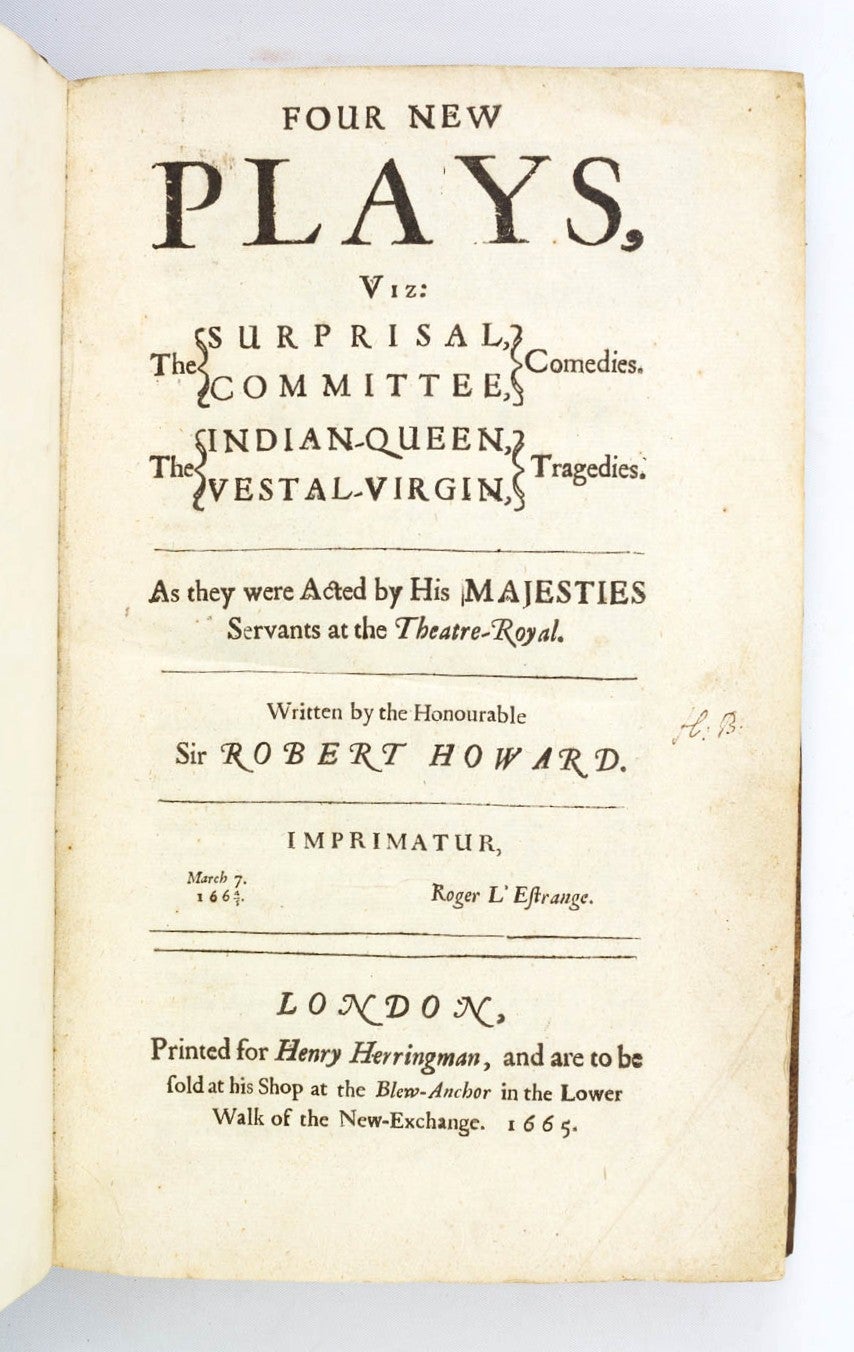
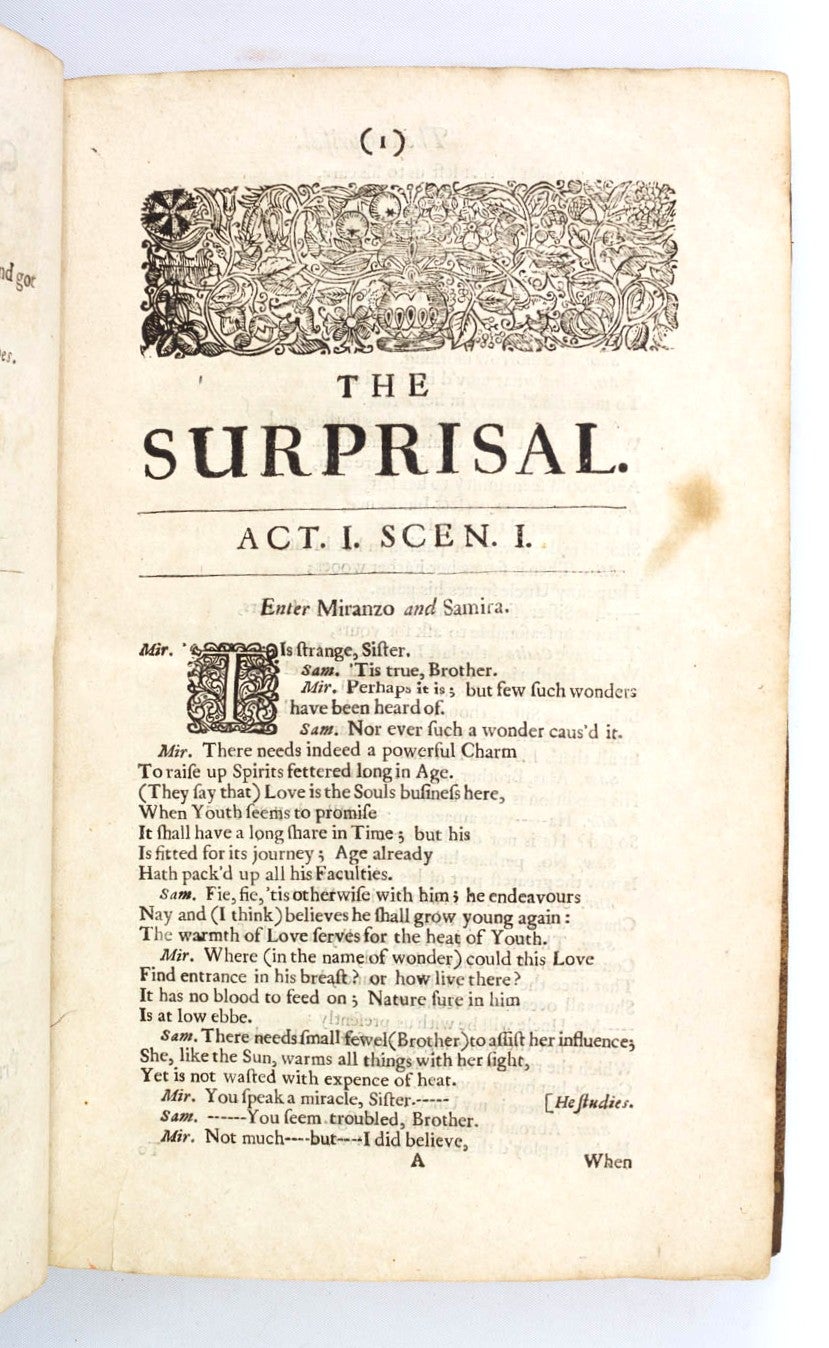
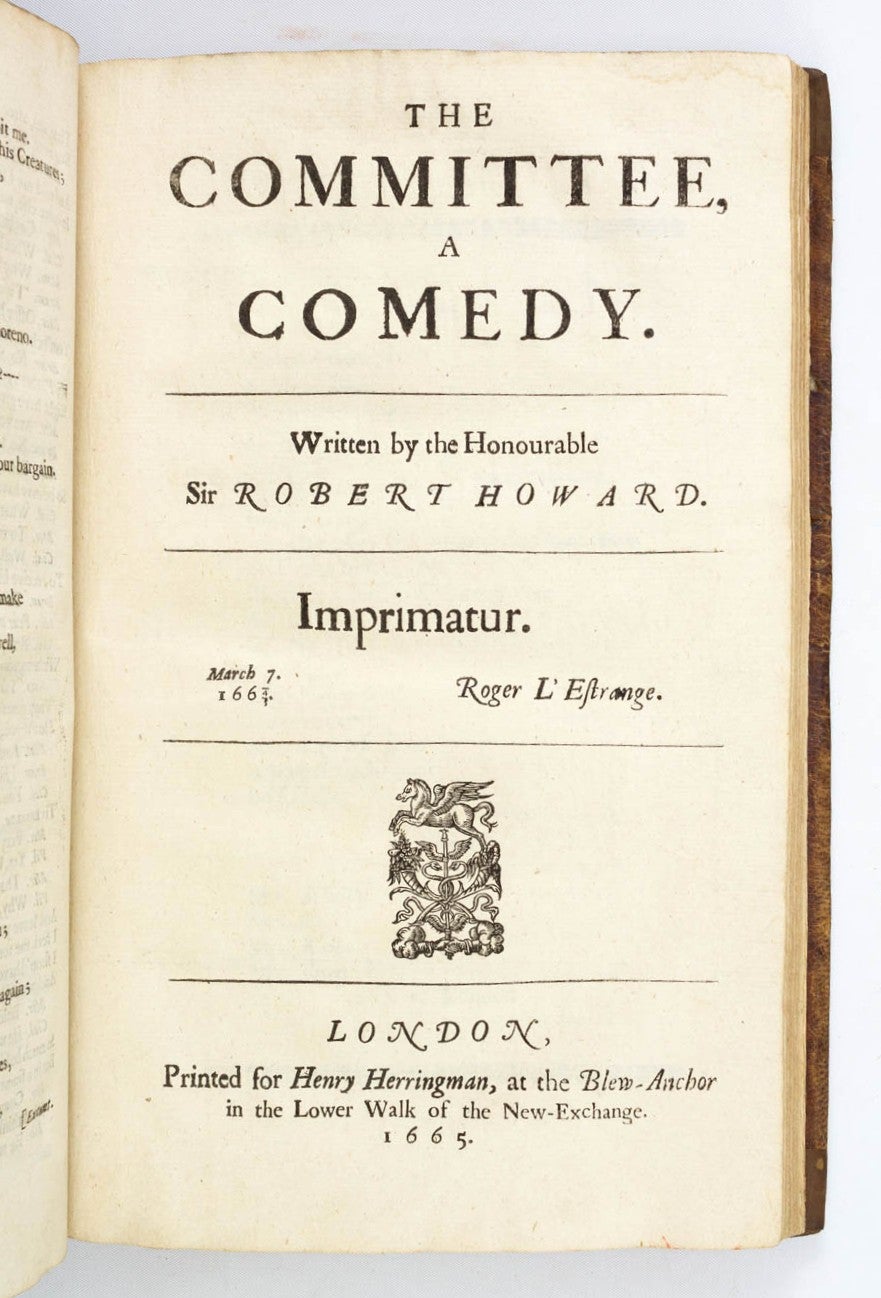
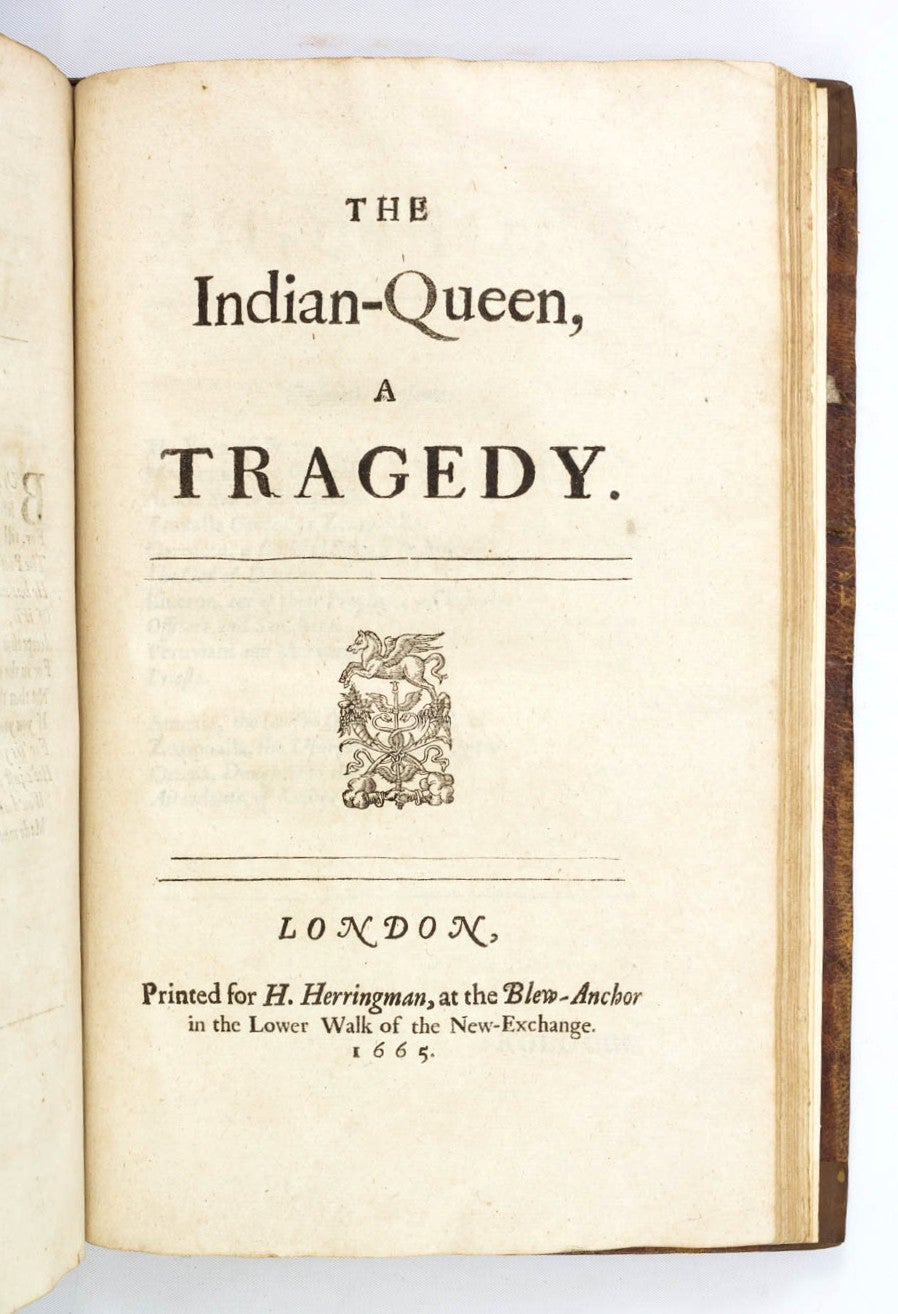
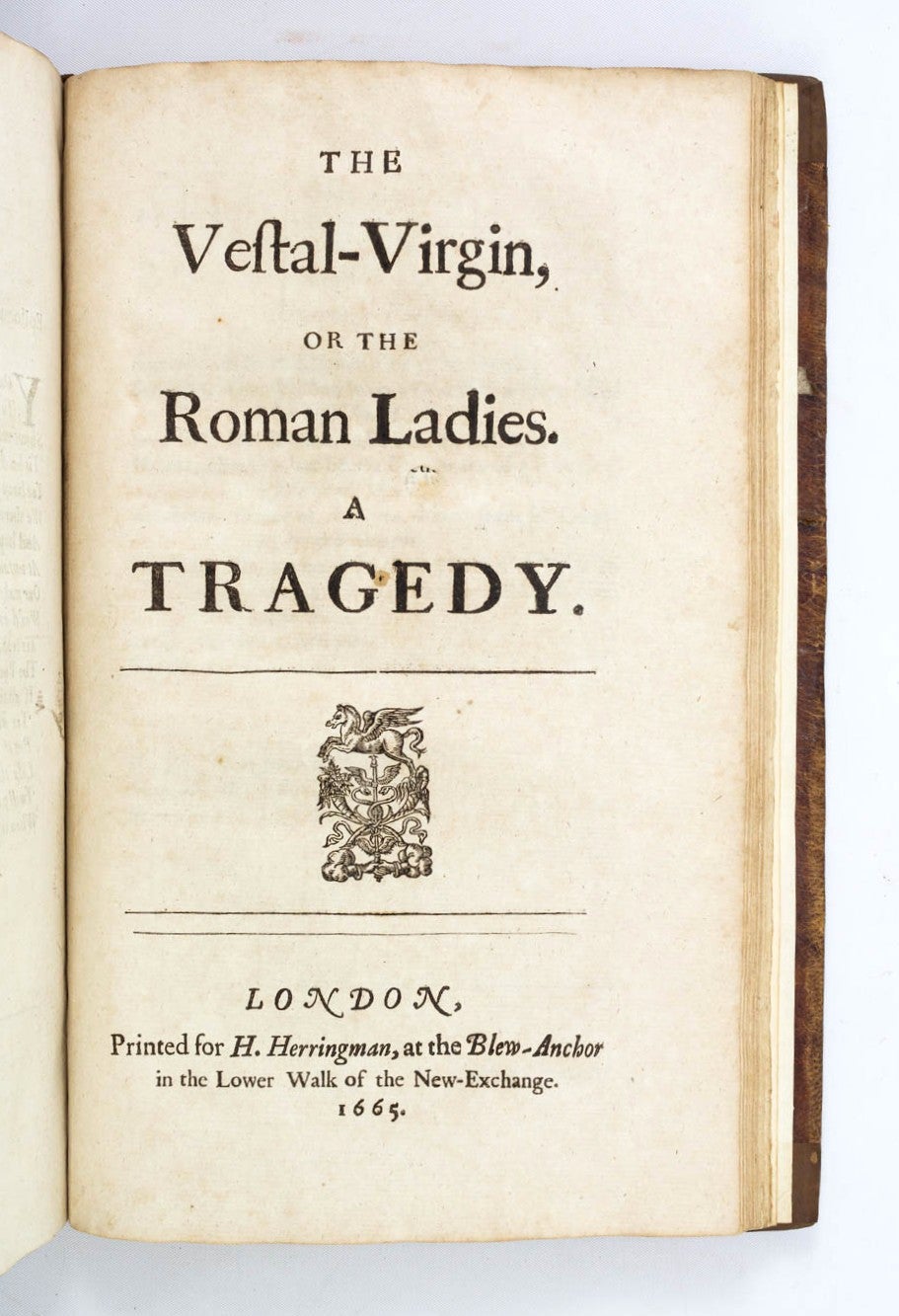
282 x 176 mm. (11 x 7"). 6 p.l., 242, [2] pp. Contemporary sheep, covers double ruled in blind, nicely rebacked and recornered, raised bands, gilt lettering, newer endpapers. Each play beginning with an attractive woodcut headpiece; play title pages with a woodcut device. Front pastedown with engraved armorial bookplate of Sir Henry Bedingfeld of Oxburgh, Bart., and ex-libris of Kenneth Rapoport. Contemporaneous ink inscription to the verso of final blank reading "John" and "In all your actions and i[n]tentions that God your Alpha and omega bee." MacDonald 68a; Wing H-2995; ESTC R21413; Hume, "The Development of English Drama in the Late Seventeenth Century," pp. 111-16, 239-42. Boards just slightly marked and abraded, A1 with scarcely noticeable neatly repaired marginal tear, isolated smudges, spots, or other insignificant imperfections, but quite an excellent copy--fresh and clean internally, and in a binding with lustrous covers. This attractive volume of Howard s plays demonstrates his range as an author and also provides a glimpse into his personal life, as it shows his collaboration and the beginnings of his falling-out with his famous brother-in-law, John Dryden. Playwright and politician Sir Robert Howard (1626-98) began writing plays in the early 1660s; these four, here all in their first appearance in print, include his most influential works. "The Committee," which Hume calls Howard s "most successful comedy," was first performed in 1662, but continued to be regularly staged well into the 19th century. Its plot consists of heartfelt romances and the blundering japes of the (nevertheless likable) servant Teague slotted in among scathing satire of Puritans, who are revealed as hypocritical and greedy despite their holier-than-thou exteriors. Hume sums up the play by noting that while it is predictable, "the excellence of the execution makes the cliched elements magnificently effective," with vivid characterizations that lend the characters "a gritty and sordid reality which is very striking indeed." The other influential work in this collection, "The Indian Queen," written in collaboration with Dryden, is a serious tragedy written in rhyming couplets. Initially performed in January of 1664, it is a drama of love and royal succession set in pre-colonial Mexico and Peru, later turned into a popular opera by Henry Purcell. The other two plays, while less enduring, nevertheless were influential and successful in their own time. "The Surprisal" was Howard's first performed play, initially acted in April of 1662. Called by Hume a "serious, romantic intrigue comedy," this "high-flown melodrama" set in the Italian countryside predicted many of the features of the Spanish romances that would soon come into vogue. On the tragic side, the Roman period piece "The Vestal Virgin," like "The Indian Queen," was "dead serious [and] full of heroic elevation," and helped build the growing trend for heroic dramas. (Hume) In terms of Howard's literary legacy, our volume is perhaps more important for its introduction than for the plays themselves. In it, our author strenuously disagreed with Dryden s statement (in the dedication of his 1664 play "The Rival Ladies") that rhyme rather than blank verse was the correct mode for heroic tragedy. This led to a feud lasting several years, primarily carried out in the prefaces of various plays, until Dryden s decisive "Defence of an Essay of Dramatick Poesie" in 1668. Our copy has distinguished and aristocratic provenance. Former owner Kenneth Rapoport amassed an outstanding library over 50 years, with special emphasis on works of drama and poetry by English and Spanish authors, among them Shakespeare, Spenser, and Cervantes. Rapoport's books were always chosen very carefully for their excellent condition. The other bookplate belongs to Sir Henry Bedingfeld of Oxburgh Hall, most likely Sir Henry Edward (1860-1941), the 8th baronet Paston-Bedingfeld.
Seller Inventory # ST20111
Contact seller
Report this item