Synopsis
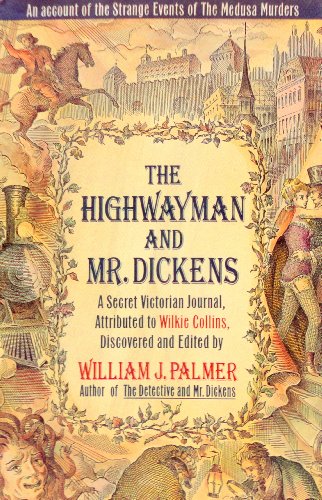
In this novel, the second "secret journal" kept by Charles Dickens's friend and protege Wilkie Collins, the two novelists reunite with Inspector William Field of London's Metropolitan Protectives to solve a ghastly double murder. Two women - one a wealthy doctor's wife, the other her chambermaid - are found dead, unmarked, their faces frozen masks of fear, as if they had seen the Medusa of ancient legend. The cause of death is a mystery, but the suspect is not: The notorious burglar and highwayman-turned-actor Tally Ho Thompson is arrested at the scene and thrown into Newgate Prison.
Thompson's unusual relationship with Charles Dickens was chronicled in the first of these secret journals, The Detective and Mr. Dickens. In that book, the dashing ex-criminal loaned his special talents to help the novelist. Now Dickens, with Collins in reluctant tow, attempts to return the favor by proving Thompson's innocence. From the bleak, cold alleys of London during the winter of 1852, to the pestilential cells of Newgate, the steamy pubs where hot gin is served, the stage of Covent Garden, and the paths of a posh men's riding club in the English countryside, the authors pursue the truth. Meanwhile Field - the foremost inspector of his day - manipulates his charges in a grand game of detection and double-cross.
Cameo appearances by the explorer Sir Richard Francis Burton, Dr. Henry Jekyll, and other Victorian figures, together with a wonderful cast of turnkeys, rogues, prostitutes, hansom drivers, barmaids, actors, and swells, enliven the eventful plot. Readers of Dickens or Collins will recognize familiar characters in different guises, and enjoy special insight into the minds of these eminent Victorians.
Reviews
Second in a series inventing the secret journals of 19th-century ghost-story author Wilkie Collins, this uneven mystery trails novelist Charles Dickens through a warren of murky London streets in 1852. Sprung from a salacious embrace with his bawd, Irish Meg, Collins hears that Tallyho Thompson, a highwayman turned actor, is accused of killing a lady and her servant. "This tyme 'ee's innersent," squeaks Meg's friend and Tallyho's helpmeet, Scarlet Bess. In cahoots with Inspector Field of the Metropolitan Protectives, Dickens and Collins help Tallyho escape from Newgate Prison. The quartet work to trip up the Medusa Murderer, whose victims' faces are found frozen in agony. A cobweb-thin, lackluster plot is shouldered aside by the meticulously crafted setting and Palmer's pleasure in literary and historical asides: a young Dr. Jekyll makes a cameo appearance; hansom cabs clatter down badly paved streets; accents are laid on so thick as to make speech unintelligible at times. Despite some witless dialogue and padded narrative, fans of both Dickens and Palmer ( The Detective and Mr. Dickens ) will enjoy this ride. BOMC alternate.
Copyright 1992 Reed Business Information, Inc.
This surprisingly formulaic sequel to The Detective and Mr. Dickens (1990) gets off to a brisk start with that staple of Victorian fiction, coitus interruptus, as a knock on the door brings Wilkie Collins and his sluttish doxy, Irish Meg, news that amiable lowlife Tally Ho Thompson has been arrested for two murders in a house he insists he'd been paid to break into by actor Dickie Dunn. There's no lack of melodramatic incident here--Dickens and Collins, who continues as his insultingly dense Watson, help Thompson break out of Newgate; witness the former's confrontations with Dunn (at swords' points) and with widower/whoremaster Dr. William Palmer (a horse race that turns into a screaming bout); and take time out (at least Collins does) for more depraved lust. But the whole affair--tricked out with cameos by Richard Burton, Dr. Henry Jekyll, and the great snowstorm of 1852--is curiously lightweight, with too many edifying footnotes and too little real mystery or suspense. Mildly diverting Victorian tosh. More on the way. -- Copyright ©1992, Kirkus Associates, LP. All rights reserved.
"About this title" may belong to another edition of this title.