
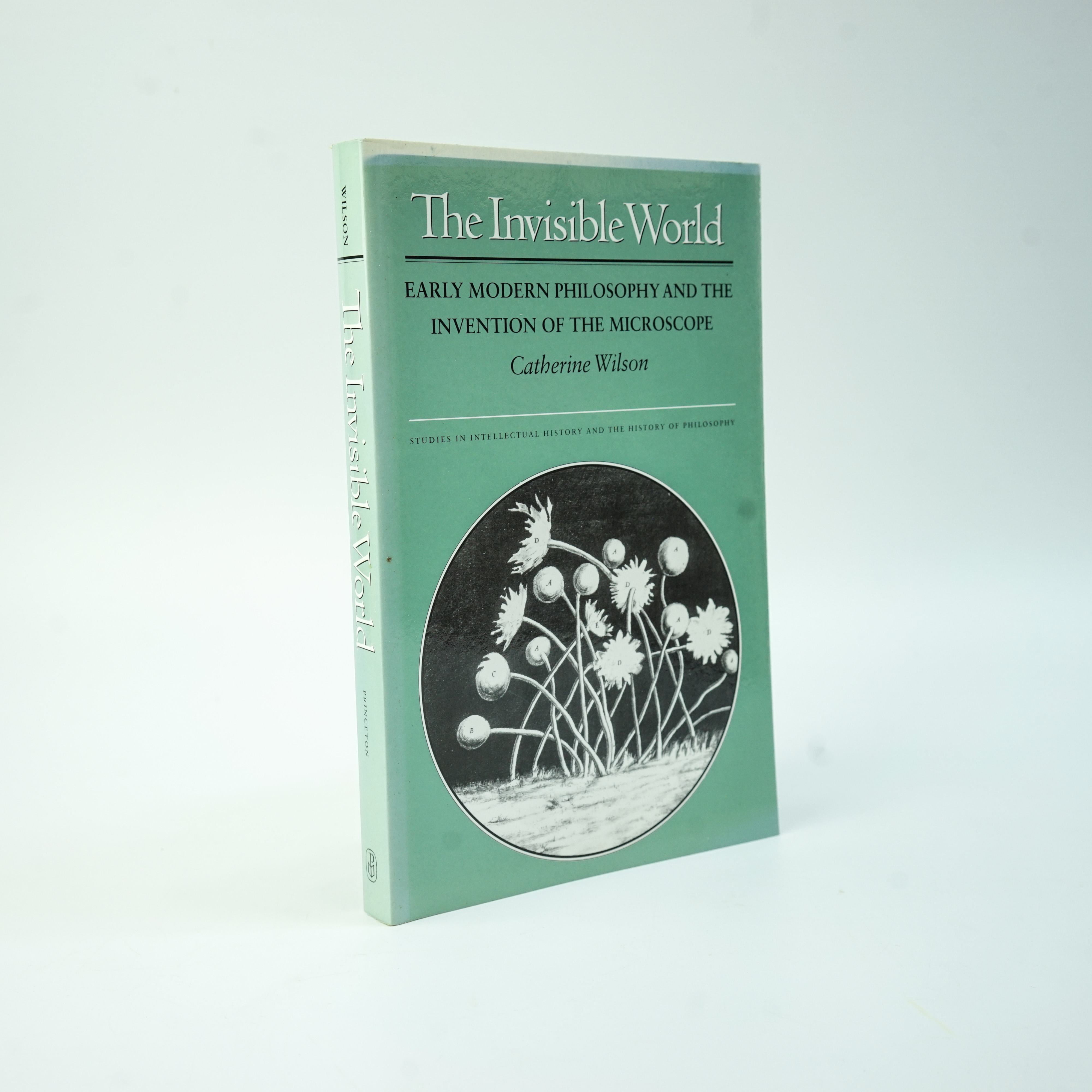
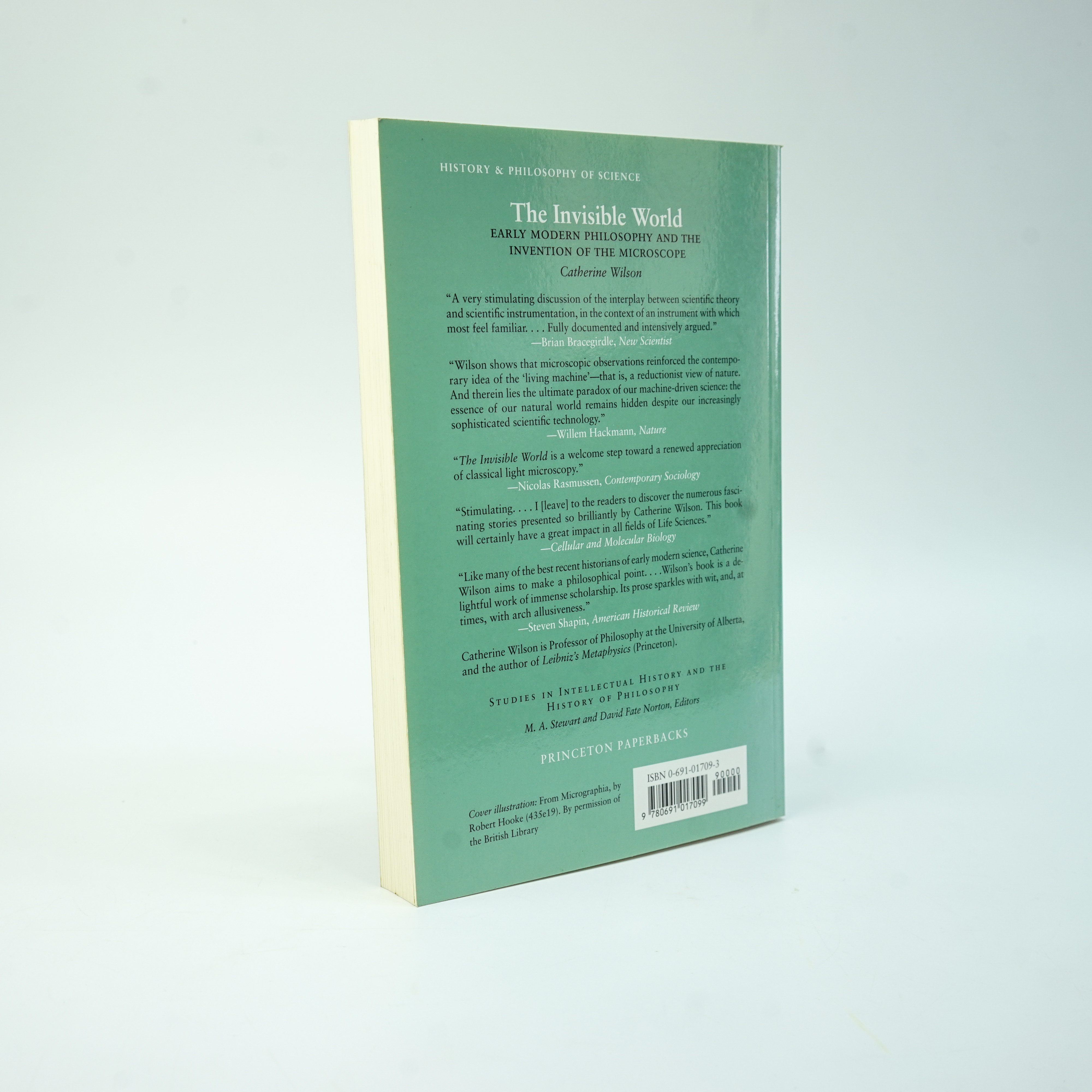
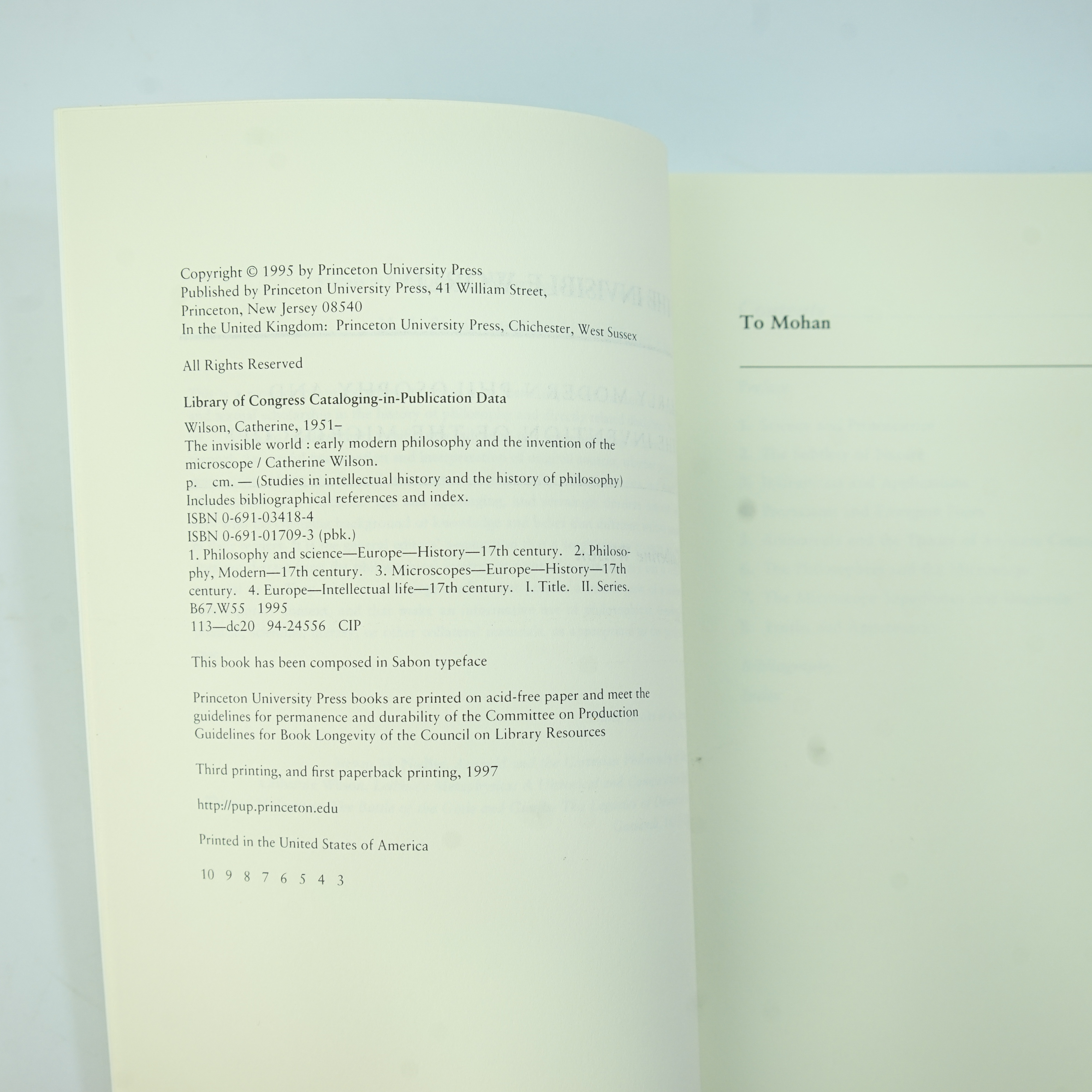
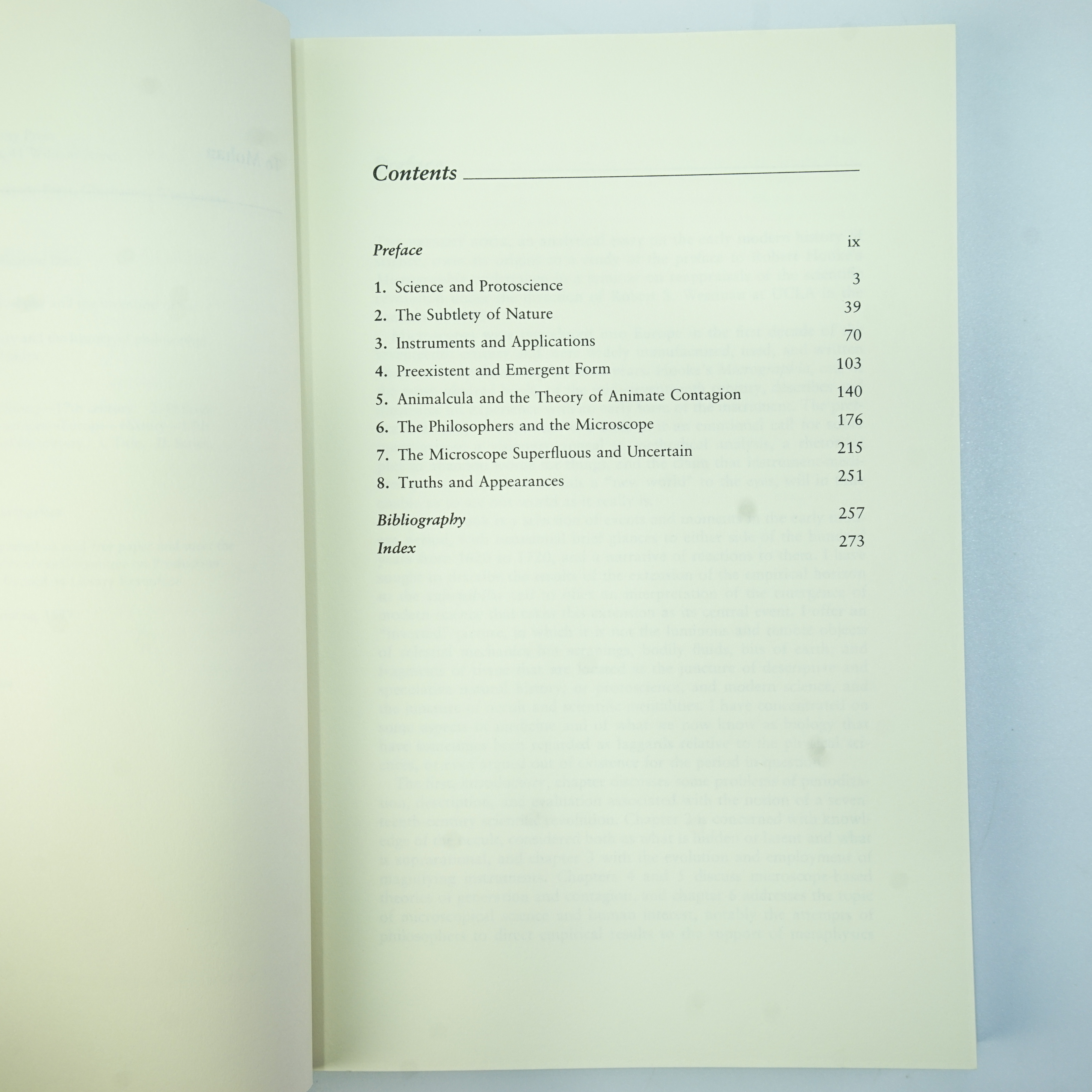

The Invisible World; Early Modern Philosophy And The Invention Of The Microscope; Studies In Intellectual History And The History Of Philosophy
WILSON, Catherine
Published by Princeton University Press, Princeton, NJ, 1997
Used
Softcover
From
Jacket and Cloth, Chippenham, United Kingdom
Seller rating 5 out of 5 stars

AbeBooks Seller since July 12, 2019
This specific copy is no longer available. Here are our closest matches for The Invisible World; Early Modern Philosophy And The Invention Of The Microscope; Studies In Intellectual History And The History Of Philosophy by WILSON, Catherine.
About this Item
Description:
Third edition and first paperback edition. DESCRIPTION: Laminated wrappers Language: English. Book Condition: Very Good: Thin sunned line to upper edges DJ Condition: Na. Pages 280. Size: 8vo 23cm by 15.5cm. BOOK RESUME: In the seventeenth century the microscope opened up a new world of observation, and, according to Catherine Wilson, profoundly revised the thinking of scientists and philosophers alike. The interior of nature, once closed off to both sympathetic intuition and direct perception, was now accessible with the help of optical instruments. The microscope led to a conception of science as an objective, procedure-driven mode of inquiry and renewed interest in atomism and mechanism. Focusing on the earliest forays into microscopical research, from 1620 to 1720, this book provides us with both a compelling technological history and a lively assessment of the new knowledge that helped launch philosophy into the modern era. Wilson argues that the discovery of the microworld--and the apparent role of living animalcula in generation, contagion, and disease--presented metaphysicians with the task of reconciling the ubiquity of life with human-centered theological systems. It was also a source of problems for philosophers concerned with essences, qualities, and the limits of human knowledge, whose positions are echoed in current debates about realism and instrument-mediated knowledge. Covering the contributions of pioneering microscopists (Leeuwenhoek, Swammerdam, Malpighi, Grew, and Hooke) and the work of philosophers interested in the microworld (Bacon, Descartes, Leibniz, Malebranche, Locke, and Berkeley), she challenges historians who view the abstract sciences as the sole catalyst of the Scientific Revolution as she stresses the importance of observational and experimental science to the modern intellect. Seller Inventory # 8492
Bibliographic Details
Title: The Invisible World; Early Modern Philosophy...
Publisher: Princeton University Press, Princeton, NJ
Publication Date: 1997
Binding: Softcover
Condition: Very Good
Dust Jacket Condition: Na
Edition: 1st Edition