Synopsis
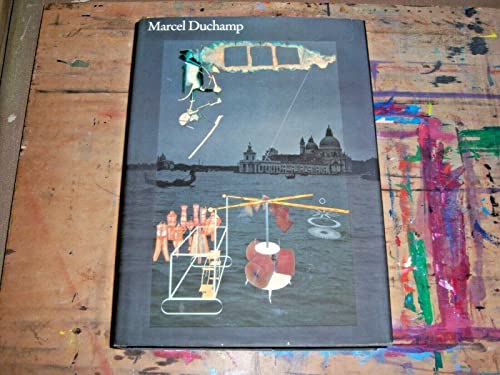
Recounts the Duchamp's artistic achievements in painting and sculpture, as well as his involvements with chess, film, theater, and people, and provides more than 1,300 reproductions of his works.
Reviews
Duchamp (1887-1968), the high priest of conceptual art, would have admired this high-concept book, which catalogues his mingling of the cultural high-brow and the quotidian. Readers can begin at either end of this double-faced volume. In one direction, glossy pages display superb photographs of a collection of Duchamp's works assembled for a recent exhibition at the Palazzo Grassi in Venice. Featured works include found objects--such as the famous urinal--as well as paintings, drawings and ingenious constructions. Interspersed throughout this section are passages reproduced from the artist's handwritten notes. Paging through from the other side of the book, one encounters a chronology of Duchamp's life and career, listing events both significant and mundane. Included in the middle section are indexes of works, exhibitions and a bibliography. The book will be prized by scholars and aficionados of modern art. Hulten is the chief curator of the Duchamp exhibition in Venice; Gough-Cooper and Caumont are Duchamp scholars.
Copyright 1993 Reed Business Information, Inc.
A dense and prodigious work befitting the grandfather of postmodernism, this volume is both a compilation of finished works and an intricate and comprehensive archive. It is unlike other art publications in that it must be opened and read from both sides. Pristine reproductions of Duchamp objects and notes and a chronological bibliography/index and timeline comprise about one-third of the book when read one way. When flipped over, the book presents a cradle-to-grave breakdown of the life of Marcel Duchamp--ordered by day of the year, with events of that day in various years appearing together. Included are important historical data, significant correspondences, and photos, as well as accounts of intimate dinner parties with other artists. Although this ambitious edition supersedes many previous reference works on Duchamp, it is not intended as an introduction. It contains little scholarly commentary, and cross referencing within the book can be difficult to follow. For an uninitiated user it may seem unapproachably detailed, even cryptic. However, any art student, scholar, or Duchamp enthusiast will find this unprecedented collection of primary material endlessly fascinating. A treasure chest that is crucial to a complete understanding of this century's preeminent art guru, prankster, philosopher, and tool and die maker; highly recommended as a companion to Marcel Duchamp: Artist of the Century (MIT, 1989) or Pierre Cabanne's Dialogues with Marcel Duchamp ( LJ 9/15/71). --Douglas McClemont, New York
Copyright 1993 Reed Business Information, Inc.
"About this title" may belong to another edition of this title.