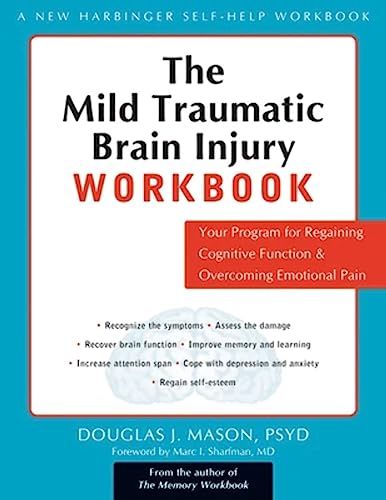
A blow to the head or the dramatic acceleration and deceleration that occur in a serious car crash can cause a traumatic injury to the brain. At their most serious, these events are critical and life threatening, but even a mild incident can cause problems with memory, communication, and mental focus. What’s worse, this kind of cognitive function loss often causes other psychological symptoms like depression and low self-esteem. Fortunately, there are things anyone can do to recover from a mild traumatic brain injury, get back lost cognitive ability, and restore a healthy frame of mind.
If you or someone you love has suffered a mild traumatic brain injury, this engaging workbook will help you:
•Learn the causes and symptoms of MTBI
•Understand the brain injury recovery timeline
•Manage medical care and set realistic goals for recovery
•Recover memory, communication, and visuospatial ability
•Cope with related symptoms like depression, anxiety, and low self-esteem
Douglas J. Mason, PsyD, is a neuropsychologist who specializes in the diagnosis and rehabilitation of people with brain injuries and other cognitive disorders. He is currently in private practice in central Florida. His practice is called The Memory Doctor, LLC.
To learn more, please visit him at www.thememorydoctor.com.
Dr. Marc I. Sharfman received his medical degree from The University of Health Science/Chicago Medical School. He interned and had his residency at Northwestern Memorial Hospital in Chicago and the University of Massachusetts Medical Center in Worcester. Dr. Sharfman is currently in private practice specializing in Neurological Injury Care and is on the volunteer faculty of the University of Central Florida College of Medicine. He is a member of The American Medical Association, The American Academy of Neurology, and The World Federation of Neurology.