Synopsis
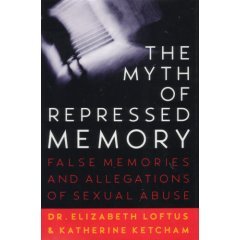
Across the country, families are being torn apart and people sent to prison, all because of a trendy new psychological phenomenon: recovered memory. According to many clinical psychologists, when the mind is forced to endure a horrifying experience, it has the ability to bury the entire memory of it so deeply within the unconscious that it can only be recalled in the form of a flashback triggered by a sight, a smell, or a sound. Therapists and lawyers have created an industry based on treating and litigating the cases of people who suddenly claim to have "recovered" memories of everything from child abuse to murder.
Dr. Loftus reveals that despite decades of research, there is absolutely no controlled scientific support for the idea that memories of trauma are routinely banished into the unconscious and then reliably recovered years later.
Reviews
While acknowledging the reality of childhood sexual abuse, Loftus, a research psychologist specializing in memory, believes that in many cases, people create false memories of nonexistent abuse, prompted to do so by their psychotherapists. Writing in the first person with coauthor Ketcham (with whom she wrote Witness for the Defense), Loftus critiques the tools used by some therapists ("trance work," hypnosis, dream analysis, journal writing, etc.) to "recover" patients' buried memories. She presents numerous case histories involving presumed memories that turned out to be fabrications and reports on a study in which false memories of childhood events were created in men and women volunteers. She also discusses her involvement in the case of Paul Ingram, a Washington deputy sheriff who confessed that he was a priest in a satanic cult and sodomizer of children after his two daughters accused him of sexual abuse; he later retracted his confession but was imprisoned anyway. This eye-opening book makes a compelling argument for caution. Author tour.
Copyright 1994 Reed Business Information, Inc.
A research psychologist whose specialty is memory pokes giant holes in claims that survivors of sexual abuse repress their memories of the abuse and can then recover them with the help of therapists. Loftus, who also teamed up with Ketcham to write Witness for the Defense (1991), points out that no scientific evidence exists to validate such claims. Comparing the current rash of sex abuse charges based on ``recovered memory'' to the 17th-century Salem witchcraft trials, she often opens chapters with quotes from The Crucible, Arthur Miller's play on that subject. Loftus describes her own research at the University of Washington, which found that false memories of a mildly traumatic childhood event (becoming lost in a large store, for example) were easily implanted in the minds of adult subjects. According to Loftus, therapists operating under the assumption that ``incest is epidemic, repression is rampant, recovery is possible, and therapy can help,'' implant similarly false memories of more serious traumas through a variety of therapeutic techniques, including suggestive questioning, age regression, and hypnosis. Memories ``recovered'' through these techniques, she asserts, can lead to painful and destructive confrontations that rip apart families and sometimes end in prison sentences for innocent people. Loftus, who has served as an expert witness, recounts her experience testifying in defense of George Franklin, whose adult daughter's recovered memories resulted in his conviction for the murder of one of the daughter's childhood friends. She also details the bizarre case of Paul Ingram (see Lawrence Wright's Remembering Satan, p. 216), whose recovered memories led him to confess to participation in quite unbelievable satanic rituals. Sure to arouse controversy: Proponents of the validity of repressed memories (``True Believers,'' as Loftus calls them) will see this as anathema; others will applaud her reasonable and restrained approach to a touchy subject. (First printing of 30,000; author tour) -- Copyright ©1994, Kirkus Associates, LP. All rights reserved.
As a cognitive psychologist, Loftus has acquired extensive insight into the malleability of memory. For example, her research has shown that false traumatic childhood "memories" can be readily induced in adults, who then enrich the implanted memory with detail and emotion. The results of such studies and a total lack of evidence of memory repression lead Loftus and other eminent psychologists to attribute the wide prevalence of recovered memories of childhood sexual abuse and satanic ritual abuse to therapist bias. Coauthor Ketcham and Loftus describe the anguish of the accused and of the families shattered by disastrous combinations of ill-trained, overzealous therapists, suggestibility of vulnerable patients, and group-therapy pressure to exhume and share monstrous memories. They neither dispute the reality of childhood sexual abuse nor the existence of traumatic memories, but they reject the true believers' assertions that "incest is epidemic, repression is rampant" and that "skeptics" are "in denial." Highly recommended. Brenda Grazis
In this latest entry in the repressed memory/false memory debate, Loftus (psychology, Univ. of Washington; Witness for the Defense, LJ 3/15/91) recounts several incidents of false memory syndrome in a popular 60 Minutes style. While the author does not completely dismiss the theory of repressed memory, she believes that it has become a dangerous panacea in the hands of too many inexperienced therapists. Loftus contends that counselors are inadvertently instilling "memories" of sexual abuse in their patients. She discusses the genesis of this phenomenon at great length, moving from Ellen Bass's Courage To Heal (LJ 5/15/88) to her current foil, Lenore Terr (Unchained Memories: True Stories of Traumatic Memories, Lost and Found, LJ 1/94). Recommended for collections needing balance in their treatment of this subject. (Index not seen.)-A. Arro Smith, San Marcos P.L., Tex.
Copyright 1994 Reed Business Information, Inc.
"About this title" may belong to another edition of this title.