Synopsis
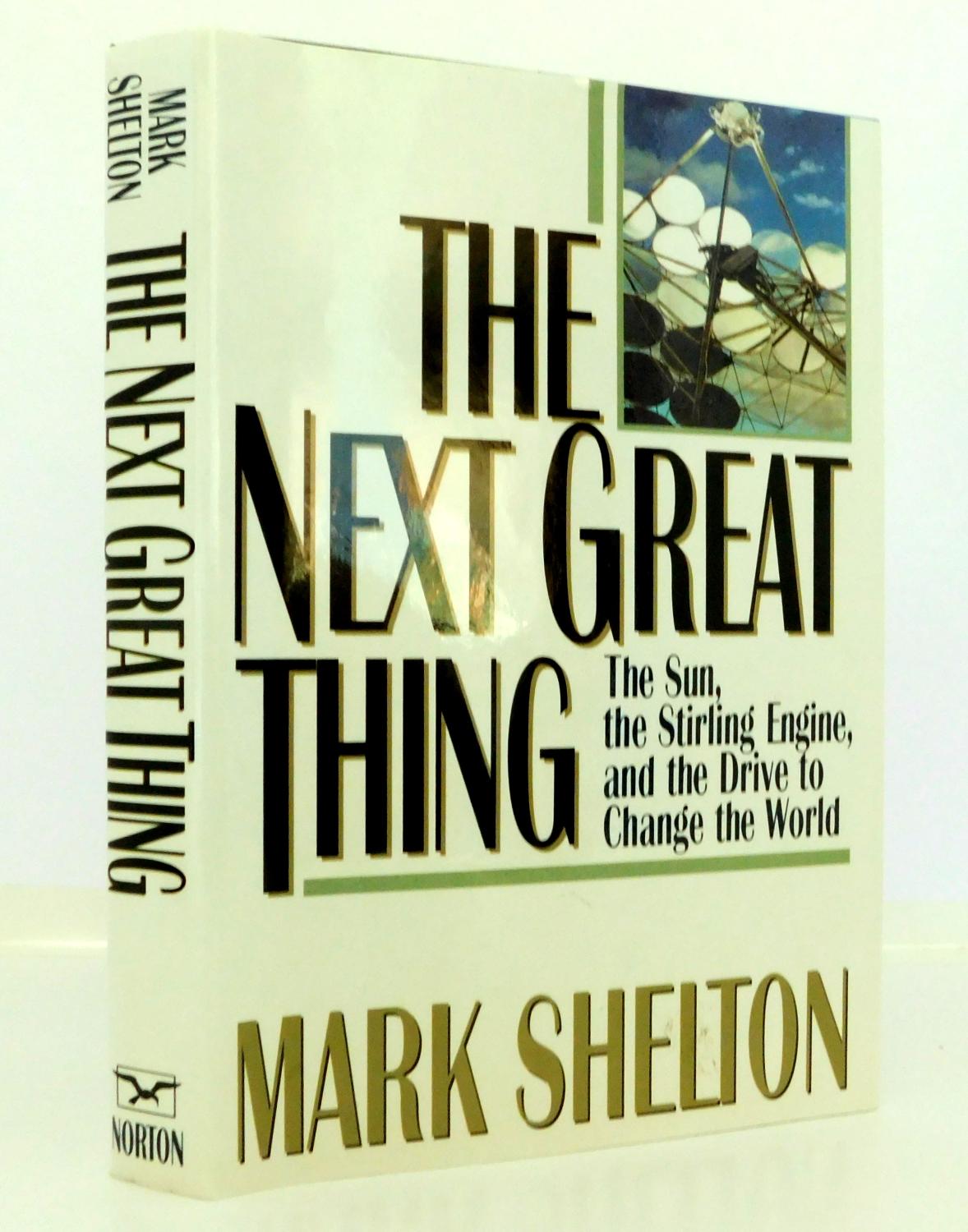
Discusses the efforts of a group of Ohio engineers to develop a solar-powered Stirling engine that would provide a safe, economical, and environmentally friendly source of energy for the U.S.
Reviews
Sunpower Inc., founded in 1970 by William J. Beale, is a bootstrap engineering research company with a Holy Grail mission: to harness Stirling heat engine technology to applications that could save the world from carbon fuel pollution and could eliminate ozone-depleting chlorofluorocarbons from the atmosphere. In Shelton's lively account, Beale and his fellow engineers in Athens, Ohio, attempt to rob the second law of thermodynamics to give the world nearly free energy for basic heating, cooling and pumping operations. Also joining Beale, who emerges as a sort of second generation Buckminster Fuller, are the company's machinists and support staff--all dedicated to the cause and the process of their R & D effort. In this depiction of Sunpower's research and its ever more time absorbing and not always productive search for funding, freelancer Shelton captures the sheer sense of joy that powers these workers at technological frontiers and proves himself a technology writer on a par with Tracy Kidder.
Copyright 1994 Reed Business Information, Inc.
The story of the hoped-for use of the sun to fill the world's energy needs by way of Stirling engines that convert heat into power and send it out over the already existing grid of power lines. Shelton wrote 1989's lively Working in a Very Small Place: The Making of a Neurosurgeon. The romance of engineering has never been more intriguingly presented than in Shelton's survey of the engineer-idealists who, battling scientific inertia and the deaf ears turned toward their ideas, are determined to save the world by harnessing the sun's power. The guiding genius behind Sunpower, Inc.--one of a handful of rival research-and-development groups bent on making the laws of thermodynamics work for all humankind--is benign monomaniac William T. Beale, whose White Whale is the sun. Beale heads his R&D group in tiny Athens, Ohio, where Shelton followed him around for two years. Two of Beale's main jobs, among many, are to attract funding and to translate theories into hardware. He must also leap over hardware already in place and powered by oil, big dams, and so on. It's not easy to persuade the United States to build a 170-square- mile complex of Stirling engines in the Arizona desert that, Beale contends, would satisfy the entire country's power needs. Nor is it easy to make people believe that every appliance in every household can be powered by a simple box in the cellar. Stirling engines could potentially eliminate the burning of fossil fuels, save the ozone layer, and shrink the greenhouse effect, among many other ecological goods. What is a Stirling engine? It is an adaptable device that, unlike the internal combustion engine, turns external heat from a continuous heat source into mechanical energy. Intellectually ravishing, while raising the question of whether the fantasy of a solar-powered world will resolve into a future fact. (Photos--not seen) -- Copyright ©1994, Kirkus Associates, LP. All rights reserved.
In a college town in southern Ohio, a small company is battling the odds to develop a solar-powered Stirling engine, an alternative energy source that could revolutionize the way the world makes and uses energy. While this technology has been around since the 19th century, practical application has been elusive. Shelton, author of Working in a Very Small Place: The Making of a Neurosurgeon ( LJ 6/1/89) and an LJ reviewer, records here the time he spent with Sunpower, Inc. and its people, relating their struggles to accomplish the dreams of the owner, William Beale, a tireless visionary enthusiast who is much more engineer than businessman. There is also a great deal of information about energy production, solar thermal energy technology, and the politics and frustrations of dealing with the Department of Energy and potential corporate sponsors. While the book is written for a general audience, its technical matter gets a bit heavy at times for the uninitiated. For larger science and technology collections. (Illustrations not seen.)-- Donald Marion, Science & Engineering Lib., Minneapolis
Copyright 1994 Reed Business Information, Inc.
In spite of Shelton's title, the Stirling engine is not a new innovation. Even though it is usually described as an experimental power source, it was actually invented in 1816 by Scottish minister Robert Stirling. It utilizes a broad range of fuels--anything from salad oil to alcohol--and is more efficient and less polluting than other types of engines. Highly complex and usually oversized, however, the engine is still too costly for popular use. Prototypes have been developed by Philips Research Laboratories in the Netherlands, and for the last 20 years, Sunpower, Inc. of Athens, Ohio, has been working to develop a solar-powered, Stirling-type engine. William Beale and a small group of engineers at Sunpower have already achieved a breakthrough in developing a more efficient refrigeration compressor, but it is their quest for the solar Stirling that intrigues Shelton. With the same novel-like narrative style that marked his Working in a Very Small Space: The Making of a Neurosurgeon (1989), Shelton tells the story of Beale and Sunpower. David Rouse
"About this title" may belong to another edition of this title.