Synopsis
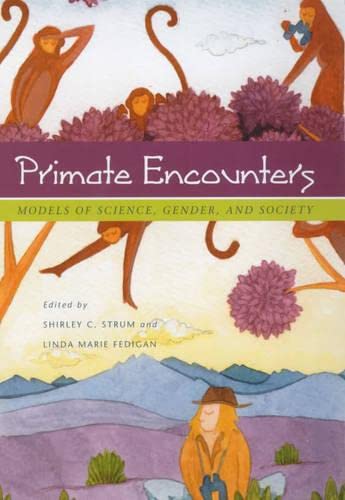
A provocative collective reflection on primatology and its relations to broader cultural, historical, and social issues, Primate Encounters brings together both scientists and those who study them to investigate precisely what kind of science primatology is.
"[A] fascinating study . . . on how and why ideas about primate society have changed. The volume consists of dialogues among scientists from different disciplines, national traditions, scientific culture, generations, standpoints, and genders. . . . A wonderful reflection on the discipline of primatology and on science in general."—Science Books and Films
"Primate Encounters should be required reading for anyone about to embark on a career in the field. But it equally valuable for its miscellany of opinions, recollections and off-the-cuff remarks, as well as for its thoughtful observations, 'outrageous ravings' and humour (from the elders in the field). It gives us a glimpse of how scientists work together to understand their place in the world."—Deborah L. Mazolillo, Times Literary Supplement
About the Author
Shirley C. Strum is a professor of anthropology at the University of California, San Diego. She is coeditor of The New Physical Anthropology, Natural Connections: Perspectives in Community-Based Conservation, and Almost Human: A Journey into the World of Baboons. Strum has studied olive baboons in Kenya since 1972 and is director of the Uaso Ngiro Baboon Project.
Linda Marie Fedigan is professor and Canada Research Chair in Primatology and Bioanthropology at the University of Calgary, Alberta, Canada. She is also the past Executive Editor of the American Journal of Primatology and a fellow of the Royal Society of Canada.
"About this title" may belong to another edition of this title.