About this Item
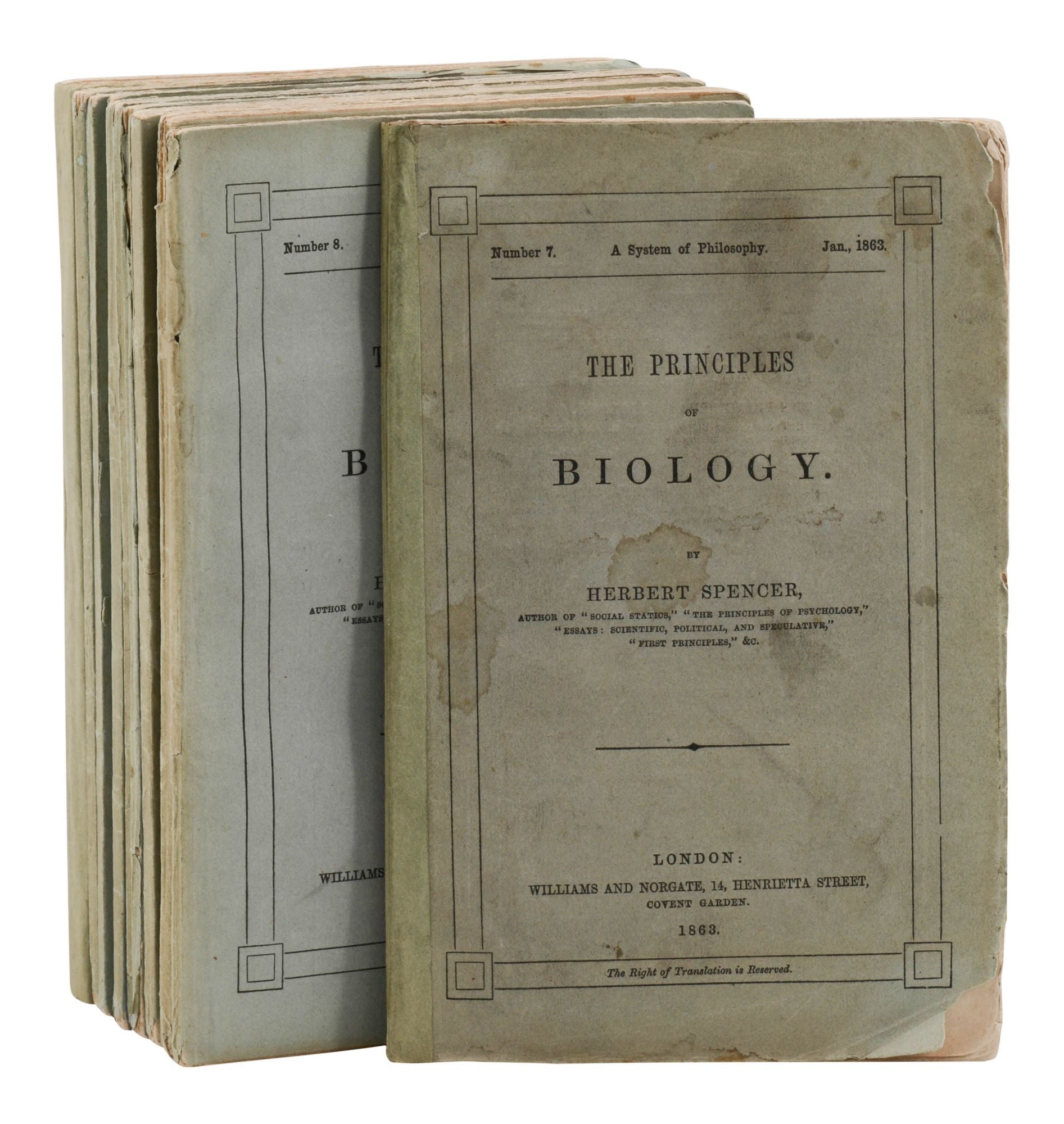
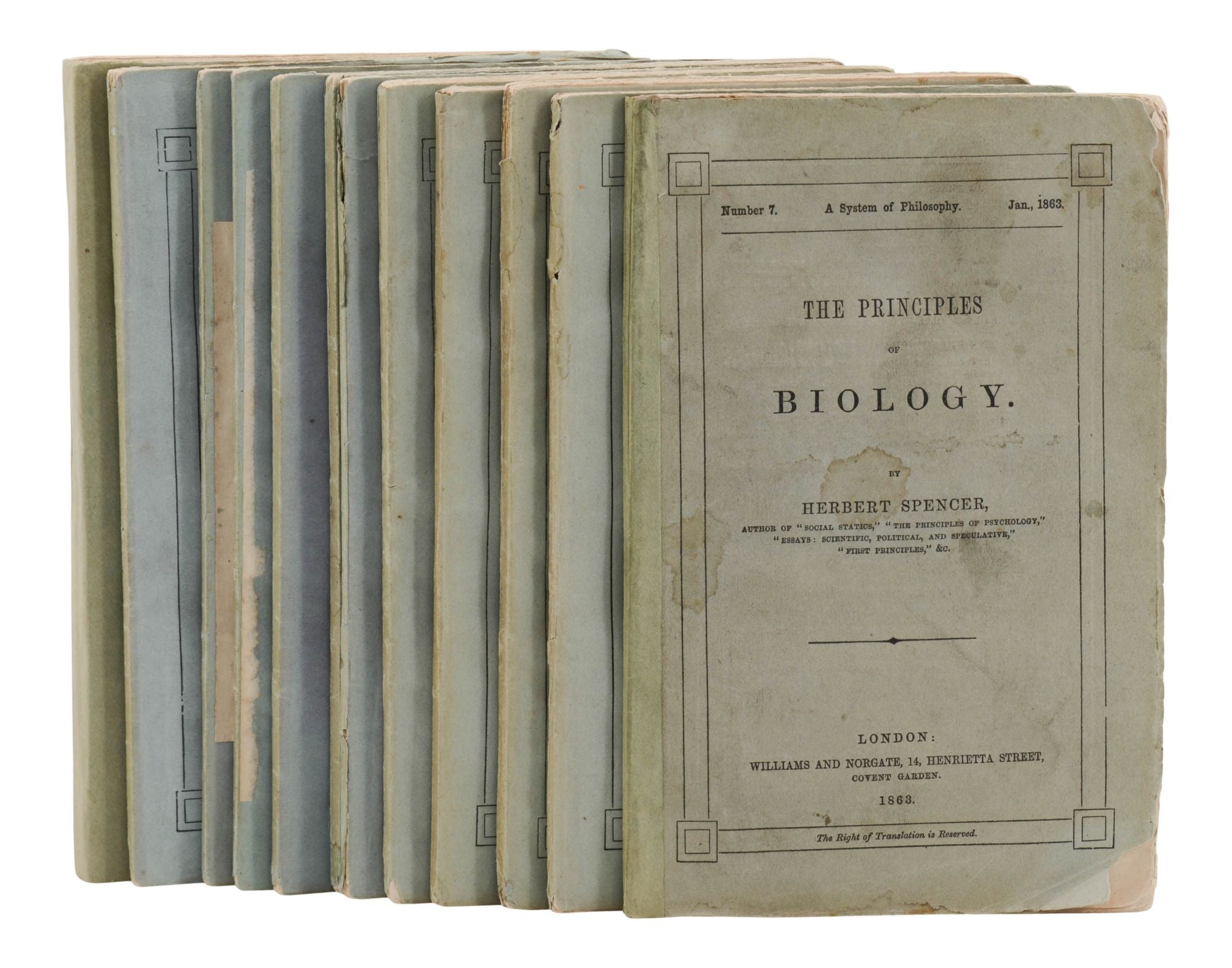
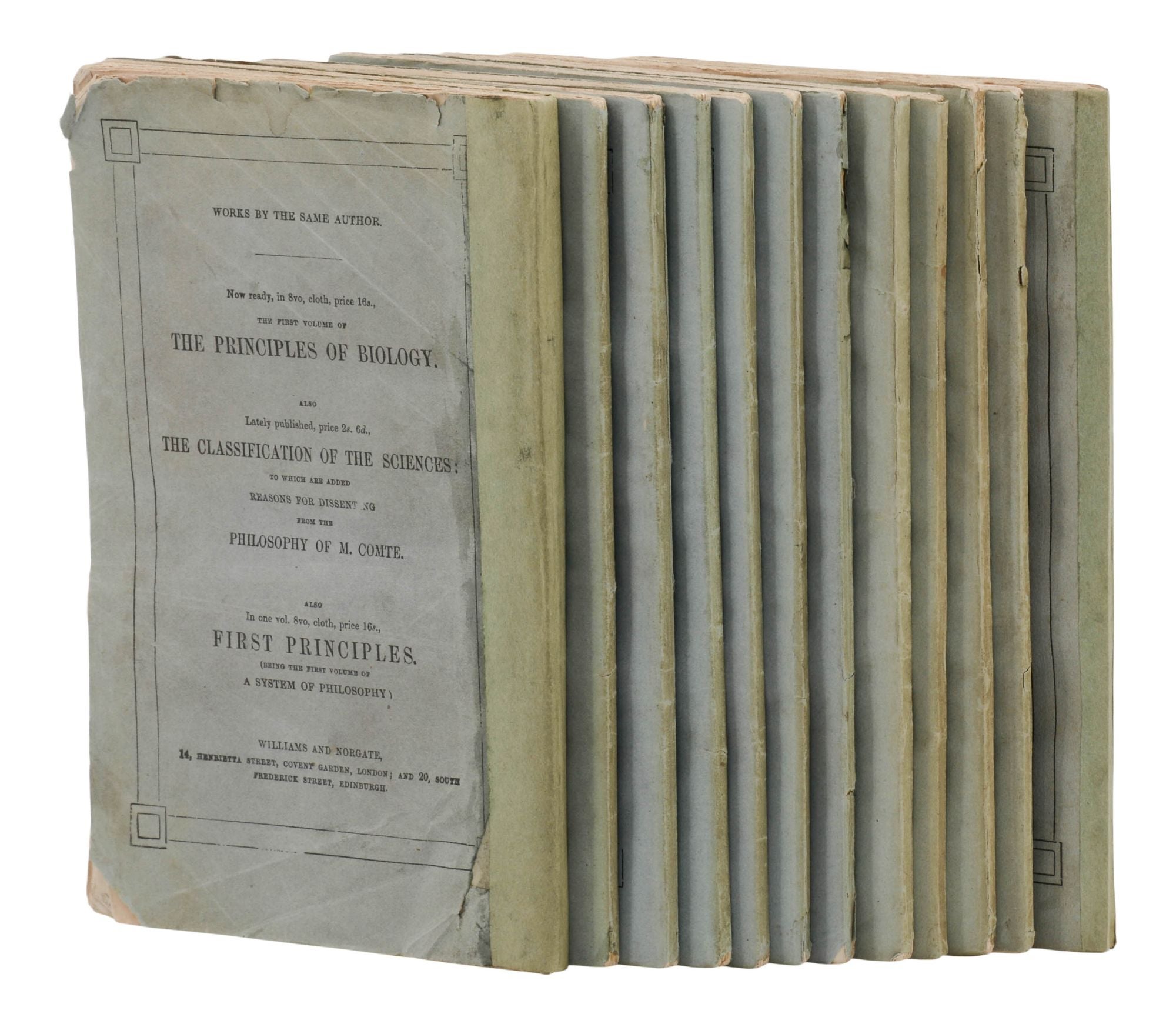
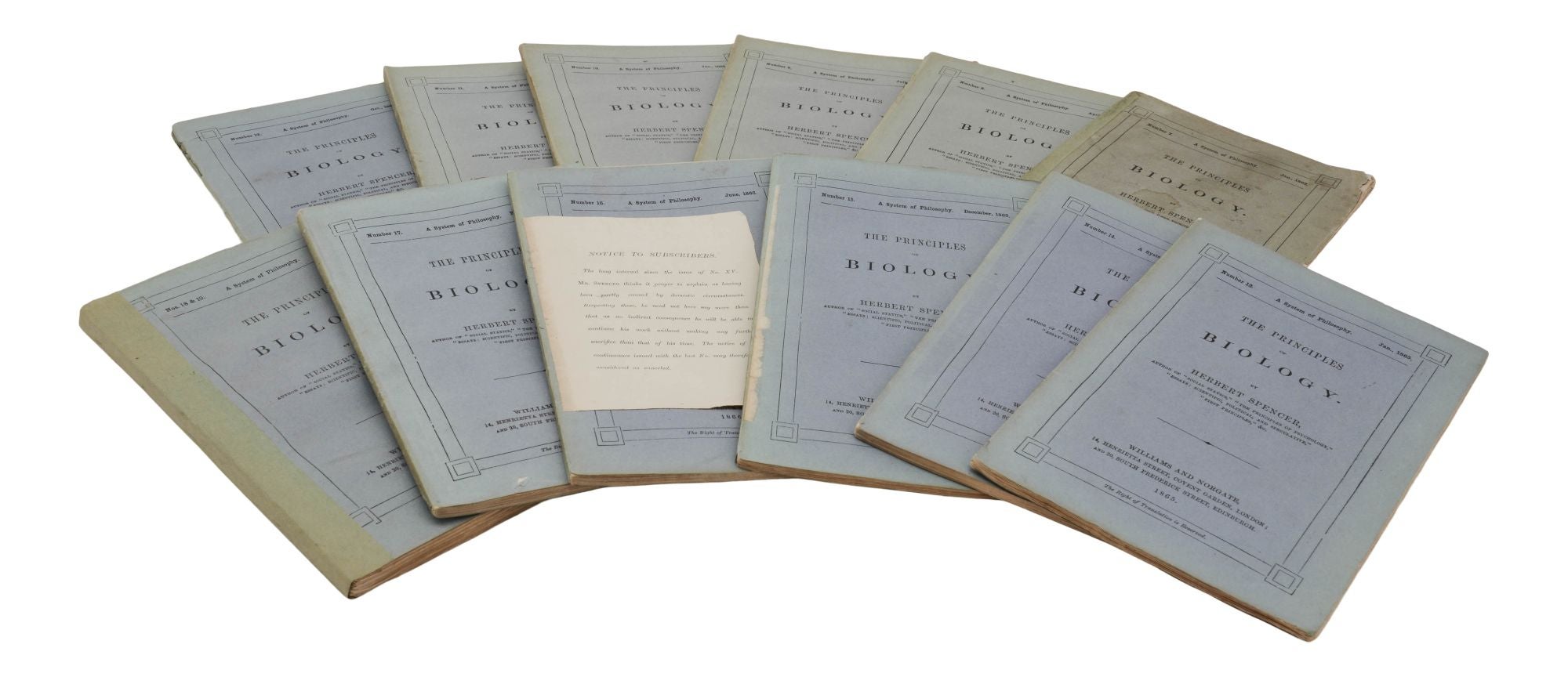
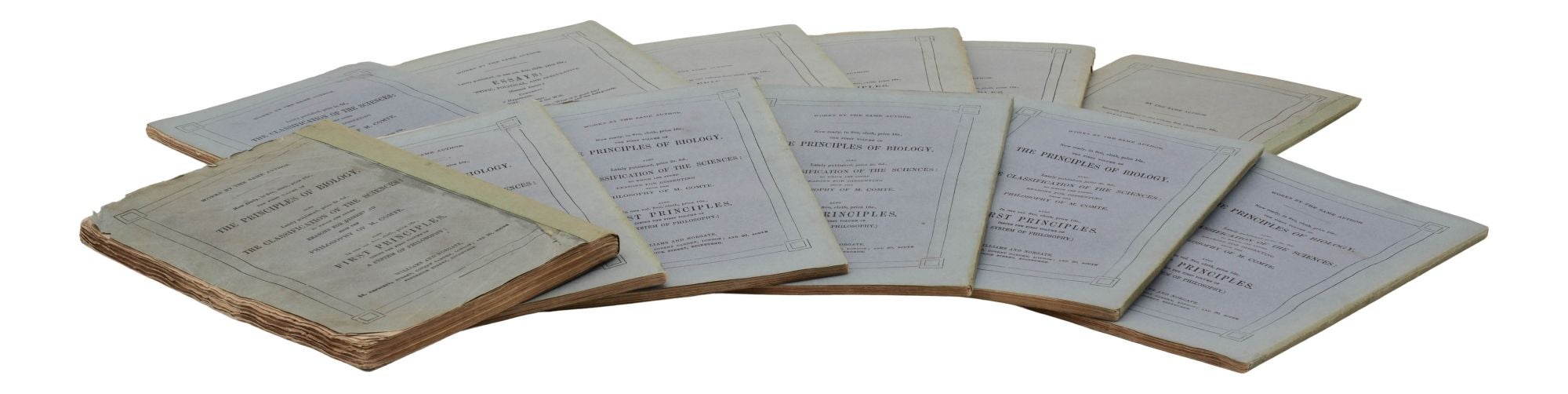
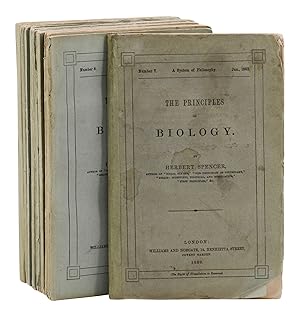
First edition, issued in parts. Complete in two volumes divided into 12 parts. Paginated by volume: Volume I (Numbers 7-12), 475 pp.; Volume II (Numbers 13-19), 560, viii pp. Volume I title page and contents bound in at rear of Number 12, Volume II title page and table of contents bound in at rear of Numbers 18 & 19 (issued together). Bound in publisher's printed blue wraps. Near Fine with light to moderate wear and staining and heavy fading to covers, paper repairs to several spines, and foxing to upper textblock edges. Notice tipped to Number 15 has been removed. Contents lightly toned, some pages unopened. A landmark in late 19th century scientific thought, extremely scarce in the original wraps. Herbert Spencer began publishing his comprehensive System of Synthetic Philosophy by subscription in 1862. An abstract of the prospectus is printed inside the front wrap of each part: "Mr. Herbert Spencer proposes to issue in periodical parts, a connected series of works which he has for several years been preparing.It is proposed to publish in parts of from five to six sheets octavo (80 to 96 pages). These parts to be issued quarterly; or as nearly so as found possible." Spencer began with First Principles before moving on to The Principles of Biology, which was followed by works on the principles of psychology, ethics, and sociology. The endeavor lasted more than three decades and was made possible in part by the death of Spencer's father and consequent inheritance of his money in 1866. That circumstance is alluded to in the "Notice to Subscribers" tipped to the front wrap of Number 16, which announces that the author "will be able to continue his work without making any further sacrifice than that of his time." Spencer was a proponent of individualism, civil liberties, and laissez-faire economics, and is often regarded as an early libertarian. It was in this work (Part 12, pp. 444-445) that he condensed Charles Darwin's concept of "natural selection, or the preservation of favoured races in the struggle for life" into the pithy phrase "survival of the fittest." Those four words were to echo through the ages, laying the groundwork for the ideology of social Darwinism that influenced the course of the 19th century, and by the 1870s Spencer was the most famous public intellectual in England. His ashes are interred under a marble tombstone in Highgate Cemetery in London, facing the elaborately marked grave of another public intellectual, one whose completely antithetical theories shaped the course of the 20th century: Karl Marx.
Seller Inventory # 140947914
Contact seller
Report this item