Synopsis
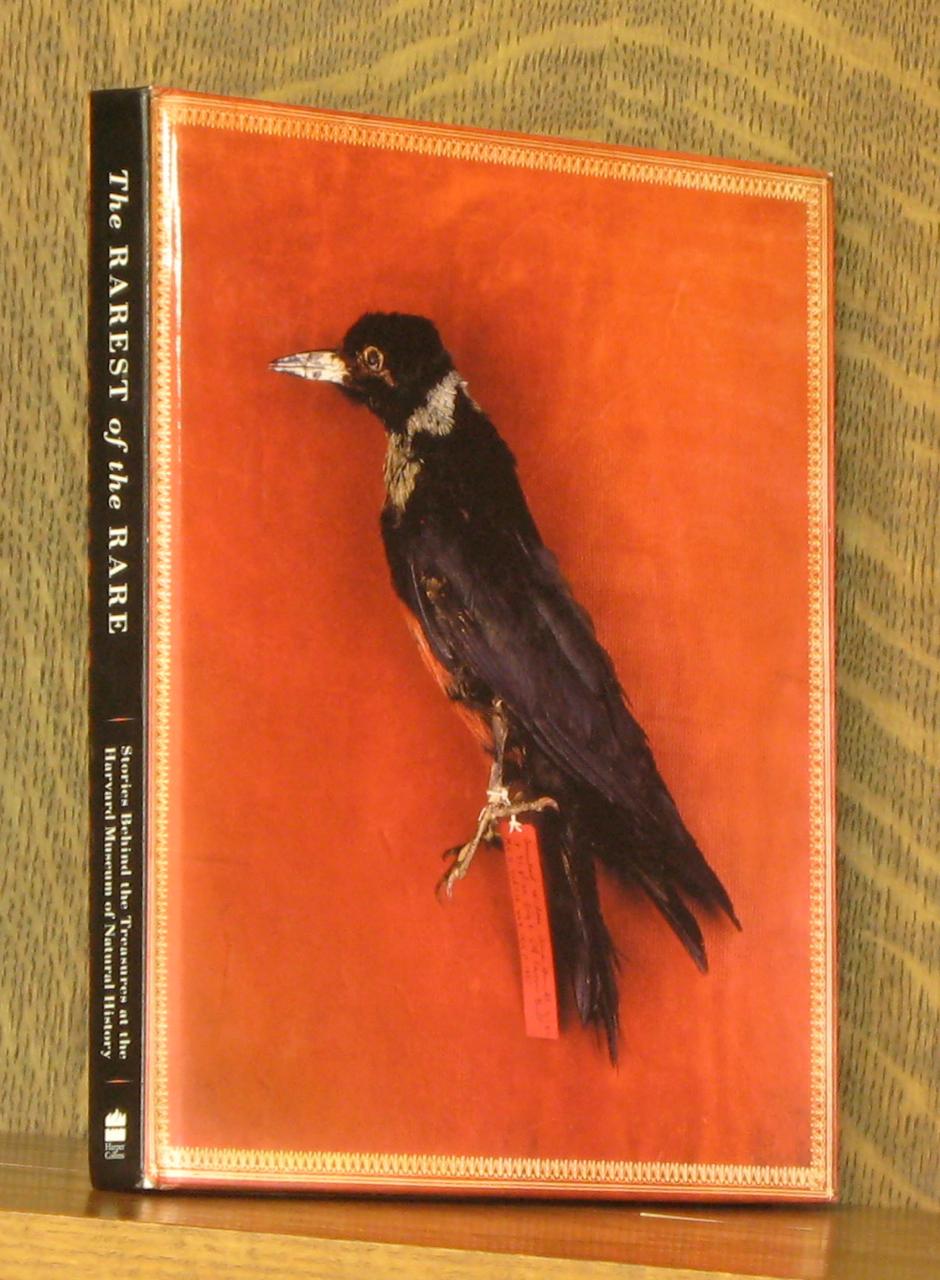
Shares the discovery stories of some of Harvard University's rarest natural history specimens, recounting the origins of such items as Nabokov's butterflies, George Washington's pheasants, a sand dollar collected by Darwin during his Beagle voyage, and the only stuffed bird remaining from the Lewis and Clark expedition. 25,000 first printing.
Reviews
Rather like a natural history museum, this book contains arresting visuals and intriguing facts but has a vaguely musty air about it. Pick, a staff writer for the Harvard Museum of Natural History, traces the growth of the institution and the accretion of its millions of animal, vegetable, fossil and mineral specimens, asserting the continuing relevance of collecting and studying whole organisms in this age of molecular biology. (As Harvard entomologist Edward O. Wilson writes in the introduction, "Biology could not have advanced without the collections of museums like this one.") The bulk of the book is devoted to photographs of flora and fauna (or rather, their taxidermied or fossilized remains), accompanied by matter-of-fact commentary about their biology or provenance. Stuffed birds, pickled turtle embryos and tapeworms taken from the intestinal tracts of "upper-crust Bostonians" share space with a haunting fossil butterfly and an awesome plesiosaur skull. Other relics, though, fail to impress: Vladimir Nabokov's collection of butterfly genitalia, for instance, probably needs to be seen in person. The most interesting sections are those that delve into the science behind the specimens, such as the mini-essays on exotic animals and the physics of blue coloration, but these, too, are cursory and rare. 95 color photos not seen by PW.
Copyright © Reed Business Information, a division of Reed Elsevier Inc. All rights reserved.
A sampling from the 20 million specimens closeted at the Harvard Museum of Natural History, the several dozen plants, animals, and minerals presented here were selected for their connections to interesting tales. The associations are sometimes either famous or bizarre, such as a woodpecker collected by Meriwether Lewis or a mastodon skeleton acquired by a Harvard professor hanged for the 1849 murder of a fellow don. Pick's choices, however, stem from the desire to depict her institution's two-century-long role in the history of biology. E. O. Wilson's introduction details the course of natural history from taxonomic description to molecular biology to evolutionary biology; Pick prefaces the main text with an essay detailing the fluctuations in the museum's reputation. Aided by Sloan's excellent photographs, Pick then groups specimens into extinct species, species discovered by museum scientists, or specimens studied by world-famous Harvard scientists such as Ernst Mayr and the late Stephen Jay Gould. This work is a beautiful showcase that will arrest the interest of every passing browser. Gilbert Taylor
Copyright © American Library Association. All rights reserved
"About this title" may belong to another edition of this title.