Synopsis
In virtually all industries today, a gap exists between the goals companies set-in terms of profit margin, production goals, and earnings-and their actual situations. Whatever the cause, that gap comprises various undesirable outcomes, failures, and incidents that siphon considerable sums from the corporate coffers. To close the gap, corporations must re-invent the way they do work, they must understand why errors occur and how to prevent them, and they must eliminate chronic failures.
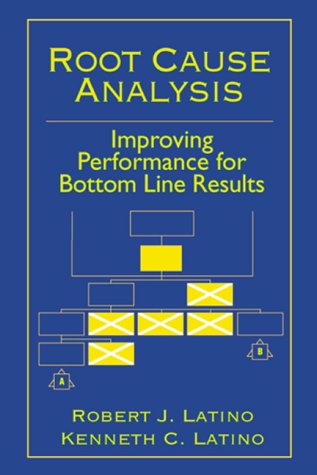
In Root Cause Analysis: Improving Performance for Bottom Line Results, the authors show how to identify, resolve, and eliminate the chronic issues that hinder the attainment of organizational goals. Root Cause Analysis (RCA) is a structured process that uncovers the physical, human, and latent causes of any undesirable event in the workplace. Following the PROACT steps outlined in this book, companies can learn how to:
Preserve event data
Order the Analysis team
Analyze the data using logic trees
Communicate findings and recommendations, and
Track for bottom-line results
The authors carefully discuss the roles of management and an RCA team, prioritizing the events to analyze, and automating the RCA process with their award winning software. They also present case studies that illustrate RCA's potential. Armed with the knowledge in Root Cause Analysis, organizations can understand why errors occur, essentially eliminate chronic errors from occurring, and witness a direct, positive impact on their bottom line.
Review
"...Packed with a wide variety of subjects and detailed information for engineering problem-solving...comprehensible and comprehensive...illuminating." -- Duy H. Hua, Kansas State University
"About this title" may belong to another edition of this title.