About this Item
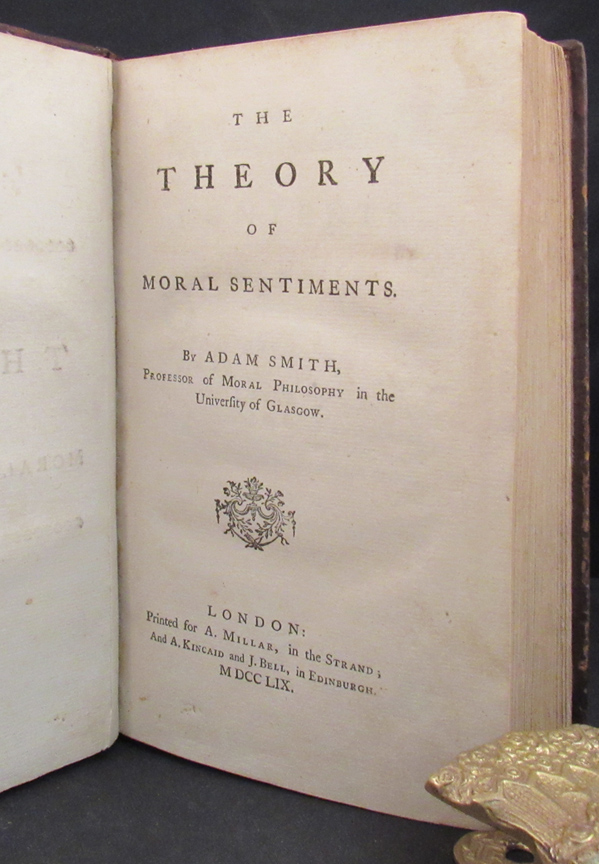
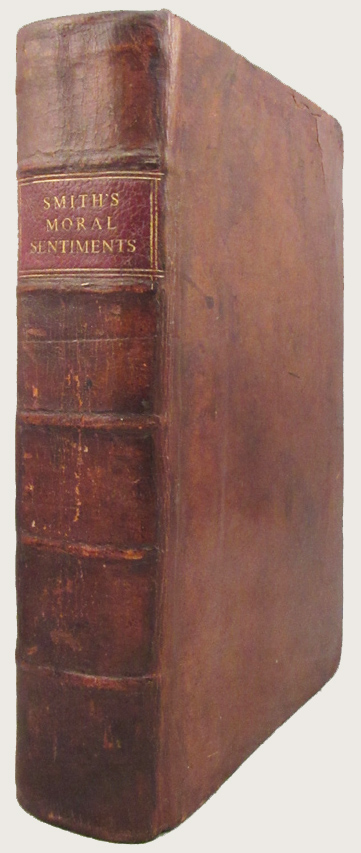
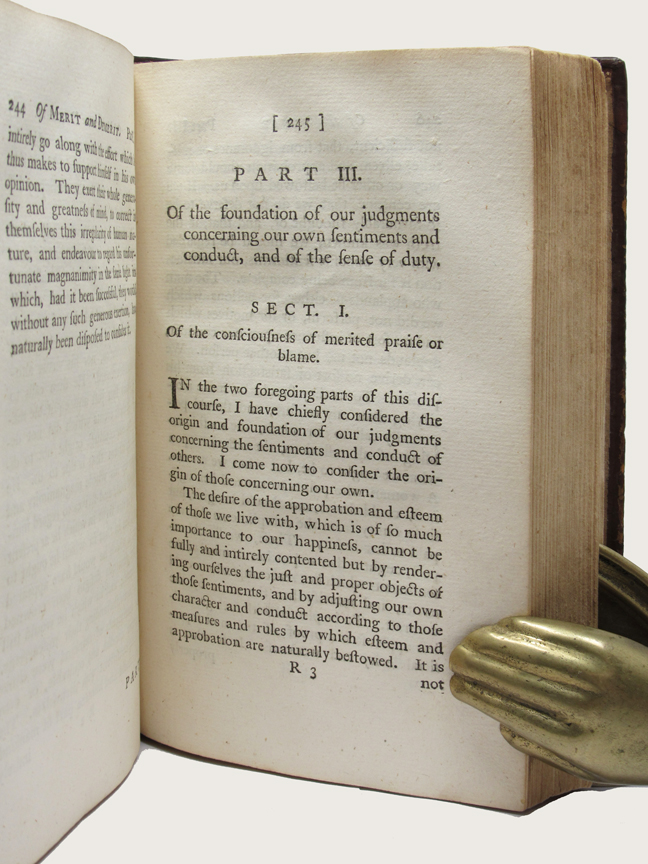
First Edition. Thick 8vo, 202 x 123 mm., bound in its original contemporary binding of full calf, neatly and very sympathetically and skillfully restored at the back with the original spine panel laid down (preserving all but ca. 2cm at the foot, a nearly invisible sophistication, the original morocco label replaced, free endleaves renewed sympathetically with antique paper. [xii], 551, [1] errata (uncorrected in the text, with an error: 412 should read 413); pp. 317-336 omitted from pagination as usual; complete with the half-title pp. A very handsome copy, crisp and unpressed, clean throughout, the binding strong and in good order, the occasional spot as to be expected, but truly a pleasing copy of this monumental work. THE ESPECIALLY RARE FIRST EDITION IN ORIGINAL CONTEMPORARY BINDING OF ADAM SMITH'S FIRST BOOK, PUBLISHED IN 1759. A TRULY RARE BOOK AND ONE OF THE MOST IMPORTANT WORKS IN ALL OF ENGLISH PHILOSOPHY. 'THE THEORY OF MORAL SENTIMENTS was a true scientific breakthrough. It shows that our moral ideas and actions are a product of our very nature as social creatures. It argues that this social psychology is a better guide to moral action than is reason. It identifies the basic rules of prudence and justice that are needed for society to survive, and explains the additional, beneficent, actions that enable it to flourish. As individuals, we have a natural tendency to look after ourselves. That is merely prudence. And yet as social creatures, explains Smith, we are also endowed with a natural sympathy today we would say empathy towards others. When we see others distressed or happy, we feel for them albeit less strongly. Likewise, others seek our empathy and feel for us. When their feelings are particularly strong, empathy prompts them to restrain their emotions so as to bring them into line with our, less intense reactions. Gradually, as we grow from childhood to adulthood, we each learn what is and is not acceptable to other people. Morality stems from our social nature. So does justice. Though we are self-interested, we again have to work out how to live alongside others without doing them harm. That is an essential minimum for the survival of society. If people go further and do positive good beneficence we welcome it, but cannot demand such action as we demand justice.Virtue. Prudence, justice, and beneficence are important. However, the ideal must be that any impartial person, real or imaginary what Smith calls an impartial spectator would fully empathize with our emotions and actions. That requires self-command, and in this lies true virtue. Morality, says Smith, is not something we have to calculate. It is natural, built into us as social beings. When we see people happy or sad, we feel happy or sad too. We derive pleasure when people do things we approve of, and distress when we believe they are doing harm. Of course, we do not feel others emotions as strongly as they do. And through our natural empathy with others, we learn that an excess of anger, or grief, or other emotions distresses them. So we try to curb our emotions to bring them into line with those of others. In fact, we aim to temper them to the point where any typical, disinterested person an impartial spectator, says Smith would empathise with us. Likewise, when we show concern for other people, we know that an impartial spectator would approve, and we take pleasure from it. The impartial spectator is only imaginary, but still guides us: and through experience we gradually build up a system of behavioural rules morality. Punishments and rewards have an important social function. We approve and reward acts that benefit society, and disapprove and punish acts that harm it. Nature has equipped us with appetites and aversions that promote the continued existence of our species and our society. It is almost as if an invisible hand were guiding what we do. For society to survive, there must be rules to present its individual members.
Seller Inventory # 31208
Contact seller
Report this item