Synopsis
Describes efforts to save the Indian tiger from extinction, and why those efforts seemed doomed to failure
Reviews
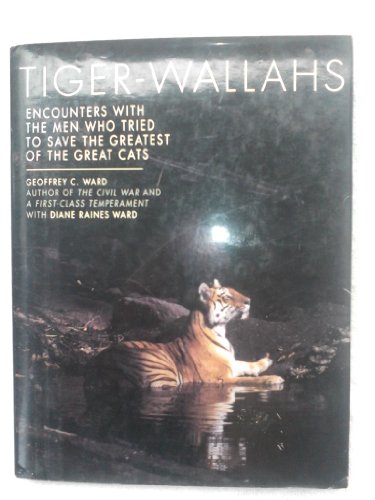
Ten years ago, historian Ward ( Before the Trumpet ) returned to India where he had lived as a teenager. He was stunned by the diminished wildlife, particularly the dwindling tiger population and their shrinking forest habitat. Ward gives a vivid, lavishly illustrated portrait of hunting by rajahs and the British from 1800 to 1900, a period, he notes, during which as many as 100,000 tigers were killed. Among the men who have fought to preserve the tiger, we meet the legendary Jim Corbett, who destroyed mankilling tigers and later became a conservationist; Billy Arjan Singh, a farmer who created a national park, Tiger Haven; Fateh Singh Rathore, Project Tiger's most successful field director, and his disciple Valmik Thapar. Ward gives a highly personal account of visiting the parks and talking to Singh, Rathore and Thapar. He suggests that population pressures and loss of habitat may be so great that the tiger may not be saved.
Copyright 1993 Reed Business Information, Inc.
From the coauthor of the mega-bestselling The Civil War: a mix of memoir, travelogue, and profiles of ``tiger-wallahs'' past and present working to save the Bengal Tiger. The subtitle's past tense is deliberate, for Ward sees the Indian tiger as most likely doomed to extinction, at least outside of zoos--a result of the disintegration of Project Tiger, the Indian government's ambitious program to create a string of tiger reservations, often by moving entire villages off their aboriginal lands. The program's failure, no surprise in India, has to do with lack of space: Buffalo farmers want the land for grazing, while the tigers, reacting to scarce food resources and territorial stress, have turned increasingly to man-eating-- leading in turn to numerous tiger kills by frightened locals. Ward contrasts the present crisis with the richness of Indian wildlife when, in 1953, as a boy of 13, he moved with his family to India--and even more so with the 19th century, when tens of thousands of tigers roamed the forests. Amazingly, the first important effort to save the tiger came from famed early 20th- century hunter Jim Corbett, a kindly man who killed only man- eaters (the tigers had killed an estimated 1500 people) before turning to conservation. Corbett's legacy was carried on by Billy Arjan Singh, who created a tiger park single-handedly and now rehabilitates tigers and leopards for release into the jungle; Fateh Singh Rathore, who has endured beatings by locals and humiliation by the federal government to protect his reserves; and Valmik Thapar, who promotes reforestation and village rehabilitation as indirect ways of deflecting native poaching, which accounts for much tiger loss. Best in its biographies of the tiger-wallahs (which may send readers scurrying to Corbett's rip-roaring bestsellers of the 40's and 50's): a strong brief for a species on the executioner's block. (Seventy-five color, 25 b&w illustrations) -- Copyright ©1993, Kirkus Associates, LP. All rights reserved.
The Wards have done a superb job of describing this magnificent creature and its protectors: brave, dedicated individuals like Jim Corbett, Billy Arjan Singh, Fateh Singh Rathore, and Valmik Thapar. These men have fought against such insurmountable odds as corrupt government officials, poachers, and expanding human populations to save the endangered animals they love. Thapar's Ranthambhore Foundation (which he describes in his own book, The Tiger's Destiny , LJ 8/93) may offer a glimmer of hope. This nongovernmental effort aims to educate and involve the people who live nearest the reserves in the importance of saving the tigers. Mark and Delia Owens ( The Eye of the Elephant , LJ 10/15/92) have had some success with the same type of program for elephants in Zambia. We need these dedicated people, we need their stories told, and we need the animals they are trying to save. Recommended for public libraries and academic collections. (Color photographs not seen.)-- Nancy Moeckel, Miami Univ. Libs., Oxford, Ohio
Copyright 1993 Reed Business Information, Inc.
"About this title" may belong to another edition of this title.