Synopsis
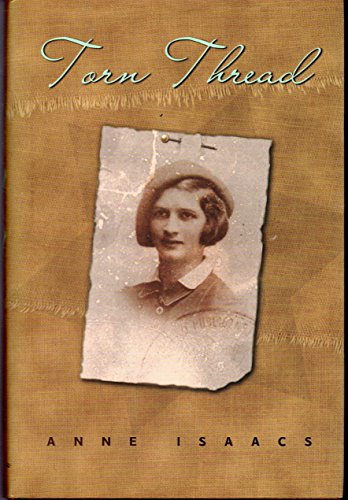
In an attempt to save his daughter's life, Eva's father sends the twelveyearold from Poland to a labor camp in Czechoslovakia where she and her sister survive the war.
Reviews
Grade 6-8-A riveting account of the experiences of two Polish-Jewish girls during World War II. Isaacs spares no details in describing the physical suffering and mental anguish of 12-year-old Eva and her 14-year-old sister Rachel during their two years in a labor camp in Czechoslovakia. Every day they worked 12 long hours in a hot, dusty mill spinning yarn for blankets and uniforms for Nazi soldiers, the clumsy machinery posing a constant threat to their safety. Exhausted by the hard work and suffering from malnutrition, inadequate clothing, severe weather, and frequent illness, the sisters manage to survive their desperate situation. Eva remembers her dear father's often repeated advice: "Try to stay alive for one more hour." She is resourceful and manages to secure extra bits of food by knitting for others. Despite almost starving, she remains obedient to her religious dietary laws. The prisoners help one another in time of need, and a kindly German supervisor in the mill protects girls who are too ill to work. These acts of kindness and friendship help to keep alive the hope that one day the war will end. And at long last the Soviet soldiers rescue them. After a time, the young women begin life anew in Canada. In a brief afterword, the author reveals that she heard the story from Eva herself, now her mother-in-law. This powerful testament to the human spirit provides much opportunity for discussion of this dark time in human history.
Virginia Golodetz, Children's Literature New England, Burlington, VT
Copyright 2000 Reed Business Information, Inc.
HIn a noteworthy departure, Isaacs (Swamp Angel; Treehouse Tales) turns her considerable literary gifts to a painful subjectDher mother-in-law's experiences as a teenage prisoner of a Nazi campDand transforms it into a powerful work of fiction. Like most stories of survival, this one is marked by unlikely turns and conjunctions, which, taken together, preserve the protagonist's life. Eva Buchbinder, 12 years old in 1943, has recently been forced into the Jewish ghetto in Bedzin, Poland, along with her father and sickly older sister, Rachel. After Rachel is seized in a roundup, Eva's father (who has, like other Jews, been forced to work for the Germans without pay) asks the commandant at his worksite to find out exactly where Rachel has been sentDand to have Eva sent there as well. Soon Eva is transported to a slave labor camp in Czechoslovakia, where she indeed finds Rachel. The conditions are terrible: starvation rations, dangerous conditions at the textile factory where they work, rampant disease and, always, the threat of deportation to Auschwitz. Eva struggles internally as well, trying her best to protect the frail Rachel, keeping from Rachel the news that the Bedzin ghetto has been liquidated and weighing the invitation of a fellow-prisoner to join up with partisan fighters. Isaacs takes the measure of acts of casual cruelty or kindness and lets readers see the repercussions. Given its precise detail and sensitivity to unimaginable suffering, this gripping novel reads like the strongest of Holocaust memoirs. Ages 10-up. (Apr.)
Copyright 2000 Reed Business Information, Inc.
The author of the uproarious tall tale Swamp Angel (1994) moves into a very different mode here in a grim Holocaust novel based on her mother-in-law's experience as a young teenage prisoner in a Nazi labor camp. The focus of Eva's story is always her bond with her fragile older sister, Rachel. They protect, even overprotect, each other, first in the Polish ghetto, and then for two years as prisoners in a Nazi labor camp in Czechoslovakia, where every day, every hour, is a struggle with hunger, disease, cold, and hard labor. Isaacs tells it without exploitation or sentimentality. She shows that there are Poles, and even some Jews, who help the Nazis and that many ordinary people are afraid to do anything or are just "uninterested." There is even one German camp officer who secretly does what he can to help the prisoners. The genocide horror is distanced because this is not a death camp, though Eva witnesses heartrending scenes of prisoners being marched to Auschwitz. Tension builds as the sisters, starving, sick, surrounded by filth, and checking each other's hair for lice, try to stay alive in the last months, one hour at time, until the Allies liberate the camp. As with the brother and sister in Anita Lobel's No Pretty Pictures (Booklist's 1998 Top of the List winner for Youth Nonfiction) and in Schoschana Rabinovici's Thanks to My Mother (the 1998 Batchelder Award winner), family love is a fact of survival. Hazel Rochman
"About this title" may belong to another edition of this title.