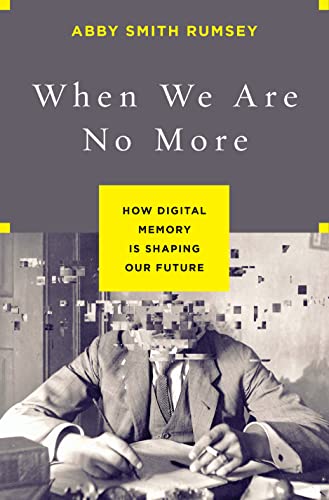
When We Are No More: How Digital Memory Is Shaping Our Future
Rumsey, Abby Smith
Sold by Olimpianbooks, Avon Lake, OH, U.S.A.
AbeBooks Seller since May 16, 2024
New - Hardcover
Condition: New
Ships within U.S.A.
Quantity: 1 available
Add to basketSold by Olimpianbooks, Avon Lake, OH, U.S.A.
AbeBooks Seller since May 16, 2024
Condition: New
Quantity: 1 available
Add to basketHardcover. Brand New, pages clean and crisp, covers clean, no highlighting or underlining. 100% Satisfaction guaranteed or your money back. Thank you for your interest. We ship same day or the next business day. A3.
Seller Inventory # A3/2
Our memory gives the human species a unique evolutionary advantage. Our stories, ideas, and innovations--in a word, our "culture"--can be recorded and passed on to future generations. Our enduring culture and restless curiosity have enabled us to invent powerful information technologies that give us invaluable perspective on our past and define our future. Today, we stand at the very edge of a vast, uncharted digital landscape, where our collective memory is stored in ephemeral bits and bytes and lives in air-conditioned server rooms. What sources will historians turn to in 100, let alone 1,000 years to understand our own time if all of our memory lives in digital codes that may no longer be decipherable?
In When We Are No More Abby Smith Rumsey explores human memory from pre-history to the present to shed light on the grand challenge facing our world--the abundance of information and scarcity of human attention. Tracing the story from cuneiform tablets and papyrus scrolls, to movable type, books, and the birth of the Library of Congress, Rumsey weaves a compelling narrative that explores how humans have dealt with the problem of too much information throughout our history, and indeed how we might begin solve the same problem for our digital future. Serving as a call to consciousness, When We Are No More explains why data storage is not memory; why forgetting is the first step towards remembering; and above all, why memory is about the future, not the past.
"If we're thinking 1,000 years, 3,000 years ahead in the future, we have to ask ourselves, how do we preserve all the bits that we need in order to correctly interpret the digital objects we create? We are nonchalantly throwing all of our data into what could become an information black hole without realizing it." --Vint Cerf, Chief Evangelist at Google, at a press conference in February, 2015.
"About this title" may belong to another edition of this title.
| Order quantity | 4 to 8 business days | 3 to 5 business days |
|---|---|---|
| First item | US$ 0.00 | US$ 13.98 |
Delivery times are set by sellers and vary by carrier and location. Orders passing through Customs may face delays and buyers are responsible for any associated duties or fees. Sellers may contact you regarding additional charges to cover any increased costs to ship your items.