
Items related to The Second World War: An Illustrated History
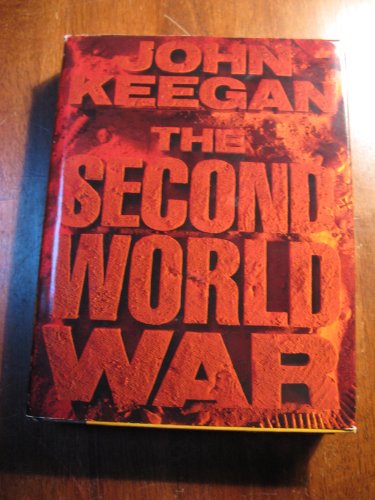
Synopsis
Surveys the events and strategies of World War II, and covers weapons production, espionage, and the resistance
"synopsis" may belong to another edition of this title.
Reviews
This account of WW II, though controversial, is rich in fresh perception, interpretation and opinion. In addition to penning a fast-paced campaign chronicle, Keegan ( The Mask of Command ) makes a convincing case for the prime motivations of Allied and Axis leaders, pinpoints the practical results of Allied summit conferences and defines the war's geopolitical dimensions. He maintains that Stalin's purge of the Soviet high command was beneficial in certain respects, and explains why Guadalcanal was a cheap victory for the U.S. Keegan argues that Churchill's hope that resistance forces would "set ablaze" Europe was a romantic notion, and that the British "descended to the enemy's level" in the strategic bombing of Germany. Most provocative are his comments on Roosevelt: while many historians would agree that FDR was the most enigmatic of the war's major figures, few will concur that his policies were "profoundly ambiguous." Photos. 50,000 first printing; $50,000 ad/promo.
Copyright 1989 Reed Business Information, Inc.
In contrast to Martin Gilbert's broader The Second World War ( reviewed in this issue, p.101), Keegan's work is more a battle campaign. His strength as a military historian ( The Face of Battle, The Price of Admiralty ) is in his ability to synthesize the order of battle without getting bogged down in minutae. The mighty German-Russian struggles are well covered, as is the war in the Pacific. While Robert Leckie's Delivered from Evil: The Saga of World War II ( LJ 9/1/87) is nearly twice as long as Keegan's book, integrates biographical material into the narrative, and is less analytical than Keegan's, Keegan's is extremely well written; the reader can almost visualize the movement of an army without looking at the maps. On another level, however, Keegan tends to be simplistic (e.g., in his discussion of the causes of World War II, in his view that the war would have come even without Hitler) and skim over many topics. Nevertheless, academic and larger public libraries will find this in demand. Recommended. Previewed in Prepub Alert, LJ 9/15/89.
- Robert Jordan, Univ. of Iowa, Iowa City
Copyright 1989 Reed Business Information, Inc.
"About this title" may belong to another edition of this title.
Search results for The Second World War: An Illustrated History

Stock Image
The Second World War: An Illustrated History
Seller: World of Books (was SecondSale), Montgomery, IL, U.S.A.
Seller rating 5 out of 5 stars

Condition: Acceptable. Item in acceptable condition! Textbooks may not include supplemental items i.e. CDs, access codes etc. Seller Inventory # 00096142997
Stock Image
Keegan John : Untitled on World War II
Seller: World of Books (was SecondSale), Montgomery, IL, U.S.A.
Seller rating 5 out of 5 stars
Hardback. Condition: Good. Seller Inventory # 00108199877
Stock Image
The Second World War: An Illustrated History
Seller: Evergreen Goodwill, Seattle, WA, U.S.A.
Seller rating 5 out of 5 stars
hardcover. Condition: Good. Seller Inventory # mon0000277509
Stock Image
The Second World War: An Illustrated History
Seller: Orion Tech, Kingwood, TX, U.S.A.
Seller rating 5 out of 5 stars
Hardcover. Condition: Good. Seller Inventory # 0670823597-3-24175370
Stock Image
The Second World War: An Illustrated History
Seller: Gulf Coast Books, Cypress, TX, U.S.A.
Seller rating 5 out of 5 stars
Hardcover. Condition: Fair. Seller Inventory # 0670823597-4-19499445
Seller Image
The Second World War: An Illustrated History
Seller: Greenworld Books, Arlington, TX, U.S.A.
Seller rating 5 out of 5 stars
Condition: very_good. Fast Free Shipping â" Very Good condition book with a firm cover and clean pages. Shows normal use and some light wear or limited notes markings. A solid, nice copy to enjoy. Seller Inventory # GWV.0670823597.VG
Stock Image
The Second World War: An Illustrated History
Seller: Once Upon A Time Books, Siloam Springs, AR, U.S.A.
Seller rating 4 out of 5 stars

Hardcover. Condition: Acceptable. This is a used book. It may contain highlighting/underlining and/or the book may show heavier signs of wear . It may also be ex-library or without dustjacket. This is a used book. It may contain highlighting/underlining and/or the book may show heavier signs of wear . It may also be ex-library or without dustjacket. Seller Inventory # mon0000510161
Stock Image
The Second World War: An Illustrated History
Seller: ThriftBooks-Dallas, Dallas, TX, U.S.A.
Seller rating 5 out of 5 stars
Hardcover. Condition: Good. No Jacket. Former library book; Pages can have notes/highlighting. Spine may show signs of wear. ~ ThriftBooks: Read More, Spend Less. Seller Inventory # G0670823597I3N10
Stock Image
The Second World War: An Illustrated History
Seller: ThriftBooks-Atlanta, AUSTELL, GA, U.S.A.
Seller rating 5 out of 5 stars
Hardcover. Condition: Good. No Jacket. Missing dust jacket; Pages can have notes/highlighting. Spine may show signs of wear. ~ ThriftBooks: Read More, Spend Less. Seller Inventory # G0670823597I3N01
Stock Image
The Second World War: An Illustrated History
Seller: ThriftBooks-Reno, Reno, NV, U.S.A.
Seller rating 5 out of 5 stars
Hardcover. Condition: Good. No Jacket. Missing dust jacket; Pages can have notes/highlighting. Spine may show signs of wear. ~ ThriftBooks: Read More, Spend Less. Seller Inventory # G0670823597I3N01