
Synopsis
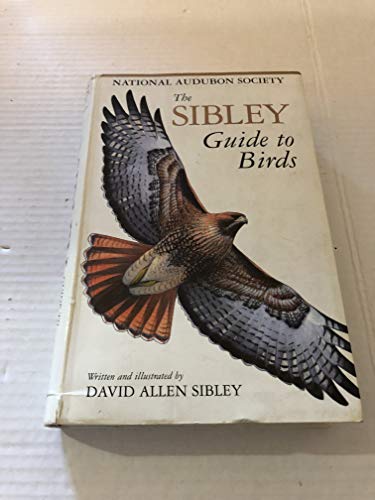
David Allen Sibley, America's most gifted contemporary painter of birds, is the author and illustrator of this comprehensive guide. His beautifully detailed illustrations—more than 6,600 in all—and descriptions of 810 species and 350 regional populations will enrich every birder's experience.
The Sibley Guide's innovative design makes it entirely user friendly. The illustrations are arranged to facilitate comparison, yet still capture the unique character of each species.
The Sibley Guide to Birds provides a wealth of new information:
—Captioned illustrations show many previously unpublished field marks and revisions of known marks
—Nearly every species is shown in flight
—Measurements include length, wingspan, and weight for every species
—Subspecies and geographic varients are covered thoroughly
—Complete voice descriptions are included for every species
—Maps show the complete distribution of every species: summer and winter ranges, migration routes, and rare occurrences
Both novice and experienced birders will appreciate these and other innovative features:
—An introductory page for each family or group of related families makes comparisons simple
—Clear and concise labels with pointers identify field marks directly
—Birds are illustrated in similar poses to make comparisons between species quick and easy
—Illustrations emphasize the way birds look in the field
With The Sibley Guide to Birds, the National Audubon Society makes the art and expertise of David Sibley available to the world in a comprehensive, handsome, easy-to-use volume that will be the indispensable identification guide every birder must own.
"synopsis" may belong to another edition of this title.
About the Author
David Allen Sibley, son of the well-known ornithologist Fred Sibley, began seriously watching and drawing birds in 1969, at age seven. He has written and illustrated articles on bird identification for Birding and American Birds (now Field Notes) as well as regional publications and books. Since 1980 David has traveled the continent watching birds on his own and as a tour leader for WINGS, Inc. He has lived in California, Arizona, Texas, Florida, Georgia, New York, Connecticut, and New Jersey. He now lives in Concord, Massachusetts.
From the Back Cover
"The ideal bird identification guide. . .raises the standard. . .High-quality paper and a sturdy binding, along with a new type of flexible cover, gives us a book that will stand up to the heavy use that it is bound to get. . . .Stunningly illustrated. . .
Undoubtedly the finest guide to North American birds. . . .The consistency in artistic style and breadth of plumage coverage, along with David Sibley's vast knowledge on the subject, combine to give North American birders a guide far superior to all previously available. I stand in awe; I have nothing but praise."
—Guy McCaskie, Birding—Dec. 2000
"The artwork is gorgeous and the writing clear and crisp. . . .No other bird guide is easier to get used to or more comprehensive."
—Michael Sims, BookPage.com—Dec. 2000
"A tour de force. . .Everyone should have a copy—one for each car, one for every home.. . .I love this book."
—Henry T. Armistead, Audubon Naturalist News—Dec.-Jan. 2001
From the Inside Flap
David Allen Sibley, America's most gifted contemporary painter of birds, is the author and illustrator of this comprehensive guide. His beautifully detailed illustrations?more than 6,600 in all?and descriptions of 810 species and 350 regional populations will enrich every birder's experience.
The Sibley Guide's innovative design makes it entirely user friendly. The illustrations are arranged to facilitate comparison, yet still capture the unique character of each species.
The Sibley Guide to Birds provides a wealth of new information:
?Captioned illustrations show many previously unpublished field marks and revisions of known marks
?Nearly every species is shown in flight
?Measurements include length, wingspan, and weight for every species
?Subspecies and geographic varients are covered thoroughly
?Complete voice descriptions are included for every species
?Maps show the complete distribution of every species: summer and winter ranges, migration routes, and rare occurrences
Both novice and experienced birders will appreciate these and other innovative features:
?An introductory page for each family or group of related families makes comparisons simple
?Clear and concise labels with pointers identify field marks directly
?Birds are illustrated in similar poses to make comparisons between species quick and easy
?Illustrations emphasize the way birds look in the field
With The Sibley Guide to Birds, the National Audubon Society makes the art and expertise of David Sibley available to the world in a comprehensive, handsome, easy-to-use volume that will be the indispensable identification guide every birder must own.
Reviews
The bird-watching world knows Sibley best as an immensely talented painter. His thick, attractive and data-packed color guide offers nearly 7,000 images, along with range maps and detailed descriptions of songs, calls and voices, for all the birds North Americans might see. It's a more informative volume than Kenn Kaufman's forthcoming Birds of North America (Forecasts, Sept. 11) but less portable and harder for beginners to use. An introduction describes the key parts of major classes of birdsDthe tomia and culmen of a gull's bill, the scapulars and coverts of passerines (songbirds). Sibley then moves on to hundreds of pages of birds in 42 categories, from Loons and Grebes to Silky Flycatchers and Bulbuls. A typical page has two columns, with one species in each: that species gets a color-coded range map, a description of its voice, and four to eight illustrative paintings. These multiple images of single species are the guide's most attractive feature; they let Sibley show some birds in several poses, as well as important seasonal and regional, juvenile and mature, breeding and nonbreeding, or male and female versions of the same bird. (Gulls, terns, and many other seabirds, in particular, change their patterns completely when breeding.) Sibley assists viewers by giving, on the same page, images of species that might be mistaken for one anotherDone column shows 13 kinds of thrushes. He also describes calls for every bird (not just the more common ones), and makes many more comparisons. If Kaufman's guide belongs in birders' coat pockets, Sibley's big, detailed book belongs on their desks; it's easy to imagine birders rushing to Sibley's guide to check details of plumage or to confirm an ID the smaller guide has helped them make.
Copyright 2000 Reed Business Information, Inc.
For birders who cut their teeth on Roger Tory Peterson's Field Guide to the Birds, that book seemed definitive, like the King James Bible or Bogart and Bergman in Casablanca. But it's a new millennium, and David Allen Sibley and the National Audubon Society have produced an impressive new Guide to Birds.
How does it differ from earlier guides? When Sibley himself was asked, he replied: "My book relies much more on illustrations.... I believe the average field guide user spends the vast majority of time looking at the pictures, and when I was developing this layout I based it on the premise that most of the text in current field guides is redundant.... I wanted a book that would condense a huge amount of information into a portable size, and at the same time make the information 'patterned,' logical, and accessible to any reader."
He delivers. Full-color paintings--6,600 of them--show us 810 North American species in an array of shapes, stages, colors, markings and poses (at rest, in flight, perched, swimming and so on). Raptors are shown from below. All significant plumages are depicted: the Laughing Gull, for example, is shown in six different stages. Voice descriptions (songs, flight calls, juvenile begging cries, threats, displays) appear on every page. Full-color range maps show complete distributions, migration routes, and summer, winter and breeding locations. Measurements are there, too: wingspan, length and weight. To facilitate comparison, information and illustrations are arranged in the same way for each species, and birds are shown in similar poses. Happily, the text accompanies the drawings as captions, so you don't have to flip back and forth. Pointers guide your eye to the relevant feature.
The book's introductory material is a primer on how to look at and identify birds, beginning with the parts of a passerine, or songbird. The introduction also includes Sibley's "rules," the first of which is: "Look at the bird. Don't fumble with a book, because by the time you find the right picture the bird will most likely be gone. Start by looking at the bird's bill and facial markings. Watch what the bird does, watch it fly away, and only then try to find it in your book."
Even the endpapers overflow, in an organized way, with useful tools: metric conversions, rulers, a map of the area the guide covers. A sturdy, flexible cover, sewn-in binding, and heavy, nonreflective paper add to the pleasure of using this book. True, it's a little hefty for the field, but this is a quibble. Better to have all this information than to be able to tuck the book in your pocket. Besides, it fits easily in a backpack.
Born to Bird
The son of Yale ornithologist Fred Sibley, David Sibley taught himself to draw at age six by tracing Arthur Singer's illustrations in Birds of the World. After two semesters at Cornell, he dropped out to work at the Cape May Bird Observatory. Several years later he left Cape May and crisscrossed the U.S. in his pickup truck to study birds, storing his sketching equipment in the cab and sleeping in the back. By his late 20s he was an acknowledged expert, leading tours for WINGS. Now 39, he is married to Joan Walsh, an ornithologist he met at Manomet Bird Observatory, and the father of two young children. Sibley starts his drawings in pencil, working from photographs and field sketches. He then puts the illustrations on an opaque projector and adjusts for size so they are exactly proportional to the others on that page of the guide. After correcting for size and shape, he traces the projection and paints the final version in gouache, working in transparent layers until he reaches the desired color and texture.
EDITORS OF SCIENTIFIC AMERICAN
"About this title" may belong to another edition of this title.
Search results for The Sibley Guide to Birds

Seller Image
The Sibley Guide to Birds
Seller: Dream Books Co., Denver, CO, U.S.A.
Seller rating 5 out of 5 stars

Condition: good. Gently used with minimal wear on the corners and cover. A few pages may contain light highlighting or writing, but the text remains fully legible. Dust jacket may be missing, and supplemental materials like CDs or codes may not be included. May be ex-library with library markings. Ships promptly! Seller Inventory # DBV.0679451226.G
Stock Image
The Sibley Guide to Birds (Aud
Seller: World of Books (was SecondSale), Montgomery, IL, U.S.A.
Seller rating 5 out of 5 stars
Condition: Acceptable. Item in acceptable condition! Textbooks may not include supplemental items i.e. CDs, access codes etc. Seller Inventory # 00102830476
Stock Image
The Sibley Guide to Birds
Seller: ThriftBooks-Atlanta, AUSTELL, GA, U.S.A.
Seller rating 5 out of 5 stars
Hardcover. Condition: Fair. No Jacket. Readable copy. Pages may have considerable notes/highlighting. ~ ThriftBooks: Read More, Spend Less. Seller Inventory # G0679451226I5N00
Stock Image
The Sibley Guide to Birds
Seller: Evergreen Goodwill, Seattle, WA, U.S.A.
Seller rating 5 out of 5 stars
paperback. Condition: Acceptable. Seller Inventory # mon0000210968
Seller Image
The Sibley Guide to Birds
Seller: Zoom Books Company, Lynden, WA, U.S.A.
Seller rating 5 out of 5 stars
Condition: very_good. Book is in very good condition and may include minimal underlining highlighting. The book can also include "From the library of" labels. May not contain miscellaneous items toys, dvds, etc. . We offer 100% money back guarantee and 24 7 customer service. Seller Inventory # ZBV.0679451226.VG
Seller Image
The Sibley Guide to Birds
Seller: Aspen Book Co., Denver, CO, U.S.A.
Seller rating 5 out of 5 stars
Condition: acceptable. It's been through some chapters of life! Expect visible wearâ"creases, notes, highlights, maybe even a splash of water here and there. Perfect for readers who love a book with history. Seller Inventory # PKV.0679451226.A
Seller Image
The Sibley Guide to Birds
Seller: Goodwill Books, Hillsboro, OR, U.S.A.
Seller rating 5 out of 5 stars
Condition: acceptable. Fairly worn, but readable and intact. If applicable: Dust jacket, disc or access code may not be included. Seller Inventory # 3IIK10002M4U_ns
Seller Image
The Sibley Guide to Birds
Seller: Zoom Books East, Glendale Heights, IL, U.S.A.
Seller rating 5 out of 5 stars
Condition: very_good. Book is in very good condition and may include minimal underlining highlighting. The book can also include "From the library of" labels. May not contain miscellaneous items toys, dvds, etc. . We offer 100% money back guarantee and 24 7 customer service. Seller Inventory # ZEV.0679451226.VG
Stock Image
The Sibley Guide to Birds
Seller: HPB-Red, Dallas, TX, U.S.A.
Seller rating 5 out of 5 stars
Paperback. Condition: Good. Connecting readers with great books since 1972! Used textbooks may not include companion materials such as access codes, etc. May have some wear or writing/highlighting. We ship orders daily and Customer Service is our top priority! Seller Inventory # S_465929882
Seller Image
The Sibley Guide to Birds
Seller: Goodwill Books, Hillsboro, OR, U.S.A.
Seller rating 5 out of 5 stars
Condition: good. Signs of wear and consistent use. Seller Inventory # 3IIT7G001L8D_ns