
Synopsis
A panoramic and provocative history of life in Palestine during the three strife-torn but romantic decades when Britain ruled and the seeds of today's conflicts were sown
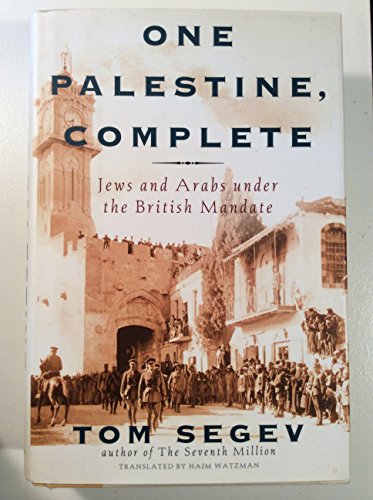
Tom Segev's acclaimed works, 1949 and The Seventh Million, overturned accepted views of the history of Israel. Now Segev explores the dramatic period before the creation of the state, when Britain ruled over "one Palestine, complete" (as noted in the receipt signed by the High Commissioner) and when its promise to both Jews and Arabs that they would inherit the land set in motion the conflict that haunts the region to this day.
Drawing on a wealth of untapped archival materials, Segev reconstructs a tumultuous era (1917 to 1948) of limitless possibilities and tragic missteps. He introduces the legendary figures--General Allenby, Lawrence of Arabia, David Ben-Gurion--as well as an array of pioneers, secret agents, diplomats, and fanatics. He tracks the steady advance of Jews and Arabs toward confrontation and with his hallmark originality puts forward a radical new argument: that the British, far from being pro-Arab, as commonly thought, consistently favored the Zionist position, and did so out of the mistaken--and anti-Semitic belief that Jews turned the wheels of history.
Rich in unforgettable characters, sensitive to all perspectives, One Palestine, Complete brilliantly depicts the decline of an empire, the birth of one nation, and the tragedy of another.
Tom Segev's acclaimed works, 1949 and The Seventh Million, overturned accepted views of the history of Israel. Now Segev explores the dramatic period before the creation of the state, when Britain ruled over "one Palestine, complete" (as noted in the receipt signed by the High Commissioner) and when its promise to both Jews and Arabs that they would inherit the land set in motion the conflict that haunts the region to this day.
Drawing on a wealth of untapped archival materials, Segev reconstructs a tumultuous era (1917 to 1948) of limitless possibilities and tragic missteps. He introduces the legendary figures--General Allenby, Lawrence of Arabia, David Ben-Gurion--as well as an array of pioneers, secret agents, diplomats, and fanatics. He tracks the steady advance of Jews and Arabs toward confrontation and with his hallmark originality puts forward a radical new argument: that the British, far from being pro-Arab, as commonly thought, consistently favored the Zionist position, and did so out of the mistaken--and anti-Semitic belief that Jews turned the wheels of history.
Rich in unforgettable characters, sensitive to all perspectives, One Palestine, Complete brilliantly depicts the decline of an empire, the birth of one nation, and the tragedy of another.
"synopsis" may belong to another edition of this title.
About the Author
Tom Segev is a columnist for Ha'aretz, Israel's leading newspaper, and author of two now-classic works on the history of Israel, 1949: The First Israelis and The Seventh Million: The Israelis and the Holocaust. He lives in Jerusalem.
Reviews
"The British entered Palestine to defeat the Turks; they stayed there to keep it from the French; then they gave it to the Zionists because they loved 'the Jews' even as they loathed them, at once admired and despised them, and above all feared them. They were not guided by strategic considerations, and there was no orderly decision-making process," claims Segev in revealing the thrust of his argument that the contemporary problems between the Arabs and the Jews over the issue of a promised homeland were exacerbated by the interventions of the British empire between the two world wars. Segev, author of the well-known and highly controversial books 1949 and The Seventh Million, is one of the "new historians" who have revised and demythologized the history of modern Israel. The reason the British feared the Zionists, Segev maintains, was that they believed that the Jews had inordinate political power around the world. Moreover, he suggests that the Arab rebellions of the late 1930s were instrumental in convincing the British to leave the reins to the Jewish Agency and even hypothesizes about how the British would have reacted if the Arabs had had a political infrastructure in place similar to that of the Jews. Although his argument would be more convincing had he given greater credence to the Palestinian perspective, Segev is an excellent historical writer who presents a compelling and timely discussion of a well-trodden subjectDeven if it does not stir as much controversy as his earlier work. (Nov. 14)
Copyright 2000 Reed Business Information, Inc.
The recent failure of the latest round of peace talks between Jews and Palestinians will provide added interest in and immediacy to this fascinating book. Israeli Segev, author of the acclaimed 1949 and The Seventh Million, looks at the period from 1917 to 1948, "an era of terror and promise," when Britain ruled over Palestine and the current conflicts of the area were germinating. Using archival records, diaries, and letters, Segev provides an incredibly detailed account of the historical roots of the animosity between the Jews and Arabs in Palestine. More than 700 years of Muslim rule ended when the British push into the Middle East in the early 1900s, bringing Palestine under its control. The region was promised to both Arabs and Jews, but British policy tended to favor the Jews following the Balfour Declaration. Eventually, aggressive Zionist efforts opened the country to Jewish immigration, providing shelter for Jews fleeing the Holocaust and setting up conditions for the inevitable conflict that followed and continues. Segev profiles the legions of famous and obscure players in the drama that unfolded with the creation of Israel. He recounts the violent struggles between Arabs and Jews to gain the upper hand with the British, who were torn between an ebbing history of imperialism, indebtedness to the Arabs for their support against the Turks, and exaggerated fears of international Jewish influence. "The Palestine conflict was more than a struggle for land; it was also a battle for myths, religious faith, national honor, and history." Both sides fought with "primal fervor" that inevitably led to a blurring of distinctions between reality and symbolism, with the British helpless and ineffective in the middle. This is a stunning, absorbing work. Vanessa Bush
Copyright © American Library Association. All rights reserved
In the past 50 years, Arab-Israeli relations have been marked by several wars and internecine conflicts. Understanding the events in Palestine during the first half of the 20th century, which shaped the future of this conflict, is critical to understanding the contemporary obstacles confronting the Middle East peace process. Israeli journalist Segev (1949: The First Israelis) has written a detailed, evenhanded account of these events, which led to the establishment of the state of Israel and the creation of the Palestinian refugee problem. By relying on a wealth of archival material, the author demonstrates how and why the British ultimately favored the Zionist forces over the Arabs and how they helped the nascent Zionist movement defeat the Palestinians and other Arabs. Highly recommended for both academic and large public libraries.
-DNader Entessar, Spring Hill Coll., Mobile, AL
Copyright 2000 Reed Business Information, Inc.
Excerpt. © Reprinted by permission. All rights reserved.
One British official typically wore a homburg when he went to a Jewish neighborhood and a red fez when he went to an Arab neighborhood. Once the man chanced on a street fight between Jews and Arabs. He ran quickly to the nearest telephone booth and called his superior to ask for instructions-should he wear the homburg or the fez? Wear them both, he was told.
"About this title" may belong to another edition of this title.
Other Popular Editions of the Same Title

Search results for One Palestine, Complete: Jews and Arabs Under the British...

Stock Image
One Palestine, Complete: Jews and Arabs Under the British Mandate
Seller: Orion Tech, Kingwood, TX, U.S.A.
Seller rating 5 out of 5 stars

hardcover. Condition: Fair. Seller Inventory # 0805048480-4-27298735
Seller Image
One Palestine, Complete: Jews and Arabs Under the British Mandate
Seller: Dream Books Co., Denver, CO, U.S.A.
Seller rating 5 out of 5 stars
Condition: acceptable. This copy has clearly been enjoyedâ"expect noticeable shelf wear and some minor creases to the cover. Binding is strong, and all pages are legible. May contain previous library markings or stamps. Seller Inventory # DBV.0805048480.A
Stock Image
One Palestine Complete Jews an
Seller: World of Books (was SecondSale), Montgomery, IL, U.S.A.
Seller rating 5 out of 5 stars
Condition: Acceptable. Item in acceptable condition! Textbooks may not include supplemental items i.e. CDs, access codes etc. Seller Inventory # 00099269849
Stock Image
One Palestine Complete Jews an
Seller: World of Books (was SecondSale), Montgomery, IL, U.S.A.
Seller rating 5 out of 5 stars
Condition: Good. Good condition ex-library book with usual library markings and stickers. Seller Inventory # 00100043067
Stock Image
One Palestine Complete Jews an
Seller: World of Books (was SecondSale), Montgomery, IL, U.S.A.
Seller rating 5 out of 5 stars
Condition: Very Good. Item in very good condition! Textbooks may not include supplemental items i.e. CDs, access codes etc. Seller Inventory # 00100046642
Stock Image
One Palestine, Complete: Jews and Arabs Under the British Mandate
Seller: ThriftBooks-Reno, Reno, NV, U.S.A.
Seller rating 5 out of 5 stars
Hardcover. Condition: Good. No Jacket. Pages can have notes/highlighting. Spine may show signs of wear. ~ ThriftBooks: Read More, Spend Less. Seller Inventory # G0805048480I3N00
Stock Image
One Palestine, Complete: Jews and Arabs Under the British Mandate
Seller: ThriftBooks-Phoenix, Phoenix, AZ, U.S.A.
Seller rating 5 out of 5 stars
Hardcover. Condition: Good. No Jacket. Pages can have notes/highlighting. Spine may show signs of wear. ~ ThriftBooks: Read More, Spend Less. Seller Inventory # G0805048480I3N00
Stock Image
One Palestine, Complete: Jews and Arabs Under the British Mandate
Seller: ThriftBooks-Atlanta, AUSTELL, GA, U.S.A.
Seller rating 5 out of 5 stars
Hardcover. Condition: Good. No Jacket. Missing dust jacket; Pages can have notes/highlighting. Spine may show signs of wear. ~ ThriftBooks: Read More, Spend Less. Seller Inventory # G0805048480I3N01
Stock Image
One Palestine, Complete: Jews and Arabs Under the British Mandate
Seller: ThriftBooks-Dallas, Dallas, TX, U.S.A.
Seller rating 5 out of 5 stars
Hardcover. Condition: Good. No Jacket. Missing dust jacket; Pages can have notes/highlighting. Spine may show signs of wear. ~ ThriftBooks: Read More, Spend Less. Seller Inventory # G0805048480I3N01
Stock Image
One Palestine, Complete: Jews and Arabs Under the British Mandate
Seller: ThriftBooks-Atlanta, AUSTELL, GA, U.S.A.
Seller rating 5 out of 5 stars
Hardcover. Condition: Good. No Jacket. Pages can have notes/highlighting. Spine may show signs of wear. ~ ThriftBooks: Read More, Spend Less. Seller Inventory # G0805048480I3N00