
Synopsis
"A textured picture of Hitler's histrionic personality and his insane mission for glory, presaging the genocide to come in the cold-blooded obliteration of one young woman." — Publishers Weekly
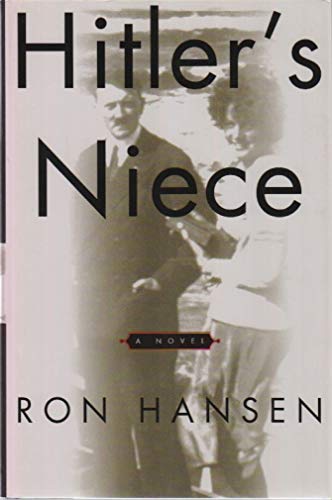
Hitler's Niece tells the story of the intense and disturbing relationship between Adolf Hitler and the daughter of his only half-sister, Angela, a drama that evolves against the backdrop of Hitler's rise to prominence and power from particularly inauspicious beginnings. The story follows Geli from her birth in Linz, Austria, through the years in Berchtesgaden and Munich, to her tragic death in 1932 in Hitler's apartment in Munich. Through the eyes of a favorite niece who has been all but lost to history, we see the frightening rise in prestige and political power of a vain, vulgar, sinister man who thrived on cruelty and hate and would stop at nothing to keep the horror of his inner life hidden from the world.
"synopsis" may belong to another edition of this title.
About the Author
Ron Hansen is the bestselling author of the novel Atticus (a finalist for the National Book Award), Hitler's Niece, Mariette in Ecstasy, Desperadoes, and Isn't It Romantic?, as well as a collection of short stories, a collection of essays, and a book for children. The Assassination of Jesse James by the Coward Robert Ford was a finalist for the PEN/Faulkner Award. Ron Hansen lives in northern California, where he teaches at Santa Clara University.
From the Back Cover
In September 1931, a 23-year-old woman was found dead in the Munich flat owned by Adolf Hitler, an unfinished letter on her desk and his handgun on the floor beside her. She was Geli Raubal, the daughter of Hitler's widowed half-sister, and, as Hitler later melodramatically claimed, the only woman he ever loved.
Although he had known of Geli since her birth, he was aloof from his Austrian family during his first years as head of the struggling Nazi Party. But in 1927, six years before he became chancellor, Hitler invited his half-sister to become housekeeper of his alpine home in Obersalzberg and to bring along her daughter, offering to pay for Geli's medical studies at the university in Munich. Seeing his niece on a daily basis, he soon fell jealously in love, for Geli was, as Hitler's friends later said, "an enchantress," pretty, fun-loving, witty, flirtatious, and able, as no one else was, to put her strange, high-strung uncle at ease.
In a carefully researched historical novel that is haunting, unflinching, shocking, profound, and as compulsively readable as a psychological thriller, Ron Hansen presents Adolf Hitler as he has never before been seen in fiction, but as his intimates must have seen him. And through the eyes of a favorite niece who has been all but lost to history, we see the frightening rise in prestige and political power of a vain, vulgar, sinister man who thrived on hate and cruelty and would stop at nothing to keep the horror of his inner life hidden from the world.
Hitler's Niece is a masterpiece, a luminous, suspenseful, beautifully crafted novel, full of passion, events, and insight, that reinforces Ron Hansen's growing reputation as one of our foremost writers of fiction.
Reviews
Writing about major historical figures is always a risk for a serious novelist; one must imagine thoughts and conversations for which no record exists, and integrate pertinent facts about peripheral people who figure in the story. For the first few chapters of Hansen's (Atticus) ambitious, provocative new novel, this problem seems likely to overwhelm his attempt to plumb the narrative's central question: what really happened to Hitler's 23-year-old niece, Geli Raubal, who was found dead, purportedly a suicide, in her room in Hitler's apartment, in 1931. Hansen has another task here as well: to convey how a mentally unstable, self-pitying failed painter became chancellor of Germany. He introduces the 19-year-old Hitler at the nadir of his fortunes in 1908, the year his niece Geli was born, traces the source of Hitler's monomaniacal mission to "save Germany" to a battlefield experience in WWI and portrays the effects of his spellbinding oratory and instinctive grasp of mass psychology on a shamed and economically devastated populace. Sometimes the sheer mass of information Hansen must provide results in a listless series of mini-bios of people who became Nazi stalwarts, in off-stage action scenes and in the past perfect tense: "the police had hesitated... had fired a salvo... Scheubner-Richter had been killed," a device that dangerously slows narrative momentum. But always the drama swings back to high-spirited, fun-loving, irreverent Geli, and Hitler's sexually deviant need to dominate her. Midway through the novel, the confluence of historical event and personal destiny becomes mesmerizing, as we perceive the torment of a sexually molested, psychologically manipulated woman, isolated and virtually imprisoned by a jealously possessive monster. The finale imagines Geli's death in a completely credible way, and leaves us with fresh insights into Hitler's twisted personality. The reader forgives the occasional longueurs in this textured picture of Hitler's histrionic personality and his insane mission for glory, presaging the genocide to come in the cold-blooded obliteration of one young woman's life. 8-city author tour; simultaneous audio. (Sept.) FYI: Ronald Hayman's Hitler and Geli will be released by Bloomsbury in August.
Copyright 1999 Reed Business Information, Inc.
From Hansen (Mariette in Ecstasy, 1991; Atticus, 1995; etc.), a microscopically researched narrative of Hitlers Munich years, hung on the hook of the Fhrers love affair with his gorgeous (and real-life) half-niece. Angela (Geli) Raubal was born in 1908, and when her father died two years later, her little family moved to Vienna, the mother becoming a chambermaid. Even in poverty, Gelis mother remained concerned about her eccentric half-brother, however distant things remained from his side; once she even traveled to Munich just to look him upin poverty of his ownand make sure he was well. After his attempted putsch of 1923 and time in prison, though, things began to change. Mein Kampf started selling, money came in to the partyand Hitler offered to employ Gelis mother, pay her brothers tuition, and keep a flat in Munich for 19-year-old Geli so she could go to the university. And so it began: as the years creep by, uncle Adolf becomes less Gelis guardian than potential lover; grows increasingly jealous; and by the time 1930 rolls around keeps her confined, isolated, even shadowed by brownshirts. The maturing Geli now despises himespecially as he introduces her to his notions of lovemakingand when she reveals to a leaky party-member just how repugnant Hitler truly is, theres nothing else to be done to keep a scandal from erupting and destroying the party, except . . . well, read and see. At times, moving toward its grim catastrophe, the book feels more like history than novel (In February 1924, Adolf Hitler, Erich Ludendorff, Ernst Rohm, and seven codefendants went on trial for . . . high treason . . . ), but meanwhile readers will hear the brand names of beers drunk, see the clothing worn, feel the air, hear the songsand cringe at the inevitability of the horror to come. Down to the smallest detail (a hint of blood on his toothbrush), a fictional rendering of the love-life and psychology of the historic monster. (Literary Guild alternate; author tour) -- Copyright ©1999, Kirkus Associates, LP. All rights reserved.
Rooted in historical fact, Hansen's riveting portrait of the century's most malevolent figure blossoms in the realm of fiction, a true flower of evil. The story begins in 1908. Hitler is 19, and his niece, Geli, has just been born to his half-sister, Angela. A manipulative, hate-filled, lazy, and pretentious bohemian who fails to get into art school, Hitler demands money from his struggling family. The visit ends disastrously, and Hitler and Angela have no contact until, widowed and poor, she tracks him down five years later, Geli at her side. The future fuhrer--a scrawny lice-infested anti-Semitic rabble-rouser with a taste for the occult and the pornographic--enjoys the company of his pretty little niece and, after a triumphant spell in jail launches his political career, summons Angela and Geli to his luxurious new home to work as his servants. Now a vain and ruthless lederhosen-wearing pasha, Hitler accelerates his ascent to power, collecting his menagerie of grotesque henchmen (all chillingly portrayed) and expressing his increasingly perverse adoration for his now beautiful niece. Bright, pragmatic, caustic, and emboldened by her erotic power, Geli seriously misjudges Hitler's capacity for sexual deviance and violence. The exact circumstances of her death are still unclear, but Hansen's imagined version feels right, and as his suspenseful novel reaches its shattering conclusion, the monster Geli called Uncle Alf is poised to unleash his insanity on a world every bit as complacent and vulnerable as his deluded niece. Hansen's insightful, brilliantly interpretative, and frightening novel does more to illuminate the welter of evil that fueled Hitler than a dozen biographies. Donna Seaman
The author of such noteworthy works as Mariette in Ecstasy and Atticus, Hansen here tries to account for the mysterious death of Hitler's niece.
Copyright 1999 Reed Business Information, Inc.
Excerpt. © Reprinted by permission. All rights reserved.
Linz, 1908
She was born in Linz, Austria, on June 4, 1908, when Hitler was nineteen and floundering in Wien, a failure at many things, and famished for food and attention. Within the month she was christened as Angelika ("Ahn-GAY-leek-ah") Maria Raubal, in honor of her mother, Angela, Hitler's half-sister, but the family was soon calling the baby Geli ("Gaily"), as she was to be known all her life.
Hitler first saw his niece at a Sunday-afternoon party after the June baptism in the Alter Dom cathedral in Linz. Angela heard four hard knocks on the front screen door and found Adolf on Bürgergasse in front of the Raubal house, looking skeletal and pale in a high, starched collar and red silk bow tie and the ill-fitting, soot-black suit he'd worn at his mother's funeral in December; his wide, thin mustache so faint it seemed penciled on, his hair as chestnut brown as her own and as short as a five-day beard. With unquestioning love, Angela invited him in and hugged him, but it was like holding wood. And then she saw that hurrying up Bürgergasse from the railway station was his only friend, August Kubizek, whose father owned an upholstery shop in Linz. Angela hugged him, too, saying, "We've missed you, Gustl.""And I, you."She called to the kitchen, "Leo! Paula! Look who's here!"And then she noticed that her half-brother held a silk top hat in his hand and was absurdly twirling a black, ivory-handled cane, as if he were a gentleman of plenty. "Aunt Johanna's here, too,"she said. "And the Monsignor.""Oh, Lord,"Hitler said. Swerving out of the kitchen with a tankard of beer was Leo Raubal, Angela's husband, a flinty, twenty-nine-year-old junior tax inspector in Linz whose jacket and tie were now off. Everything Hitler loathed about his dead father, Leo Raubal professed to admire, and he seemed to be imitating the late Alois Hitler as he said, "Why, it's Lazy himself! The bohemian! Rembrandt's only rival! Aren't we honored to finally have you here!""Leo, be nice,"Angela said."Who's nicer than I? I'm Saint Nicholas! I'm a one-man charity!"Hitler's twelve-year-old sister, Paula, who suffered frequent trials with mental illness and would be nicknamed "The Straggler,"hung back in the kitchen, winding string around a fist and flirting a stare at Kubizek, whom she was fond of, until Hitler held out a present to her. "I have a gift for you, Paula!"She scuttled forward in once white stockings and took the package, irresolutely staring at a festive wrapping of tissue paper that Hitler had hand-painted. "You can tear it,"he said. "But I don't want to.""Oh, for God's sake, do it!"Leo Raubal said. She tore off the paper and found underneath it a fat and difficult novel, Don Quixote. "You say the title how?"she asked. Hitler told her. She opened the book, and inside, where she hoped for a sentimental note from the older brother she worshiped, or even a "To My Dear Paula,"she instead found Hitler's handwritten list of other books in history, biography, politics, and literature that would possibly benefit her. Her face fractured with disappointment as she said, "Thank you, Adolf,"and hurried to put Don Quixote away. "What a treat,"Raubal told Hitler. "Girls really go for things like that.""She's all right?"Raubal touched his head. "She's all wrong up here."Aunt Johanna Pölzl, the wealthy, hunchbacked, forty-five-year-old sister of Hitler's late mother, walked down the hallway from a bedroom. She smiled. "I was taking a nap with Leo Junior when I heard your voice, Adi.""My favorite aunt!"he said. "My sweetest darling! Are you feeling well?""Oh, just tired,"Aunt Johanna said. "I'm used to it."She held out her left hand and he kissed it, as did August Kubizek. Angela got the baby from a bassinet and held the tiny girl up to Hitler's face so he could kiss her on the forehead. Jiggling Geli's left hand with his index finger, her uncle said, "Aren't you pretty?"She gripped the finger in her fist. "Will the fräulein allow me the pleasure of introducing myself? My name is Herr Adolfus Hitler.""Your uncle, Angelika,"Angela said, and shook the baby, trying to get her to smile, but Geli only stared at his hair. "See? She loves you.""And why not?"he asked. Leo Raubal called, "August Kubizek! Would you like some good beer?"Walking into the kitchen, Kubizek said, "Clearly I have some catching up to do.""Won't take but a pitcher,"Raubal said. Hitler stayed in the front room as Angela gave Geli to Aunt Johanna and went into the kitchen behind August in order to get out the potatoes in jackets. Canting back into the pantry with a full stein of beer was a stout and white-haired monsignor in rimless glasses and a pitch-black soutane with red buttons and piping. "Welcome, Herr Kubizek!"he too loudly said. "Are you liking the Conservatory of Music?""Very much, Monsignor.""The child's a miracle at music,"the old priest told Raubal, "You play, what, violin, viola, piano.... What else?""Also trumpet and trombone.""Amadeus Mozart,"the old priest said. Angela got a braising pan out of the oven and put it on an iron trivet on the kitchen table. "We have potatoes in jackets here. And herring rolls in the icebox."Raubal handed Kubizek a stein of beer and a cold skillet of sliced kielbasa in ale, then focused intently on his high forehead and his soft, feminine face. "And what does our Adolf do in Wien while you study your music?""Oh, he works; very hard. Even to two or three in the morning."Raubal was astonished. "At what?""Watercolors of churches, parliament, the Belvedere Palace. Reading in Nordic and Teutonic mythology. Writing of all kinds. And city planning. Adolf strolls around the Ringstrasse in the afternoons, carefully observing, then redesigns sections of it at night. Amazing . . ."About this title" may belong to another edition of this title.
Other Popular Editions of the Same Title

Search results for Hitler's Niece: A Novel

Stock Image
Hitler's Niece: A Novel
Seller: Evergreen Goodwill, Seattle, WA, U.S.A.
Seller rating 5 out of 5 stars

hardcover. Condition: Good. Seller Inventory # mon0000698885
Stock Image
Hitler's Niece : A Novel
Published by
HarperCollins Publishers, 1999
ISBN 10: 0060194197
ISBN 13: 9780060194192
Used
Hardcover
First Edition
Seller: Better World Books, Mishawaka, IN, U.S.A.
Seller rating 5 out of 5 stars
Condition: Very Good. 1st. Former library copy. Pages intact with possible writing/highlighting. Binding strong with minor wear. Dust jackets/supplements may not be included. Includes library markings. Stock photo provided. Product includes identifying sticker. Better World Books: Buy Books. Do Good. Seller Inventory # 14747078-20
Stock Image
Hitler's Niece : A Novel
Published by
HarperCollins Publishers, 1999
ISBN 10: 0060194197
ISBN 13: 9780060194192
Used
Hardcover
First Edition
Seller: Better World Books: West, Reno, NV, U.S.A.
Seller rating 5 out of 5 stars
Condition: Good. 1st. Former library copy. Pages intact with minimal writing/highlighting. The binding may be loose and creased. Dust jackets/supplements are not included. Includes library markings. Stock photo provided. Product includes identifying sticker. Better World Books: Buy Books. Do Good. Seller Inventory # 13669159-6
Stock Image
Hitler's Niece: A Novel
Seller: Half Price Books Inc., Dallas, TX, U.S.A.
Seller rating 5 out of 5 stars
hardcover. Condition: Very Good. Connecting readers with great books since 1972! Used books may not include companion materials, and may have some shelf wear or limited writing. We ship orders daily and Customer Service is our top priority! Seller Inventory # S_467185223
Stock Image
Hitler's Niece: A Novel
Seller: HPB Inc., Dallas, TX, U.S.A.
Seller rating 5 out of 5 stars
hardcover. Condition: Very Good. Connecting readers with great books since 1972! Used books may not include companion materials, and may have some shelf wear or limited writing. We ship orders daily and Customer Service is our top priority! Seller Inventory # S_467071482
Stock Image
Hitler's Niece: A Novel
Seller: HPB-Diamond, Dallas, TX, U.S.A.
Seller rating 5 out of 5 stars
Hardcover. Condition: Very Good. Connecting readers with great books since 1972! Used books may not include companion materials, and may have some shelf wear or limited writing. We ship orders daily and Customer Service is our top priority! Seller Inventory # S_461745279
Seller Image
Hitler's Niece: A Novel
Seller: ZBK Books, Carlstadt, NJ, U.S.A.
Seller rating 5 out of 5 stars
Condition: very_good. Fast & Free Shipping â" Very Good condition book with a firm cover and clean pages. Shows normal use and some light wear or limited notes markings. A solid, nice copy to enjoy. Seller Inventory # ZWV.0060194197.VG
Seller Image
Hitler's Niece: A Novel
Seller: Greenworld Books, Arlington, TX, U.S.A.
Seller rating 5 out of 5 stars
Condition: very_good. Fast Free Shipping â" Very Good condition book with a firm cover and clean pages. Shows normal use and some light wear or limited notes markings. A solid, nice copy to enjoy. Seller Inventory # GWV.0060194197.VG
Stock Image
Hitler's Niece: A Novel
Seller: HPB-Emerald, Dallas, TX, U.S.A.
Seller rating 5 out of 5 stars
hardcover. Condition: Very Good. Connecting readers with great books since 1972! Used books may not include companion materials, and may have some shelf wear or limited writing. We ship orders daily and Customer Service is our top priority! Seller Inventory # S_469269454
Stock Image
Hitler's Niece: A Novel
Seller: HPB-Ruby, Dallas, TX, U.S.A.
Seller rating 5 out of 5 stars
Hardcover. Condition: Very Good. Connecting readers with great books since 1972! Used books may not include companion materials, and may have some shelf wear or limited writing. We ship orders daily and Customer Service is our top priority! Seller Inventory # S_471021899