
Items related to The Graveyard Book
Synopsis
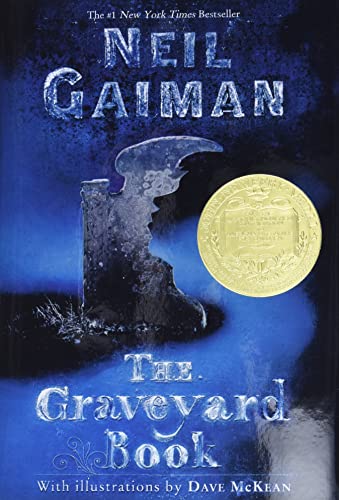
The original hardcover edition of a perennial favorite, The Graveyard Book by Neil Gaiman, which has sold more than one million copies and is the only novel to win both the Newbery Medal and the Carnegie Medal.
Bod is an unusual boy who inhabits an unusual place—he's the only living resident of a graveyard. Raised from infancy by the ghosts, werewolves, and other cemetery denizens, Bod has learned the antiquated customs of his guardians' time as well as their ghostly teachings—such as the ability to Fade so mere mortals cannot see him.
Can a boy raised by ghosts face the wonders and terrors of the worlds of both the living and the dead?
The Graveyard Book is the winner of the Newbery Medal, the Carnegie Medal, the Hugo Award for best novel, the Locus Award for Young Adult novel, the American Bookseller Association’s “Best Indie Young Adult Buzz Book,” a Horn Book Honor, and Audio Book of the Year.
"synopsis" may belong to another edition of this title.
About the Authors
Neil Gaiman is the New York Times bestselling and multi-award winning author and creator of many beloved books, graphic novels, short stories, film, television and theatre for all ages. He is the recipient of the Newbery and Carnegie Medals, and many Hugo, Nebula, World Fantasy, and Will Eisner Awards. Neil has adapted many of his works to television series, including Good Omens (co-written with Terry Pratchett) and The Sandman. He is a Goodwill Ambassador for the UN Refugee Agency UNHCR and Professor in the Arts at Bard College. For a lot more about his work, please visit: https://www.neilgaiman.com/
Dave McKean is best known for his work on Neil Gaiman's Sandman series of graphic novels and for his CD covers for musicians from Tori Amos to Alice Cooper. He also illustrated Neil Gaiman's picture books The Day I Swapped My Dad for Two Goldfish, The Wolves in the Walls, and Crazy Hair. He is a cult figure in the comic book world, and is also a photographer.
Margaret Atwood, whose work has been published in more than forty-five countries, is the author of over fifty books, including fiction, poetry, critical essays, and graphic novels. In addition to The Handmaid’s Tale, now an award-winning television series, her works include Cat’s Eye, short-listed for the 1989 Booker Prize; Alias Grace, which won the Giller Prize in Canada and the Premio Mondello in Italy; The Blind Assassin, winner of the 2000 Booker Prize; The MaddAddam Trilogy; The Heart Goes Last; Hag-Seed; The Testaments, which won the Booker Prize and was long-listed for the Giller Prize; and the poetry collection Dearly. She is the recipient of numerous awards, including the Peace Prize of the German Book Trade, the Franz Kafka International Literary Prize, the PEN Center USA Lifetime Achievement Award, and the Los Angeles Times Innovator’s Award. In 2019 she was made a member of the Order of the Companions of Honour in Great Britain for her services to literature. She lives in Toronto.
From the Back Cover
Nobody Owens, known to his friends as Bod, is a normal boy.
He would be completely normal if he didn't live in a sprawling graveyard, being raised and educated by ghosts, with a solitary guardian who belongs to neither the world of the living nor of the dead.
There are dangers and adventures in the graveyard for a boy-an ancient Indigo Man beneath the hill, a gateway to a desert leading to an abandoned city of ghouls, the strange and terrible menace of the Sleer.
But if Bod leaves the graveyard, then he will come under attack from the man Jack—who has already killed Bod's family. . . .
Beloved master storyteller Neil Gaiman returns with a luminous new novel for the audience that embraced his New York Times bestselling modern classic Coraline. Magical, terrifying, and filled with breathtaking adventures, the graveyard book is sure to enthrall readers of all ages.
Reviews
Grade 5–8—Somewhere in contemporary Britain, "the man Jack" uses his razor-sharp knife to murder a family, but the youngest, a toddler, slips away. The boy ends up in a graveyard, where the ghostly inhabitants adopt him to keep him safe. Nobody Owens, so named because he "looks like nobody but himself," grows up among a multigenerational cast of characters from different historical periods that includes matronly Mistress Owens; ancient Roman Caius Pompeius; an opinionated young witch; a melodramatic hack poet; and Bod's beloved mentor and guardian, Silas, who is neither living nor dead and has secrets of his own. As he grows up, Bod has a series of adventures, both in and out of the graveyard, and the threat of the man Jack who continues to hunt for him is ever present. Bod's love for his graveyard family and vice versa provide the emotional center, amid suspense, spot-on humor, and delightful scene-setting. The child Bod's behavior is occasionally too precocious to be believed, and a series of puns on the name Jack render the villain a bit less frightening than he should be, though only momentarily. Aside from these small flaws, however, Gaiman has created a rich, surprising, and sometimes disturbing tale of dreams, ghouls, murderers, trickery, and family.—Megan Honig, New York Public Library
Copyright © Reed Business Information, a division of Reed Elsevier Inc. All rights reserved.
Neil Gaiman's fantasies have entranced both younger readers and adults; this gothic fantasy, a coming-of-age story modeled after The Jungle Book and with slight nods to Harry Potter, will appeal to all ages. By juxtaposing the world of the dead with the world of the living, Gaiman creates a fantastical world where the thoughtful protagonist comes to understand the power of family as he experiences the fear, pains, confusions, and joys of growing up. Critics praised each illustrated chapter as its own little gem, with moments both tender and terrifying—and each equally exciting. The Graveyard Book is sure to become a book to last the ages.
Copyright 2008 Bookmarks Publishing LLC
*Starred Review* While a highly motivated killer murders his family, a baby, ignorant of the horrific goings-on but bent on independence, pulls himself out of his crib and toddles out of the house and into the night. This is most unfortunate for the killer, since the baby was his prime target. Finding his way through the barred fence of an ancient graveyard, the baby is discovered by Mr. and Mrs. Owens, a stable and caring couple with no children of their own—and who just happen to be dead. After much debate with the graveyard’s rather opinionated denizens, it is decided that the Owenses will take in the child. Under their care and the sponsorship of the mysterious Silas, the baby is named “Nobody” and raised among the dead to protect him from the killer, who relentlessly pursues him. This is an utterly captivating tale that is cleverly told through an entertaining cast of ghostly characters. There is plenty of darkness, but the novel’s ultimate message is strong and life affirming. Although marketed to the younger YA set, this is a rich story with broad appeal and is highly recommended for teens of all ages. Grades 6-10. --Holly Koelling
Excerpt. © Reprinted by permission. All rights reserved.
The Graveyard Book
By Neil GaimanHarperCollins Publishers, Inc.
Copyright © 2008 Neil GaimanAll right reserved.
ISBN: 9780060530921
Chapter One
How Nobody Came to the Graveyard
There was a hand in the darkness, and it held a knife.
The knife had a handle of polished black bone, and a blade finer and sharper than any razor. If it sliced you, you might not even know you had been cut, not immediately.
The knife had done almost everything it was brought to that house to do, and both the blade and the handle were wet.
The street door was still open, just a little, where the knife and the man who held it had slipped in, and wisps of nighttime mist slithered and twined into the house through the open door.
The man Jack paused on the landing. With his left hand he pulled a large white handkerchief from the pocket of his black coat, and with it he wiped off the knife and his gloved right hand which had been holding it; then he put the handkerchief away. The hunt was almost over. He had left the woman in her bed, the man on the bedroom floor, the older child in her brightly colored bedroom, surrounded by toys and half-finished models. That only left the little one, a baby barely a toddler, to take care of. One more and his task would be done.
He flexed his fingers. The man Jack was, above all things, a professional, or so he told himself, and he would not allow himself to smile until the job was completed.
His hair was dark and his eyes were dark and he wore black leather gloves of the thinnest lambskin.
The toddler's room was at the very top of the house. The man Jack walked up the stairs, his feet silent on the carpeting. Then he pushed open the attic door, and he walked in. His shoes were black leather, and they were polished to such a shine that they looked like dark mirrors: you could see the moon reflected in them, tiny and half full.
The real moon shone through the casement window. Its light was not bright, and it was diffused by the mist, but the man Jack would not need much light. The moonlight was enough. It would do.
He could make out the shape of the child in the crib, head and limbs and torso.
The crib had high, slatted sides to prevent the child from getting out. Jack leaned over, raised his right hand, the one holding the knife, and he aimed for the chest . . .
. . . and then he lowered his hand. The shape in the crib was a teddy bear. There was no child.
The man Jack's eyes were accustomed to the dim moonlight, so he had no desire to turn on an electric light. And light was not that important, after all. He had other skills.
The man Jack sniffed the air. He ignored the scents that had come into the room with him, dismissed the scents that he could safely ignore, honed in on the smell of the thing he had come to find. He could smell the child: a milky smell, like chocolate chip cookies, and the sour tang of a wet, disposable, nighttime diaper. He could smell the baby shampoo in its hair, and something small and rubbery—a toy, he thought, and then, no, something to suck—that the child had been carrying.
The child had been here. It was here no longer. The man Jack followed his nose down the stairs through the middle of the tall, thin house. He inspected the bathroom, the kitchen, the airing cupboard, and, finally, the downstairs hall, in which there was nothing to be seen but the family's bicycles, a pile of empty shopping bags, a fallen diaper, and the stray tendrils of fog that had insinuated themselves into the hall from the open door to the street.
The man Jack made a small noise then, a grunt that contained in it both frustration and also satisfaction. He slipped the knife into its sheath in the inside pocket of his long coat, and he stepped out into the street. There was moonlight, and there were streetlights, but the fog stifled everything, muted light and muffled sound and made the night shadowy and treacherous. He looked down the hill towards the light of the closed shops, then up the street, where the last high houses wound up the hill on their way to the darkness of the old graveyard.
The man Jack sniffed the air. Then, without hurrying, he began to walk up the hill.
Ever since the child had learned to walk he had been his mother's and father's despair and delight, for there never was such a boy for wandering, for climbing up things, for getting into and out of things. That night, he had been woken by the sound of something on the floor beneath him falling with a crash. Awake, he soon became bored, and had begun looking for a way out of his crib. It had high sides, like the walls of his playpen downstairs, but he was convinced that he could scale it. All he needed was a step . . .
He pulled his large, golden teddy bear into the corner of the crib, then, holding the railing in his tiny hands, he put his foot onto the bear's lap, the other foot up on the bear's head, and he pulled himself up into a standing position, and then he half-climbed, half-toppled over the railing and out of the crib.
He landed with a muffled thump on a small mound of furry, fuzzy toys, some of them presents from relations from his first birthday, not six months gone, some of them inherited from his older sister. He was surprised when he hit the floor, but he did not cry out: if you cried they came and put you back in your crib.
He crawled out of the room.
Continues...
Excerpted from The Graveyard Bookby Neil Gaiman Copyright © 2008 by Neil Gaiman. Excerpted by permission.
All rights reserved. No part of this excerpt may be reproduced or reprinted without permission in writing from the publisher.
Excerpts are provided by Dial-A-Book Inc. solely for the personal use of visitors to this web site.
"About this title" may belong to another edition of this title.
Search results for The Graveyard Book

Stock Image
The Graveyard Book
Published by
HarperCollins Publishers Inc, 2008
ISBN 10: 0060530928
ISBN 13: 9780060530921
Used
Hardcover
Seller: World of Books (was SecondSale), Montgomery, IL, U.S.A.
Seller rating 5 out of 5 stars

Hardback. Condition: Fair. McKean, Dave (illustrator). The original hardcover edition of a perennial favorite, The Graveyard Book by Neil Gaiman, which has sold more than one million copies and is the only novel to win both the Newbery Medal and the Carnegie Medal. Bod is an unusual boy who inhabits an unusual place--he's the only living resident of a graveyard. Raised from infancy by the ghosts, werewolves, and other cemetery denizens, Bod has learned the antiquated customs of his guardians' time as well as their ghostly teachings--such as the ability to Fade so mere mortals cannot see him. Can a boy raised by ghosts face the wonders and terrors of the worlds of both the living and the dead? The Graveyard Book is the winner of the Newbery Medal, the Carnegie Medal, the Hugo Award for best novel, the Locus Award for Young Adult novel, the American Bookseller Association's "Best Indie Young Adult Buzz Book," a Horn Book Honor, and Audio Book of the Year. Seller Inventory # 00080875039
Stock Image
The Graveyard Book
Published by
HarperCollins Publishers Inc, 2008
ISBN 10: 0060530928
ISBN 13: 9780060530921
Used
Hardcover
Seller: World of Books (was SecondSale), Montgomery, IL, U.S.A.
Seller rating 5 out of 5 stars
Hardback. Condition: Good. McKean, Dave (illustrator). The original hardcover edition of a perennial favorite, The Graveyard Book by Neil Gaiman, which has sold more than one million copies and is the only novel to win both the Newbery Medal and the Carnegie Medal. Bod is an unusual boy who inhabits an unusual place--he's the only living resident of a graveyard. Raised from infancy by the ghosts, werewolves, and other cemetery denizens, Bod has learned the antiquated customs of his guardians' time as well as their ghostly teachings--such as the ability to Fade so mere mortals cannot see him. Can a boy raised by ghosts face the wonders and terrors of the worlds of both the living and the dead? The Graveyard Book is the winner of the Newbery Medal, the Carnegie Medal, the Hugo Award for best novel, the Locus Award for Young Adult novel, the American Bookseller Association's "Best Indie Young Adult Buzz Book," a Horn Book Honor, and Audio Book of the Year. Seller Inventory # 00099893395
Stock Image
The Graveyard Book
Seller: Orion Tech, Kingwood, TX, U.S.A.
Seller rating 5 out of 5 stars
Hardcover. Condition: Good. McKean, Dave (illustrator). Seller Inventory # 0060530928-3-19347069
Stock Image
The Graveyard Book
Seller: Your Online Bookstore, Houston, TX, U.S.A.
Seller rating 5 out of 5 stars
Hardcover. Condition: Good. McKean, Dave (illustrator). Seller Inventory # 0060530928-3-20806197
Stock Image
The Graveyard Book
Seller: Gulf Coast Books, Cypress, TX, U.S.A.
Seller rating 5 out of 5 stars
Hardcover. Condition: Fair. McKean, Dave (illustrator). Seller Inventory # 0060530928-4-19954714
Seller Image
The Graveyard Book
Seller: Dream Books Co., Denver, CO, U.S.A.
Seller rating 5 out of 5 stars
Condition: acceptable. McKean, Dave (illustrator). This copy has clearly been enjoyedâ"expect noticeable shelf wear and some minor creases to the cover. Binding is strong, and all pages are legible. May contain previous library markings or stamps. Seller Inventory # DBV.0060530928.A
Seller Image
The Graveyard Book
Seller: 3Brothers Bookstore, Egg harbor township, NJ, U.S.A.
Seller rating 5 out of 5 stars
Condition: good. McKean, Dave (illustrator). Books may contain some notes and highlighting. Supplements such as Access Codes, Cd's Dust Jackets, etc. are not guaranteed with used book purchases. Seller Inventory # EVV.0060530928.G
Seller Image
The Graveyard Book
Seller: Zoom Books East, Glendale Heights, IL, U.S.A.
Seller rating 5 out of 5 stars
Condition: good. McKean, Dave (illustrator). Book is in good condition and may include underlining highlighting and minimal wear. The book can also include "From the library of" labels. May not contain miscellaneous items toys, dvds, etc. . We offer 100% money back guarantee and 24 7 customer service. Seller Inventory # ZEV.0060530928.G
Seller Image
The Graveyard Book
Seller: Zoom Books Company, Lynden, WA, U.S.A.
Seller rating 5 out of 5 stars
Condition: very_good. McKean, Dave (illustrator). Book is in very good condition and may include minimal underlining highlighting. The book can also include "From the library of" labels. May not contain miscellaneous items toys, dvds, etc. . We offer 100% money back guarantee and 24 7 customer service. Seller Inventory # ZBV.0060530928.VG
Seller Image
The Graveyard Book
Seller: Zoom Books East, Glendale Heights, IL, U.S.A.
Seller rating 5 out of 5 stars
Condition: very_good. McKean, Dave (illustrator). Book is in very good condition and may include minimal underlining highlighting. The book can also include "From the library of" labels. May not contain miscellaneous items toys, dvds, etc. . We offer 100% money back guarantee and 24 7 customer service. Seller Inventory # ZEV.0060530928.VG