
Synopsis
“Erdrich is a true original… [and] one of our major writers: She illuminates large swaths of U.S. history and culture, and [The Red Covertible] is a good demonstration of her compelling stylistic innovations, not to mention her literary cunning.” —Washington Post Book World
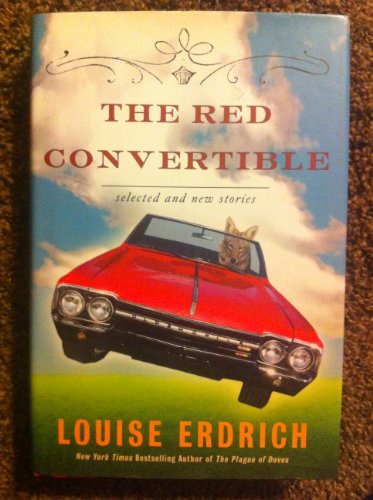
From New York Times bestselling author Louise Erdrich, fresh off her acclaimed Pulitzer-Prize finalist The Plague of Doves, comes The Red Convertible, a stunning collection of short stories selected by the author herself from over three decades of work. A veritable masterclass in the art of short fiction, The Red Convertible features 31 previously published stories and 5 never-before-published pieces. Presented in one collection for the first time, the stories of The Red Convertible cement Louise Erdich’s position in the pantheon of consummate, innovative writers of the American short story alongside such luminaries as Flannery O’Connor and Charles Baxter.
"synopsis" may belong to another edition of this title.
About the Author
Louise Erdrich, a member of the Turtle Mountain Band of Chippewa, is the award-winning author of many novels as well as volumes of poetry, children’s books, and a memoir of early motherhood. Erdrich lives in Minnesota with her daughters and is the owner of Birchbark Books, a small independent bookstore.
From the Back Cover
This unique volume brings together for the first time three decades of short stories by one of the most innovative and exciting writers of our day. A master of the genre, Louise Erdrich has selected these pieces—thirty works that first appeared in magazines as well as six unpublished stories—from among a much larger oeuvre. She has ordered them chronologically but also by theme and voice.
Erdrich is a fearless and inventive writer. In her fictional world, the mystical can emerge from the everyday, the comic turn suddenly tragic, and violence and beauty inhabit a single emotional landscape. Each character in these stories is full of surprises, and the twists and leaps of Erdrich's imagination are made all the more meaningful by the deeper truth of human feeling that underlies them.
In "Saint Marie," the ardent longing that propels a fourteen-year-old Indian girl up the hill to the Sacred Heart Convent and into a life-and-death struggle with the diabolical Sister Leopolda fuels a story of breathtaking power and originality. "Knives" tells of a homely butcher's assistant, a devoted reader of love stories, who falls for a good-looking predator, a traveling salesman, with devastating consequences for each of them. "Le Mooz" evokes the stinging flames of passion in old age—"Margaret had exhausted three husbands, and Nanapush had outlived his six wives"—with unexpected humor that turns suddenly bittersweet at the story's close. A passion for music in "Naked Woman Playing Chopin" proves more powerful than any experience of carnal or spiritual love; indeed, when Agnes DeWitt removes her clothing to enter the music of a particular composer, she sweeps all before her and transcends mortality and time itself.
In The Red Convertible, readers can follow the evolution of narrative styles, the shifts and metamorphoses in Erdrich's fiction, over the past thirty years. These stories, spellbinding in their boldness and beauty, are a stunning literary achievement.
Reviews
From The Washington Post's Book World/washingtonpost.com Reviewed by Valerie Sayers It has been 25 years since Louise Erdrich published the first of her vibrant novels -- or was that really a novel in the first place? Love Medicine, set on a Chippewa reservation in North Dakota, was told from a number of perspectives over many years, and some critics argued at the time that it was more properly described as a collection of stories. But Erdrich's use of multiple narrative voices has been, from the beginning, a fruitful choice. Besides, she hardly invented the concept of multiple narrative voices; her literary kinship with Faulkner in particular is apparent. Erdrich -- of mixed ancestry including German, Chippewa and French forebears -- has over the years created a Midwestern territory situated somewhere between the borders of realism and fanciful mythopoeticism. Hers is a place where Native and immigrant Americans live in uneasy proximity, where a single voice or angle of vision can't begin to reconstruct the whole tale, where characters make cameo appearances in multiple novels rather than play the starring role. You can call her slicing up of the story "postmodern" -- many have -- but Erdrich is a true original, and labels won't do justice to the oddness, wit and ferocity of her fiction. Now she has gathered a few new stories and many previously published as chapters in novels into a single volume that makes her work seem more modular than ever. Most of the pieces in The Red Convertible stand perfectly well on their own and resonate, in this arrangement, in new ways. If multiple voices seemed particularly apt 25 years ago, the recycling here is downright inspired. Short stories have a special punch, and though this is a long collection, many of these stories have that power. Erdrich's North Dakota and Minnesota settings, on and off the reservation, yield rich anthropological and political themes (the first story, "The Red Convertible," concerns a young Indian back from Vietnam). The myths and traditions of a people, whether Chippewa or German, inform the rich cadences of her storytelling. Short stories also enable her to concentrate on individuals and the singular pain that comes from poverty or alcoholism or sexual despair. Humiliation is a recurrent theme, but so is pride: Margaret Kashpaw, as punishment for her opposition to a treaty settlement, is attacked and shaved bald. But Margaret flaunts her baldness, just as Ojibwe men "press a sharp crease down the front of their blue jeans" to show that "although the government has tried in every way possible to destroy their manhood, they are undefeatable." One of the qualities that have made Erdrich's writing so attractive is the strutting sureness of her formulations -- "Owehzhee. We still look good and we know it" -- and another is her humor, dry and wry in equal measure. That humor is often aimed at two sensitive subjects: Christianity and sexuality. Religion is treated as, alternately, a consoling tradition and a construct designed for whites to wield power. One of Erdrich's most appalling, fascinating and funny creations is Sister Leopolda of "Saint Marie" (though she recurs in the novels, readers of these stories will get one good strong dose of her). Another is Father Damien, whose evolution as both religious and sexually ambiguous character is hinted at here. Indeed, sexuality and gender roles among both whites and Indians have always been key themes for Erdrich. Women often act outside their assigned roles, but here -- especially in the later stories -- men take on strange duties, none more so than the suckling of a baby girl accomplished by a runaway soldier in "Father's Milk." The later stories (and the novels in which they appear) explore sexuality in broadly humorous ways: The love struggles between the aging Margaret and Nanapush in "Le Mooz" are pathetic, touching, funny, even thrilling. Although despair, death and suicide take their toll again and again, these stories focus on the dignity that can accompany struggle, on the human capacity to embrace and forgive. Chippewa women often embody this graciousness, but white women too can exude wisdom: No woman is more dignified than the dying Eva, of "The Butcher's Wife." Erdrich doesn't flinch when she eyes the trials of motherhood, and some of the last stories pay special tribute to the mothers of middle-aged women. Erdrich has revisited her fiction before -- she revised and published a new edition of Love Medicine in 1993 -- a habit that points out her kinship to Faulkner in yet another way. Whether the decision to gather these stories was commercial, literary or both, I'm glad she's done it, even if not all of them are entirely successful in this context. "The Blue Velvet Box," which was published as a story before it made its appearance in the novel "The Beet Queen," is as powerful as ever, but seems here more of an introduction than a world unto itself. Midway through the collection, stories like "The Crest," are clever conceptually but written from an emotional distance unusual for Erdrich. The wonder, of course, is that so many of these pieces could be quilted together in the first place, much less ripped apart and re-stitched to such strong effect. Erdrich is one of our major writers: She illuminates large swaths of U.S. history and culture, and this volume is a good demonstration of her compelling stylistic innovations, not to mention her literary cunning.
Copyright 2009, The Washington Post. All Rights Reserved.
In this retrospective anthology, Louise Erdrich interweaves history, myth, tragedy, comedy, earthiness, spirituality, sensitivity, and violence—creating a "magnificent feast" from this "all-you-can-eat buffet of stories" (Baltimore Sun). Critics praised Erdrich's wry humor, vivid, lyrical language, and extraordinary ability to distill entire lives and family histories into a few pages. Fans of Erdrich will welcome old friends such as Gerry Nanapush, Margaret Kashpaw, and Fleur Pillager, while newcomers will find these stories a warm and hospitable place to start. Though the Milwaukee Journal Sentinel considered her newer stories less compelling—partly because of the absence of Erdrich's poetic Native American characters and settings—the other critics enjoyed them. These powerful, evocative stories are an eloquent tribute to Erdrich's career to date.
Copyright 2009 Bookmarks Publishing LLC
Starred Review. Masculine women, gorgeous sports cars rich with family history, rugged plains, river currents, stubbornness and entropy wend through this spellbinding collection of ten new and 26 previously published stories from prolific Midwestern author Erdrich (The Plague of Doves). Many of Erdrich's protagonists are American Indians (Chipewa, Kapshaw, and Ojibwe feature prominently) of mixed ancestry (French, German, etc.) and difficult means. Erdrich's character-driven stories are rooted in the mystery of the everyday, stretched across the bones of folklore but cured in the brine of modern life: "as an Indian," Gerry finds it " difficult... to retain the good humor of his ancestors in these modern circumstances"; another protagonist concludes that "the only interesting Indian is dead, or dying by falling backwards off a horse." Absurdity and a strained sense of humor keep Eldrich's closely observed tales fresh, making it clear that the life of an "interesting Indian" takes many shapes. An exquisite anthology, this volume should cement Erdrich's reputation as one of contemporary America's best short fiction writers.
Copyright © Reed Business Information, a division of Reed Elsevier Inc. All rights reserved.
*Starred Review* This collection spanning 30 years brings together for the first time the inventive Erdrich’s short stories, many of which provided the groundwork for her dozen novels. Of the 36 stories included, most have been previously published, but there are also 6 new tales. The stories are laid out in chronological order and give readers the full breadth of Erdrich’s meticulously drawn world, one on a par with Faulkner’s fictional Yoknapatawpha County, although for Erdrich, the theme of endurance takes on a special significance, placed as it is within the context of an Ojibwa reservation in North Dakota, where Native Americans struggle mightily to prevent the decimation of their culture. Like Faulkner, Erdrich combines a supple, poetic style with a vividly realized setting and unforgettable characters, often setting up complex, interlocking narratives. Readers familiar with her novels will be stunned once again by the sheer virtuosity of her storytelling. Here, on rich display, are characters from the principal families in Erdrich’s world as well as those who haunt them: sadistic Sister Leopolda, the pie-making Kashpaw sisters and their alcoholic men, enigmatic Fleur Pillager, the bingo-playing Lipsha Morrissey, and aged and comical wise man Nanapush and his stubborn wife, Margaret. Erdrich effortlessly conveys her characters’ earthy humor, drunken despair, and ever-present spirituality, making their struggles at once particular and universal. What makes Erdrich such a mesmerizing storyteller, though, is the way she so fearlessly explores and expresses human emotion. A must-have for serious fiction collections. --Joanne Wilkinson
"About this title" may belong to another edition of this title.
Other Popular Editions of the Same Title

Search results for The Red Convertible: Selected and New Stories, 1978-2008

Stock Image
The Red Convertible: Selected and New Stories, 1978-2008
Seller: BooksRun, Philadelphia, PA, U.S.A.
Seller rating 5 out of 5 stars

Hardcover. Condition: Very Good. 1. With dust jacket. It's a well-cared-for item that has seen limited use. The item may show minor signs of wear. All the text is legible, with all pages included. It may have slight markings and/or highlighting. Seller Inventory # 0061536075-11-1-29
Stock Image
The Red Convertible: Selected and New Stories, 1978-2008
Seller: Wonder Book, Frederick, MD, U.S.A.
Seller rating 5 out of 5 stars
Condition: Very Good. Very Good condition. Very Good dust jacket. With remainder mark. A copy that may have a few cosmetic defects. May also contain light spine creasing or a few markings such as an owner's name, short gifter's inscription or light stamp. Seller Inventory # A07N-00253
Seller Image
The Red Convertible: Selected and New Stories, 1978-2008
Seller: Goodwill of Colorado, COLORADO SPRINGS, CO, U.S.A.
Seller rating 5 out of 5 stars
Condition: good. All pages and cover are intact. Dust jacket included if applicable, though it may be missing on hardcover editions. Spine and cover may show minor signs of wear including scuff marks, curls or bends to corners as well as cosmetic blemishes including stickers. Pages may contain limited notes or highlighting. "From the library of" labels may be present. Shrink wrap, dust covers, or boxed set packaging may be missing. Bundled media e.g., CDs, DVDs, access codes may not be included. Seller Inventory # COLV.0061536075.G
Stock Image
The Red Convertible : Selected and New Stories, 1978-2008
Published by
HarperCollins Publishers, 2009
ISBN 10: 0061536075
ISBN 13: 9780061536076
Used
Hardcover
First Edition
Seller: Better World Books, Mishawaka, IN, U.S.A.
Seller rating 5 out of 5 stars
Condition: Good. 1st Edition. Pages intact with minimal writing/highlighting. The binding may be loose and creased. Dust jackets/supplements are not included. Stock photo provided. Product includes identifying sticker. Better World Books: Buy Books. Do Good. Seller Inventory # 9152478-75
Stock Image
The Red Convertible : Selected and New Stories, 1978-2008
Published by
HarperCollins Publishers, 2009
ISBN 10: 0061536075
ISBN 13: 9780061536076
Used
Hardcover
First Edition
Seller: Better World Books, Mishawaka, IN, U.S.A.
Seller rating 5 out of 5 stars
Condition: Good. 1st Edition. Former library copy. Pages intact with minimal writing/highlighting. The binding may be loose and creased. Dust jackets/supplements are not included. Includes library markings. Stock photo provided. Product includes identifying sticker. Better World Books: Buy Books. Do Good. Seller Inventory # 2193709-6
Stock Image
The Red Convertible: Selected and New Stories, 1978-2008
Seller: Wonder Book, Frederick, MD, U.S.A.
Seller rating 5 out of 5 stars
Condition: Very Good. Very Good condition. Good dust jacket. With remainder mark. A copy that may have a few cosmetic defects. May also contain light spine creasing or a few markings such as an owner's name, short gifter's inscription or light stamp. Seller Inventory # E05A-02985
Stock Image
The Red Convertible: Selected and New Stories, 1978-2008
Seller: Wonder Book, Frederick, MD, U.S.A.
Seller rating 5 out of 5 stars
Condition: Very Good. Very Good condition. Very Good dust jacket. A copy that may have a few cosmetic defects. May also contain light spine creasing or a few markings such as an owner's name, short gifter's inscription or light stamp. Seller Inventory # Z03B-02931
Stock Image
The Red Convertible: Selected and New Stories, 1978-2008
Seller: ThriftBooks-Atlanta, AUSTELL, GA, U.S.A.
Seller rating 5 out of 5 stars
Hardcover. Condition: Good. No Jacket. Former library book; Pages can have notes/highlighting. Spine may show signs of wear. ~ ThriftBooks: Read More, Spend Less. Seller Inventory # G0061536075I3N10
Stock Image
The Red Convertible: Selected and New Stories, 1978-2008
Seller: HPB-Diamond, Dallas, TX, U.S.A.
Seller rating 5 out of 5 stars
Hardcover. Condition: Very Good. Connecting readers with great books since 1972! Used books may not include companion materials, and may have some shelf wear or limited writing. We ship orders daily and Customer Service is our top priority! Seller Inventory # S_438829587
Stock Image
The Red Convertible: Selected and New Stories, 1978-2008
Seller: HPB-Ruby, Dallas, TX, U.S.A.
Seller rating 5 out of 5 stars
hardcover. Condition: Very Good. Connecting readers with great books since 1972! Used books may not include companion materials, and may have some shelf wear or limited writing. We ship orders daily and Customer Service is our top priority! Seller Inventory # S_454332835