
Synopsis
Two of the most important Buddhist tracts from Japan
A Penguin Classic
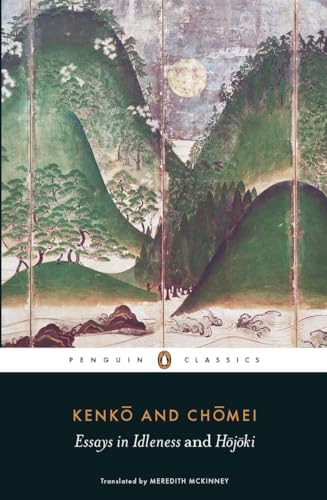
Both of these works on life’s fleeting pleasures are by Buddhist monks from medieval Japan, but each represents a different worldview. In Essays in Idleness, his lively and sometimes ribald collection of anecdotes, advice, and observations, Kenko displays his fascination with earthly matters. In the short memoir Hojoki, or The Ten Foot Square Hut, however, Chomei recounts his decision to withdraw from worldly affairs and live as a hermit.
For more than seventy years, Penguin has been the leading publisher of classic literature in the English-speaking world. With more than 1,700 titles, Penguin Classics represents a global bookshelf of the best works throughout history and across genres and disciplines. Readers trust the series to provide authoritative texts enhanced by introductions and notes by distinguished scholars and contemporary authors, as well as up-to-date translations by award-winning translators.
"synopsis" may belong to another edition of this title.
About the Author
KENKO (1238-?) was born in Kyoto. He became a monk probably in his late twenties, and was also noted as a calligrapher. Today he is remembered for his wise and witty aphorisms.
CHOMEI (1155-1216) was born into a family of Shinto priests at at time when the stable world of the court was rapidly breaking up. He became an important poet of his day, and at the age of fifty withdrew from the world to become a tonsured monk.
MEREDITH McKINNEY (translator / introducer) is a translator of Japanese literature, both contemporary and classical, and has translated The Pillow Book and Kokoro for Penguin Classics. She lived in Japan for twenty years and is currently a visiting fellow at the Australian National University in Canberra.
"About this title" may belong to another edition of this title.
Search results for Essays in Idleness and Hojoki (Penguin Classics)

Seller Image
Essays in Idleness and Hojoki
Seller: GreatBookPrices, Columbia, MD, U.S.A.
Seller rating 5 out of 5 stars

Condition: good. May show signs of wear, highlighting, writing, and previous use. This item may be a former library book with typical markings. No guarantee on products that contain supplements Your satisfaction is 100% guaranteed. Twenty-five year bookseller with shipments to over fifty million happy customers. Seller Inventory # 18565487-5
Stock Image
Essays in Idleness and Hojoki (Penguin Classics)
Seller: World of Books (was SecondSale), Montgomery, IL, U.S.A.
Seller rating 5 out of 5 stars
Condition: Good. Item in good condition. Textbooks may not include supplemental items i.e. CDs, access codes etc. Seller Inventory # 00105577695
Seller Image
Essays in Idleness and Hojoki (Penguin Classics)
Seller: -OnTimeBooks-, Phoenix, AZ, U.S.A.
Seller rating 5 out of 5 stars
Condition: very_good. Gently read. May have name of previous ownership, or ex-library edition. Binding tight; spine straight and smooth, with no creasing; covers clean and crisp. Minimal signs of handling or shelving. 100% GUARANTEE! Shipped with delivery confirmation, if you're not satisfied with purchase please return item! Ships USPS Media Mail. Seller Inventory # OTV.0141192100.VG
Seller Image
Essays in Idleness and Hojoki (Penguin Classics)
Seller: Goodwill of Central and Coastal Virginia, Richmond, VA, U.S.A.
Seller rating 3 out of 5 stars

Condition: acceptable. Seller Inventory # CCVV.0141192100.A
Stock Image
Essays in Idleness and Hojoki
Seller: GreatBookPrices, Columbia, MD, U.S.A.
Seller rating 5 out of 5 stars
Condition: New. Seller Inventory # 18565487-n
Seller Image
Essays in Idleness
Seller: Rarewaves.com USA, London, LONDO, United Kingdom
Seller rating 5 out of 5 stars
Paperback. Condition: New. These two works on life's fleeting pleasures are by Buddhist monks from medieval Japan, but each shows a different world-view. In the short memoir Hôjôki, Chômei recounts his decision to withdraw from worldly affairs and live as a hermit in a tiny hut in the mountains, contemplating the impermanence of human existence. Kenko, however, displays a fascination with more earthy matters in his collection of anecdotes, advice and observations. From ribald stories of drunken monks to aching nostalgia for the fading traditions of the Japanese court, Essays in Idleness is a constantly surprising work that ranges across the spectrum of human experience. Meredith McKinney's excellent new translation also includes notes and an introduction exploring the spiritual and historical background of the works.Chômei was born into a family of Shinto priests in around 1155, at at time when the stable world of the court was rapidly breaking up. He became an important though minor poet of his day, and at the age of fifty, withdrew from the world to become a tonsured monk. He died in around 1216.Kenkô was born around 1283 in Kyoto. He probably became a monk in his late twenties, and was also noted as a calligrapher. Today he is remembered for his wise and witty aphorisms, 'Essays in Idleness'.Meredith McKinney, who has also translated Sei Shonagon's The Pillow Book for Penguin Classics, is a translator of both contemporary and classical Japanese literature. She lived in Japan for twenty years and is currently a visitng fellow at the Australian National University in Canberra.'[Essays in Idleness is] a most delightful book, and one that has served as a model of Japanese style and taste since the 17th century. These cameo-like vignettes reflect the importance of the little, fleeting futile things, and each essay is Kenko himself' Asian Student. Seller Inventory # LU-9780141192109
Buy New
US$ 15.05
Free Shipping
Ships from United Kingdom to U.S.A.
Ships from United Kingdom to U.S.A.
Quantity: 4 available
Stock Image
Essays in Idleness
Seller: PBShop.store US, Wood Dale, IL, U.S.A.
Seller rating 5 out of 5 stars
PAP. Condition: New. New Book. Shipped from UK. Established seller since 2000. Seller Inventory # GB-9780141192109
Stock Image
Essays in Idleness and Hojoki (Penguin Classics)
Seller: Lakeside Books, Benton Harbor, MI, U.S.A.
Seller rating 5 out of 5 stars
Condition: New. Brand New! Not Overstocks or Low Quality Book Club Editions! Direct From the Publisher! We're not a giant, faceless warehouse organization! We're a small town bookstore that loves books and loves it's customers! Buy from Lakeside Books! Seller Inventory # OTF-S-9780141192109
Seller Image
Essays in Idleness and Hojoki (Paperback or Softback)
Published by
Penguin Books 7/29/2014, 2014
ISBN 10: 0141192100
ISBN 13: 9780141192109
New
Paperback or Softback
Seller: BargainBookStores, Grand Rapids, MI, U.S.A.
Seller rating 5 out of 5 stars
Paperback or Softback. Condition: New. Essays in Idleness and Hojoki. Book. Seller Inventory # BBS-9780141192109
Seller Image
Essays in Idleness
Seller: Rarewaves USA, OSWEGO, IL, U.S.A.
Seller rating 5 out of 5 stars
Paperback. Condition: New. These two works on life's fleeting pleasures are by Buddhist monks from medieval Japan, but each shows a different world-view. In the short memoir Hôjôki, Chômei recounts his decision to withdraw from worldly affairs and live as a hermit in a tiny hut in the mountains, contemplating the impermanence of human existence. Kenko, however, displays a fascination with more earthy matters in his collection of anecdotes, advice and observations. From ribald stories of drunken monks to aching nostalgia for the fading traditions of the Japanese court, Essays in Idleness is a constantly surprising work that ranges across the spectrum of human experience. Meredith McKinney's excellent new translation also includes notes and an introduction exploring the spiritual and historical background of the works.Chômei was born into a family of Shinto priests in around 1155, at at time when the stable world of the court was rapidly breaking up. He became an important though minor poet of his day, and at the age of fifty, withdrew from the world to become a tonsured monk. He died in around 1216.Kenkô was born around 1283 in Kyoto. He probably became a monk in his late twenties, and was also noted as a calligrapher. Today he is remembered for his wise and witty aphorisms, 'Essays in Idleness'.Meredith McKinney, who has also translated Sei Shonagon's The Pillow Book for Penguin Classics, is a translator of both contemporary and classical Japanese literature. She lived in Japan for twenty years and is currently a visitng fellow at the Australian National University in Canberra.'[Essays in Idleness is] a most delightful book, and one that has served as a model of Japanese style and taste since the 17th century. These cameo-like vignettes reflect the importance of the little, fleeting futile things, and each essay is Kenko himself' Asian Student. Seller Inventory # LU-9780141192109