
Synopsis
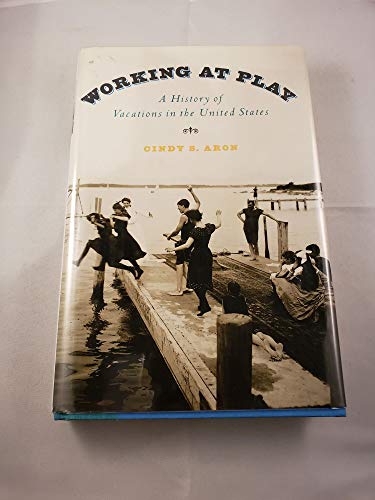
No one works harder at playing than Americans. Indeed, as Cindy Aron reveals in this intriguing account, the American vacation has seen a constant tension between labor and leisure, especially in the 19th and early 20th century, when we often struggled to protect ourselves from the sin of idleness.
In Working at Play, Aron offers the first full length history of how Americans have vacationed--from eighteenth-century planters who summered in Newport to twentieth-century urban workers who headed for camps in the hills. In the early nineteenth century, Aron shows, vacations were taken for health more than for fun, as the wealthy traveled to watering places, seeking cures for everything from consumption to rheumatism. But starting in the 1850s, the growth of a white collar middle class and the expansion of railroads made vacationing a mainstream activity. Aron charts this growth with grace and insight, tracing the rise of new vacation spots as the nation and the middle class blossomed. She shows how late nineteenth-century resorts became centers of competitive sports. Bowling, tennis, golf, hiking, swimming, and boating absorbed the hours. But as vacationing grew, she writes, fears of the dangers of idleness bloomed with it. Self improvement vacations flourished; religious camp grounds became established resorts, where gambling, drinking, and bathing on Sunday were banned. Asbury Park, named after Francis Asbury, the first American Methodist bishop, quickly became one of the most popular getaways for the devout.
With vivid detail and much insight, Working at Play offers a lively history of the vacation, throwing new light on the place of work and rest in American culture.
"synopsis" may belong to another edition of this title.
About the Author
Cindy S. Aron is the author of Ladies and Gentlemen of the Civil Service: Middle Class Workers in Victorian America, and is Professor of History at the University of Virginia. She lives in Richmond, Virginia.
Reviews
An interesting if somewhat academic social history of the American vacation that examines the tension between the American work ethic and the concept of leisure. Aron, a University of Virginia historian, explores the development of the American vacation from the early 19th century to WWII. Prior to 1865, vacations were taken exclusively by the wealthy and justified for health reasons. A doctor might recommend a stay at the seashore or a mineral spring for restoring health: ``change of air . . . could, some physicians felt, mitigate or even cure some diseases, among them consumption, asthma, gout, and rheumatism.'' Places with clean air and mineral water, such as Saratoga Springs (N.Y.), Hot Springs (Va.), and Newport (R.I.), became meccas for 19th-century American vacationers. To entice more visitors, these ``restorative'' resorts began offering various amusements like billiards, bowling, gambling, dances, and concerts. With their wealthy clientele and leisurely amusements, these ``fashionable'' resorts became centers of gossip and dissolution, according to the popular press. Meanwhile, religious leaders condemned the decadence of these resorts while setting up religious retreats and campsites. At Chautauqua, N.Y., a Methodist minister established a resort for training Sunday school teachers. These religiously motivated resorts typically restricted alcohol, smoking, dancing, and flirting. The Chautauqua model of vacation resorts dedicated to sober self-improvement was copied all over the nation. After the Civil War, railroads and travel agencies made vacationing easier, cheaper, and widely accessible to the middle class. Wary of the idleness and frivolity of fashionable resorts, the middle class turned to camping, touring, chautauquas, and the national parks. In the early 20th century, companies began giving paid vacations to workers as a means of boosting morale and productivity. Long excluded from most resorts, African-Americans and Jews began setting up their own vacation resorts. Alas, the historic tension of which Aron writes between work and fun is evident in her own prose, which is thoroughly scholarly. Readers, like vacationers, want some entertainment, too. -- Copyright ©1999, Kirkus Associates, LP. All rights reserved.
Most Americans take taking a vacation for granted, but in this fascinating study Aron shows that the idea of taking time away from work for leisure is a relatively recent development. Aron, an associate professor of history, portrayed the rise of a new social and economic class with Ladies and Gentlemen of the Civil Service: Middle-Class Workers in Victorian America. Now she traces the growth of vacationing as a family and a social ritual. Beginning from when vacations were the privilege of the early nineteenth-century elite, she chronicles how vacations became a middle-class custom. Because one of Aron's interests is in how vacation resorts themselves became agents of change, she limits her survey to vacations taken within the U.S. and concludes it at the beginning of World War II. She also suggests that vacations stirred "cultural anxieties," that many "struggled with the notion of taking time off from work." Aron shows how many vacations were devoted to intellectual, religious, and therapeutic activities. David Rouse
"About this title" may belong to another edition of this title.
Other Popular Editions of the Same Title

Search results for Working At Play: A History of Vacations in the United...

Stock Image
Working at Play A History of V
Published by
Oxford University Press, 1999
ISBN 10: 0195055845
ISBN 13: 9780195055849
Used
Hardcover
Seller: World of Books (was SecondSale), Montgomery, IL, U.S.A.
Seller rating 5 out of 5 stars

Condition: Good. Good condition ex-library book with usual library markings and stickers. Seller Inventory # 00099295224
Stock Image
Working at Play A History of V
Published by
Oxford University Press, 1999
ISBN 10: 0195055845
ISBN 13: 9780195055849
Used
Hardcover
Seller: World of Books (was SecondSale), Montgomery, IL, U.S.A.
Seller rating 5 out of 5 stars
Condition: Very Good. Item in very good condition! Textbooks may not include supplemental items i.e. CDs, access codes etc. Seller Inventory # 00104518454
Stock Image
Working at Play : A History of Vacations in the United States
Published by
Oxford University Press, Incorporated, 1999
ISBN 10: 0195055845
ISBN 13: 9780195055849
Used
Hardcover
Seller: Better World Books, Mishawaka, IN, U.S.A.
Seller rating 5 out of 5 stars
Condition: Very Good. Pages intact with possible writing/highlighting. Binding strong with minor wear. Dust jackets/supplements may not be included. Stock photo provided. Product includes identifying sticker. Better World Books: Buy Books. Do Good. Seller Inventory # 3141307-75
Stock Image
Working at Play : A History of Vacations in the United States
Published by
Oxford University Press, Incorporated, 1999
ISBN 10: 0195055845
ISBN 13: 9780195055849
Used
Hardcover
Seller: Better World Books, Mishawaka, IN, U.S.A.
Seller rating 5 out of 5 stars
Condition: Good. Former library copy. Pages intact with minimal writing/highlighting. The binding may be loose and creased. Dust jackets/supplements are not included. Includes library markings. Stock photo provided. Product includes identifying sticker. Better World Books: Buy Books. Do Good. Seller Inventory # 3141306-6
Stock Image
Working At Play: A History of Vacations in the United States
Published by
Oxford University Press, 1999
ISBN 10: 0195055845
ISBN 13: 9780195055849
Used
Hardcover
Seller: HPB-Emerald, Dallas, TX, U.S.A.
Seller rating 5 out of 5 stars
hardcover. Condition: Very Good. Connecting readers with great books since 1972! Used books may not include companion materials, and may have some shelf wear or limited writing. We ship orders daily and Customer Service is our top priority! Seller Inventory # S_470548478
Stock Image
Working At Play: A History of Vacations in the United States
Published by
Oxford University Press, 1999
ISBN 10: 0195055845
ISBN 13: 9780195055849
Used
Hardcover
Seller: ThriftBooks-Atlanta, AUSTELL, GA, U.S.A.
Seller rating 5 out of 5 stars
Hardcover. Condition: Very Good. No Jacket. May have limited writing in cover pages. Pages are unmarked. ~ ThriftBooks: Read More, Spend Less. Seller Inventory # G0195055845I4N00
Stock Image
Working At Play: A History of Vacations in the United States
Published by
Oxford University Press, 1999
ISBN 10: 0195055845
ISBN 13: 9780195055849
Used
Hardcover
Seller: ThriftBooks-Atlanta, AUSTELL, GA, U.S.A.
Seller rating 5 out of 5 stars
Hardcover. Condition: Good. No Jacket. Pages can have notes/highlighting. Spine may show signs of wear. ~ ThriftBooks: Read More, Spend Less. Seller Inventory # G0195055845I3N00
Stock Image
Working At Play: A History of Vacations in the United States
Published by
Oxford University Press, 1999
ISBN 10: 0195055845
ISBN 13: 9780195055849
Used
Hardcover
Seller: Books From California, Simi Valley, CA, U.S.A.
Seller rating 4 out of 5 stars

hardcover. Condition: Good. Seller Inventory # mon0003524917
Stock Image
Working At Play: A History of Vacations in the United States
Published by
Oxford University Press, 1999
ISBN 10: 0195055845
ISBN 13: 9780195055849
Used
Hardcover
Seller: Books From California, Simi Valley, CA, U.S.A.
Seller rating 4 out of 5 stars
hardcover. Condition: Very Good. Seller Inventory # mon0003699194
Stock Image
WORKING AT PLAY: A HISTORY OF VACATIONS IN THE UNITED STATES
Published by
Oxford University Press, New York, 1999
ISBN 10: 0195055845
ISBN 13: 9780195055849
Used
Hardcover
First Edition
Seller: Black Swan Books, Inc., Lexington, KY, U.S.A.
Seller rating 4 out of 5 stars
Hardcover. Condition: Fine. Dust Jacket Condition: Fine. First Edition. Illustrated with black-and-white photographs. The dust jacket is protected by a Brodart mylar cover and is not price clipped. Not an ex-library copy. No remainder marks. No names or marks in the text. Most books shipped within 24 hours. All books mailed with Delivery Confirmation in a heavy cardboard box. Unread. Fine condition in fine dust jacket. Selling Used and Rare books on line since April 1998 and from our bookstore in the heart of the Bluegrass since 1984. ; Black-and-white photographs; 8vo.; 324 pages. Seller Inventory # 15673